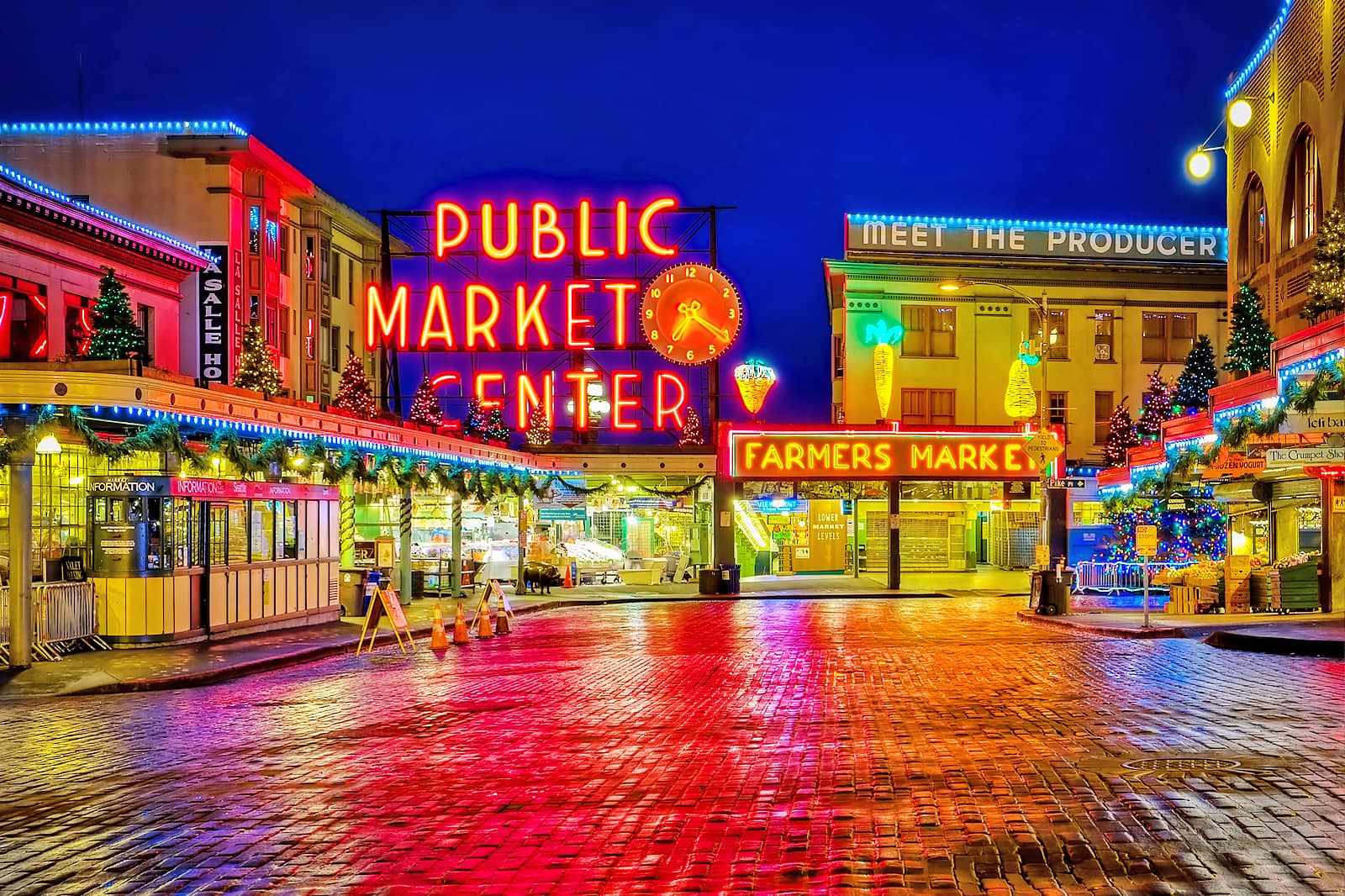
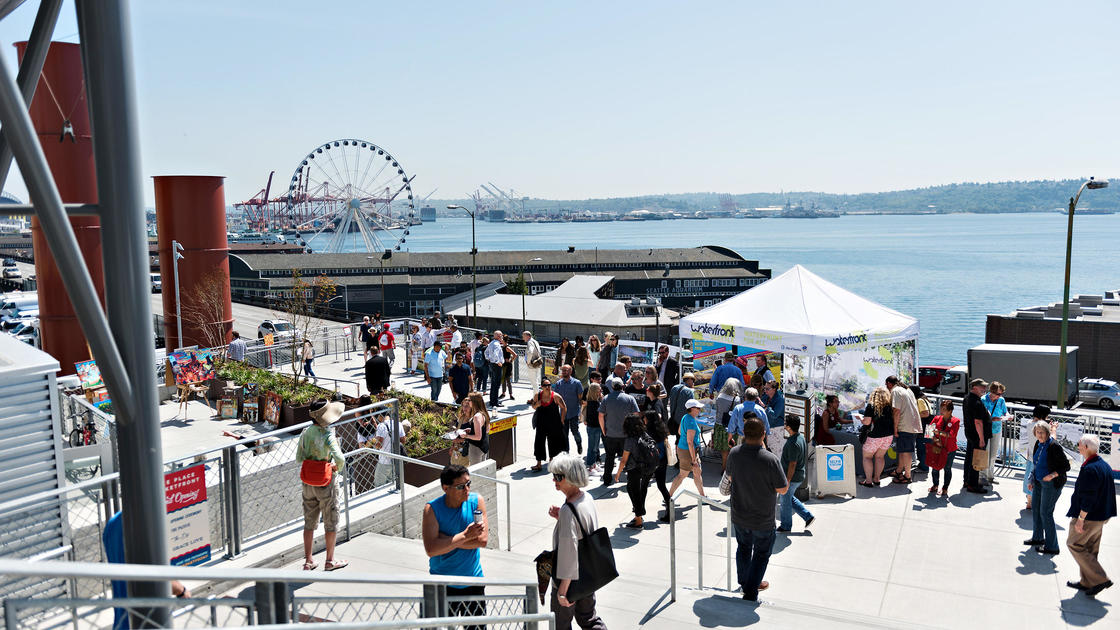
In the center of Seattle there’s the famous Pike Place Market. Today it’s a lively place with fishmongers who toss fish across stalls, musicians on the corners, and the smell of bread and coffee. But once city officials decided to... demolish it. And most surprisingly — they thought they were doing a good deed and building a “city of the future.” The story of how ordinary citizens stopped this “beautiful disaster” can help other cities avoid losing their most important places.
The city of the future that almost ate its market
In the 1960s many U.S. cities followed a trend: tear down everything old, build everything new. Imagine someone telling your class:
“Throw away all the old toys and books! Buy identical shiny tablets, and everyone will have a ‘super-modern life’!”
That’s roughly how people treated Pike Place Market.
The market was old, worn in places, steps cracked, the roof leaked. It was called “dirty,” “outdated,” and “in the way of progress.” Wide highways, glass-and-concrete skyscrapers, and huge parking lots were in fashion.
City officials discussed a plan that sounded very attractive. They promised to:
- build new modern buildings;
- create convenient roads and large parking areas for cars;
- “cleanse” the downtown of “chaos” and “poverty.”
Many newspapers and politicians said, “This is a step into the future! We are saving the city from the old.”
Almost no one asked: who are we pushing out of this “bright future”?
Thus began a story where something good in words nearly destroyed something good in reality.
The invisible heroes of the old market
Seen through a tourist’s eyes, Pike Place Market is just a pretty market by the sea. But in the 1960s it was much more for many people.
- For farmers around Seattle it was a place to sell vegetables and fruit without middlemen.
- For elderly downtown residents — the only place to buy affordable food and just talk.
- For immigrants — a place to hear their native language and find familiar products.
- For artists and street musicians — the first “stage” where someone noticed them.
Imagine an elderly woman, let’s call her Mrs. Lin. She’s spent her life selling apples and greens at the market. She has little money, but regular customers who know her by name. At the market she isn’t alone: neighbors at adjacent stalls help carry boxes, offer tea, help call a doctor if she feels ill.
Next to her might stand a young student who works unloading goods for farmers and plays guitar on the corner to earn money for textbooks. For him the market is his first adult job, his first experience dealing with many different people.
On paper, in the developers’ pretty plans, all these people were almost invisible. The diagrams and models showed buildings, roads, parking — but there was no place for the old apple seller, the farmers with their crates, the student musicians, and quiet lonely shoppers.
When it became clear the market was to be demolished, these “invisible heroes” were the first to feel they were losing not just walls and a roof, but their small universe.
How the city learned to argue with “pretty pictures”
At first it seemed everything had been decided: the project had serious architects, influential backers, beautiful models.
But then odd things started to happen.
Architects who loved the old buildings began to say:
“These are not ruins, they are history. If repaired, they will be more beautiful than new concrete.”
Students and young activists began organizing tours of the market, showing how it lived and how it helped the poor and the elderly. Photographers shot the sellers’ wrinkled faces, funny signs, old plaques — and held exhibitions.
Elderly residents, who rarely engaged in politics, suddenly started collecting signatures and attending meetings. One of them said:
“You talk about the future — where will we live and buy food in that future?”
So a “strange team” of defenders formed around the market:
- grandmothers and grandfathers;
- feminists and activists fighting for women’s and the poor’s rights;
- artists, photographers, musicians;
- young architects who loved old houses;
- ordinary shoppers, vendors, and farmers.
They succeeded in taking the market issue to a referendum — a special vote where not only officials decide, but all residents.
Imagine, as in school, voting on whether your old schoolyard with its trees and benches should be turned into a giant parking lot. Only here an entire city voted.
Many influential people were sure citizens would choose the “beautiful future project.” But the majority voted to preserve the market. People said:
“No, don’t erase our memory for shiny new developments. Better to fix what we have than destroy it.”
So the “pretty picture” on paper lost to a living place full of people, smells, sounds, and stories.
What this market can teach other cities (and children too)
The story of Pike Place Market isn’t just about one market in Seattle. It’s about how cities treat their old places.
It’s easy to fall in love with shiny models: glass towers, straight roads, neat parking lots. But Pike Place Market reminds us of something important:
- Old places can be repaired, not thrown away, like a favorite toy with a torn paw. You can sew it up, wash it, smooth it out — and it will be loved again.
- When adults say, “This will be better for everyone,” sometimes they simply didn’t ask everyone.
- In a city it’s important not only how it looks, but how different people live in it: rich and poor, young and old, those born here and those who moved here.
Even children can ask very important questions when they see something in the city about to change:
- “Where will the elderly walk if this park is built over?”
- “Where will the people who sell here go if the market disappears?”
- “Is there any place in the new plan for those with little money?”
Sometimes such simple questions make adults stop and look at their “pretty picture” with different eyes.
Conclusion: the city as a big family photo album
Pike Place Market in Seattle survived. It was repaired and improved, and today it’s considered one of the city’s symbols. You can see tourists with cameras there, but nearby farmers with vegetables, artists with paintings, and old people who remember the market differently still stand.
If you think about it, any city is like a big family photo album. It has new photos taken on a phone and old, slightly worn pictures that grandparents held in their hands. If you throw away all the old photos, the album will look “cleaner,” but we’ll lose part of ourselves.
The story of Pike Place Market tells both children and adults:
cherish the places where your stories live, even if they don’t appear in the “city of the future” pictures. Sometimes it’s those modest, unfashionable corners that make a city truly alive and kind for everyone.