Imagine writing a letter about the library of your dreams, hiding it in the wall of an old building, and 40 years later someone finds it — and your dream becomes reality. That’s exactly what happened in Seattle when builders were tearing down the old Central Public Library and found hidden messages from children of the 1960s. The new library, opened in 2004, turned out to be surprisingly close to what those children had imagined, even though the architects only learned about the letters after the building was already under construction.
The Book Spiral you can walk like a mountain trail
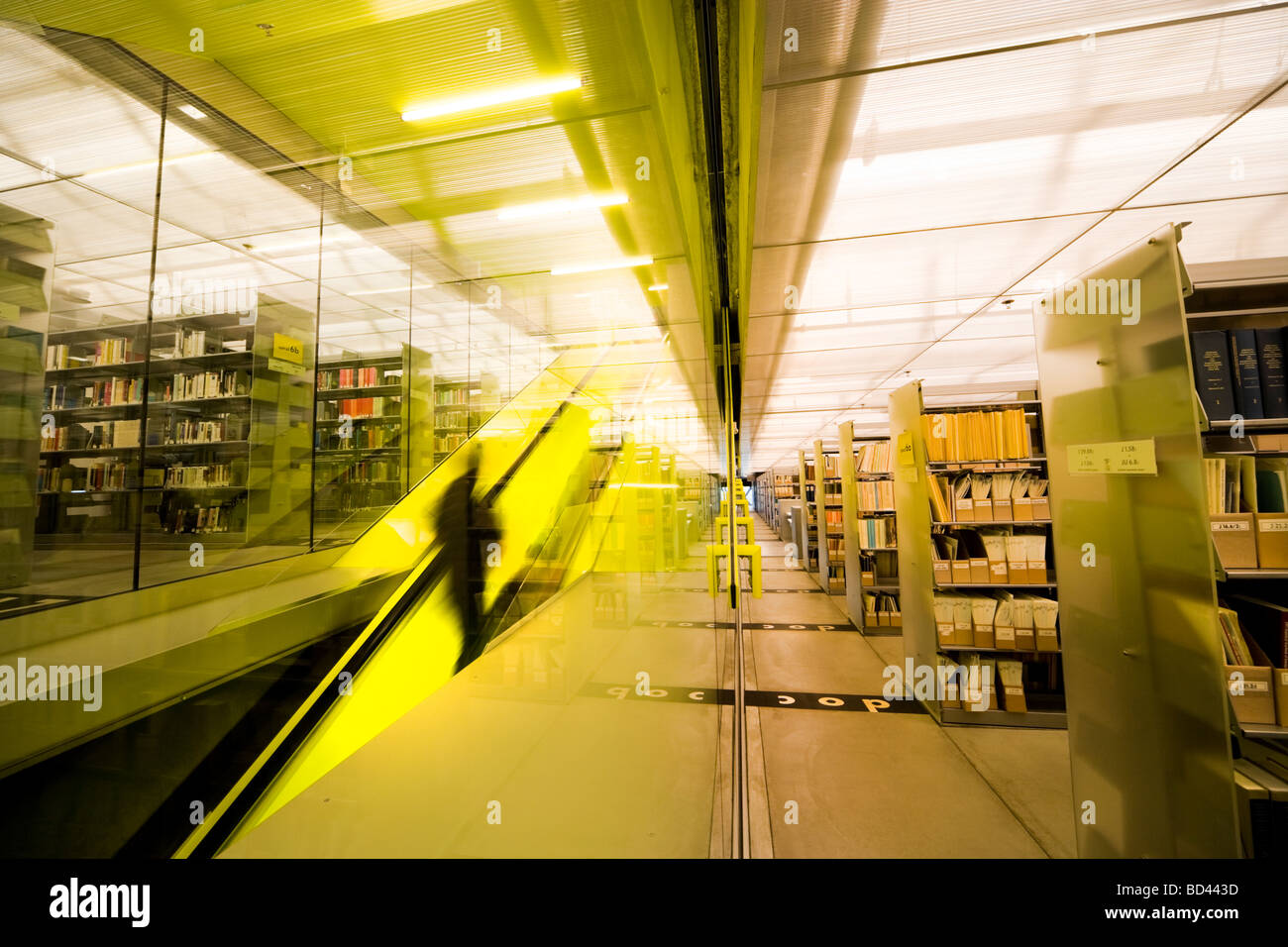
The most unusual part of the Seattle library is the "Book Spiral." Instead of placing books on different floors and in separate rooms, the architects created one continuous pathway that rises in a spiral over four floors. It's like laying all your books out in one very long line and twisting it into a snail-shaped ramp upwards.
Why does that matter? Usually, books about animals might be on the second floor and books about nature on the third, and you have to go down and up. Here you just walk forward, and the books transition smoothly from one subject to another. Books about cats sit next to books about dogs, those sit next to books about wild animals, and then come books about forests where those animals live. Everything is connected, like in real life!
The spiral rises to the height of a nine-story building, but walking it isn't hard — the incline is very gentle. Librarians say children often turn a stroll along the spiral into a game: "Let's find a book about dragons, then see what books live next to it!" That way you can stumble upon books you never even thought about.
A living room in the sky and secret reading nooks
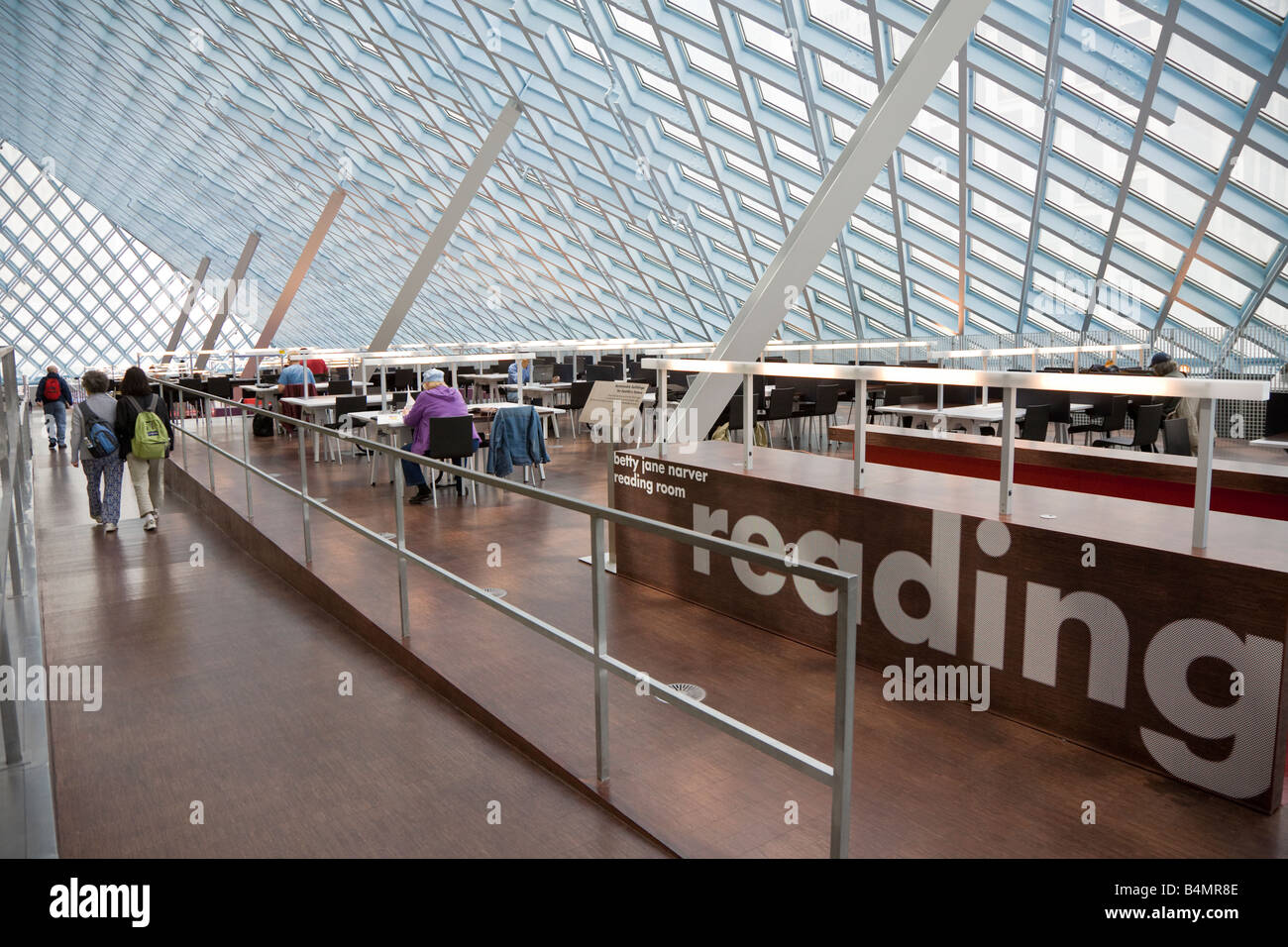
One of the letters found in the wall of the old library was from a girl named Susan. She wrote, "I want a library with big windows where you can see the clouds, and with soft armchairs like my grandmother's house." In the new library there is a huge "Living Room" on the top floor — a room with floor-to-ceiling windows that look out over the whole city, the mountains, and Puget Sound.
But the most interesting thing is how the architects considered that different people read in different ways. Some like to read in silence, hidden away from everyone. Others like to read in noisy places where life buzzes around them. The Seattle library has both!
For example, there are small "reading capsules" — cozy little nooks built into the walls where you can curl up with a book. There are step-seats where you can sit and watch other visitors. And there are quiet corners by the windows where you can daydream while watching the clouds — just like Susan wanted in the 1960s.
How unheard voices changed the library
When the library was being designed, architects Rem Koolhaas and Joshua Prince-Ramus did something unusual: they asked not only adult librarians but also ordinary people — children, teens, people experiencing homelessness, elderly people — what they wanted to see in the new library. Many of these people had never before thought their opinions could change anything.
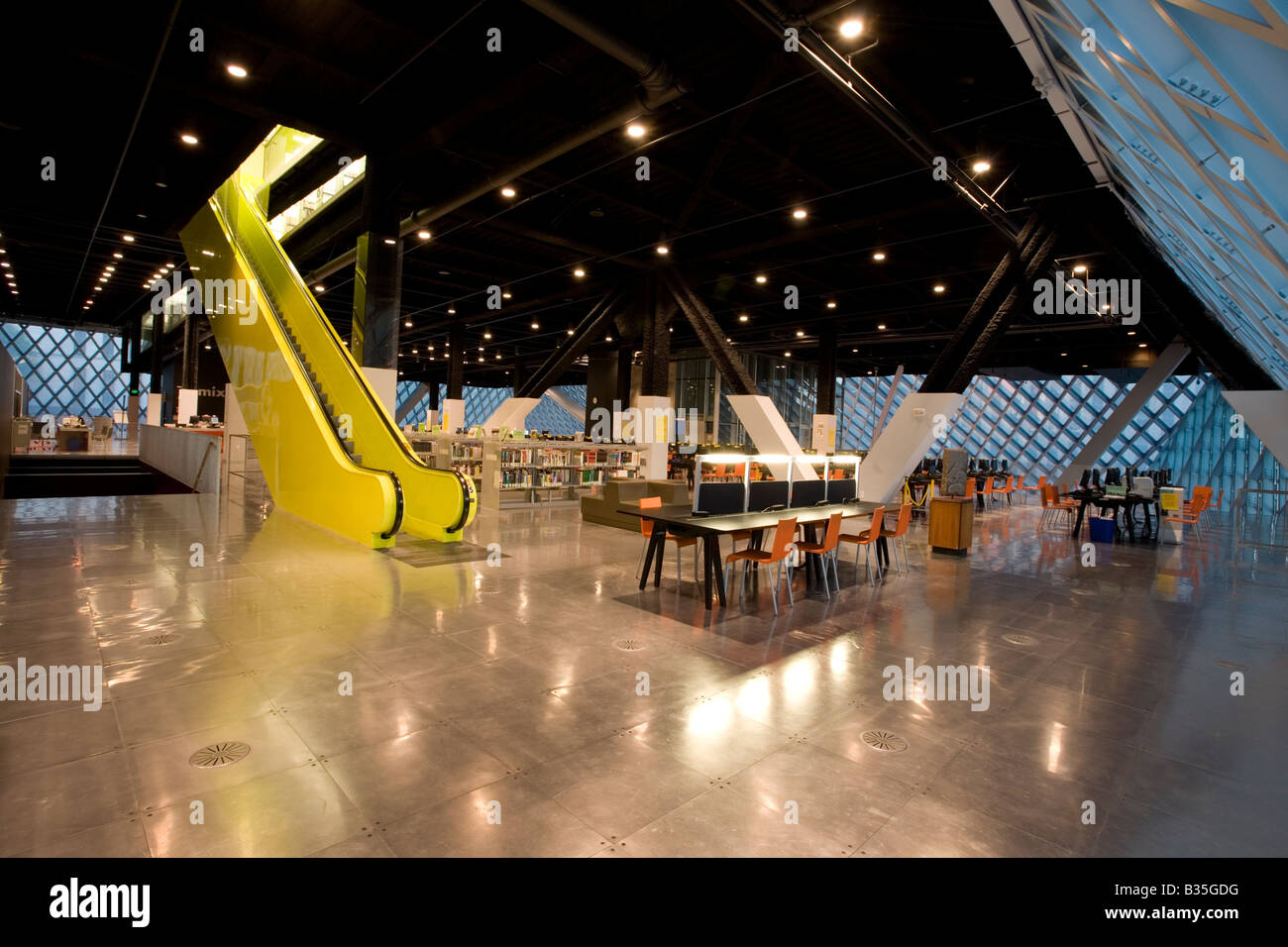
One group of teenagers said, "We need a place to work together, talk, and not be afraid of being kicked out for making noise." That led to the creation of the "Mixing Chamber" — a bright red space where people can work in groups, discuss projects, and even be a little loud. The walls there are slanted and unusual, and the color is so bold you immediately understand: different rules apply here; it's okay to be noisy!
People experiencing homelessness asked for a place where they could feel like welcome guests, not outcasts. The library became one of the first public buildings in America to intentionally design a space for everyone — without exceptions. There are no guards who eject people for having an "inappropriate appearance." There is only one rule: respect the books and other people.
Glass and metal diamonds that protect the books
From the outside the library looks like a giant crystal of glass and metal. The facade is made up of thousands of diamonds — glass and metal — that create an unusual pattern. Many Seattle residents at first didn't understand the design. "This doesn't look like a library!" they said.
But these diamonds have a secret. The architects carefully calculated where to place glass panels and where to use metal. Glass lets light into areas where people read and work. Metal protects the books from the sun — after all, sunlight can damage old pages. As a result, the building itself takes care of the books, like a thoughtful librarian!
Inside there's another secret: the Book Spiral is the main storage, but there is also a closed stacks area for the most valuable and oldest books. That space maintains special temperature and humidity. A robotic system helps librarians retrieve requested items. It's like a secret treasury of knowledge!
What changed when the library became different
After the new library opened something surprising happened: visitor numbers more than doubled. But people came not only for books. They came to work on laptops (the library provides free internet), meet friends, study, or simply sit and think.
One girl named Maria, now 12, said: "When I was 6 my mom first brought me here. I thought libraries were boring, that you had to be silent and couldn't touch books. Here I saw that you can lie on the floor with a book, sit on bright cushions, look out big windows. I realized books aren't scary, they're interesting. Now I come here almost every week."
Librarians also noticed another thing: children became more curious about the books that stood next to the ones they were looking for. A boy comes for a book about space and leaves also with a book about deep-sea fish because they were near each other and both about "exploring the unknown." The spiral helps reveal connections between different topics.
Dreams that travel through time
The most magical thing about the story of the Seattle library is that children's dreams from the past somehow found their way into the future. The letters found in the walls are now kept in a special display in the children's section of the library. Next to them are new letters from today's children about what they imagine a library of the future should be like.
One of the new letters says, "I want a library where books can talk to computers, and where there is a garden on the roof." Who knows — maybe in 40 years someone will read that letter and make that library real?
The Seattle library showed that buildings can be more than boxes for storing things. They can listen to people, especially those whose voices are usually not heard — children, teenagers, those without homes. They can be places where everyone feels important and welcome.
And most importantly: this library proved that dreams don't disappear. They hide in walls, in letters, in drawings — and wait for their time to become real. Maybe your dream of something wonderful will also someday come true, even if it doesn't happen right away. The important thing is not to be afraid to dream and to tell others about your dreams.