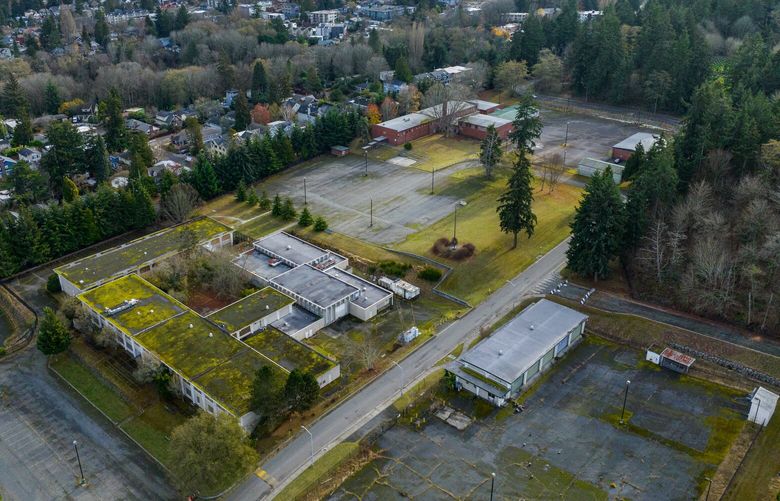
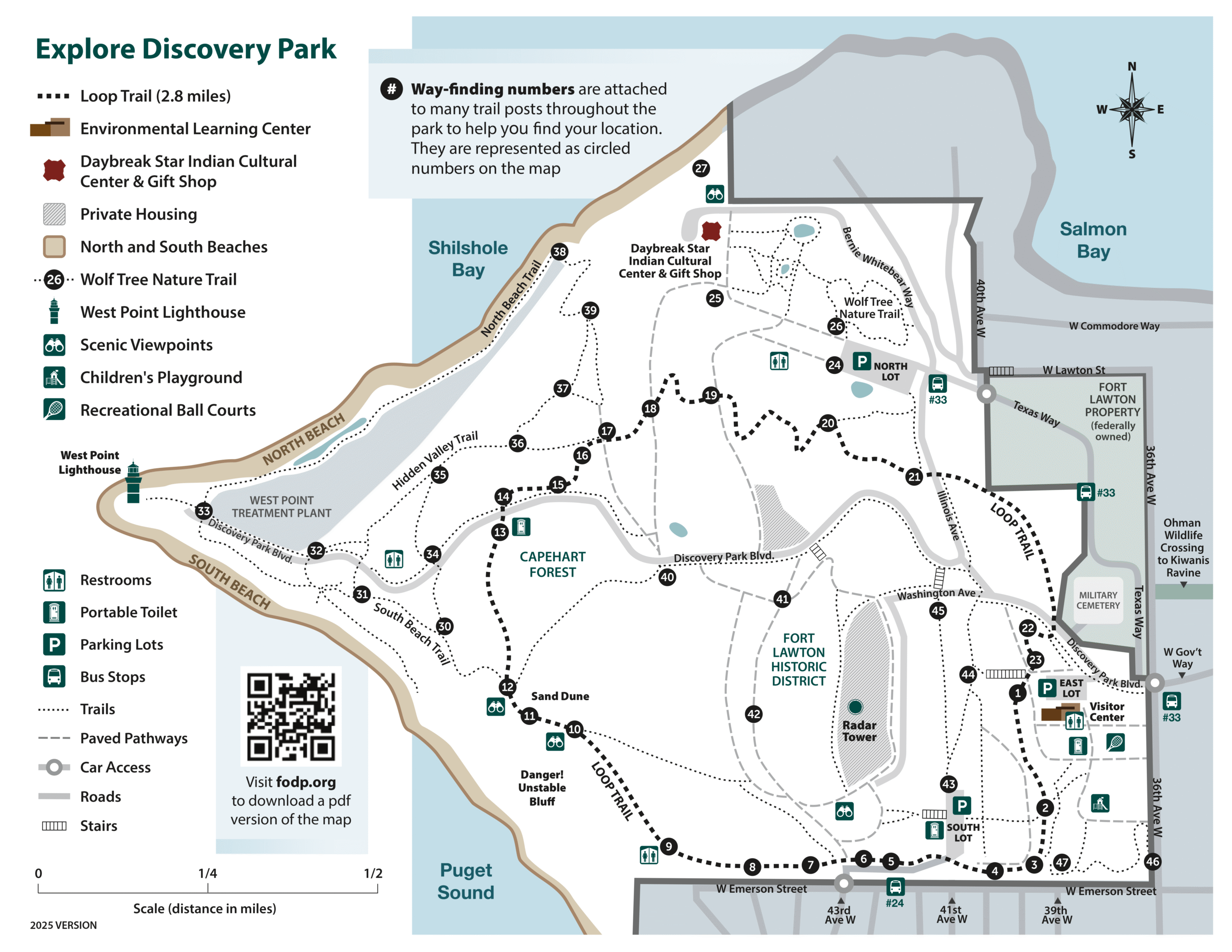
Imagine: you’re walking through the biggest park in Seattle, and suddenly something strange appears from behind the bushes. A concrete wall. A rusted door. A dark corridor going down underground. This isn’t a castle or a movie-style bomb shelter — it’s an old military bunker. And there are several of them here. A park where squirrels run today, eagles nest, and wildflowers bloom — once it was a secret soldiers’ camp. And the ground under your feet holds history you won’t find in any guidebook.
When soldiers marched here
More than a hundred years ago, in 1900, the U.S. Army fenced off a large plot of land along the shore of Puget Sound and built a military base there — Fort Lawton. Thousands of soldiers lived and trained here. During World War II, hundreds of thousands of servicemembers passed through the base — they left here to fight in the Pacific. There were barracks, warehouses, artillery, underground tunnels, and even its own railway.
But then the war ended. Then the next war ended. There were fewer and fewer soldiers, buildings stood empty, and fences rusted. In the 1970s, the Army decided the base was no longer needed and left. After them, the military didn’t just leave empty barracks — it left a real ecological puzzle.
Poisoned land — and its recovery
When scientists began studying the former base, they found plenty of unpleasant things. In the soil, old fuel tanks had been buried; they leaked, and oil seeped into the ground. Paint on older buildings contained lead — a substance very harmful to people and animals. In places, old shells lay in the grass, having never exploded. The land was sick.
Imagine that your room had been a dumping ground for a long time — and now it needs to be not only cleaned up, but treated, too. That’s roughly what had to be done with the land at Fort Lawton. Workers hauled away tons of contaminated soil. They dug up and removed the old tanks. Where barracks once stood, new trees were planted.
And nature responded. First the birds returned — robins, woodpeckers, then hawks. Then foxes and coyotes appeared. And one day, bald eagles began circling over the park — birds that, in the 20th century, nearly disappeared from the West Coast due to pesticides. Today, Discovery Park is one of the best places in all of Seattle to watch wildlife. More than 270 bird species live here.
“Nature doesn’t forget how to be nature,” say ecologists working in the park. “It just needs a little help and not to be in the way.”
People who waited fifty years
But this land has another story — much older. Long before soldiers arrived, people lived here. The Duwamish, Suquamish, and other Indigenous peoples inhabited the shores of Puget Sound for thousands of years. They fished, gathered berries, and built homes from cedar. It was their land.
Then settlers came from Europe. Then the Army came. Indigenous communities were pushed aside, their villages were demolished, and their land rights were simply not recognized. When the Army left the base in the 1970s, several tribes said, “This land is ours. Give it back to us.” They asked for part of the territory to be set aside so they could build homes for their families and a cultural center.
They were denied. They asked again. They were denied again. This went on for nearly fifty years — an entire human lifetime. People sued, wrote letters, and held rallies. The children of those who started the fight grew up and continued their parents’ struggle.
And in 2021 — finally — the City of Seattle said “yes.” Twenty acres of land in the park were set to be transferred to the “United Tribes of Fort Lawton.” Affordable housing and a cultural center will be built here, where people will be able to learn about the traditions and history of Indigenous peoples.
Two healings at once
The story of Discovery Park is the story of two healings that happened almost simultaneously.
The first was healing the land. Soil contaminated by military waste was cleaned up; trees grew again, and animals returned. Nature proved surprisingly resilient: give it a chance and it will recover.
The second was healing injustice. People who had been driven away from their own land, after half a century of waiting, were finally able to return. It isn’t everything that was taken — but it’s an important step.
The next time you’re in the park and see an old bunker or hear an eagle cry over the water, remember this land remembers everything. It remembers soldiers’ boots and children’s laughter, oil stains and the first shoots after cleanup, the long waiting and the long-awaited return. And it’s glad that it’s finally being heard.