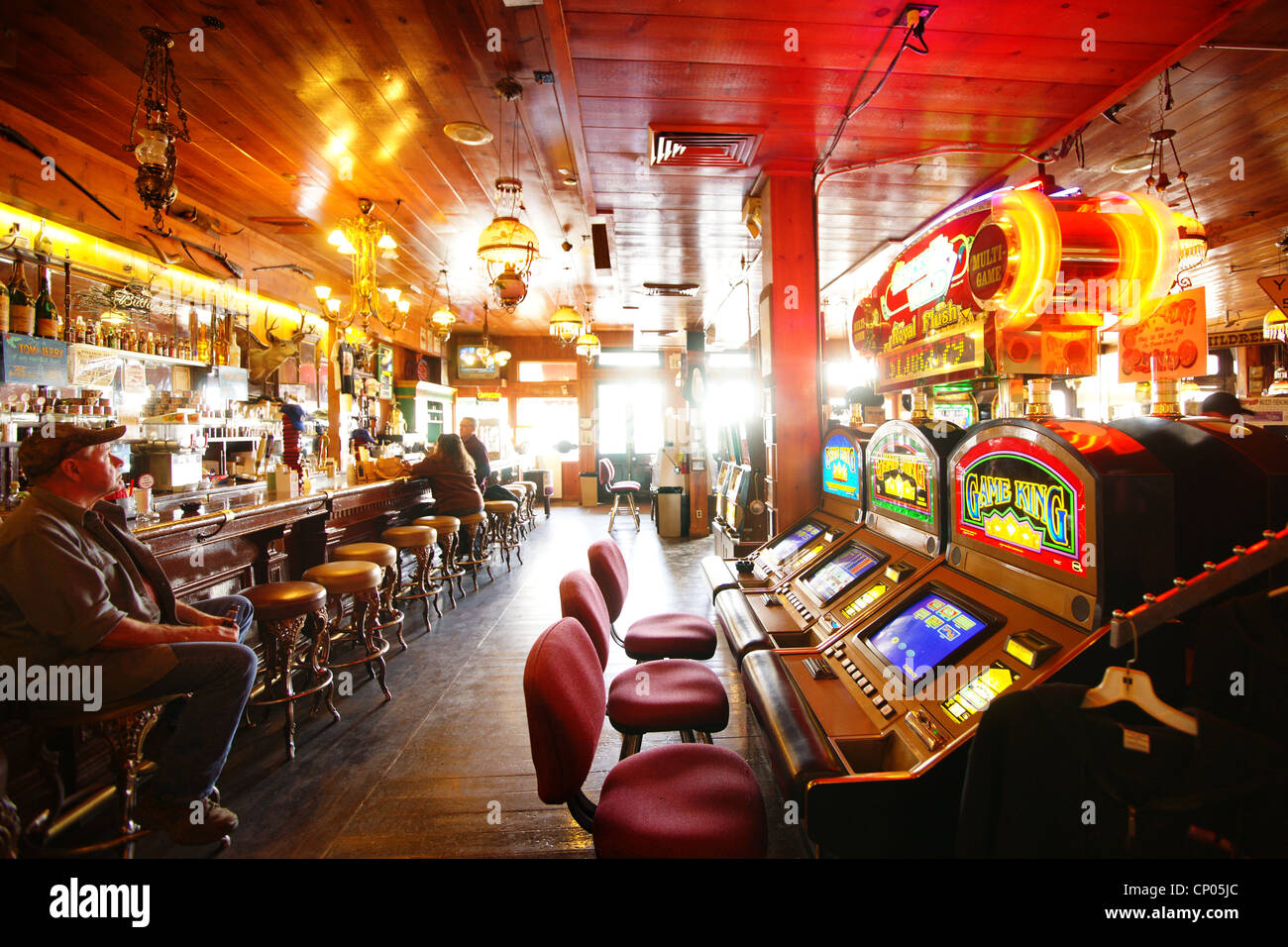
Imagine stepping into an old wooden house—and it starts telling you a story, not in words, but through creaking floorboards, scuffed tables, and faded photographs on the walls. That’s exactly how people feel when they visit the “Blood Bucket” saloon in the small American town of Virginia City. The building was almost torn down. But it was saved—and that act of saving changed how many towns think about their historic buildings.
Why Is the Saloon Called “Blood Bucket”?
Just the name alone sounds like the beginning of a terrifying fairy tale, doesn’t it? According to legend, back in the 1860s, when workers were digging a well behind the building, they struck water of a strange reddish color. People panicked and took it as a bad omen. Most likely, the water had been colored by iron from the surrounding rocks—something that can happen in places where silver and gold are mined. Still, the name “Blood Bucket” stuck forever.
The saloon opened in 1876, right in the middle of the silver boom. At the time, Virginia City was a true wild west town: miners, fortune seekers, traders, and adventurers poured in from all over America. In the saloon, people drank, played cards, argued, and reconciled. A young journalist named Samuel Clemens also came through—yes, the same man who later became the famous writer Mark Twain and wrote about Tom Sawyer and Huckleberry Finn. He worked for a local newspaper and almost certainly heard stories that later became part of his books.
The Fight for the Old House
By the middle of the twentieth century, Virginia City had become a quiet, almost forgotten place. The silver was gone, the miners had left, and many buildings fell into disrepair. Some people said, “Why keep these ruins? Let’s tear them down and build something new—stores, parking lots, modern hotels!”
But others understood: if you tear down old houses, you lose more than wood and stone—you lose the stories. Historians, local residents, and later tourists began explaining: Virginia City is one of the few places where the Wild West has been preserved for real—not like a movie set, but like a living memory. Wooden sidewalks, old signs, squeaky doors—everything is authentic, not invented.
In 1961, Virginia City was designated a historic landmark, which gave its buildings legal protection. The “Blood Bucket” survived. Today, it’s one of the most famous saloons in America—and it’s still open.
What This Saloon Taught Other Cities
The story of Virginia City became an example for many other places. When people saw how many tourists traveled to see an authentic old town—not a replica, not a “made to look like it,” but the real place with real stories—they started thinking differently about their own aging buildings.
The lesson was simple, but it mattered: an old building is like a book you can touch. If you burn it, you can’t write a new one the same way. You can build a beautiful new house, but it won’t remember Mark Twain, the miners, or the girls and boys who ran these streets one hundred and fifty years ago.
Today, many towns ask themselves a question before tearing down an old building: “What story will we lose along with it?” That question—small, but extremely important—is the “Blood Bucket” legacy.
Houses That Remember
It seems to me that every old building has a kind of superpower—it can hold time. Walk into a hundred-year-old house and you can feel it: something happened here before you. People laughed here, argued here, dreamed here. It isn’t scary—it’s amazing.
The saloon with the frightening name “Blood Bucket” didn’t survive because it was beautiful or convenient. It survived because people decided that stories matter more than parking spaces. And now, anyone who steps inside becomes part of that story—even if they’re only looking at the old photos on the wall and wondering, “I wonder who these people are?”
Maybe that’s the most important thing old houses teach us: there’s always someone who came before us. And there will be someone after. Our job is not to erase that chain—but to pass it on carefully.