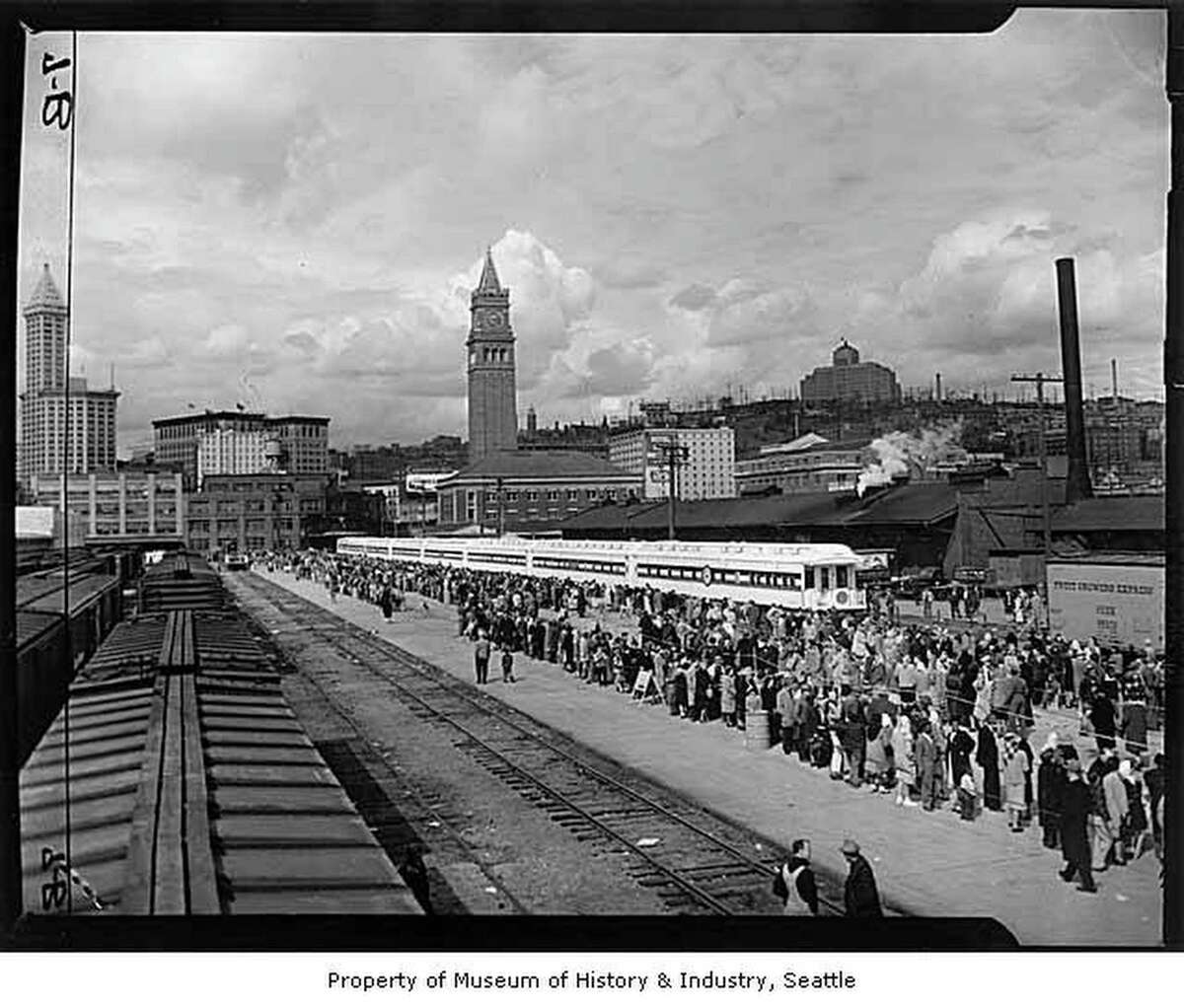
Imagine a train where, during the day, you can sit by the window on a comfortable sofa, and in the evening that sofa magically turns into a bed with clean sheets and a curtain. Another bed lowers from the ceiling above it. This was called a Pullman car, and almost overnight, one person could transform it: the porter. Many porters lived in Seattle and built a community together that changed the nation’s history.
The Car That Could Transform
Pullman cars were invented in the United States in the 19th century. The idea was bold: to let people sleep and rest comfortably as the train sped through prairies, mountains, and forests. By day, the car had ordinary seats. In the evening, they were pulled apart, a second berth was lowered from above, curtains were hung, and the seats became proper beds.
But the cars couldn’t do this on their own. Every night, someone had to turn the seats into beds in just a few minutes, make them up, bring water and towels, shine shoes, help with luggage, and answer a hundred questions. That person was the porter, or “Pullman porter.”
Almost all the porters were African American. Starting in the 1860s, George Pullman’s company hired formerly enslaved people, and over time this became a tradition. The porter was the face of the train: he greeted passengers politely, knew everything about the route, and never complained.
Hard Work and Unfair Rules
The porter’s job looked glamorous, but it was very difficult. They could spend up to 400 hours a month on the road, and had to catch what sleep they could, sitting on the edge of a seat. Porters often paid for their own uniforms, shoe polish, and food. Their wages were low, and they relied almost entirely on tips.
There was also a hurtful custom: many passengers called all the porters “George,” after the company’s owner. Imagine being called by someone else’s name every day instead of your own. The porters learned to put up with it, but they never forgot who they really were.
Seattle: The City They Called Home
In the early 20th century, Seattle had only a few thousand African American residents. Trains arrived at King Street Station, with its tall clock tower (reminiscent of Venice’s famous bell tower), and later at Union Station. Many porters made Seattle their home: railroad work gave them a steady income, and they had families in the city.
Most lived in the Central District, where churches, shops, clubs, and newspapers sprang up, including publications for Black residents. Porters brought back news, Chicago newspapers, and books from their trips, and told stories about life in other cities. Thanks to them, Seattle’s small community knew what was happening across the country.
The porters also had families who contributed to the community. In Seattle, as in other cities, their wives organized meetings, raised money, helped families whose fathers were away on the road, and supported the porters’ union. It’s said that without the wives, the union would not have been as strong.
Twelve Years of Struggle
In 1925, porters founded a union in New York: the Brotherhood of Sleeping Car Porters. It was led by A. Philip Randolph. The Pullman Company refused to recognize the union: it threatened and fired activists, and sometimes hired people to persuade others to leave the organization. But the porters stood together—and so did those in Seattle.
The struggle lasted twelve years. Finally, in 1937, the company signed the first contract with a Black workers’ union in the United States. The work month grew shorter, wages increased, and porters gained the right to stand up for their rights. It was a real victory not only for them, but for everyone who dreamed of justice.
Randolph said that freedom is never simply given—it has to be won. The porters showed that it was possible through patience, solidarity, and determination.
What We Can Take Away
When I think about a Pullman car, I feel that the most amazing thing about it wasn’t the fold-out beds. The real miracle was the people who didn’t give up: the porters, their wives, neighbors, and friends in Seattle. They built not only hotels on wheels, but also a community where people supported one another. Thanks to them, churches and organizations took root in the Central District, followed by new leaders in the civil rights movement.
So when you see an old train or hear a whistle at King Street Station, remember: people once stood on that platform who weren’t just doing a job—they were changing the world. What do you think it takes to bring about change together?
```html