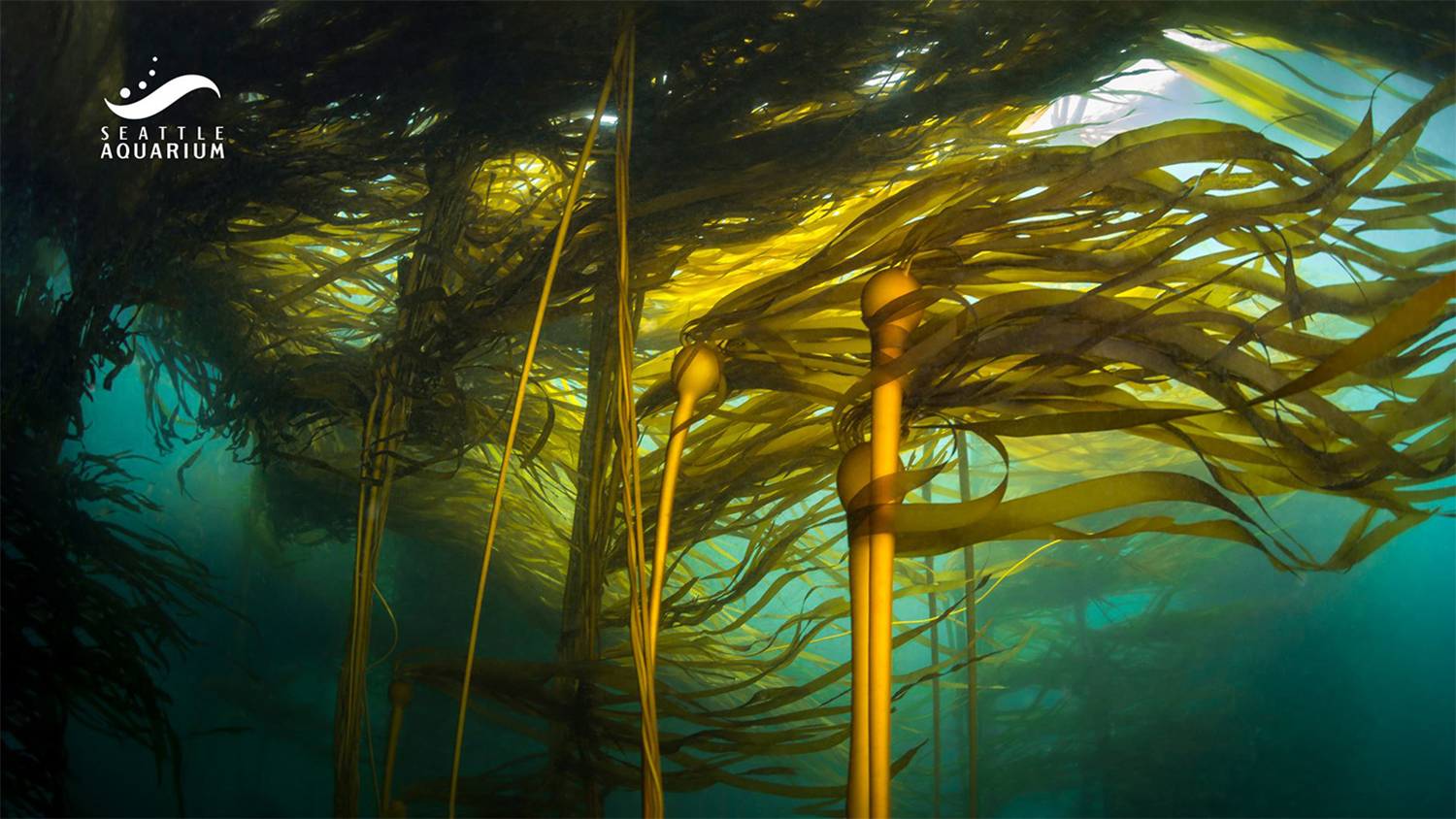
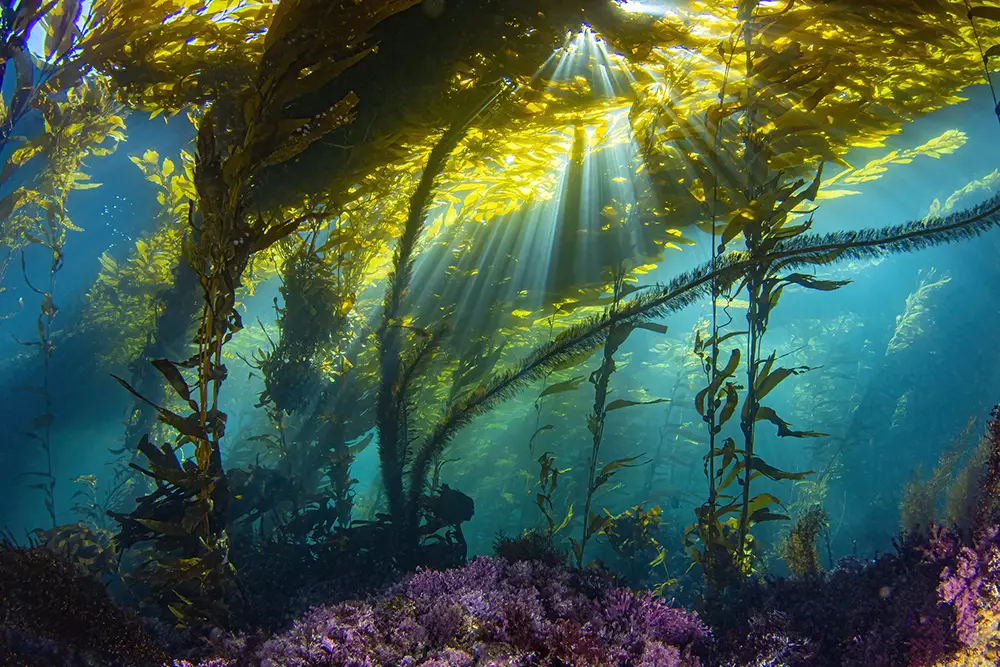
Imagine a forest. The trees are taller than a three-story building, branches sway in the wind, and between them hide fish, octopuses, and sea stars. But this forest isn’t on land. It’s underwater. And it almost vanished forever—until a group of schoolchildren and their teacher decided to step in.
What an underwater forest is—and why it matters
At the bottom of Elliott Bay, right off the coast of Seattle, kelp grows—giant brown algae that can reach up to ten meters in length. It’s not just beautiful. Kelp forests are one of the most “alive” ecosystems on the planet—something like an underwater city. Young fish hide among the long fronds from predators. Sea urchins gnaw at the stems. Octopuses make burrows in the roots. Even birds—cormorants and gulls—dive in to hunt.
The Indigenous Duwamish people, who lived along the shores of the bay long before Seattle existed, knew these places well. Duwamish fishers used patches of kelp on the water’s surface to orient themselves: where the algae are, there are fish. They called dense stands “a forest underwater” and passed down knowledge about them from generation to generation. For them, the bay was alive, and the underwater forest was its heart.
How the forest nearly died
In the middle of the 20th century, Elliott Bay became one of the most polluted places in the American Pacific Northwest. Factories, the port, and the city’s sewage flowed directly into the water. The water turned murky and dirty. Kelp needs light—without it, it cannot grow. Gradually, the underwater forest began to thin out and disappear.
There were fewer fish. Sea birds flew away. Those who went diving in the bay remembered seeing nothing but gray silt and an almost empty seafloor. It seemed as though the bay was dying—and no one paid much attention. The port kept operating, ships sailed, and the city grew.
The teacher who noticed
In the 1970s, marine biologist and teacher Jan Ho dder began bringing her students to the shore of the bay to see what remained of underwater life. She was convinced that if people could see firsthand what was happening underwater, they wouldn’t be able to stay indifferent.
Her students dove, sketched, and made maps—where kelp still remained, and where it had disappeared. It was real scientific work, only done not by adult researchers in labs, but by young people with notebooks and diving masks. Their observations became important evidence that the bay needed protection.
Around that time, the United States passed the Clean Water Act—one of the most important environmental laws in the country’s history. Data collected by people like Hodder and her students helped show whether the law was working—or whether it was being violated. The voice of ordinary people, backed by facts, turned out to be loud.
“The ocean can’t speak for itself,” Jan Hodder told her students. “So we have to speak.”
The forest is coming back
The water in the bay became cleaner—slowly, year after year. And with it, kelp began to return. Today, underwater stands can be found again in Elliott Bay—not as dense as they were a century ago, but alive. Young salmon and perch are back. Octopuses are back. Divers who remember the bay in the 1970s say the difference is enormous.
Researchers working with the Duwamish community started turning to older knowledge—asking elders where the densest stands had once been, and where the fish used to go. It turned out that traditional knowledge and modern science complement each other well: where the Duwamish pointed to rich areas, researchers found traces of ecosystems that had vanished—and understood where to direct restoration efforts.
Why this story matters
The underwater forest of Elliott Bay is a mirror. When people stopped caring for the water, the forest disappeared. When people were found who chose to look closely and speak out—teachers, students, Indigenous people, scientists—the forest began to return.
This story is a reminder: nature is surprisingly resilient. It needs a chance. And sometimes that chance doesn’t come from big government or huge money, but from simply people who don’t walk past it. Even if they’re ten, fifteen, or twenty. Even if all they have is a diving mask and a notebook.