Imagine a duck. It wobbles from foot to foot, pauses, looks around—and then freezes right next to a massive construction crane. Around it, machines roar, workers in hard hats carry pipes, and it just stands there. Stares. As if checking: is it possible to live here?
That’s the kind of scene you could see in the South Lake Union area of Seattle, when Amazon arrived and began building its huge urban campus. Most people know this story as one about money, offices, and glass spheres. But there’s another story—quiet, green, and a little surprising. The story of how nature returned to the place it had long been pushed out of.
What the area looked like before
South Lake Union is a neighborhood by the lake in the very heart of Seattle. Sounds pretty, doesn’t it? But just twenty years ago, it wasn’t pretty at all. There were old warehouses, rusting garages, and asphalt parking lots with not a single tree. The small streams that once ran through this land had been buried underground long ago or hidden in pipes. The water in them was dirty. There were no fish. Birds almost never came.
You can imagine it like this: as if someone took a living meadow, covered it with an enormous gray blanket of concrete and asphalt, and left it that way for a hundred years. The soil under the blanket still remembered what it had been. But from the outside, you couldn’t see it.
When Amazon decided to build its headquarters here, one of the biggest construction projects in the city’s history began. Dozens of buildings, thousands of workers, years of noise and dust. It seemed like there was simply no place for nature here.
Rules that changed everything
But here’s what’s interesting. In the United States, there are laws that tell builders: if you’re going to build something, you must take care of water and greenery. You can’t just pave everything with concrete and walk away. You have to figure out where the rainwater will go. You need to plant trees. You need to leave space where insects, birds, and plants can live.
Amazon is a very large company. And its construction project was very large too. That meant the requirements for it were serious. Engineers and environmental experts worked together on how to ensure that rainwater wouldn’t simply run into the sewer system, but would instead soak into the ground through special “green gardens.” These gardens aren’t just decorative flowerbeds. They’re smart patches of land with specific plants that filter water like a real natural filter.
Gradually, small green spaces appeared in the neighborhood—hundreds of trees were planted, and water features were set up. The gray blanket began to come off—bit by bit, slowly, but still coming off.
When the birds came back—and kids started going to watch
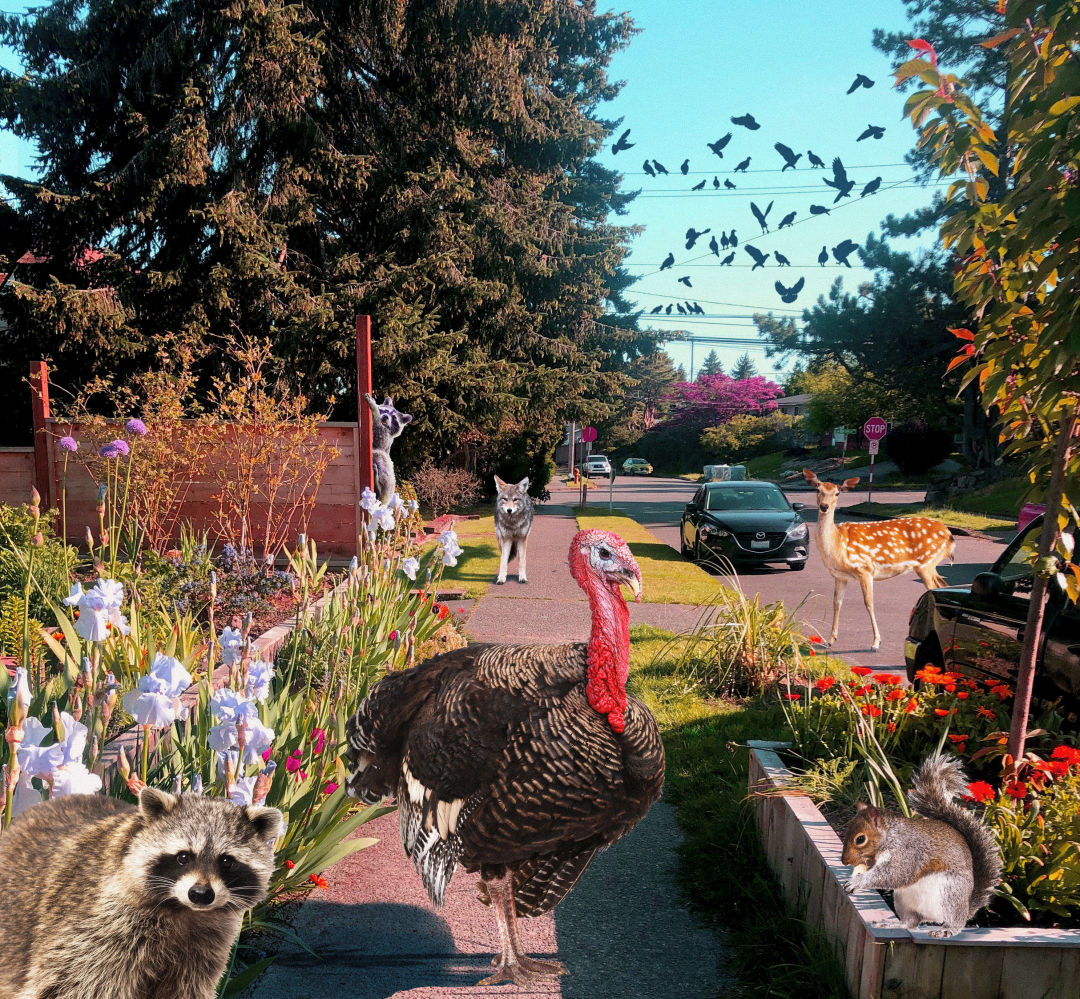
Nature responded quickly. Where there had once been nothing alive, herons began to show up. Ducks arrived—those very ducks that aren’t afraid of cranes. In Lake Union, right next to the new offices, salmon started to be spotted. Salmon in the city! For Seattle, that’s incredibly important: salmon here is almost a symbol—like bears are for Russia.
Schoolchildren from nearby districts began coming to the water with notebooks and special water-quality testing kits. They took samples, counted insects, and recorded which birds they saw. This is called “citizen science”—when ordinary people, even children, help scientists monitor nature.
One teacher from a local school said her students initially didn’t believe anything could live in city water. But when they saw tiny water bugs themselves under a microscope—collected right from a puddle near Amazon’s new building—they were thrilled. “They’re real!” they shouted.
Can a city and nature learn to get along?
The story of South Lake Union teaches us something important. Big construction projects and big companies often seem like enemies of nature. And sometimes they really are: they take up land, create noise, and warm the air. But sometimes—if there are rules and people who make sure those rules are followed—even a huge build can become the beginning of something green.
That doesn’t mean everything is perfect. The neighborhood became more expensive, and many long-time residents moved away because they couldn’t afford the higher rent. That’s also part of the story, and it can’t be forgotten. But nature doesn’t look at apartment prices. It just looks for somewhere it can put down roots. And if you give it even a little space, it comes back.
That duck on the tower crane didn’t know there was a big argument around it—about money, offices, and the city’s future. It just found a puddle with clean water. And decided to stay.
Maybe that’s the most honest sign that something is going right.