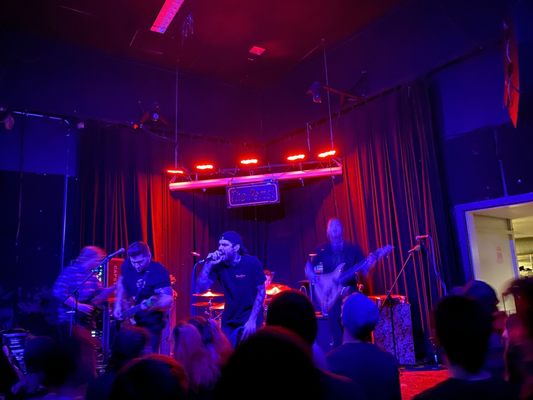
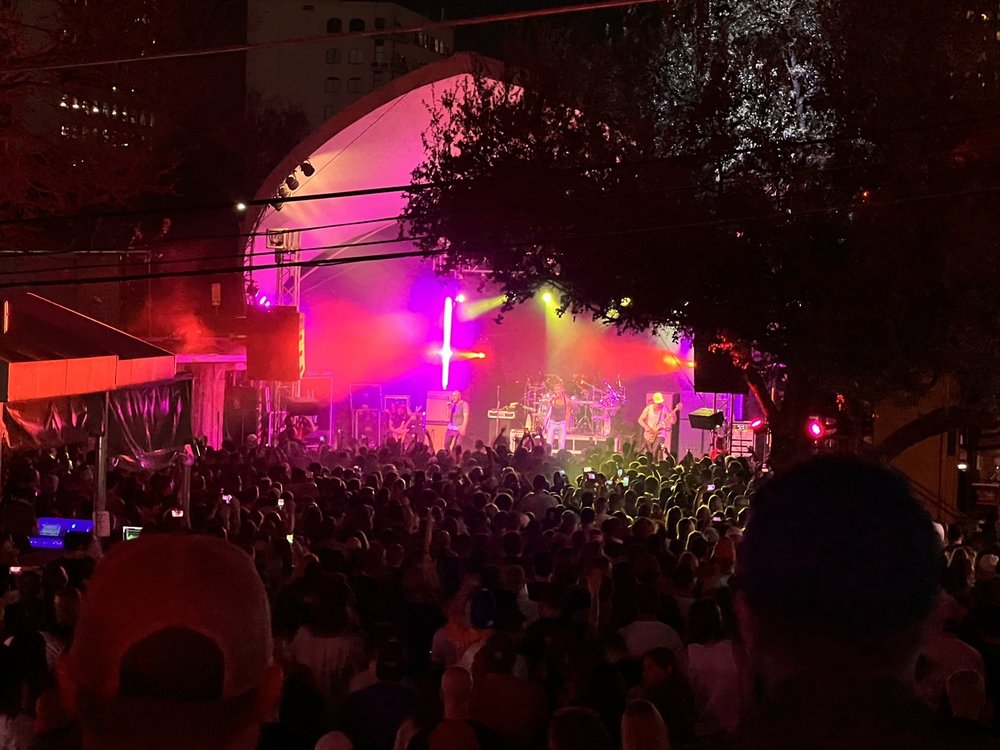
Imagine: you’re thirteen, you love music, but all the concerts take place in bars where kids are not allowed. That’s how Seattle teenagers felt in the early 2000s. The city was famous for rock music, but after the grunge era ended, almost all the small clubs where emerging bands could play began to close. The remaining venues allowed only adults because they served alcohol. But a group of schoolkids decided this was unfair and did something few believed possible: they created and saved a music venue run by teenagers themselves.
The story of how it nearly ended
In 2001 there was a small place in Seattle called The Vera Project. It was one of the few venues that welcomed people of all ages—kids and adults alike. Young bands just starting out played there. But the venue faced serious financial problems and was about to close for good.
When teens learned about this, they didn’t just feel upset—they organized. About fifty students showed up at a city meeting and told the adults: “Give us a chance. We will run this venue ourselves. We’ll prove that young people can do it professionally.” The adults were skeptical. How could kids organize concerts? Who would be responsible for safety? Where would the money come from?
But the teens were persistent. They drafted a detailed plan, showed how volunteers would operate, explained that the venue would be non-profit—meaning all funds would go back into the project rather than into anyone’s pockets. And most importantly, they promised there would never be alcohol at the venue. That made the space safe for all ages.
How a venue works without adult bosses
The Vera Project became an unusual place. In most music venues, adult professionals are paid to run things. Here, almost everything is done by volunteers—many of whom are under eighteen. Want to learn to work with sound? Volunteer and experienced peers will teach you how to operate the mixing board. Dream of organizing shows? Help plan events. Interested in design? Create posters.
It works like a big school, only instead of teachers there are older teens and young adults who themselves started here as volunteers. Everyone who comes to help receives free training. For example, you can learn to:
- Work with sound equipment (the kind that’s very expensive and usually entrusted only to professionals)
- Operate lighting effects during shows
- Check tickets and oversee event safety
- Communicate with musicians and help them prepare for performances
- Manage social media and tell people about upcoming shows
One girl who began volunteering at Vera at fifteen recalled: “On my first day they handed me a microphone and said, ‘You’ll announce the bands.’ I was terrified, but everyone supported me. A year later I was training newcomers. Now I work as a sound engineer—and it all started here.”
Why this place became special
The Vera Project proved an important thing: teenagers can create something serious and professional if they’re given opportunity and trust. Over more than twenty years, thousands of young people have passed through the venue. Many who started here as volunteers became true professionals—sound engineers, event organizers, musicians.
But the venue matters not only as a place of learning. It became a space where young people feel heard. In the regular world adults often make decisions for kids. Here, teens decide which bands to invite, how to decorate the space, and which workshops to run. That teaches responsibility and shows that their opinions matter.
The venue also helped many emerging musicians. After the grunge era faded, major record labels lost interest in Seattle music. Young bands had nowhere to play and no one to hear them. The Vera Project gave them a stage. Some bands that started here later became nationally known. But even those who didn’t become famous got a chance to try music and find their first listeners.
What this means for all of us
The story of The Vera Project teaches several important lessons. First, age is not the main thing. If you have an idea and you’re willing to work, you can create something meaningful even if you’re thirteen or fifteen. Those teens in 2001 could have simply complained about having nowhere to hear music. Instead, they took responsibility and changed the situation.
Second, when people work together for a common goal rather than for money, something special can happen. At Vera there’s no owner trying to make as much profit as possible. Everyone works because they care about music and community. That creates an atmosphere where people help each other simply because they want to.
Third, sometimes adults should give kids a chance to prove what they can do. City officials in 2001 could have just said “no” and closed the venue. But they took a risk and trusted the teens—and it paid off. Now The Vera Project is considered one of Seattle’s important cultural spots, an example of how youth can run serious projects.
This story shows that Seattle’s musical legacy isn’t only the famous bands of the past. It’s also the tradition of giving young people opportunities, believing in the power of community, and creating spaces where people can learn, create, and grow. And most surprisingly of all: it all started when a group of schoolkids refused to sit by when their favorite place was under threat.