Imagine that all the homes in your city suddenly disappeared. People lost their jobs, ran out of money, and had nowhere to live. What would you do? That is exactly what happened in Seattle nearly a century ago, during the difficult period known as the Great Depression. And then something remarkable happened: ordinary people who had almost nothing left built a city of their own. They called it Hooverville—as a joke, after the president under whom the crisis began. But the most interesting thing is not the name; it is how these people lived together.
A City Built from Trash and Hope
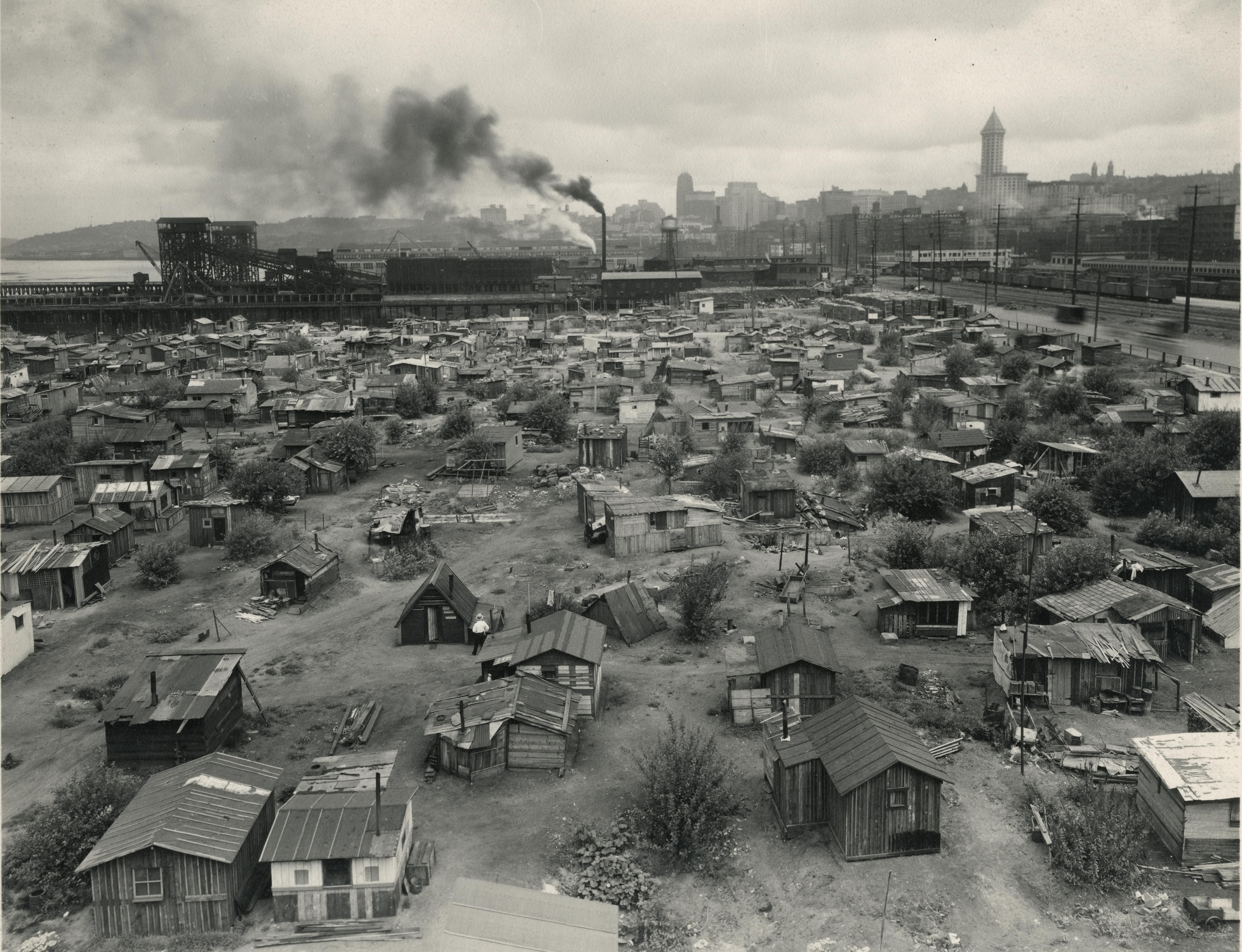
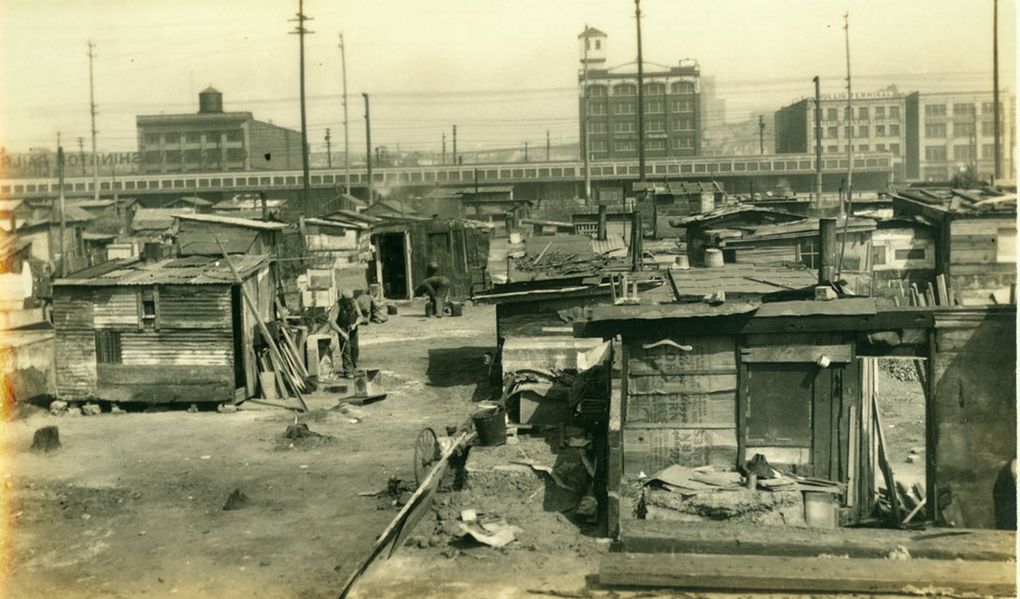
Hooverville appeared in 1932 on an empty plot of land along Seattle’s Elliott Bay. People built homes from whatever they could find: old boards, pieces of tin, cardboard, and the wreckage of boats. No two homes were alike—some were tiny huts for one person, while others housed an entire family in structures the size of a school classroom.
It sounds sad, doesn’t it? But the most surprising thing was that the residents did not live in chaos. They chose their own “mayor”—a former lumberjack named Jesse Jackson. He created simple rules: do not steal from your neighbors, do not start fires, and keep the area clean. It was a real little city with its own laws, only without officials from city hall.
One journalist who visited Hooverville in the 1930s wrote that the residents “were proud of their homes, poor as they were”—people swept the paths between the huts and even planted flowers by the entrances.
Neighbors Who Were Different from One Another
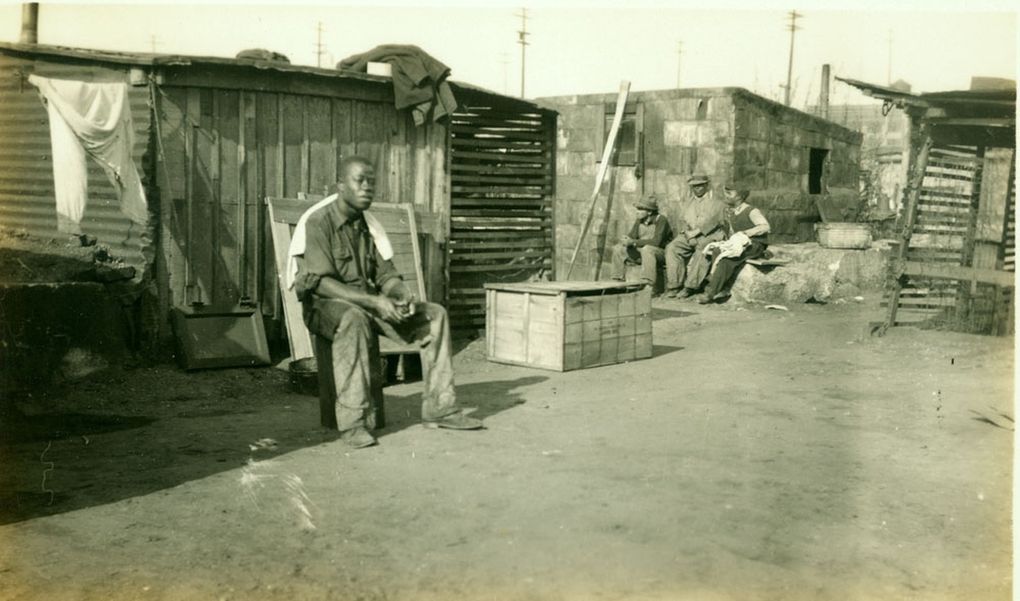
This is what makes the story truly special. At that time, people of different races and nationalities lived separately in many American cities—a system known as segregation. But Hooverville was different. Filipinos, Chinese, Japanese, Black Americans, and white families lived side by side. No one divided people by skin color, because everyone was facing the same hardship: they all needed a roof over their heads.
Imagine children playing in your yard whose parents speak five different languages, yet all of them are simply your neighbors and friends. For the 1930s, this was highly unusual. While the rest of the city had rules about who could live where, those rules simply did not work in Hooverville—everyone was in the same boat.
How People Survived Each Day
Life in Hooverville was difficult, but people helped one another. This is what an ordinary day looked like:
| Need | How Hooverville residents managed |
|---|---|
| Water | Carried it in buckets from nearby public pumps |
| Food | Caught fish in the bay, grew vegetables, and shared food |
| Light | Used candles and kerosene lamps |
| Work | Some found temporary jobs at the port |
| Children | Played together, and some attended the city’s regular schools |
Men often left in the morning to look for any work they could find—unloading ships, helping at construction sites, or chopping firewood. Those who stayed behind kept order, repaired roofs after the rain, and looked after their neighbors’ children as if they were their own.
Hooverville lasted for nearly ten years, until 1941, when World War II began and workers were once again needed in factories. The residents gradually left their huts, and the city on the bay disappeared.
What the Vanished City Can Teach Us
Today, in many cities around the world—including Seattle itself—people are once again facing homelessness. The story of Hooverville reminds us of a simple truth: even when everything goes wrong, people are capable of caring for one another and building something good together if they do not divide their neighbors into “us” and “them.”
It seems to me that the most important part of this story is not the tin roofs or wooden walls, but the fact that a thousand completely different people were able to become one large family during difficult times. Perhaps this is what modern cities should learn from the small, vanished Hooverville: to help our neighbors, no matter who they are or where they came from—because one day, you may need help too.