Did you know that Seattle is named after a man who did not want to fight its residents? In the winter of 1856, a real battle took place on the shore of Puget Sound. It later became known as the Battle of Seattle. But the story is more complicated than it may seem: it involved newcomers who built wooden forts, people who had lived there for thousands of years, and a wise chief whose name the city bears.
Who Was Here First
Imagine that you’ve joined a new class. Everyone already knows one another, and you’re the only newcomer. That’s roughly how the settlers who arrived by boat in the early 1850s felt. They had come from far away, many of them traveling across the country, and founded a small settlement with fewer than 300 people.
But the land was not empty. The Duwamish people had lived there for centuries, along with other nearby tribes. They caught salmon, built large cedar homes, and knew every stream. Their language is called Lushootseed. The word “Seattle” is the English version of the chief’s name, which in Lushootseed sounds roughly like “Si’ahl.”
The settlers and Chief Si’ahl knew one another and were mostly friends. One of the city’s founders, Dr. David Maynard, suggested naming the settlement after the chief. It was a sign of respect.
January 26, 1856
As the so-called Puget Sound War unfolded in the region, the settlers grew anxious. Many Indigenous people were unhappy with treaties that cost them their land. Seattle’s residents built several blockhouses—small forts made of thick logs where people could take shelter. The warship Decatur had also arrived in the bay.
On the morning of January 26, warriors from groups that had come from beyond the surrounding area attacked the settlement. Historians still disagree about how many there were; estimates vary widely. Settler families took refuge in the blockhouses and on the ship. Sailors and Marines defended the town, while the Decatur’s guns fired into the forest from which the attack was coming. By evening, the shooting had died down and the attackers had left. Two settlers were killed. Very little is known about Indigenous casualties.
I think stories like this have no simple “good guys” and “bad guys”: on both sides were people afraid for their families and homes.
The Chief Who Chose Peace
Chief Seattle did not fight the city that bears his name. According to historians, he believed war could not save his people and tried to preserve peace. He died in 1866, and his grave at the Suquamish Cemetery in Washington State is still considered a deeply revered place.
There’s another story that stays with you. The chief’s daughter, Kikisoblu, whom settlers called Princess Angeline, lived in Seattle almost until the end of the 19th century, in a small hut by the water near today’s Pike Place Market. She wove baskets and sold them to city residents. People photographed her, and her portraits spread around the world on postcards. Imagine someone whose father gave the city its name walking its very streets, yet living in poverty.
What Remains Today
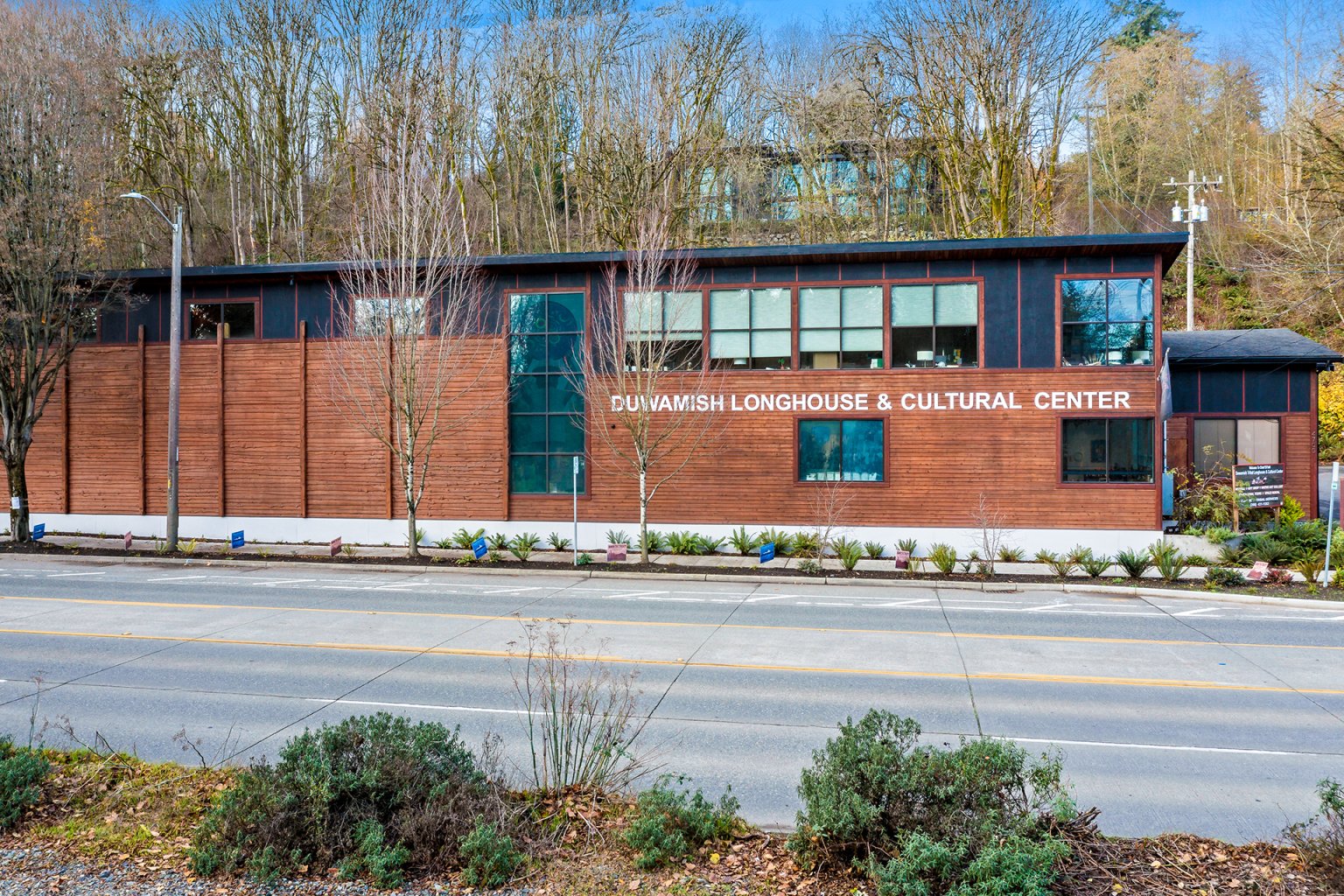
The story did not end in 1856. The Duwamish people still live in Seattle today. In West Seattle stands the Duwamish Longhouse and Cultural Center, which opened in 2009. Visitors can listen to stories, see cedar carvings, and learn about the Lushootseed language. The tribe is still seeking federal recognition from the U.S. government. It was recognized in 2001, but that decision was overturned in 2002.
Another change came in 2014. Seattle’s City Council decided to replace Columbus Day with Indigenous Peoples’ Day. In doing so, the city once again acknowledged that this land had a people who called it home long before the first blockhouses were built.
Why This Matters
Seattle could have had any name, but it was named after a man who wanted peace. It reminds us that every city has deeper roots than we might think, and that history should be heard from more than one perspective. If you ever find yourself