The digest presents three key stories from Vancouver: a tragic collision involving an elderly man in a motorized wheelchair, provincial officials debunking rumours of evicting unhoused people ahead of the 2026 World Cup, and the mysterious death of a woman kayaker whose identity investigators are trying to determine using pollen analysis.
Tragedy in Vancouver: elderly man dies after being struck by car, police consider mental health angle
A dramatic story is unfolding in Vancouver, Canada, one that has shaken the local community and reopened questions about road safety and the role of mental health in such incidents. A 75-year-old man operating a motorized wheelchair was the victim of what police characterize as an intentional vehicle strike. The May 15 incident in the West End initially appeared to be a horrific accident, but as the investigation progressed the picture grew more sinister. CBC, citing police, reports the victim died in hospital on May 24, nine days after the crash. His death escalates the case to a more serious category, and investigators are preparing new charges against 34-year-old Todd Bali, who has already been arrested.
What happened in the early morning was a nightmare for residents of the quiet neighbourhood. At about 5:30 a.m. local time, witnesses say the vehicle driver began driving extremely erratically, deliberately ramming into anything in his path. He did not merely lose control — he attacked city infrastructure, tearing down the fencing of a dog-off-leash area in Nelson Park. Several pedestrians managed to leap aside at the last second to avoid the speeding car. But the elderly man on the scooter could not evade it and suffered critical injuries. Police who arrived on scene were also injured: two officers were hurt, one of them a trainee who was on his second day. The driver did not stop; after ploughing into a police car he overturned his own vehicle, bringing the frantic episode to an end.
According to Vancouver police, the main investigative theories now are mental-health issues and drug impairment. This is a key detail that could explain why someone would commit such irrational and aggressive acts. Under Canadian law, “dangerous operation of a motor vehicle” is a serious charge, but if it can be proven that the driver intended to cause harm to people rather than merely drove recklessly, the charge could be upgraded to attempted murder. That is why police are forwarding evidence to the Crown for consideration of additional charges. This means Bali could face a far more serious sentence than the four counts of dangerous driving he was initially charged with. The case is a painful reminder of how vulnerable people with disabilities are in urban environments and how a calm morning can suddenly turn into a tragedy triggered by a person’s mental-health crisis behind the wheel.
"False and harmful": British Columbia officials deny rumours of removing unhoused people from Vancouver ahead of 2026 World Cup
With the 2026 FIFA World Cup — which will be partially hosted in Vancouver — approaching, worrying rumours spread in the city that provincial authorities were handing out bus tickets and cash to unhoused people to get them to leave the Downtown Eastside (DTES) before tourists arrived. These claims, amplified after a Vancouver Is Awesome article, sparked an outcry among activists and residents. But the British Columbia Ministry of Housing and Municipal Affairs flatly rejected the accusations, calling them “inaccurate and harmful.”
In an official statement cited by Vancouver Is Awesome, a ministry spokesperson emphasized: “Claims that the province is relocating people out of Vancouver ahead of the World Cup are false and undermine our work to support vulnerable people.” Rather than forced removals, the government says it is implementing a large-scale program of reinvestment — the “Downtown Eastside Support Plan” — designed to expand access to integrated housing and social services right in the neighbourhood.
According to government figures, since 2023 about 1,100 housing and social units have been opened or renovated in the DTES, and another 678 units are expected to come online by 2026. For example, at 1015 East Hastings, 25 supportive housing units and 80 shelter beds recently opened, operated by the Vancouver Aboriginal Friendship Society. Overall, BC Housing says the province now funds nearly 1,300 permanent shelter spaces across Vancouver — roughly 400 more than in 2017, when there were about 900. Moreover, temporary shelters that usually close in summer will remain open through summer 2026, covering the duration of the tournament.
Interestingly, the story’s origins lie in a kind of “communication breakdown.” Rumours about bus tickets arose alongside a real document — the Host City Human Rights Action Plan Vancouver published May 26. The plan discussed how the city would manage an influx of visitors while trying to minimize harm to unhoused residents. Some residents interpreted these measures as an attempt to “clean up” the streets of unwanted people, though in practice the document addresses legal measures: the city can request that certain public spaces be cleared, which is not the same as expelling people from the city. The province insists its approach is not to push people out of Vancouver but to create supports within it, which is meant to reduce visible street homelessness by 2026.
The key takeaway is the acute sensitivity of the issue and a low level of trust between authorities and parts of the community. Any public discussion about relocations or temporary clearing of spaces is perceived as a threat. For now, the government is trying to put the debate into numbers: 678 new units by the tournament is not eviction but an attempt to offer alternatives. Still, questions remain about where unhoused people will go during the 48 matches if city facilities are repurposed for FIFA needs.
Mysterious death of woman kayaker: Canadian police seek clues in Seattle and Portland
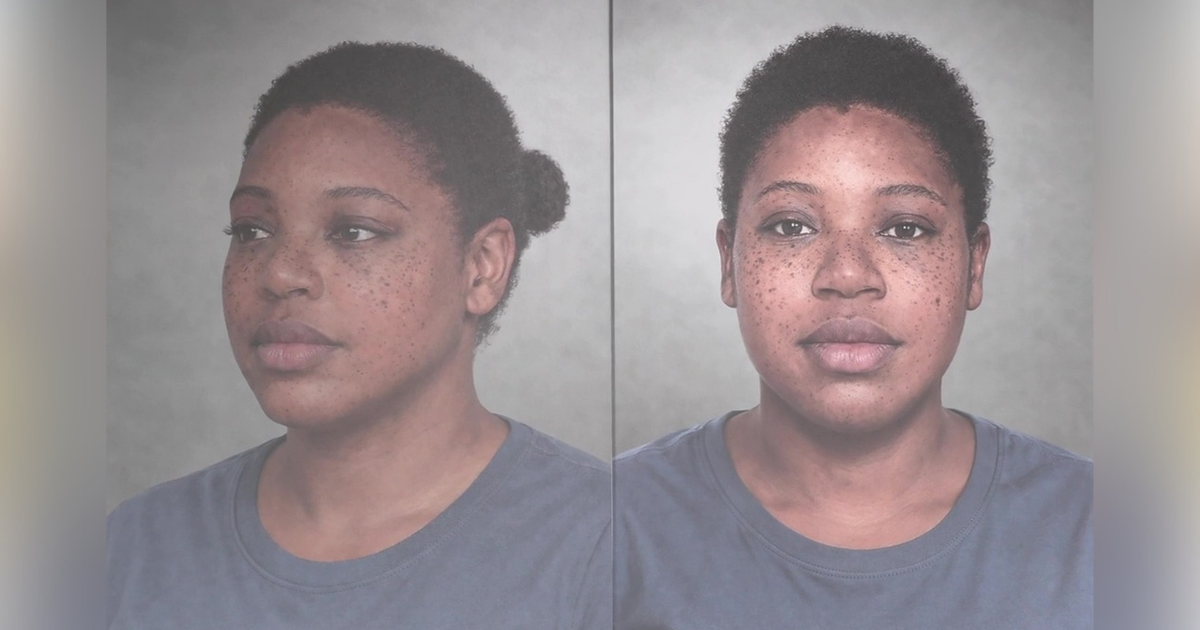
For nearly four years Vancouver investigators have been trying to identify a woman whose body was found in English Bay. This case, full of unexpected twists and scientific investigative methods, has again drawn public attention. The key to the mystery turned out to be... microscopic particles of pollen and fern spores found on her personal belongings. As FOX 13 Seattle reports, analysis of those particles suggested the woman may have been in the Seattle or Portland area shortly before her death. That finding prompted Vancouver police to seek help from residents of the U.S. Pacific Northwest.
The events unfolded on September 29, 2022. At about 9 p.m., a tugboat crew noticed something unusual in the dark waters near Spanish Banks beach. When they came closer, they found an unconscious woman. She was brought aboard and handed to medical personnel, but despite their efforts she died a few hours later. An inflatable kayak was found near the scene, but there were no documents to identify her. Only a backpack, some candy, a sweater and insulin were found with her. The woman appeared to be Black and about 30 years old. An autopsy found that the cause of death was not drowning but severe anaphylactic shock — an acute allergic reaction. That suggests the tragedy was sudden and caused by internal health factors rather than external foul play. Investigators have ruled out criminality.
Why was it important to find where she had come from? Standard identification methods — DNA and fingerprint database checks — produced no matches in either Canada or the U.S. No one reported a missing person matching her description. Investigators then used an unusual method often applied in botany and archaeology. They sent the backpack and sweater for analysis. The testing found unique pollen grains and fern spores on the sweater characteristic of the I-5 interstate corridor that runs through Oregon and Washington, linking Portland and Seattle. That discovery narrowed the search: police now believe the woman spent her final days in that region. She may have been a tourist or a recent resident who then traveled to Canada for a kayaking outing. Vancouver police have released an age-progression image of the deceased and are asking anyone who may have seen her or knows her name to contact the Unsolved Crime Unit at 604-717-0619 or by email at thekayaker@vpd.ca. Even the smallest detail could unlock this mystery and restore a name to the woman who died four years ago.