Vancouver news: journalist Frances Bula is running for office, authorities are closing problematic SRO hotels, and the region was hit by an unexpected snowfall.
Well-known journalist Frances Bula runs for Vancouver city council
An interesting development is brewing in Vancouver politics: one of the most respected and well-informed journalists who has covered municipal affairs for decades has decided to run for a seat on city council herself. After more than thirty years of observation, Frances Bula says it’s time to act from within to try to make things better.
Frances Bula, a longtime reporter on urban planning issues in British Columbia, announced her intention to run for Vancouver city council under the OneCity banner in the municipal election in October 2026. As she said in her statement, journalism has been her service to the community for decades, and now she wants to serve more directly. “I want to get in there and fight for what I think can improve this city that I love,” Bula said. Her decision is largely driven by the current state of municipal politics, which she describes as a crisis of local democracy. She believes that if people like her are not willing to run for public office at a time like this, we should expect only a continuation of chaos.
Bula is widely known for her reporting on the housing crisis, city planning and mayoral politics. Over her career she has covered six Vancouver mayors and more than a dozen municipal parties, earning a reputation as one of the most attentive and informed observers of city government. Her campaign will focus on a number of issues she views as key to Vancouver’s future: increasing housing supply, supporting small businesses and cultural organizations, developing infrastructure for pedestrians and cyclists, and improving public safety and rebuilding “social trust” in neighbourhoods. Housing policy will occupy a central place in her platform. With deep experience covering Vancouver’s housing problems, Bula advocates expanding the diversity of housing options, including community land trusts, tiny home villages, laneway houses, and mid‑rise buildings with retail to meet neighbourhood needs.
OneCity’s mayoral candidate William Azaroff warmly welcomed Bula’s decision to seek the party’s nomination, highlighting her deep knowledge of city hall’s inner workings. “Frances is a powerful force who knows city hall inside and out. It’s amazing to see candidates of this calibre stepping up for OneCity nominations,” he said, joking that the ruling ABC (A Better City) party should wish Ken Sim luck if she wins, because “there isn’t a skeleton in Ken Sim’s closet that she doesn’t know about.” In addition to journalism, Bula teaches the subject at the University of British Columbia and Langara College. In 2023 her career reached a new peak when she received the province’s highest journalism honour — the Bruce Hutchison Lifetime Achievement Award from the Jack Webster Foundation.
As reported by Daily Hive Vancouver, OneCity has already chosen its mayoral candidate, and nominations for city council, park board and school board are scheduled for May 2026. At present twelve people are already competing for council nominations, including a local historian and a nightlife worker, a hospital employee, activists, lawyers and an IT developer, demonstrating a wide range of interests and support for the party. Vancouver city council has only ten seats, so the competition will be intense. The entrance of a media and expert figure like Frances Bula into the political arena signals a possible change in the tone and content of municipal debates. Her deep understanding of the city’s systemic problems, backed by years of close observation, may be a convincing argument to voters that addressing complex issues like affordable housing and public trust requires not just politicians but people with practical knowledge of the pitfalls and mechanisms of power.
Vancouver authorities to close three problematic SROs in the entertainment district
Vancouver authorities announced a landmark agreement with the provincial government of British Columbia that is expected to change the look of the downtown core. The plan calls for the closure of three so‑called SROs — Single Room Occupancy hotels — located in the Granville entertainment district. These properties — the Luugat, St. Helens and Granville Villa hotels — have long been sources of public safety concerns. Mayor Ken Sim said in a joint statement with Minister of Housing and Municipal Affairs Christine Boyle that the agreement is intended to achieve two goals: improve the living conditions of residents and restore vitality to a key tourist area ahead of an important event.
Under the plan, the province will work to relocate residents of the Luugat hotel by June, while the city will provide land for new development. It is expected that roughly 280 self‑contained units will be built outside the entertainment district to replace the three aging SROs. The statement emphasized that the work will be carried out with respect for the dignity of current tenants, in accordance with the Residential Tenancy Act and with safety concerns in mind. Mayor Sim sees this as an opportunity for SRO residents to move into higher‑quality housing with necessary supports, which is particularly important for people with complex mental health and substance‑use needs.
The decision also has an important economic context. As CityNews Vancouver notes, Vancouver is preparing to host seven matches of the FIFA World Cup, and from June the city expects tens of thousands of additional visitors. The Downtown Vancouver Business Improvement Association called the closure of these three SROs ahead of the influx of guests one of its members’ top priorities. Vancouver Hotel Association representative Laura Bellans called the deal “incredibly good news,” expressing hope that it will be the start of restoring confidence in safety on Granville Street. She said the concentration of residents with complex needs in that area had been “a recipe for disaster” for nearly six years, and moving people into more appropriate housing should reduce chaos and disorder on the streets, bringing back not only tourists but local patrons. In a social media post, Mayor Ken Sim described the agreement as “real progress” for local businesses and workers, indicating the authorities’ desire to balance social obligations with the need to maintain the city’s tourism and business appeal.
Unexpected snowfall hits southwestern British Columbia
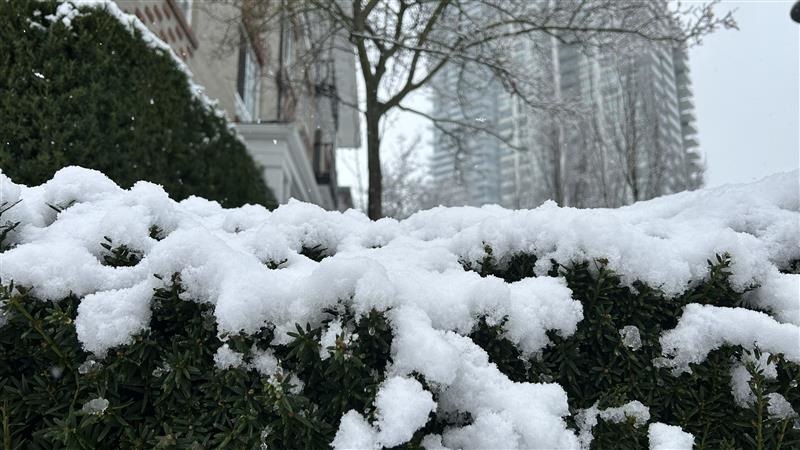
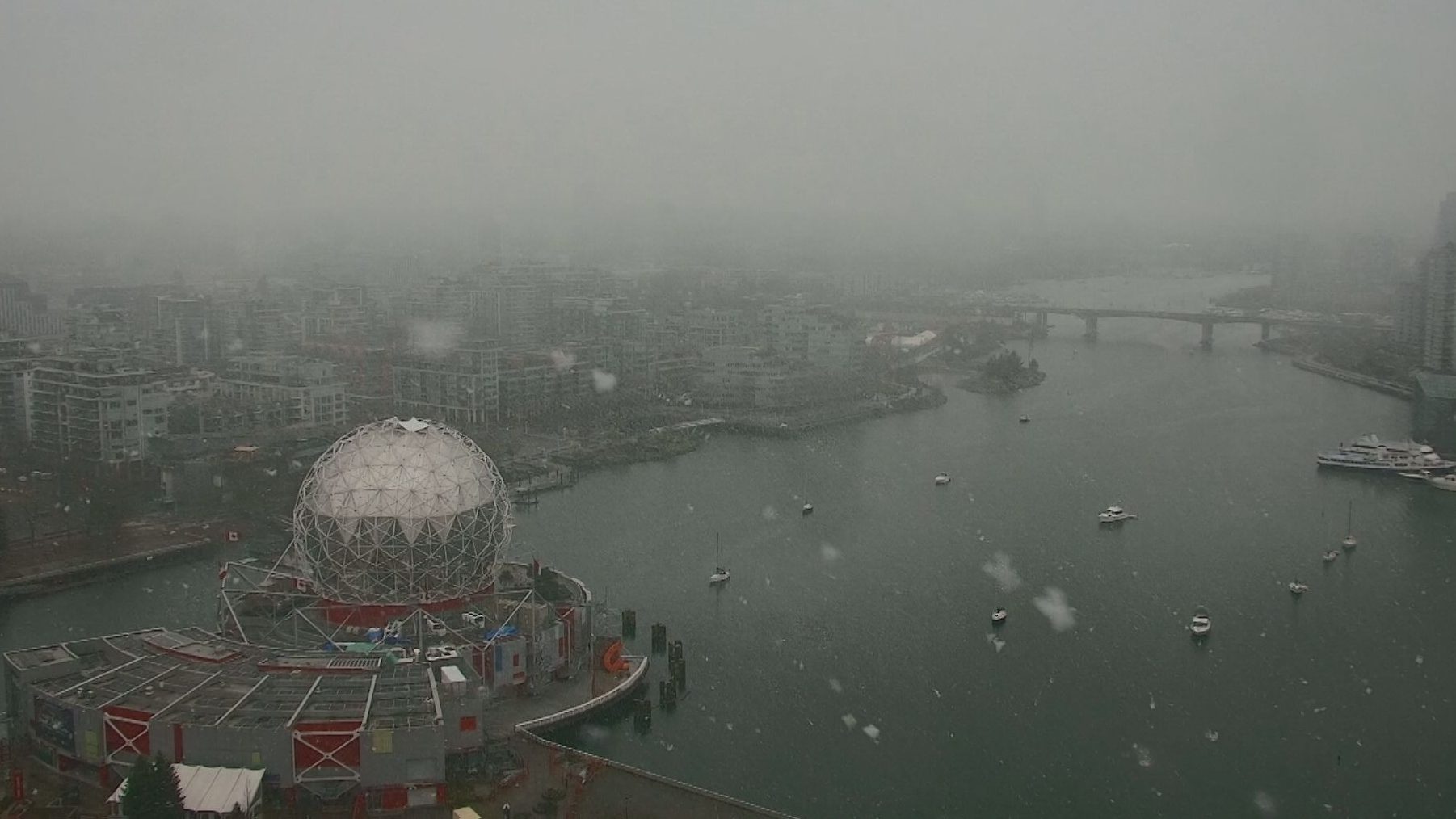
Residents of southwestern British Columbia, from Metro Vancouver to Vancouver Island, were reminded of winter in early March 2026. Forecasts from meteorologists came true as the region, known for its normally mild climate, was gripped by a snowstorm.
According to a special severe weather bulletin published on CityNews Vancouver, Environment Canada expanded a snowfall warning for low elevations. An unusually cold and unstable air mass brought snow even to coastal areas at sea level. In densely populated zones such as Metro Vancouver, the Fraser Valley, the Sunshine Coast and Howe Sound, up to four centimetres of snow were expected. More significant impacts were forecast for inland areas of northern Vancouver Island, where more than 10 centimetres could fall. As often happens, the mountains and highways received the most snow. On the Sea to Sky Highway, which connects Squamish and Whistler, up to 15 centimetres could accumulate by the end of Tuesday. Meteorologists paid special attention to the Coquihalla Highway, which had already experienced congestion and crashes due to weekend bad weather. That key transportation corridor was under a full snowfall warning with forecasts up to 30 centimetres, creating very challenging driving conditions. Environment Canada explicitly advised motorists to prepare for difficult travel. For context, such snow events in coastal southwest B.C. in March are unusual, since spring thaw typically begins by then. The Coquihalla and Sea to Sky highways are vital arteries linking Vancouver to the province’s interior and ski resorts, so disruptions there have serious economic and social consequences. The main takeaway is how rapidly changing weather can disrupt everyday life even in regions perceived as prepared for the elements. Authorities and media, including CityNews Vancouver, responded quickly, urging the public to monitor updates via radio, social media and alerts. This incident is a reminder of the importance of heeding official forecasts and of adapting infrastructure to increasingly frequent weather anomalies.