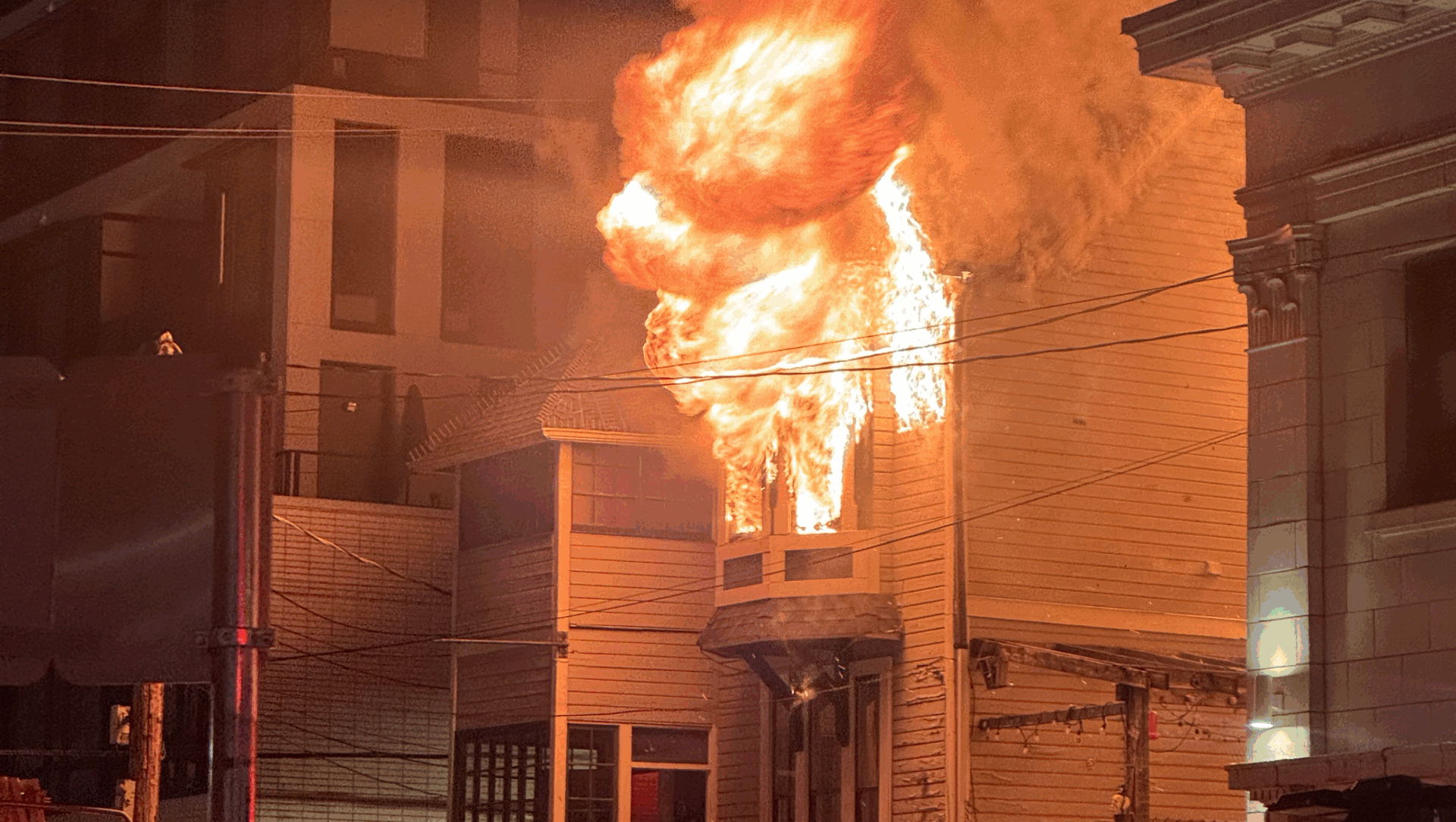
In Vancouver a fire above a restaurant left six people homeless, rent prices fell for the first time in a long while, and a fare check on the metro led to the arrest of an armed man.
Fire above Vancouver restaurant leaves six people homeless
An incident in Vancouver has prompted locals to once again consider the safety of older buildings. Six people were left without housing after a fire broke out Wednesday evening in a residence located above a restaurant in the Mount Pleasant neighbourhood. Despite the quick work of firefighters and no reported injuries, the event will likely spell the end for the historic building and the business that had recently opened there.
According to Vancouver CityNews, the call to emergency services came in at about 8:15 p.m. Assistant Fire Chief Arnie Grunewegen said the fire originated in a bedroom on the third floor of the building on 8th Avenue near Main Street. Firefighters arriving on scene observed flames coming out of a window. Extinguishing the blaze was complicated by the building’s layout: the structure was divided into several apartments, which made accessing the upper floor difficult. Nevertheless, the fire was brought under control quickly. Fortunately, all residents of the building, as well as staff and patrons of the Italian restaurant Osteria Otto on the ground floor, were able to evacuate safely.
Restaurant owner Ignacio Arrieta, who had only opened his business in December, expressed relief that no one was hurt. However, his optimism is overshadowed by the extent of the damage. In an interview he bitterly stated, “Now we just have a flooded restaurant. I think it’s over.” His words reflect a harsh reality: the water used to put out the fire, combined with smoke damage, caused irreparable harm to both the living spaces and the commercial area below. Firefighters’ preliminary theory points to a possible electric blanket causing the blaze. The investigation is ongoing, and no official determination has been made. The incident raises important questions about fire safety in older multi-unit buildings, especially where commercial and residential uses coexist under one roof. For the six displaced residents (translation: people forced to leave their homes) and for Arrieta, the fire was not just an unfortunate event but a collapse of their everyday lives and business.
Vancouver rent prices: first year-over-year drop after long rise
After many years of sharp increases, asking rents across Metro Vancouver—one of Canada’s most expensive housing markets—have finally shown a noticeable decline. According to recent data reported by CTV News, asking rents in the region have fallen over the past year. This change could mark a turning point for renters who have long struggled with housing affordability.
Data analysis shows the decline affected various housing types and neighbourhoods. While the article does not list exact figures in its headline, such reports typically rely on listing analyses and data from real-estate firms tracking average asking rents. It’s important to note that “Metro Vancouver” includes not only the city itself but also numerous suburbs such as Burnaby, Richmond and Surrey, where price dynamics can vary. The drop is likely the result of a combination of factors, including increased housing supply from completed new apartment buildings, shifts in migration flows, and overall economic pressure reducing renters’ purchasing power. This trend contrasts with the years when demand far outpaced supply, driven by a strong economy, an influx of new residents and limited opportunities for new construction.
The key takeaway is that the decline could bring much-needed relief for renters. However, experts commenting on such trends often warn it may be a temporary correction rather than the start of a long-term downturn. The market could be affected by further changes in Bank of Canada interest rates, government housing policies and demographic shifts. For prospective tenants, this may be an opportunity to find better deals, while for investors and landlords it signals possible reductions in returns. Final judgments about a long-term trend will require watching data over the coming quarters, but the current decline has certainly changed the mood in one of the country’s tightest housing markets.
Armed arrest at SkyTrain station: how a fare check led to the arrest of an armed man
A routine fare inspection on public transit unexpectedly resulted in a serious arrest in Vancouver’s metro system. What appeared to be a standard Transit Police operation to ensure fare payment uncovered a far more dangerous situation: a passenger was found to be armed.
According to Metro Vancouver Transit Police, the incident occurred Monday at about 10 a.m. at the SkyTrain Gateway station in Surrey, British Columbia. Officers were conducting a planned fare inspection when they noticed a 55-year-old man who had tailgated through a fare gate without paying, following another passenger. That seemingly minor infraction set off a chain of events. Subsequent interaction with police, the details of which were not disclosed in the press release, revealed the man had several outstanding arrest warrants. Most troublingly, officers found a loaded handgun and ammunition in his possession.
The man was immediately arrested and charged with possession of a loaded or restricted firearm — a serious offence under Canadian law. According to a report published by Vancouver Is Awesome, the accused remains in custody awaiting his next court appearance. The case highlights how everyday work by transit police can intersect with efforts to fight more serious crime. A fare check, often viewed as a formality, in this instance proved an effective prevention tool, removing a dangerous weapon from public space and apprehending a person already wanted by the justice system. The incident also raises questions about safety on public transit and the hidden threats law enforcement confronts. It remains unknown what the man’s intentions were and what might have happened had he not been stopped during a routine check.