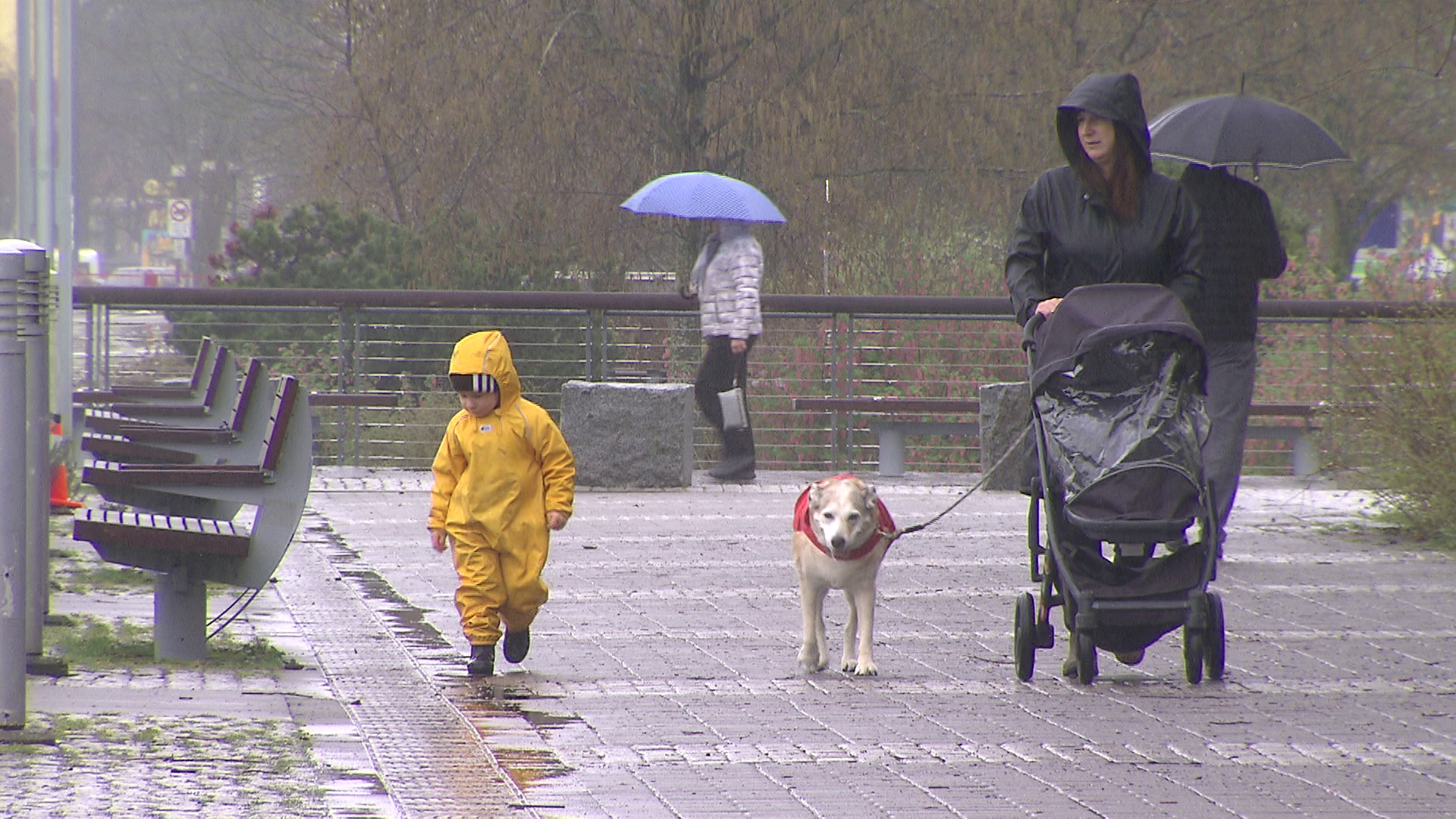
Spring 2026 in Vancouver is packed with happenings: from festivals and preparations for the 2026 FIFA World Cup to a serious kidnapping incident. At the same time, British Columbia is being hit by a prolonged atmospheric river bringing torrential rain, flood and landslide risks.
Spring in Vancouver: festivals, football and LEGO space
Spring 2026 in Vancouver promises to be incredibly busy. The city is preparing a slew of events to satisfy a wide range of tastes — from cherry-blossom lovers and car enthusiasts to soccer fans and science buffs. Local outlet Daily Hive Vancouver compiled an extensive guide to more than 40 events, and several are truly grand.
One of the season’s most anticipated events is the Vancouver Cherry Blossom Festival, running March 27 to April 12. It’s one of the city’s most beloved annual events, with a program that includes art workshops, “Blossoms After Dark” evening events at David Lam Park, a “Blossom Block Party” at Bentall Centre, and the “Sakura Days” Japanese cultural festival at VanDusen Botanical Garden. The festival turns the city into a picturesque canvas of pink and white blooms, drawing both locals and tourists.
But the main driver of summer 2026’s happenings will undoubtedly be the FIFA World Cup 2026, with Vancouver hosting some matches. In the lead-up to the tournament, the city will begin immersing itself in football culture as early as spring. From May 15 to September 7, Science World will host the official FIFA exhibition from the FIFA Museum in Zurich. The exhibit, divided into five interactive zones (Broadcasting & Media, Smart Data, Refereeing & Fair Play, Game Organization, and Innovation Lab), will let visitors learn how modern technologies are changing the way football is experienced and organized. For those craving not just intellectual but also musical accompaniment, the PNE Fairgrounds will host the FIFA Fan Festival. The festival will feature a series of concerts in the amphitheatre, including two headline shows with legendary Mötley Crüe and the electronic duo Kx5 (Kaskade and Deadmau5). As noted in the Daily Hive piece, the PNE will become a “hub of the FIFA World Cup” with family-friendly entertainment.
The world of technology won’t be left out either. From March 25 to 29 the Vancouver International Auto Show will take place at the Vancouver Convention Centre. On 300,000 square feet more than 30 manufacturers will be represented, including BMW, Audi, Mercedes and Honda. Attendees can expect not only the latest models but also a journey through more than a century of automotive history. And for those whose interests lie in space and creativity, Science World is offering “Artemis: A Space Adventure with LEGO Bricks.” Running through April 6, the exhibition lets visitors build solutions to space challenges with LEGO, admire huge sculptures and take part in workshops.
Thus, spring and summer 2026 in Vancouver look set to be a time of major city celebrations and international events. From blooming parks to the roar of engines and football anthems, the city is ready to offer residents and visitors a rich palette of experiences that go well beyond typical seasonal activities.
Two men charged with kidnapping after home invasion in Vancouver
Vancouver Police reported a serious incident that took place this week in the city’s east side, resulting in two men being arrested and facing charges. Events unfolded quickly and ended with a chase and the suspects’ apprehension.
According to an official police statement published Friday, 26-year-old Fazil Salman and 24-year-old Reynings Besong Avah are charged with kidnapping. The incident occurred Wednesday evening at around 9:15 p.m. PT. Police received an emergency call reporting a home invasion and a subsequent abduction. While the exact address has not been released, police say a 62-year-old man was forcibly removed from his residence and placed into a vehicle. About 30 minutes after the call, officers spotted a suspicious vehicle near the intersection of Slocan and East Broadway. The driver failed to stop when ordered, prompting a pursuit. The chase ended near 14th Avenue and Woodland Drive, where officers boxed in the suspects’ vehicle — surrounding it with police cars to prevent maneuvering. Despite attempts to flee on foot, both men were arrested with the assistance of a police dog. They remain in custody. The 62-year-old victim was taken to hospital with injuries. Details about his condition and the motive are not yet disclosed. This incident, detailed in a CBC article, raises renewed concerns about safety in urban areas and police response. Quick action and coordination among units, including the K9 unit, allowed officers to both apprehend the suspects and free the victim in a relatively short time.
An unusual river in the sky: prolonged atmospheric river pounds British Columbia
Meteorologists warn that the current weather crisis in British Columbia is more than heavy rain. It involves an unusual and prolonged atmospheric river whose effects will be felt long after the skies clear. As reported by CityNews Vancouver, this phenomenon stands out both for its duration and its untimely timing for March.
Brian Proctor, a meteorologist with Environment Canada, explains that while March storms are common, rains this prolonged and intense are anomalous. The moisture source was a region of the Pacific near Hawaii. An atmospheric river is a narrow, elongated plume of very moist air that, like a fire hose, can deliver huge amounts of moisture to particular stretches of coast. What’s unusual about the current situation is that this “hose” has not shut off for several days. The cause is a powerful, stationary anticyclone (area of high pressure) parked off the coast of California. This atmospheric block not only brought anomalous heat to the southern U.S. states but also steered the moisture straight toward the shores of British Columbia, allowing it to “slide” along the northern edge of this persistent ridge.
Although the system feeding the atmospheric river will weaken by Friday morning, that will be only the start of new problems. Bringing the province back to normal will require a prolonged dry period. Proctor says watersheds will need days to cope with such rainfall because they are already near capacity. Residents should expect more seasonal, mild temperatures but also gusty southwest winds. Those winds could topple many trees whose roots have already been undermined by water. The most vulnerable areas for wind damage include parts of Vancouver Island, the city of Vancouver itself, the Fraser Valley, and then the province’s interior regions.
Even more serious threats are landslides and debris flows, especially in areas already familiar with such disasters. Soil saturated by days of continuous rain is already losing stability. A striking example occurred in Coquitlam, where a landslide severed power lines and left about 5,000 people without electricity. Concern is growing among residents of the Central Coast Regional District, where authorities expanded a state of emergency and issued new evacuation orders because of the risk of ground failure, even though no one currently lives in the most immediately threatened areas—this is a precautionary measure.
Paradoxically, the atmospheric river has also brought out-of-season warmth. Interior areas of the province recorded century-old temperature records being broken. For example, in Kamloops the thermometer rose to 21.8°C, surpassing a record from 1910. Similar anomalies were recorded in Quesnel and Salmon Arm. But this warmth has troubling consequences. It sharply raised freezing levels in the mountains, causing rapid snowmelt on Vancouver Island and in the coastal ranges. That, in turn, creates two major problems: depletion of snowpack reserves that are critically important for agriculture, industry and household needs in spring and summer, and an increased risk of avalanches in the Rockies.
Thus, the province faces a complex crisis: ongoing torrential rain, flood and landslide threats, the danger from strong winds, and longer-term consequences such as reduced snowpack and potential water shortages. As experts emphasize, the impacts of this unusual atmospheric event will be felt for many days after the rain finally ends.