Vancouver residents elected Green candidate Pete Fry as mayor in the 2026 municipal election. He defeated incumbent Mayor Ken Sim by approximately 23,000 votes. The Green Party and COPE dominated all elected bodies—the city council, park board, and school board—while ABC Vancouver won just one council seat. Voters also approved three borrowing plebiscites authorizing $790 million for the 2027–2030 capital plan. Turnout rose to more than 43%, up from 36% in 2022. Official results will be announced on October 21, and the inauguration is scheduled for November 2.
Vancouver Chooses a Green Course: Fry Wins, Progressives Take Council, Voters Approve $790 Million in Loans
Vancouver residents elected a mayor, 10 city councillors, seven park commissioners, and nine school trustees in the 2026 municipal election, while also answering three borrowing questions. In short, the city took a noticeable step to the left: Green candidate Pete Fry won the mayoral race, while progressive forces—the Greens, COPE, and OneCity—dominated the city council, park board, and school board. The only notable exception was ABC Vancouver, which elected just one councillor. The chief election officer is expected to announce the official results, including the plebiscite results, by 4 p.m. on Wednesday, October 21. All figures cited here are therefore preliminary, as emphasized by the results page on the city’s website.
The most striking result was the mayoral race: Green candidate Pete Fry received 98,494 votes. Notably, he is the only mayoral candidate listed in the published results, which looks unusual for a genuine multiparty contest, but that is how the preliminary data currently appear. Ten people were elected to council, and the results are revealing. COPE’s Sean Orr received 83,038 votes—more than any other council candidate and nearly as many as Fry—followed by Green candidate Annette Riley (78,476), Chloe Leslie (COPE, 67,791), Devyani Singh (COPE, 65,473), Stephanie Smith (Greens, 64,070), Lucy Maloney (OneCity, 63,143), Camille Dumont (Greens, 62,540), Solomon Yee-Kieran (COPE, 60,361), Mike Klassen (ABC Vancouver, 57,798), and Bridgette Burns (Greens, 57,788). The gap between the last elected candidate and the first unsuccessful candidate is not provided, but the close results at the bottom of the top 10 indicate that the race for the final seats was tight, while COPE and the Greens maintained a solid dominance.
Progressives strengthened their position even more on the school board. COPE won four of the nine seats, led by Susie Ma (83,416 votes), while the remaining seats went to OneCity and the Greens. On the park board, the Greens and COPE divided all seven seats. Tom Digby (Greens, 78,751) topped the list, followed by Spencer van Vloten (Greens, 65,005), T’uy’t’tanat Keyes Wires (COPE, 64,192), Tamiko Suzuki (COPE, 63,105), Brianna Smart (Greens, 62,420), Jamie Han (COPE, 61,093), and Sasya Burton (COPE, 59,480). In other words, ABC Vancouver—which had been the leading force in municipal politics in previous years—retained only one council seat and won no representation on the park or school boards. This marks a major shift in the balance of power.
The three borrowing questions for the capital plan were a separate storyline. The city asked voters to authorize $790 million in borrowing to fund a four-year capital plan for 2027–2030, worth $3.5 billion in total and focused on maintaining, renewing, and modernizing infrastructure and public facilities. All three questions received decisive support. Transportation and street infrastructure ($292 million) passed 147,171 to 41,572; public and essential civic infrastructure ($438 million) passed 149,938 to 38,802; and parks and open public spaces ($60 million) passed 152,587 to 36,489. This gives council the authority to borrow funds for the relevant projects during the specified period.
Turnout also increased. Preliminary figures show 209,214 ballots cast, representing more than 43%, compared with 36% in 2022. A rise of nearly seven percentage points in a municipal election signals heightened public interest, although some of the increase may be attributable to the borrowing plebiscites themselves, which traditionally mobilize voters. The inauguration of the city council, park board, and school board is scheduled for November 2, 2026.
Several points help put the results in context. Vancouver’s municipal elections are not conducted through closed party lists in the conventional sense. Voters select individual candidates, so party affiliation matters as a label, but votes are distributed personally—hence the differences among candidates from the same party. COPE, the Coalition of Progressive Electors, and OneCity are left-wing and progressive municipal movements. The Greens have traditionally focused on environmental issues and public transit. ABC Vancouver is a centrist force associated with the previous city administration. A borrowing plebiscite is a mechanism requiring the city to ask voters for permission to take on long-term debt; without a majority “yes” vote, council could not finance the relevant capital-plan items. A capital plan is a four-year infrastructure spending program rather than an operating budget, covering roads, bridges, water systems, parks, and similar assets.
The key takeaway is that Vancouver did not simply change its mayor; it reshaped the balance of power in its representative institutions. Fry’s victory and the dominance of COPE and the Greens give city hall a mandate for more socially and environmentally oriented policies, while approval of $790 million in borrowing provides that agenda with financial backing. At the same time, ABC Vancouver’s decline raises questions about how cohesive the opposition will be and how quickly the new council can deliver its capital projects. Turnout of more than 43% further strengthens the result’s legitimacy. The city now awaits official confirmation on October 21, when the figures will become final.
Pete Fry Defeats Ken Sim and Becomes Vancouver’s Mayor
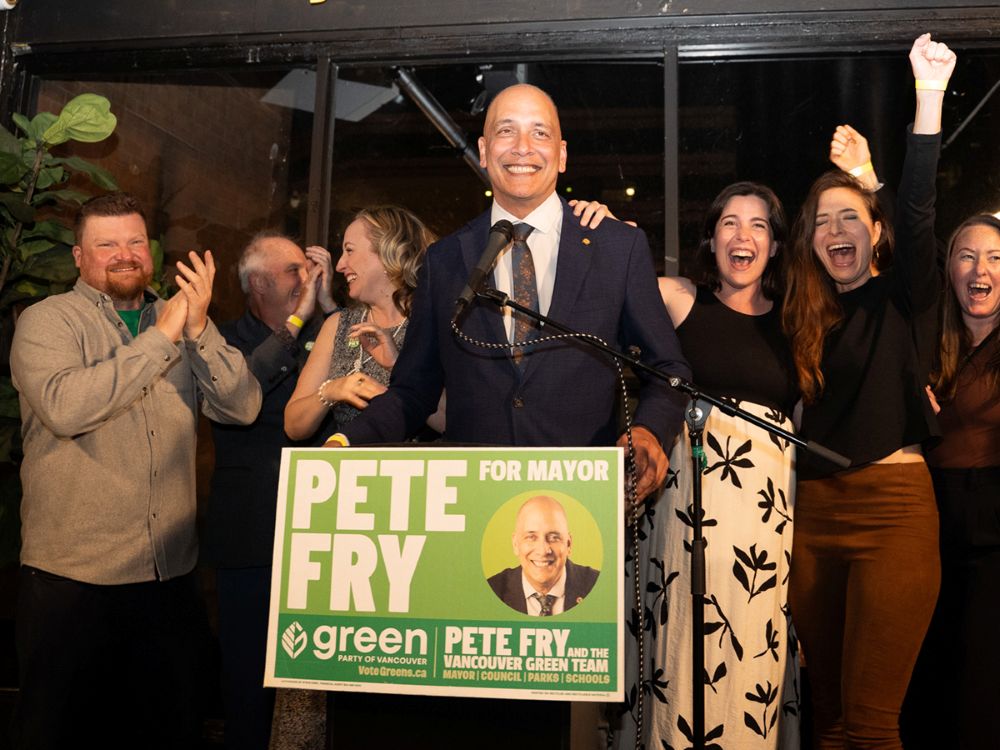
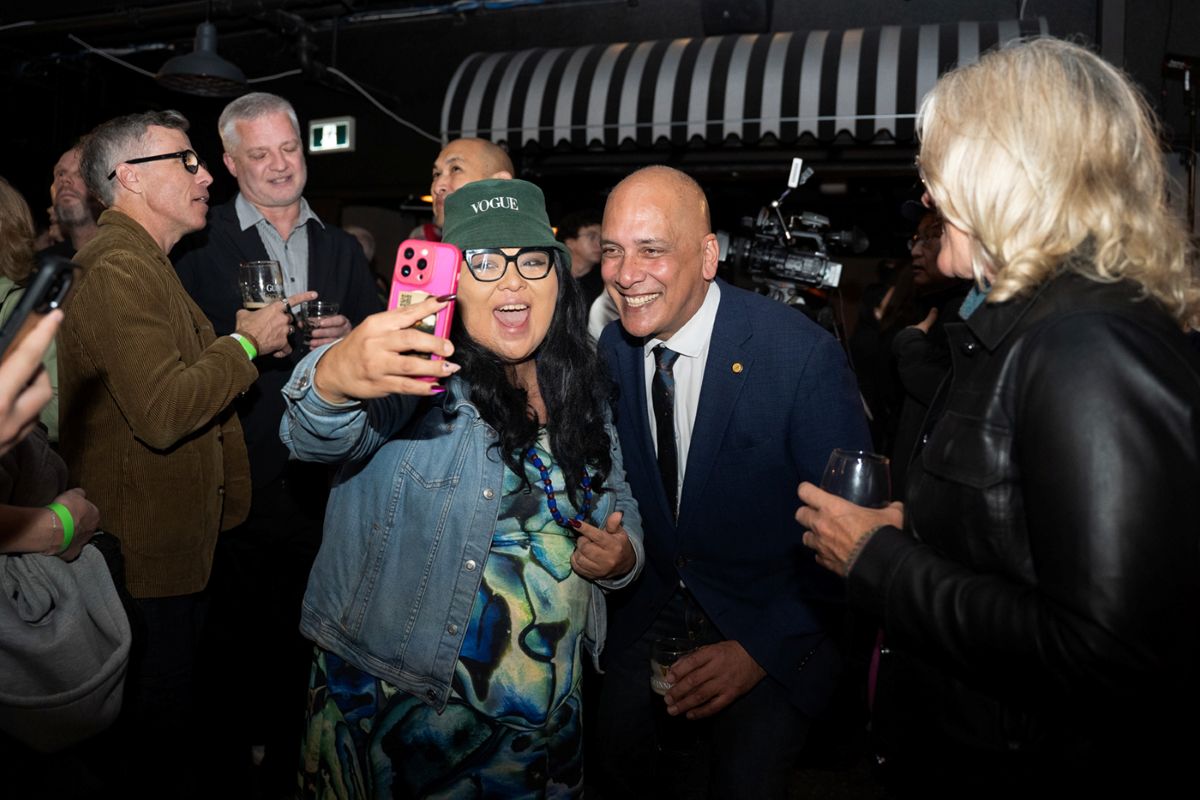
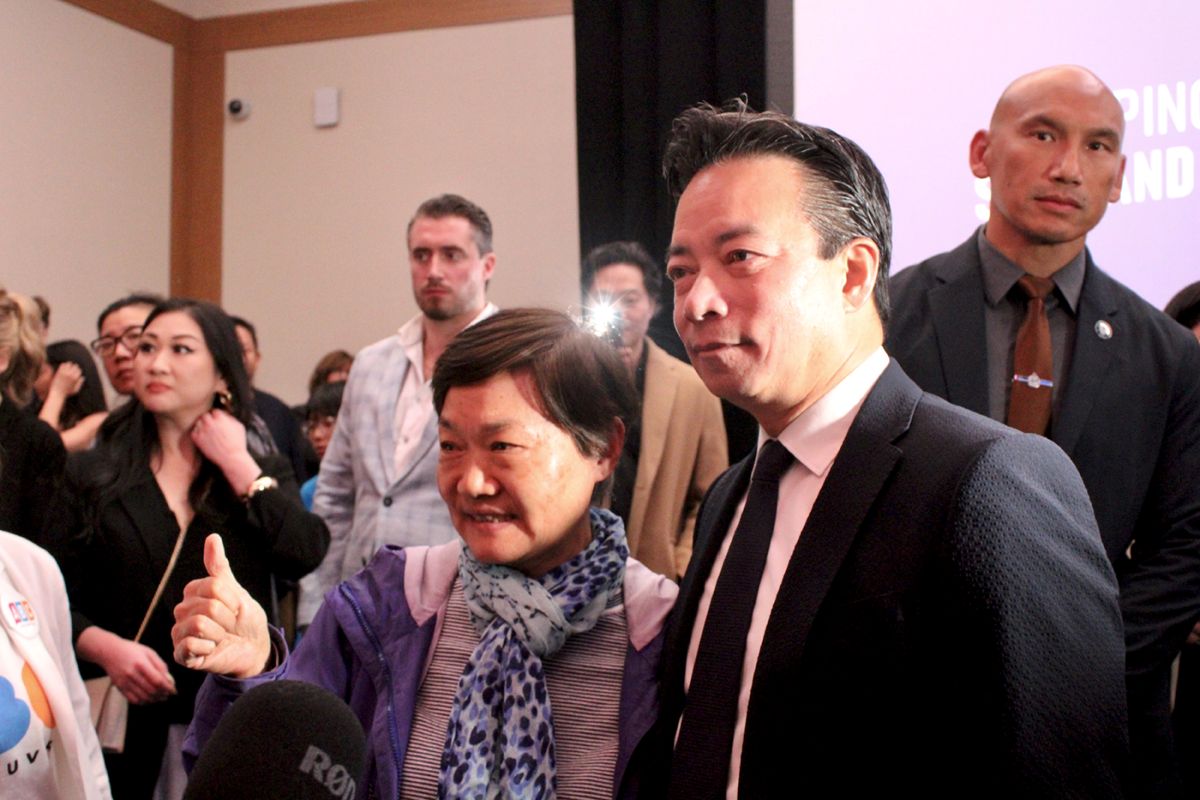
Pete Fry, a city councillor who had served two terms and emerged as the leading challenger to incumbent Mayor Ken Sim, won Saturday’s Vancouver municipal election. According to a CityNews Vancouver report, Fry did more than win: he led a triumph for his party, the Vancouver Greens, which is on track to win seats in nearly every elected body in the city. With 80% of ballots counted, Fry was already ahead of Sim by approximately 23,000 votes, and the margin continued to grow as counting progressed. The result was so decisive that Sim called his rival and conceded defeat before the official results were announced.
The election results went against the previous administration across the board. TEAM’s Colleen Hardwick finished third, Karim Allam of the Vancouver Liberals was fourth, and Rebecca Bligh of Vote Vancouver rounded out the top five. But the main story was not simply Fry’s personal victory; it was the collapse of ABC Vancouver, Sim’s party. According to preliminary results, it elected just one candidate to council, Mike Klassen, and won no seats on the park board. “Clearly, voters wanted to go in a different direction tonight,” Sim acknowledged in his farewell speech. “Not only at the mayor’s office, but also on council, the park board, and the school board. I think it’s important to recognize that.”
Fry took the stage to chants of “Fry, Fry!” and promised in his victory speech not to betray the public’s trust. “Thank you for putting your trust in me and my team. We will not let you down,” he said. “We love this city very much, and we’re here to work for it and fight for it. Yes, we have problems—but what city doesn’t? It’s about how we face those problems and how we solve them together.” Sim, meanwhile, said he would take comfort in the fact that serving as mayor had been “the best job of his life.” “When I’m on my deathbed, I’ll look back on this time and realize that this was probably the most meaningful thing I’ve ever been part of.”
The Greens are on track to elect their entire slate—a rare result in Canadian municipal politics, where parties usually win only a portion of the available seats. Annette Riley, Stephanie Smith, and, according to projections, Camille Dumont are headed to council, while Bridgette Burns is in a close battle for the 10th and final seat. All three of the party’s park-board candidates—Tom Digby, Spencer van Vloten, and Brianna Smart—are also leading. In addition to the Greens, council seats are going to Sean Orr, Chloe Leslie, Devyani Singh, and Solomon Yee-Kieran of COPE, as well as Lucy Maloney of OneCity. Fry himself cautiously noted that results were still coming in and that “there is a lot to process.”
A key factor in the victory was the unification of the progressive camp. COPE’s Stephanie Allen first withdrew from the mayoral race, followed by OneCity’s William Azaroff. Both decisions were made to avoid splitting the vote and to field a single candidate against Sim. Fry, described as the incumbent mayor’s “natural antidote,” presented himself as Sim’s “only consistent opposition” throughout his four years in office. This allowed him to become a rallying point for voters weary of the previous administration.
Fry and the Greens’ platform is built around affordable housing and transportation, sustainable development and green construction, and neighbourhood safety. On crime—one of the campaign’s central issues—the party has promised to create an outreach team to respond to non-emergency calls involving unhoused people and those struggling with addictions, while funding crisis-intervention and de-escalation programs. The Greens also plan to establish “safe and appropriate spaces” where unhoused people can gather and receive support and medical care, including supervised drug use. “The important thing is to find a better place for them and say, ‘You know, you can’t do this in the doorway of someone’s business, but you can go over there, where there’s a more appropriate space for it,’” Fry explained in an interview with CityNews. He also called a non-binding plebiscite on whether to tighten the city’s sanitation bylaw and ban public use of hard drugs—including fentanyl, methamphetamine, and heroin—a “very bad idea.”
Other promises include using city-owned land for affordable housing, completing the core cycling network, renovating the Vancouver Aquatic Centre, and introducing ranked-choice voting in mayoral elections instead of the first-past-the-post system. The last proposal is particularly significant: the fragmentation of the progressive electorate nearly cost it the victory, and electoral reform is intended to preserve the lesson of this election.
Fry’s path to the mayor’s office was a long one. He came to Canada from Ireland as a child and worked as a graphic designer and communications consultant before entering politics. He lost the 2014 municipal election and, in 2016, lost a by-election to the provincial legislature in the Vancouver–Mount Pleasant riding as a candidate for the BC Green Party. He was then elected to city council for the first time in 2018, finishing second in the vote, and narrowly won re-election to a second term in 2022. Now, his experience as an opposition figure who voted against Sim administration decisions for years has become his greatest political asset.
For readers unfamiliar with the Canadian municipal context, several points are worth explaining. Vancouver is one of the few major Canadian cities with fully developed municipal parties, although they formally differ from federal and provincial parties. The city council consists of a mayor and 10 councillors elected at the same time, so a party “sweep”—electing several candidates at once—gives it control over the legislative agenda. The park board and school board are elected separately, which explains how the Greens could prevail at all three levels. Finally, a ranked ballot is a system in which voters rank candidates, with votes for eliminated candidates transferred to the next preference. It helps prevent a candidate from winning with a minority of the vote when opposition support is divided.
The main conclusion from this election is straightforward: Vancouver voted less for the Greens than against four years of Sim’s administration, and the unification of progressive forces turned that discontent into a mandate for a comprehensive change of direction. A 23,000-vote margin and potential control of all elected bodies give Fry a rare opportunity for a Canadian city mayor to implement his agenda without having to contend with an internal council opposition—but responsibility for that agenda now rests entirely with him. With the housing crisis and public drug use remaining the city’s most urgent problems, and the proposed “safe spaces” for drug users already generating controversy, the new mayor must prove that his status as Sim’s “natural alternative” is more than a slogan and can become a functioning model of governance.
Vancouver Changes Course: How the Green Wave and COPE Ended the Ken Sim Era
Vancouver’s 2026 mayoral election became a political earthquake that had seemed unlikely until the very end. Green Party candidate Pete Fry decisively defeated incumbent Mayor Ken Sim of ABC, bringing his administration to an end and completely reshaping city council. What had looked just months earlier like a change of scenery turned into a change of political era: for the first time in the city’s history, a Green representative became mayor, while a council once dominated by a single party now consists of four political forces with a clear left-leaning orientation. Sim conceded quickly and graciously, calling the voters’ decision a form of democracy that must be respected and promising to support his successor.
The voting results were far more radical than simply replacing one mayor with another. All four Green candidates—Annette Riley, Camille Dumont, Stephanie Smith, and Bridgette Burns—won council seats. COPE elected all 12 of its candidates, with Sean Orr leading the councillor race by several thousand votes. OneCity retained its sole seat through Lucy Maloney’s re-election, while ABC was left with a modest consolation: Mike Klassen became the only ABC councillor to be re-elected. Taken together with the park-board and school-board results, the picture looks like a complete reset of city government, with ABC’s former “comfortable majoritarianism” replaced by a fragile but promising balance of power.
Fry’s victory is not only about the arithmetic of seats; it also represents a change in governing philosophy. He explains the Greens’ success by saying that they have always been a party of values rather than a rigid party program: respect for the land, participatory democracy, cooperation, nonviolence, and basic human kindness. In that sense, his comments about the “heavy role” of being the first Green mayor sound less like a complaint than an acknowledgment of the weight of expectations. It is telling that Fry, who also served on council under Kennedy Stewart, remembers those years as a period when the pandemic created obstacles but council still achieved results—for example, opening meetings to video and audio participation, which changed the practice of city politics itself. His argument that mayors and councillors across British Columbia work perfectly well without a party system is directed squarely at the new landscape, in which no one holds a majority.
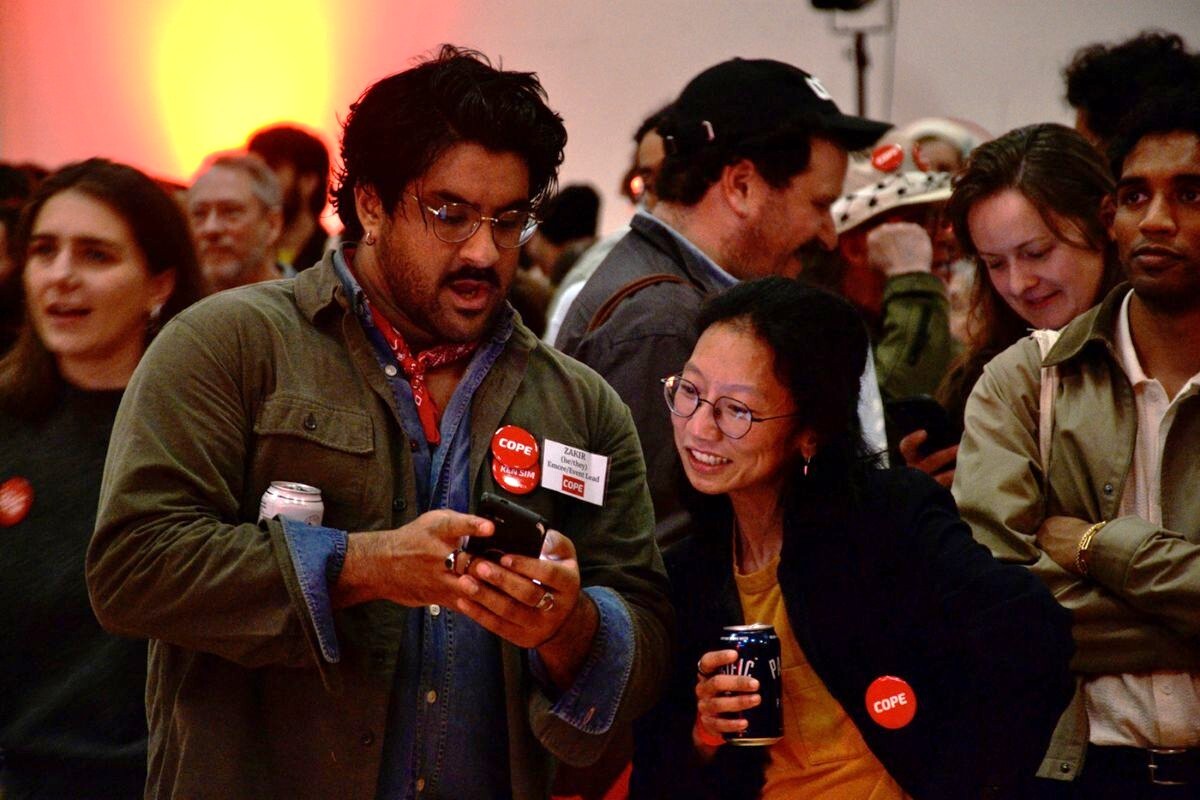
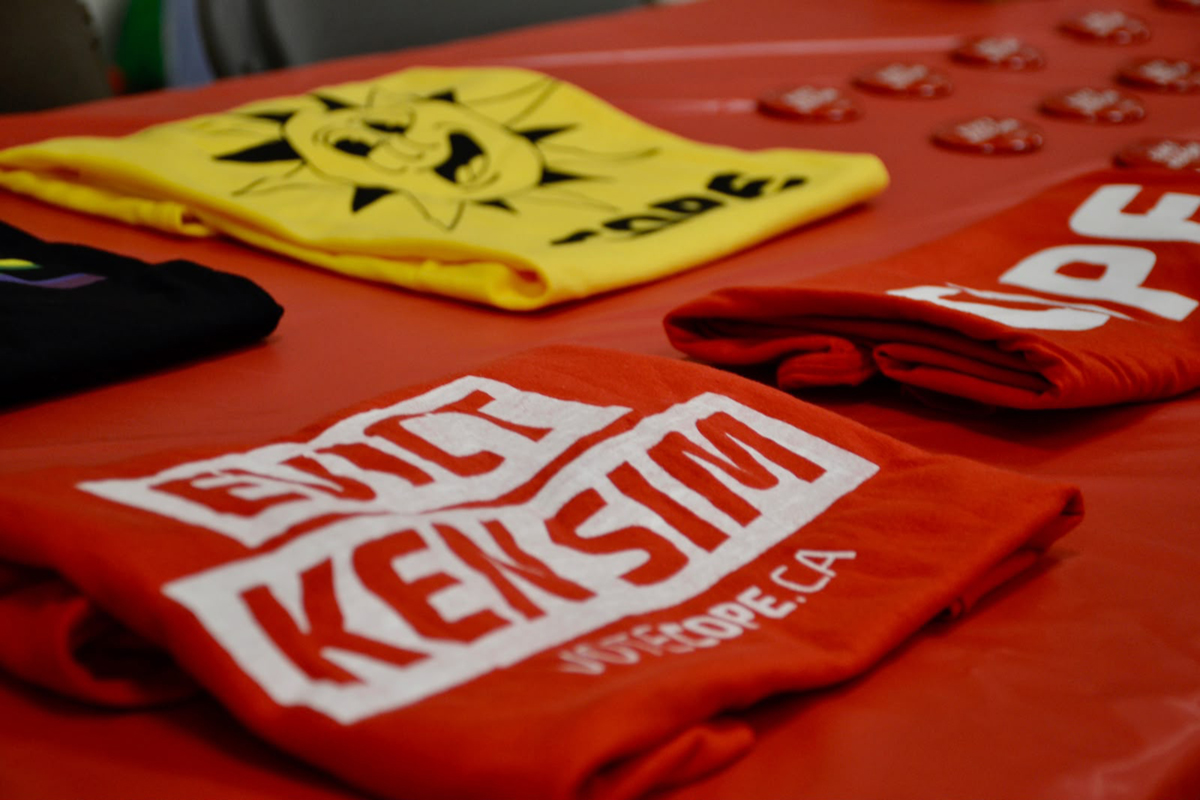
COPE’s success deserves separate analysis, since the party turned public discontent into an electoral machine. Its campaign was built around the simple and blunt message “Evict Ken Sim,” while its “People’s Audit” platform promised to review controversial decisions made during the Sim era, raise the empty-homes tax to 9%, and investigate why key decisions had been made against the public interest. Campaign director Sean Wolfle said the party knocked on 10,000 doors on election day and sensed that something special was happening. In April 2025, COPE had already won a council seat in a by-election, which became a precursor to the current triumph. In COPE’s view, Sim was “leading the city into decline” through his governing style and budget cuts—and voters, judging by the results, agreed. Stephanie Allen, who withdrew her candidacy in September to avoid splitting the opposition vote, put it most succinctly: “I made defeat beautiful. We showed that power belongs to the people.”
ABC’s defeat was not simply a loss of positions; it was a rejection of a particular political course. Sim’s party built its campaign around public safety, citing falling crime rates, while also calling for action against the “social disorder” on the streets associated with mental illness and addiction. ABC opposed opening a new overdose-prevention site in Yaletown, and in August the provincial government announced that the plan would not go ahead. The party also called for a pause in the construction of new supportive housing and lobbied against the opening of such facilities initiated by the local health authority. Opposition parties, by contrast, supported lifting the ban on new supportive housing and opposed two plebiscite questions that ABC and Sim’s council had added to the ballot at a cost of $500,000. The plebiscite results will be announced on October 21, but it is already clear that most voters did not interpret the “tough-on-crime” approach as a mandate.
Several terms used in the text as though self-explanatory require clarification. A “councillor” is a member of the city council, equivalent to a municipal-level legislator; together with the mayor, councillors make key decisions about the budget, zoning, and city services. A “plebiscite” in this context is not a nationwide referendum but a citywide question placed on the ballot at council’s initiative to seek a public mandate on contentious issues, particularly drug policy and involuntary treatment. “Supportive housing” is housing accompanied by social services for people unable to live independently; the debate over it in Vancouver has become a symbol of the broader conflict between advocates of a tougher response to street crime and supporters of social assistance. COPE stands for the Coalition of Progressive Electors, the city’s oldest left-wing municipal party, while OneCity is a younger centre-left force focused on housing affordability and support for small businesses, including the legalization of corner stores.
The central insight from this election is that Vancouver residents voted less for a specific program than against the style and priorities of the previous government. Sim himself said he was proud of his work in Chinatown and his actions in the Downtown Eastside, including the controversial clearing of a tent encampment in 2023 and the police operation known as “Task Force Barrage,” as well as of becoming the first mayor of Chinese descent in a major Canadian city. But that pride did not translate into votes. Voters appear to have judged not individual achievements but their overall sense of the city’s direction. His statement—“We love this city very much, and of course we want Pete to succeed. The goal was never to become mayor. The goal was to have an incredible city”—sounds sincere, but also underscores how closely his party identified itself with its leader rather than with a durable coalition.
The new council, where COPE holds a small majority and the Greens, OneCity, and ABC each have individual seats, is destined for difficult negotiations. Fry, however, is optimistic. His experience serving on council under Stewart, when the party system was weaker and meetings were opened to remote participation, suggests to him that the absence of a dominant party is not a sentence but an invitation to cooperate. Riley says the Greens did not seek a majority precisely because they wanted to work across party lines, and that her main goal is to make the city safer for all residents, including vulnerable groups. OneCity’s Maloney expresses the same idea through the lens of affordability and safety: “It’s really great that ABC will no longer be making decisions.” It is a rare case of opposition forces declaring their readiness to compromise in advance, although their electoral bases may demand more decisive action.
For readers following Canadian municipal politics, this election is an instructive case of how local issues—such as supportive housing, overdose-prevention sites, and the empty-homes tax—become full-fledged ideological markers. The victory of the Greens and COPE signals that in Vancouver, the demand for social justice and climate action proved stronger than the demand for “street order” in its more hard-line interpretation. At the same time, ABC’s result is a reminder that a party built around the mayor’s personality and polarizing issues risks losing everything if voters tire of the conflict. The question now is how durable the new balance of power will be and whether Fry can turn the “Green wave” from an emotional surge into a sustainable governing practice. Further voting details and final results can be tracked in [The Tyee’s report](https://thetyee.ca/News/2026/10/17/Tracking-Vancouver-

![Pete Fry, a city councillor who served two terms and positioned himself as the leading challenger to incumbent Mayor Ken Sim and his administration, decisively defeated Sim and will become Vancouver’s next mayor. Fry became the unified voice of progressive candidates during the campaign after being considered the most likely contender to defeat Sim, […]](https://vancouver.citynews.ca/wp-content/blogs.dir/sites/9/2026/10/17/Pete-Fry-scaled-e1792305819863.jpg)