This digest looks at the dispute over facial recognition in Vancouver social housing, the return of the legendary Hockey Night in Canada logo alongside women’s hockey, and the city’s review of speed limits.
Union opposes facial recognition in Vancouver social housing
Another round of conflict between workers and the management of a nonprofit organization is unfolding in Vancouver’s most vulnerable neighbourhood, the Downtown Eastside, known for high levels of poverty, drug addiction and homelessness. The union representing employees of PHS Community Service Society has opposed plans to introduce facial recognition for tracking work hours. Management insists the proposal is simply about “automating” routine timekeeping, but for workers in harm reduction and addiction support, the idea of biometric identification is alarming.
The dispute is outlined in a CityNews Vancouver report. CUPE Local 5536, which represents harm-reduction workers, sent members a letter firmly opposing a plan to introduce “facial-recognition time clocks.” According to the outlet, which cited a letter obtained by The Canadian Press, the employer proposes that employees scan their faces whenever they arrive at or leave work, as well as when they go on a break and return from one. The union calls the practice “debasing” and describes the normalization of artificial intelligence and biometric surveillance in harm reduction as “reckless and dangerous.” Its demand is unequivocal: the organization must abandon its plans.
It is worth explaining what harm reduction means. It is an approach to working with people who use drugs that prioritizes preserving their health and lives over forced treatment or punishment. It can include needle exchanges, supervised consumption and access to safe conditions. Workers in this field interact every day with people in extremely vulnerable circumstances, and relationships built on trust are central to professional ethics. That is why a proposal to “scan faces” is seen not as a technical detail but as a symbolic gesture of distrust and control. Devin Lefebvre, the newly elected president of the local union, declined to comment before a meeting with the employer’s management scheduled for November 19.
The organization’s position is defended by its CEO, Micheal Vonn, a lawyer and former policy director at the British Columbia Civil Liberties Association. She says the current manual payroll system urgently needs an upgrade after a series of errors, and that the new “contactless” system will use facial recognition but immediately delete employees’ facial images. In an interview, she stressed that the technology is used for authentication and does not involve biometric surveillance: “It’s exactly the kind of technology many people use today to access their phones and other devices.” Vonn said she is “deeply interested” in privacy issues and that the union’s campaign began before she had even been briefed on the new system.
Meanwhile, union members are wearing buttons to work declaring their opposition to facial recognition, and the union’s letter says the technology’s introduction “must be stopped.” Vonn called the union’s conclusions premature and exaggerated, and described the button campaign as inappropriate and based on misinformation. “We’re not looking to introduce this technology to catch people who are five minutes late for their shift, or anything like that,” she said. “We have very good reasons to automate the system.” She said implementation should be expedited because “the sooner, the better for the accuracy of the system and for ensuring people are paid properly.”
The context in which the dispute is unfolding is also telling. Vonn says everyone working in supportive housing and harm reduction faces serious challenges in “deeply antagonistic times,” as homelessness and the toxic drug crisis persist. “At this point, we have very few friends in this world,” she said. “Everybody supports supportive housing—as long as it’s on Mars. We have very little social licence, and every day is a damn battle.” The “Mars” metaphor captures the paradox: an organization carrying out some of the city’s toughest social work is having to defend itself not against outside critics, but against its own employees, who fear that a tool of control could turn care into surveillance.
The central question is how to reconcile conflicting interests. For the employer, facial recognition is a way to fix payroll errors that affect those same workers. For the union, it sets a precedent: if biometric identification becomes standard in social work, the line between tracking work hours and monitoring people could blur—especially in a sector where trust between clients and workers is critical. It is worth noting that, as a former civil liberties advocate, Vonn understands these risks better than most. That makes her claim that facial images will be “deleted immediately” especially significant, but also especially contentious, since it is difficult to verify in practice that such a promise is being kept.
On Friday, Vonn said the meeting with the union covered a number of employee concerns and issues. Lefebvre was unavailable for comment Friday afternoon. The outcome of the meeting has not yet been officially disclosed, so the dispute remains unresolved. As the parties trade accusations of “misinformation” and “recklessness,” the main point is clear: whether biometric authentication is acceptable in a field built on trust and vulnerability matters far more than the convenience of timekeeping, and it is unlikely to be settled unilaterally.
Canadian designer brings back a legendary logo as Hockey Night in Canada enters a new era with women’s hockey
The Canadian Broadcasting Corporation (CBC) has officially unveiled a refreshed logo for its iconic hockey program, Hockey Night in Canada. The change is about more than design: it marks a shift in eras. For decades associated with men’s professional hockey, the program will now broadcast Professional Women’s Hockey League (PWHL) games on Saturdays. The new identity was created by Vancouver-based designer and devoted fan Greg Durrell, whom CBC entrusted with the difficult task of reviving one of the most recognizable symbols in Canadian sport.
Durrell discussed the project in an interview with CBC’s On The Coast. He said he was approached three years ago, at a time when hockey was at a kind of turning point: questions about the sport’s culture and reputation were being raised off the ice. That is why the project appealed to him not as an ordinary rebrand, but as a chance to rethink what the game could be and whom it could reach. Hockey was Durrell’s first love: some of his earliest childhood memories are of watching Hockey Night in Canada with his grandparents and family. He played competitively until he was 18, but gradually lost his enthusiasm for the game. The project gave him a chance to rediscover that passion—especially now that he can see how fiercely and wholeheartedly women compete.
The new logo’s key idea is not to start from scratch, but to revive the classic identity used before 1998. Durrell puts his design philosophy simply: the greatest logos are stripped down and memorable—you see them and feel them immediately. The problem was that the legendary mark had no single creator or definitive version. It appeared sometime in the 1960s or 1970s, and countless variations emerged over the decades. Someone might paint it on a studio backdrop, someone else might print it on a poster, and because digital files did not yet exist, everyone recreated the symbol in their own way. Durrell’s team traced the logo’s evolution, collected and outlined all the versions they could find, and then worked to identify its most authentic form while preserving its distinctive features. One such detail is the edge of the stick blade: it runs at an angle, in a way that feels a little unexpected and wrong. In the designer’s view, that deliberate imperfection gives the mark a human character.
The colour deserves special attention, too. The light blue is no accident: it pays tribute to tradition and recalls the era when legendary player Bobby Orr wore that shade. The challenge was to bring the colour back while making it feel more modern and relevant—with the aim, as Durrell put it, of creating a brand that would last another 60 years. He said the public response has been encouraging: people are supporting the initiative, and it is about more than the logo itself. It is also about what CBC is trying to build and which Canadians it wants to reach. Durrell hopes this will spark a grassroots movement, a groundswell that rekindles the country’s love of hockey—a game he believes is part of the national DNA.
The new season is set to begin on December 5. PWHL broadcasts will start at 5 p.m. Pacific time on CBC TV and CBC Gem, with the first women’s hockey game in the history of Hockey Night in Canada. Durrell is looking forward to the puck dropping, saying that nothing is more exciting than the energy just before the opening faceoff. He is especially pleased that he will be able to experience it in Vancouver, which now has its own team, and bring his eight-year-old daughter to a game so she can see the athletes and be inspired.
A few points help put this in context. The PWHL is a relatively new professional women’s hockey league that brings together top players from across North America and has become the leading stage for women’s professional hockey. Hockey Night in Canada is the world’s longest-running sports television program. It has aired for decades and has been a fixture of Saturday evenings in Canadian homes. CBC’s decision to keep the program after losing the rights to broadcast NHL games, and to fill it with women’s hockey, is symbolic in itself. The reference to Bobby Orr evokes one of the greatest defencemen in NHL history, whose jersey and light-blue uniform became part of generations of fans’ visual memory.
The main takeaways from this story are clear. First, this rebrand is not merely cosmetic: it is a meaningful gesture, returning to an authentic legacy while signalling a new audience for the program. It is also telling that the design is based on a hand-drawn, imperfect version of the mark. Durrell deliberately rejects sterile digital geometry in favour of “humanity,” an approach that echoes the idea of sport as something live and emotional. The choice of colour and the preservation of historical references also show respect for tradition while modernizing it—a balance that, judging by the interview’s audience response, seems to have worked. Finally, December 5 and the first women’s game under the legendary logo mark a symbolic passing of the torch from men’s to women’s hockey not just in words, but on air. That could be a significant shift in how Canada sees its national game.
Vancouver reviews speed limits: safety versus convenience
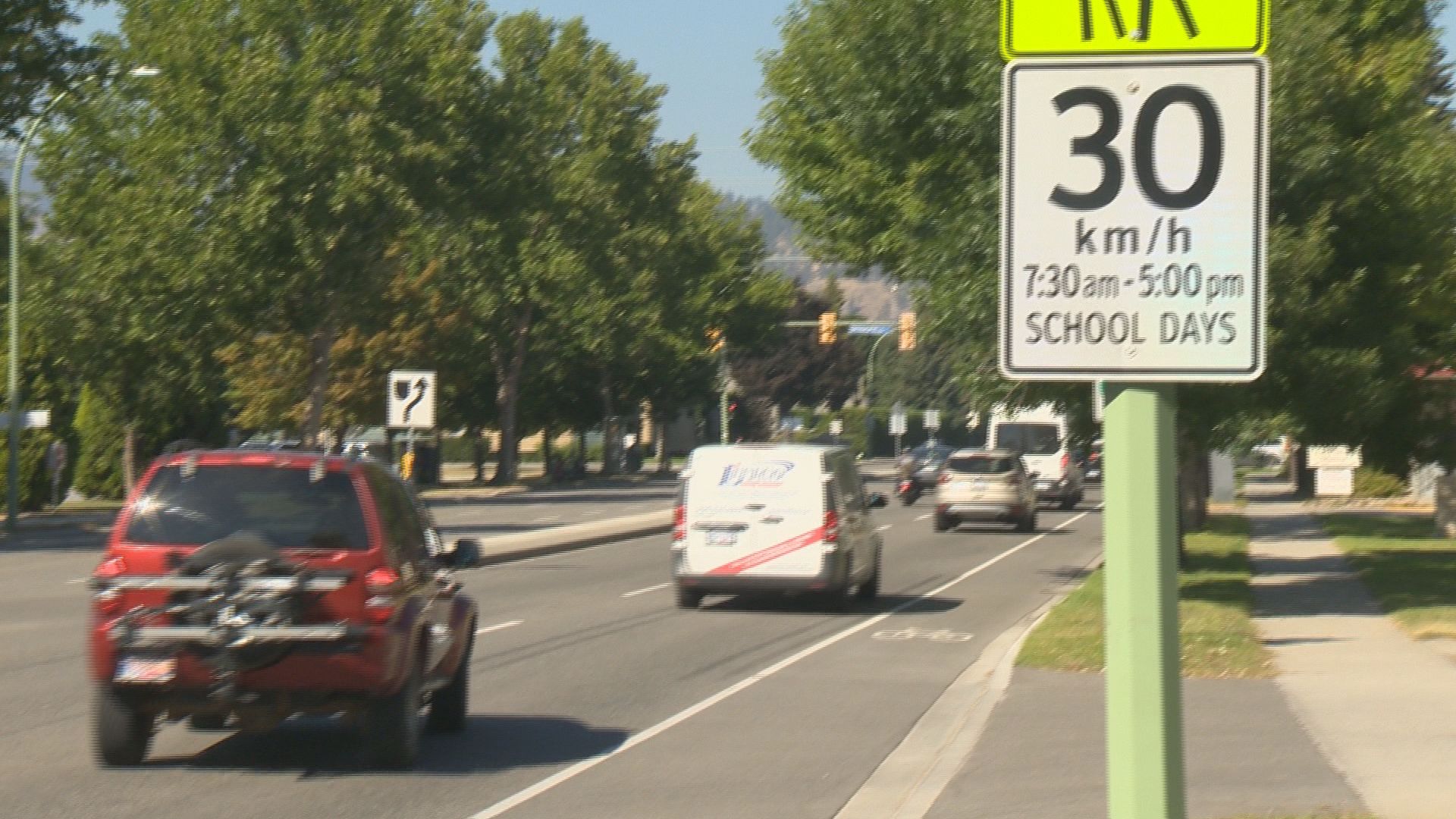
Vancouver City Council has decided to review speed limits on major streets, reopening a question that had been settled by the previous council. The proposal could lower limits to 40 or even 30 kilometres per hour. It marks a reversal: the previous council, which had an ABC majority, rejected the move, but the current council voted to restart the process. Grant Gottgetreay, a traffic litigation consultant and former traffic officer with the New Westminster and West Vancouver police departments, discussed the issue on the morning program Global News.
The change means the city is prepared to lower speeds on streets currently designed for faster traffic. For drivers, that means adjusting their habits: where the limit used to be 50 kilometres per hour, it could now be 40 or 30. For pedestrians and cyclists, it could mean a safer, more predictable environment, since drivers have more time to react at lower speeds and stopping distances are shorter.
It is important to understand what a “review” means in practice. It does not mean new signs will automatically go up across the city. Rather, it is an assessment process in which officials examine specific streets, collision statistics and residents’ views. Here, “major streets” means key traffic arteries, not quiet residential lanes where speed limits are already low. A limit of 30 kilometres per hour is considered a “safe speed” internationally in areas where pedestrian collisions are likely: at that speed, the risk of a fatality in a collision is substantially lower than at 50.
It is notable that the decision is accompanied by commentary from a former police officer who specializes in investigating collisions. The choice of guest suggests the debate is grounded in evidence, not just political preferences. Gottgetreay, who worked in two municipalities in the region, can also assess the practical implications for enforcement: how police will enforce the new limits, how they might affect road incidents, and whether drivers will see the limits as justified.
The key point is the political reversal. The previous council’s rejection had effectively taken the issue off the agenda, so reopening it signals a shift in the city’s transportation priorities. This is a familiar dilemma for North American cities: lower speeds slow traffic and may frustrate drivers, but they also reduce the severity of collisions and support road-safety goals. The report provides no details about specific streets, timelines or final limits, so the exact parameters remain subject to further analysis. Follow developments in the report.