In this roundup: a fishing vessel wreck off the coast leaves six dead, a nurses’ strike with mediators appointed, and the arrest in France of a Vancouver-area resident wanted in the United States over alleged links to international organized crime.
“Two boats went out together”: tragedy off Vancouver raises questions about negligence and rescue
New information is shedding light on the circumstances behind the tragic deaths of six people off British Columbia, after the small charter fishing vessel Top Ocean sank in the Strait of Georgia. It’s now coming to light that at the time of the wreck, a second, larger boat operated by the same company—Top Vancouver Fishing Charter—was nearby. The business owner on board that vessel, according to the mother of one of the missing men, allegedly did not immediately notice that the second boat had disappeared. This raises serious doubts about the operator’s actions and brings new questions about how the rescue operation was organized.
According to a report published on the website Castanet, on June 28 the company posted a boastful entry on the Chinese social platform “Red Book” about how its two vessels set out together and would return with a bountiful catch. But the post went up at 12:24, while two hours earlier—around 10:35—the Top Ocean automatic identification system sent its last signal. Shortly afterward, at 11:45, a distress signal was received by the rescue coordination center, and witnesses aboard a sailboat saw five people in the water without lifejackets. They managed to pull three from the water, but one more person later died in hospital. Four people were rescued in total, while the six people—citizens of Canada, the United States and China, aged 22 to 33—are considered to have died. Their bodies have not yet been found; the sunken vessel rests at a depth of 153 metres.
Ashley Lin, the mother of 22-year-old captain of the Top Ocean, Chen Ming, said she met the company owner (known as “Rocky”) at the pier around 7 p.m.—more than eight hours after the wreck. The owner allegedly told her that the two vessels left together with an interval of “no more than five minutes,” and that he was on the second, larger boat. Lin was outraged: “If you can’t contact the other boat, you must at least land the customers and immediately check what happened. That is your duty.” At the same time, the owner claimed that right after losing contact he called the RCMP, but official services received the signal not from him—rather from bystanders. What’s more, at 12:16 the call was made to emergency medical services, and the rescue operation began late.
When the article was written, the owner refused to comment. The vessel on which he was located was detained by Transport Canada due to safety violations: the boat was classified as a recreational vessel, despite being used for commercial transport, and it was not properly registered. It also emerged that the Top Ocean had previously had a faulty side door: the captain’s friend said the door swung open while the ship was moving two days before the tragedy, and the vessel began filling with water. Police are investigating whether a mechanical failure played a role in the catastrophe.
This story raises important questions about safety in the charter fishing industry. The lack of a clear procedure for communication between boats operated by the same company, delays in calling for rescue, and questionable captain licensing (the mother does not know whether her son was properly certified) all point to systemic problems. In addition, the company posted boastful updates on social media without realizing a tragedy had occurred—pointing to an alarming lack of operational contact. The business owner will have to answer questions from investigators about how he managed his vessels and why the rescue came not from him, but from random witnesses. Six young lives were cut short in the Pacific waters, and only a thorough investigation can provide answers for their families.
Positive development: B.C. nurses remove pickets in Vancouver as the province appoints mediators
The Government of British Columbia has stepped in to address the protracted dispute between the British Columbia Nurses’ Union (BCNU) and the Health Employers Association of British Columbia (HEABC), appointing experienced mediators. Labour Minister Jennifer Whiteside has brought in a veteran labour mediator, Vince Ready, and Amanda Rodger, who over the next ten days will try to find a mutually acceptable solution. If they are unable to reach an agreement, they will submit recommendations to the minister and both sides. The province says it remains committed to collective bargaining, emphasizing that the best agreements are reached at the bargaining table. As reported by Vancouver Is Awesome, the news has brought relief to patients and staff at Vancouver General Hospital (VGH), where the picket line was removed on Wednesday evening. At the same time, tensions were rising elsewhere: a picket line remains at Surrey Memorial Hospital, and new actions are planned on Vancouver Island next week.
BCNU president Adriana Gir said in an interview that while the appointment of mediators is a “positive development,” the process itself is frustrating: the union learned about the mediators from the news, not from the government. Still, she said, it’s a sign that the strike is having an impact. Gir emphasized that the union is prepared to bargain with mediation, but is not optimistic if the province does not offer employers more flexibility at the bargaining table. “There are no signs that the government is moving away from its imposed mandate,” she added. According to Gir, the nurses are united and receiving strong support from other unions, labour organizations and everyday residents, who bring food and coffee to picket lines and show solidarity.
Gir confirmed that BCNU is ready to continue its actions “for as long as it takes.” The pickets at Victoria General begin on Sunday, July 12; at Nanaimo Hospital on Monday; and at Royal Jubilee Hospital and the South Shore Surgical Centre on Tuesday. Essential services will continue operating as normal. The union has also filed a complaint with the Labour Relations Board over alleged instances of intimidation of nurses taking part in lawful protests. BCNU has launched a campaign, “Let’s Make Healthcare Better,” urging residents across British Columbia to write to their Members of the Legislative Assembly and demand a bargaining mandate from the government that will solve the retention problem.
The key sticking point is the province’s mandate, which the union says prevents employers from offering terms that could stop nurses from leaving the system. The appointment of well-known mediators such as Vince Ready—who for decades has helped resolve labour disputes in British Columbia (for example, in ports and schools)—signals the seriousness of the situation. However, for now both sides are taking hardline positions: the government will not change the mandate, and the nurses are not removing all picket lines. If the mediators do not make progress within 10 days, their recommendations could form the basis for a forced resolution—but that would mean moving away from voluntary bargaining. In any case, the strike is already affecting everyday life: picket lines are making it harder to access hospitals, and patients and their families are being forced to seek alternative routes.
Arrested in France: West Vancouver resident accused in the U.S. of ties to international organized crime
A West Vancouver resident named in an American indictment involving international organized crime was arrested in France. The incident is part of a large-scale operation that led to the uncovering of three criminal syndicates linked to India. Authorities say the groups were involved in drug smuggling, extortion, and were involved in the killing of a leader of the Sikh community in British Columbia. The detained man is expected to be extradited to the United States, where he faces charges of obtaining cocaine and heroin for transportation from California to Canada and the eastern states of the U.S.
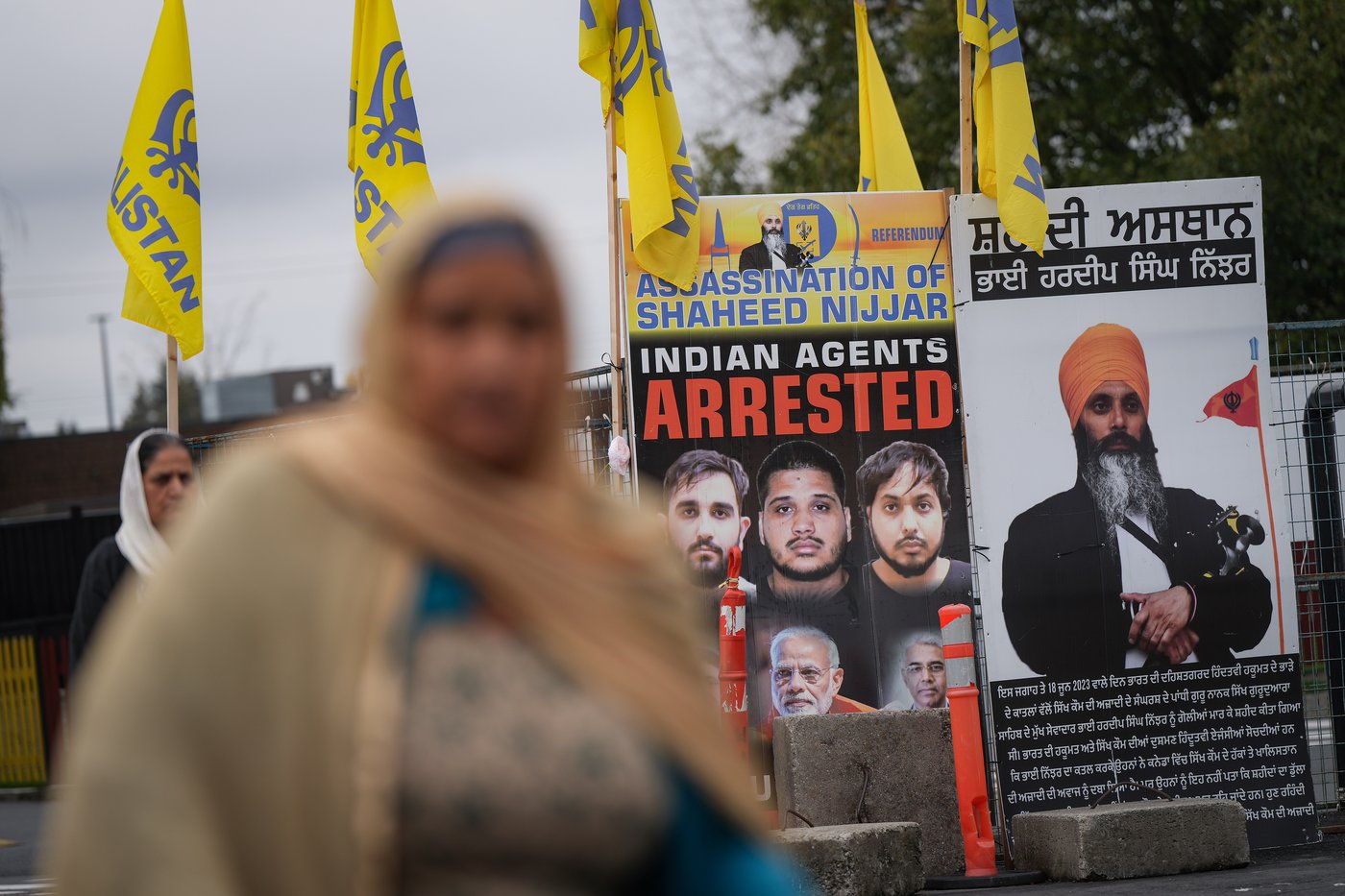
According to the Royal Canadian Mounted Police (RCMP), Garinder Deo was arrested on July 7—the day after Los Angeles authorities announced the disruption of the activities of three criminal clans. The clans, which have roots in India, are suspected of organizing large-scale drug trafficking schemes, as well as the contract killing of Hardip Singh Nijjar, a prominent Sikh activist who was killed in June 2023 at a gurdwara in Surrey, British Columbia. In an official statement, the RCMP says Deo is currently in custody in France and awaiting extradition to the United States on charges related to an FBI operation.
According to the indictment, Deo allegedly obtained cocaine and heroin for transportation from California to Canada and the U.S. East Coast on behalf of one of the criminal organizations. In addition to him, three other men from British Columbia involved in a separate criminal group were previously arrested—those men are now undergoing extradition proceedings in the provincial Supreme Court. Also this week, the U.S. Department of Justice announced that as part of the same investigation, charges were filed against Lawrence Bishnoi—an Indian gangster serving a prison sentence in India—and his alleged associate. They are accused of organizing the killing of Nijjar.
It is worth clarifying that Hardip Singh Nijjar was one of the leaders of the Khalistan independence movement and was on India’s list of wanted terrorists, although Canadian authorities did not view him as a threat. His killing triggered a diplomatic crisis between Canada and India. Lawrence Bishnoi is the head of a powerful criminal syndicate in India; his group is implicated in racketeering, drug trafficking and contract killings. Extradition is the process of transferring a suspect or convicted person from one country to another at the request of the other country, governed by international agreements.
As reported in a CityNews Vancouver article, the case highlights the global nature of modern organized crime and the close cooperation between law enforcement agencies across different countries. Deo’s arrest in France, along with arrests in Canada and charges against leaders in India, point to the scale of the FBI operation, which appears to have touched multiple continents at once. The key takeaway is that the attempt on Nijjar—carried out in a quiet suburb of Vancouver—was only the tip of the iceberg in a complex network of transnational crime involving drug trafficking, extortion and contract killings. In the coming days, Garinder Deo is likely to appear before a U.S. court, where he will face proceedings on charges that could lead to a lengthy prison sentence.