In British Columbia, a storm left tens of thousands of homes without power, cave rescuers shared their expertise with colleagues on Vancouver Island, and early voting set records—although the rise in turnout is raising questions.
Storm Winds Hit Southwestern B.C., Leaving Tens of Thousands Without Power
Early Saturday evening, residents of British Columbia’s Lower Mainland felt that autumn had arrived not according to the calendar, but in powerful northwest wind gusts. The storm that hit the region on Friday toppled trees, knocked out power to tens of thousands of homes and forced utility crews into emergency operations. As reported by CBC News, the weather event posed a serious test for infrastructure in Vancouver and its suburbs, although no one was killed.
According to Environment Canada, wind gusts near the Strait of Georgia reached 70 kilometres per hour, while speeds across the region generally hovered around 50 kilometres per hour. That was enough to leave about 30,000 B.C. Hydro customers without electricity at the height of the storm. Company spokesperson Mora Scott said most outages were caused by trees and branches falling onto power lines and equipment. “At this time of year, there’s still a lot of foliage on the trees, so they’re much more vulnerable to wind damage,” she explained. By 7 p.m. local time, about 17,000 people were still without power, although utility crews expected to restore service to most of them by 8 p.m.
Vancouver, Burnaby, Port Coquitlam and Surrey suffered the greatest damage. In Vancouver alone, the storm left dozens of trees down. One fell onto a vehicle in Kitsilano, while another large tree came down in Douglas Park. City officials said the parks department had received at least 110 reports involving broken branches, fallen trees and their removal. That was, the city said, “higher than would normally be expected during regular operations.” There were also reports of damage to vehicles and private property.
Interestingly, despite the storm’s intensity, B.C. Ferries service was largely unaffected: all sailings except for several daytime departures between Texada Island and Powell River left on schedule. This suggests that, despite its strength, the storm did not become catastrophic for the region’s transportation system.
Mora Scott used the situation to remind residents to prepare a 72-hour emergency kit in advance, including water, food, batteries and a portable charger. “You never know in advance how severe the damage from a storm will be or how long you may be without power,” she said. “That’s why we always encourage customers to be prepared.” The advice was particularly relevant given that, according to Environment and Climate Change Canada, the unsettled weather was expected to continue through Friday evening, with winds easing only around midnight to approximately 20 kilometres per hour.
For readers unfamiliar with the terminology, the Lower Mainland is the densely populated region in southwestern British Columbia that includes Vancouver and the surrounding municipalities. B.C. Hydro is the province’s primary electricity company, responsible for power generation and distribution. The Strait of Georgia is the body of water between the mainland and Vancouver Island, where winds can be particularly strong because of the area’s geography.
This incident is more than a local weather report. It shows how vulnerable infrastructure can be—even in a developed region—when faced with a fairly typical autumn storm for these latitudes. Trees with heavy foliage pose the greatest threat to power lines, meaning utility services may need to think more often about clearing rights-of-way and trimming trees. The story also highlights the importance of personal preparedness: the emergency kit Scott mentioned is not a formality, but a practical way to get through several hours or even days without electricity or heat.
British Columbia Cave Rescuers Share Their Expertise with Vancouver Island Colleagues
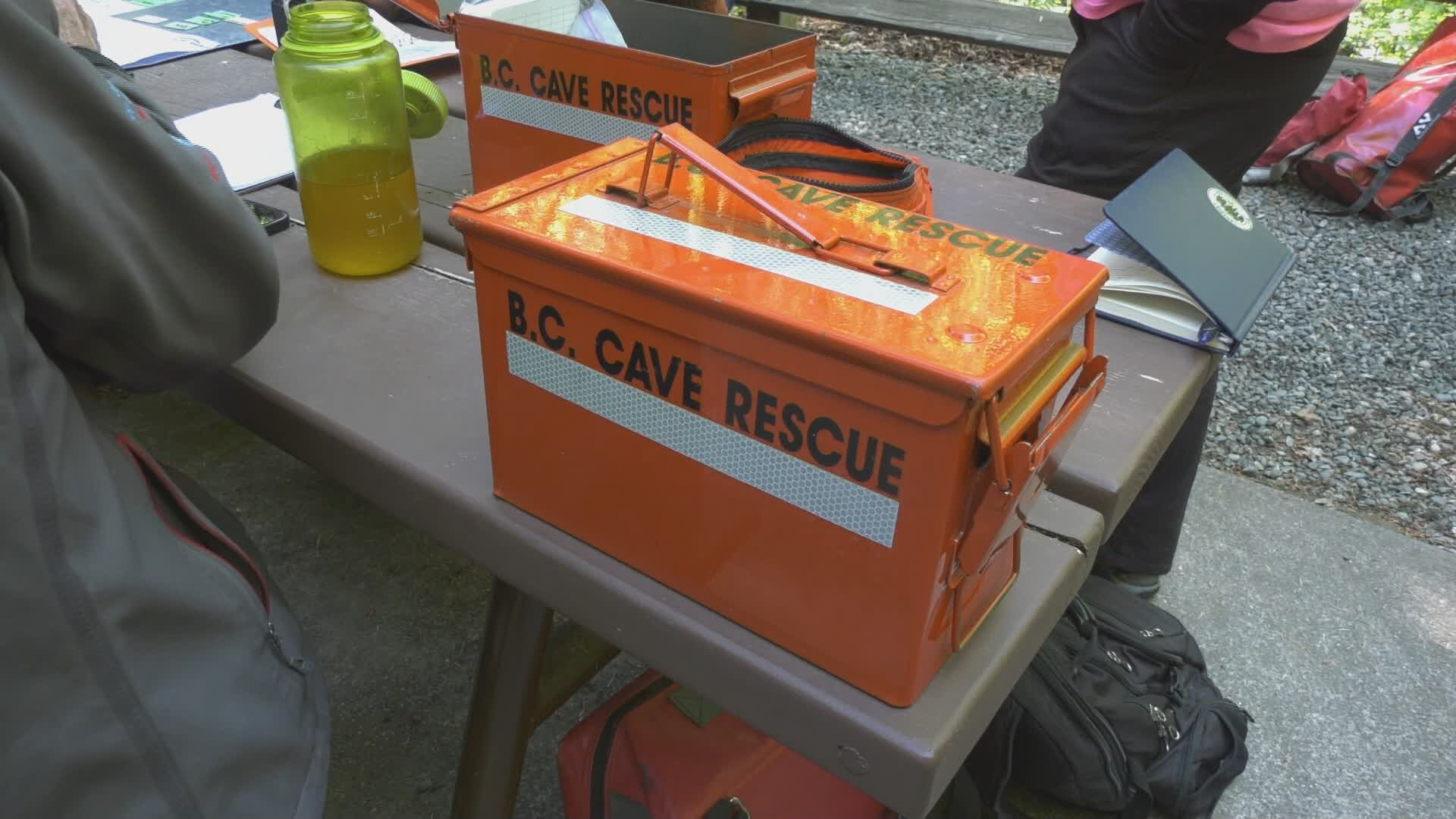
In a world where extreme tourism and scientific expeditions are becoming increasingly popular, safety in hard-to-reach locations is taking on greater importance. British Columbia, known for its complex cave systems, is becoming not only a destination for cavers but also a training hub for rescuers. A recent report published by Global News sheds light on an important initiative: experienced cave-rescue teams are training their colleagues on Vancouver Island.
What is happening goes beyond a routine exchange of experience. It involves transferring highly specialized skills needed for rescue operations in confined, dark and vertical spaces. A cave rescuer is not simply a climber with a flashlight. It is a specialist trained to ascend and descend ropes in restricted spaces, navigate complex mazes, provide medical assistance in places where a helicopter cannot be summoned immediately and, critically, do all of this without endangering their own life or that of the injured person. Training other teams on Vancouver Island is a strategic step toward creating a provincewide network of qualified rescuers.
Why is this so important? Vancouver Island caves, such as the Horne Lake cave system, attract cavers from around the world. They can be treacherous, with sudden flooding, tight crawls and difficult navigation. When an accident occurs in such a system, every hour matters. Local rescue services, even when generally well trained, may lack the specialized skills required to work underground. That is why instructors from British Columbia’s mainland—home to one of Canada’s most active cave-rescue teams—are providing more than a lecture: they are offering practical training in survival techniques.
The report also mentions another seemingly unrelated story: NASA researchers’ interest in the Peat Lake fire in the Cariboo and their use of a Cold War-era aircraft to fly over it. Although the two subjects appear disconnected, they share a subtle link. Studying extreme environments—whether caves or wildfire zones—requires unique tools and international cooperation. In the case of the Cariboo fire, NASA was likely studying fire behaviour and its impact on the atmosphere, using high-altitude aircraft to collect data. This underscores a broader trend: modern challenges, whether natural disasters or rescue operations, require interdisciplinary approaches and the exchange of knowledge.
The key insight from the report is that safety in extreme activities depends not on the heroism of individuals, but on systematic training and the creation of resilient communities of practitioners. British Columbia’s rescuers understand that their experience is invaluable, but it must be replicated. Training on Vancouver Island is an investment in the future that could save lives. As caving tourism grows and weather conditions become increasingly unpredictable because of climate change, such programs are not merely desirable—they are essential. Ultimately, this is a story about how knowledge passed from one team to another creates an invisible safety network underground.
What might be unclear to readers? The term “cave rescuer” may seem self-explanatory, but it is important to understand that it represents a distinct qualification. Unlike ordinary rescuers, cave rescuers work in environments without natural light, where communication with the surface is often unavailable and movement requires specialized equipment, from harness systems to portable sources of heat. The reference to a Cold War-era aircraft probably concerns modified reconnaissance or transport planes that NASA uses for scientific missions because they can fly at high altitudes and carry heavy equipment. The Cariboo fire was a major wildfire studied to understand how fires spread in a changing climate. These details show how closely modern science and rescue work are intertwined, using common approaches to solve problems in extreme environments.
Early Voting in British Columbia: Excitement Is High, but Does It Mean Turnout Is Really Rising?
Municipal elections in British Columbia are not over yet, but a number of cities are already reporting an unexpected and significant surge of interest in early voting. This is not limited to Vancouver, which traditionally attracts attention as the province’s largest city: a similar pattern is emerging in Kelowna, Surrey and Burnaby. At first glance, this appears to be an encouraging sign of renewed civic engagement. However, the figures conceal a much more complex and ambiguous story that should not be interpreted as a guarantee of high overall turnout.
Let’s start with the specific figures. In Kelowna, 2,712 people voted on the first day of advance voting—nearly twice the 1,471 voters recorded in 2022. Deputy city clerk and chief election officer Michael Judd said it was too early to assess the ultimate impact, but there were no signs that interest was declining. He said the unusually large number of vacancies on city council may be playing a role, along with the city’s efforts to make early voting as quick and convenient as possible.
In Surrey, 10,618 people voted early on Wednesday—30 percent more than the 8,159 voters on the first day of advance voting in 2022. In Burnaby, 9,710 ballots were cast during the first two days of early voting, 73.8 percent more than the 5,585 people recorded during the same period in the previous election. Burnaby deputy chief election officer Josh Komia attributed the increase to several council vacancies, a larger number of candidates than in 2022 and the overlap with the provincial election, which created a kind of political “buzz.” However, he also offered a warning: high early-voting turnout does not necessarily mean higher overall turnout. Voters may simply be choosing the convenience of voting early.
This brings us to the most revealing example: Vancouver. Over the past decade, city officials have deliberately expanded access to early voting, and the number of people voting in advance rose from just under 34,000 in 2014 to 65,127 in 2022. It might seem like a triumph of civic engagement. Yet during the same period, overall turnout actually fell—from 181,707 people, or 43.4 percent, in 2014 to 171,494, or 36.3 percent, in 2022. In other words, people did not become more likely to vote; they simply shifted their votes toward the early-voting format. In the current election cycle, Vancouver residents again appear to be heading to early polls in large numbers: nearly 46,966 ballots have already been cast, and early voting continues for two more days before the general election on October 17.
This brings us to a key conceptual distinction that is important when reading such reports: the difference between early voting and overall turnout. Early voting is just one way voters can exercise their rights, alongside voting on election day, by mail or at mobile polling stations. When a city expands access to early voting—by opening more polling stations, extending hours or simplifying the process—some voters who would otherwise have voted on election day simply move into the “early voter” category. This creates the appearance of rising early turnout, an increase that may have nothing to do with greater civic engagement. That is why Josh Komia of Burnaby and Michael Judd of Kelowna are cautious in their assessments: they understand that early-voting figures are more an indicator of convenience than a barometer of political enthusiasm. The overlap between provincial and municipal elections also deserves mention. It is a rare situation that can either stimulate interest or, conversely, overwhelm voters with too many elections.
What conclusions can be drawn from this picture? First, the rise in early voting in British Columbia’s cities is real and significant, particularly in Burnaby, where it exceeds 70 percent. Second, the reasons for the increase are varied: council vacancies, a large number of candidates, convenient polling locations and the broader political climate. Third—and most importantly—Vancouver’s experience serves as a sobering reminder that high early turnout does not automatically translate into high overall turnout. As Yahoo News Canada reported, overall turnout in Vancouver fell by nearly seven percentage points during a decade in which early voting grew. So the current excitement around advance polls is primarily a story about convenience and access, not necessarily about a mass awakening of civic consciousness. The real answer will come only after the votes are counted following October 17, when it becomes clear whether people who previously stayed home went to the polls—or whether we are simply seeing a redistribution of the existing electorate.