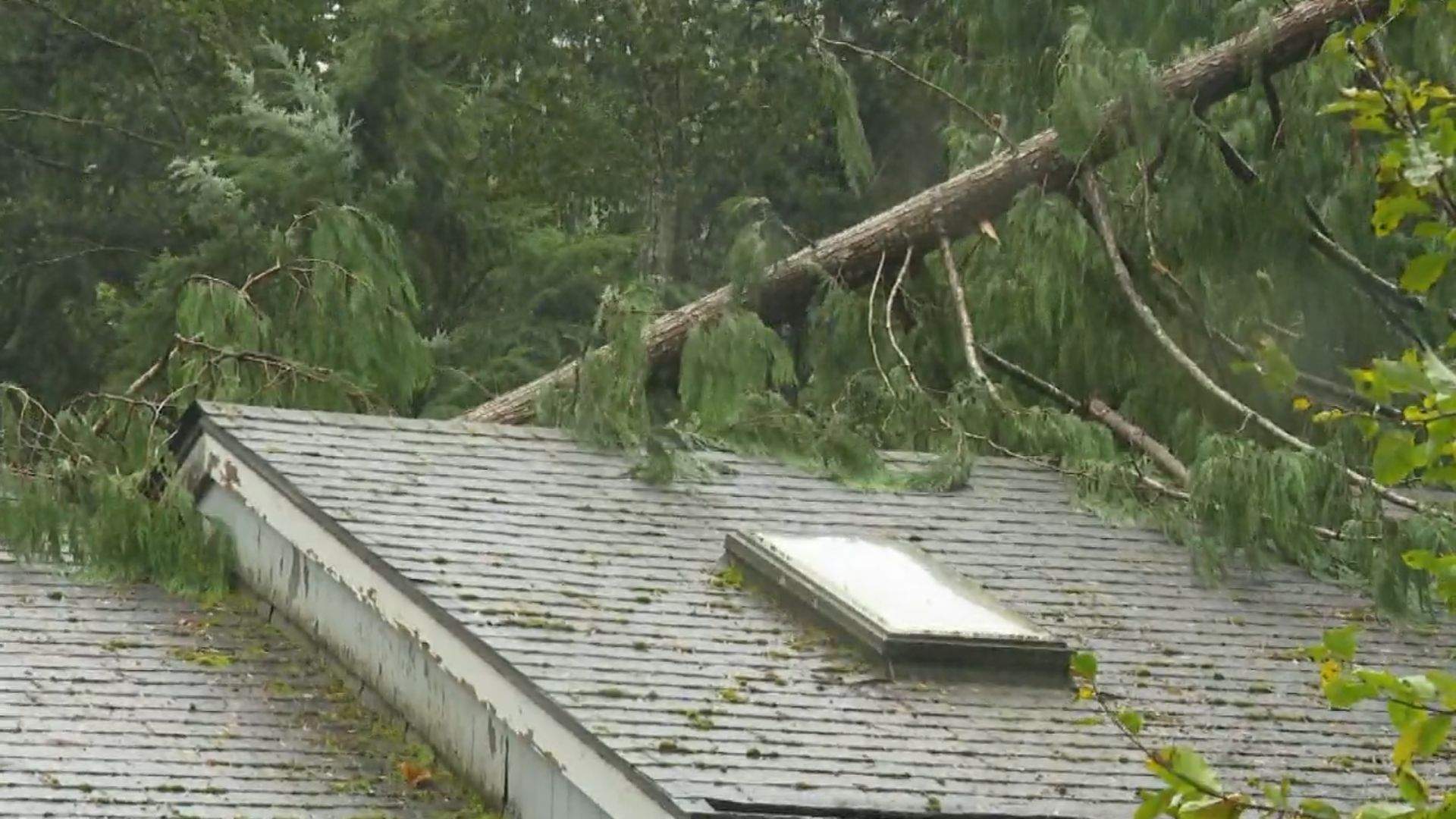
The second storm system to hit over the weekend knocked out power to tens of thousands of homes on Vancouver Island and across British Columbia, killed a driver in Surrey and forced residents of Zeballos to evacuate. Utilities are warning that a third storm will arrive on Monday.
Second storm in a week knocks out power to tens of thousands of homes on Vancouver Island
Late last weekend, another powerful storm swept over Canada’s west coast, leaving tens of thousands of British Columbians without electricity in just a few hours. It was the region’s second severe storm in a short span, and utilities warn that the ordeal may not be over. Once again, the storm exposed how vulnerable Vancouver Island’s infrastructure and coastal communities remain to high winds. Utility crews are working around the clock to restore power and heat.
According to BC Hydro, outages peaked at around 1 a.m. Sunday, when about 135,000 customers were without electricity. By 7 a.m., crews had reduced that number to around 63,000, but much work remained. The hardest-hit areas were Duncan and Port Hardy on Vancouver Island, as well as Surrey and Prince George on the mainland. Falling trees and branches brought down power lines, poles and other equipment, causing widespread outages. Since the series of storms began on Friday, BC Hydro estimates that more than 380,000 customers across the province have been affected, with service restored to about 317,000 of them. The company cautions, however, that the worst may still be ahead: strong winds are expected to persist in some areas through Sunday, making further damage and outages likely. “We prepared for this storm and had crews and resources standing by so we could respond immediately,” said BC Hydro spokesperson Whitney Dean. “Our crews are making good progress, but with the wind continuing this morning, we expect more damage and outages before conditions improve.” Repairs are underway around the clock, with crews restoring damaged lines while responding to new incidents. The company says it will update restoration estimates as it assesses the damage and determines what repairs are needed. Residents are urged to stay at least 10 metres away from downed or damaged wires and report them by calling 911. Current outage information and estimated restoration times are available at bchydro.com/outages.
To understand the scale of what is happening, it helps to clarify a few points. BC Hydro is a provincial Crown corporation—in other words, a government-owned utility that supplies electricity to nearly all of British Columbia. When news reports refer to outages affecting “customers,” they mean households and businesses connected to its grid. Vancouver Island is a large island off Canada’s west coast, home to Victoria, Nanaimo and Duncan. Port Hardy is at the island’s northern tip, while Surrey and Prince George are on the provincial mainland, underscoring the storm’s geographic reach. The phrase “at the peak of the storm” refers to the point when outages were at their highest, not necessarily to the strongest winds. Finally, the series of storms matters because each new one hits infrastructure already weakened by the last: trees destabilized by earlier storms are more likely to fall, while exhausted crews face mounting pressure.
The main takeaway is both simple and worrying: natural disasters on British Columbia’s coast are becoming more frequent and destructive, repeatedly testing the region’s power grid. The numbers speak for themselves: 135,000 customers without power at the peak, more than 380,000 affected since Friday, and 317,000 connections already restored. The speed of the response is also notable: in just six hours, the number of outages was cut by more than half, demonstrating BC Hydro’s readiness. But the forecast of continued winds through the end of the day means the final damage toll could still rise. For residents, the practical advice is clear: stock up on water and food, charge devices, stay away from downed wires and follow updates on the utility’s website. As CHEK News reported, utility crews are doing all they can, but nature is still calling the shots. For Vancouver Island residents, all that remains is to be patient and wait for the winds to die down and the lights to come back on.
Second wave of storms hits British Columbia with wind, rain and widespread power outages
Residents of Canada’s western province of British Columbia endured an unsettling weekend as another powerful storm brought hurricane-force winds and torrential rain, leaving tens of thousands without power. At the height of the storm early Sunday morning, about 135,000 BC Hydro customers were without electricity. By 7 a.m., utility crews had reduced that number to around 63,000. But, BC Hydro spokesperson Whitney Dean said, crews were making good progress while bracing for further damage and outages as strong winds continued through Sunday. The events are described in detail in a report by CityNews Vancouver.
Environment and Climate Change Canada issued heavy-rain warnings for northern and western Vancouver Island, where some areas were expected to receive up to 120 millimetres of rain. Wind warnings were also in effect for parts of the Lower Mainland, the Sunshine Coast, north-central British Columbia and Vancouver Island. Gusts were reaching 90 kilometres per hour on the mainland and 100 kilometres per hour on the island. Jerry Sullivan, a resident of Zeballos on the northwest coast of Vancouver Island, said the wind woke him up. He described the night as “just howling, there was thunder, there was lightning.” He explained that the community lies right on the west coast, beside an inlet leading to the Pacific Ocean, and when a storm hits, the wind howls down the inlet. His wife, Vicki Sullivan, added that she was 72 and had never experienced wind like it. On Saturday, she heard trees falling near their home.
Conditions in Zeballos remain difficult. An evacuation order is still in place for 22 properties following the rain and flooding caused by Friday’s storm, amid an increased risk of landslides. The Strathcona Regional District said Saturday that a geotechnical engineer had completed an initial assessment and that the district was awaiting a formal report. One of the area’s main roads, Maquinna Avenue, has reopened for essential travel, but stopping there is strictly prohibited because of the ongoing threat to public safety. Jerry Sullivan said the village, which has about 120 residents, is 42 kilometres from the main highway, connected to it by a forest service road. He was unsure whether the road remained passable after the latest storm. By about 8 a.m. Sunday, the wind in Zeballos had eased, but rain continued. The Sullivans had been without power since Saturday afternoon, but had two generators and a wood-burning stove for backup heat.
The rain is not over for the province: British Columbia is being hit by a series of atmospheric rivers bringing heavy precipitation to coastal areas. According to the provincial River Forecast Centre, a third storm, expected to begin later on Monday, could bring a longer period of rain to the coast over the coming week. A few terms from the report are worth explaining. An atmospheric river is a long, narrow band in the atmosphere that transports large amounts of moisture from the ocean. When it reaches land, it can cause prolonged, intense rainfall. A weather service rain warning means that the expected precipitation could lead to flooding and hazardous conditions, not merely wet weather. An evacuation order is an official requirement to leave an area, not a recommendation, and disobeying it may have legal consequences. Finally, BC Hydro is the provincial utility responsible for generating and distributing electricity, which is why it reports the number of customers without power.
The report’s key figures paint a worrying picture: 135,000 customers without power at the storm’s peak, down to 63,000 by 7 a.m.; up to 120 millimetres of rain; wind gusts of up to 90 and 100 kilometres per hour; evacuation orders covering 22 properties; and a village of about 120 people connected by a forest road. Vicki Sullivan’s remark that she had never seen winds like these in her 72 years is especially telling—it conveys the storm’s force better than any weather data. The main point is that the province is facing not a single event but a sequence of interconnected storms. Each successive system arrives over already saturated ground, damaged infrastructure and exhausted emergency crews. The consequences include a heightened risk of landslides and flooding, longer power restoration times, and a need to prepare backup sources of heat and electricity. For coastal residents, it is too soon to relax: a third storm is on the way, and next week could be even more difficult than the weekend just past.
Two forces of nature, one life lost: British Columbia weathers a series of storms
A second wave of severe weather over the weekend hit southwestern Canada, knocking out power to tens of thousands and killing a driver on a Surrey highway. What began as a weather warning for strong winds and rain had become a real emergency by Saturday evening: a fallen tree blocked Highway 10 and trapped two vehicles, and one of the people involved could not be saved. The tragedy unfolded amid widespread outages affecting Vancouver, Vancouver Island and central parts of the province, as utility crews prepared for a third storm system on Monday.
Surrey police said they received a report of downed wires on the highway west of 184 Street at 7:58 p.m. local time. First responders found a tree and power lines on top of the vehicles. Despite resuscitation efforts, one driver died at the scene. The other sustained minor injuries and declined hospital treatment. BC Hydro crews and city workers were clearing debris and addressing the danger posed by fallen wires—one of many similar incidents that evening, Global News reported.
The scale of the outages was significant. By 7 a.m. Sunday, around 63,000 customers were still without power, though outages had peaked at about 1 a.m., when around 135,000 people lost electricity. Utility crews named Surrey, Duncan, Port Hardy and Prince George among the hardest-hit areas, where gusting winds brought branches and entire trees down onto power lines, poles and other equipment. Including Friday’s first storm, more than 380,000 customers across the province have experienced outages, and service has been restored to about 317,000. However, winds are forecast to continue through the end of the day, and BC Hydro warns that further damage is likely.
“We prepared for this storm and had crews and resources standing by so we could respond immediately,” the publication quoted BC Hydro spokesperson Whitney Dean as saying. “Our crews are making good progress, but while the wind continues, we expect more damage and outages before conditions improve.” The company says it will update restoration estimates as crews reach damaged sites. It also reminds residents to stay at least 10 metres away from downed, damaged or low-hanging wires and report them by calling 911.
The cause is a series of atmospheric rivers moving across British Columbia one after another. While rising water is the main threat to coastal areas, destructive winds pose the greatest risk on the mainland. Environment and Climate Change Canada issued a range of wind and rainfall warnings for the island and the Lower Mainland: gusts could reach 90 km/h, while some areas, including parts of North Vancouver, could receive up to 50 millimetres of rain. Special weather statements were in effect for inland areas, including the Cariboo, Fraser Canyon, 100 Mile House, South Thompson, the Coquihalla Highway and the Okanagan Connector. Gusts of 60 to 80 km/h were expected there, easing somewhat before a cold front arrived and potentially brought gusts of up to 90 km/h later in the morning. Winds were expected to ease by evening.
Against this backdrop, most BC Ferries service had returned to normal after concerns on Saturday about possible cancellations. Sailings between Metro Vancouver and Nanaimo were operating, as were departures from Swartz Bay and Tsawwassen. But it is too soon to relax: Environment and Climate Change Canada says a third storm expected on Monday could bring a longer period of rain to the province’s coast over the coming week. In other words, the current outages are not the end of the story, but one episode in a prolonged series of challenges. The focus is shifting from restoring power to keeping people safe on the roads and ensuring infrastructure can withstand repeated atmospheric rivers.
A couple of terms help put the events in context. An atmospheric river is a narrow, elongated band in the atmosphere that carries huge amounts of water vapour from the tropics to higher latitudes. These “rivers” are responsible for many of the heavy rains and floods on North America’s west coast. A cold front is the boundary between warm and cold air masses. Its passage often brings abrupt changes in wind and precipitation; in this case, it could strengthen gusts to 90 km/h. Environment and Climate Change Canada warnings are official alerts of hazardous weather that help emergency services prepare and inform public safety advice.
```html