Search operations off British Columbia have been paused for six people missing after the charter vessel crash. Meanwhile, a Vancouver man is helping victims of the earthquake in Venezuela.
Search for six missing after charter boat sinks off B.C. coast is suspended
Rescue operations off British Columbia, where a charter fishing vessel sank last week, have been temporarily suspended. As reported in a CTV News story, six people are still listed as missing, and authorities made the difficult decision to pause the active search due to unfavorable weather conditions and the lack of any new leads.
The incident happened near a popular tourist area — the Haida Gwaii archipelago. The vessel, carrying local residents and, reportedly, tourists, sent a distress signal early in the morning. Responders immediately flew to the scene, but strong winds, high waves, and cold water seriously hampered the operation. The Canadian Coast Guard, using helicopters and boats, surveyed a large area of water, but found only wreckage and empty life jackets.
Suspending the search does not mean it is finished forever — experts note that if new information comes to light, the operation may be resumed. However, for the families of the missing, it has been a devastating blow. At this time, it is known that one person was rescued and taken to hospital with signs of hypothermia. The identities of the other six are not being released while relatives are notified.
The tragedy is once again raising questions about the safety of charter trips in the challenging navigation conditions of the northern Pacific Ocean. In winter, water temperatures here rarely rise above 8–10 degrees Celsius, leaving survivors only minutes before hypothermia sets in in the event of a crash. Life jackets can help people stay afloat, but they do not protect against the cold. That is why, even with a rapid arrival of help, the chances of survival drop sharply if people are not in airtight survival capsules.
Investigators are now trying to determine the cause of the sinking: whether it could have been a mechanical failure, a crew error, or a sudden squall gust. Preliminary information suggests the vessel may have capsized due to a sudden shift in cargo or a wave impact. It is also being checked whether all passengers had wetsuits, which could have helped extend the time they could survive while waiting.
Local communities are expressing condolences, and authorities are reminding people of the need to strictly follow safety rules and ensure emergency beacons are mandatory on all commercial vessels. This case will likely lead to tighter regulation of the small-craft fleet in the province. For now, all that remains is hoping for a miracle and waiting for the search to resume if weather and circumstances allow.
Tragedy in the Strait of Georgia: search for six missing sailors suspended
On Sunday evening in the Strait of Georgia off Richmond, British Columbia, a tragedy occurred: a charter vessel carrying ten people sank. Four managed to escape, but the fate of the remaining six is still unknown. According to the Canadian Coast Guard, all of the missing were in the water without life jackets. The search-and-rescue operation was suspended at 9:45 p.m. local time, and the case was handed over to the Royal Canadian Mounted Police (RCMP). As reported by CBC News, the decision to stop the active phase of the search was made by the commander of the Joint Rescue Coordination Centre in Victoria (JRCC).
The incident took place at about 11:45 a.m. on Sunday. The vessel began taking on water near Roberts Bank, roughly 10 nautical miles southwest of Vancouver International Airport. Two witnesses, Bryan Angus and Dorothy Stauffer, were on their sailboat and spotted five people in the water. They immediately issued a “mayday” distress call and managed to pull three of them onto an inflatable dinghy. The other two were likely among those later recovered by rescuers. In total, four people were pulled from the water, and six remain listed as missing.
British Columbia Attorney General Niki Sharma said on Monday at a press conference that she was shocked by what happened and that an investigation has begun. “We are all shocked to hear about what happened,” she said, promising to share more details as they become available.
Terms such as “Strait of Georgia” are part of the Pacific Ocean between the mainland and Vancouver Island. “JRCC” (Joint Rescue Coordination Centre) refers to a joint search-and-rescue coordination centre run by the military and the Coast Guard. The “mayday” distress signal is an international radio distress call at sea, corresponding to the Russian “SOS.” The phrase “without life jackets” points to a critical factor: the absence of individual flotation devices, which in the cold waters of the strait (temperatures rarely exceed 10°C) sharply reduces survival time.
Key facts: ten people on board, four rescued, six missing. The search was stopped 10 hours after the wreck. The decision to suspend operations is usually made when all reasonable chances of finding survivors in the given conditions have been exhausted — taking into account time in the water, temperature, and currents. Handing the case to the RCMP means the priority will now be determining the cause of the incident: the vessel’s technical condition, the captain’s qualifications, and compliance with safety rules. The case raises serious questions about charter trip safety in the region, especially regarding the mandatory availability of life jackets and communications equipment. After the investigation, stricter regulations or recommendations for marine operators may follow.
Venezuela after an earthquake: a Vancouver man on the front line of a humanitarian catastrophe
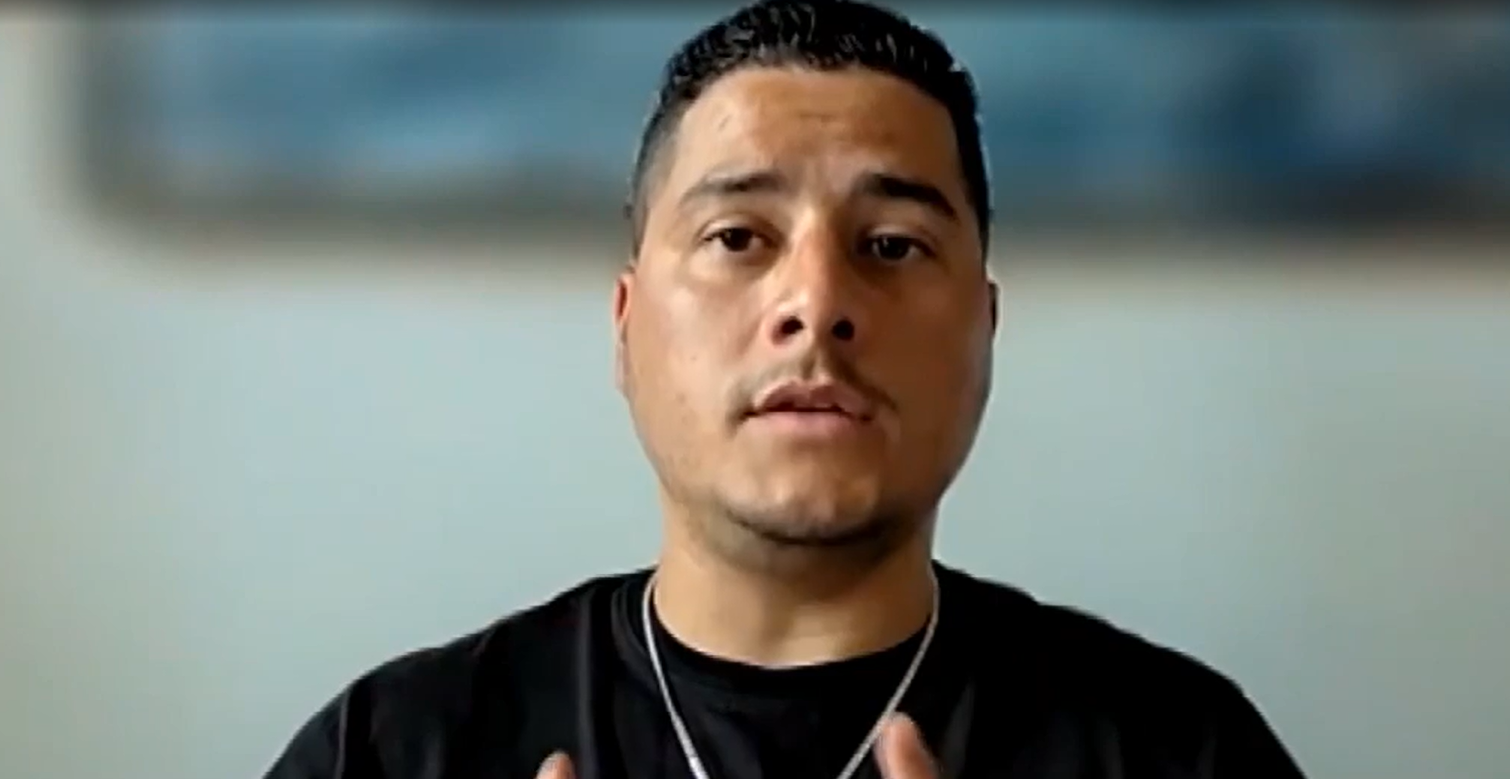
When a devastating earthquake struck Venezuela on June 28, Arnoldo Duas Santos, a Vancouver resident, was visiting his home country. He found himself at the epicentre of events that turned his life upside down and forced him to act despite fear. In an interview with CityNews Vancouver, he described how he survived the first minutes inside a 14-storey condominium that somehow held up, unlike many other buildings. “The fear that pierced me is beyond explanation,” he admits. “Everything is racing through my head: my children and my wife who are still at home.” Instead of evacuating, Duas Santos began helping the victims, using his own resources and donations that the Venezuelan community in Vancouver had sent to him through the internet.
The scale of the disaster proved horrific. Duas Santos delivers supplies to the hardest-hit areas, such as La Guaira, where local morgues are overflowing. “There was nowhere to put the bodies,” he describes what he saw. “They were stacked in piles in the yard and in containers — in bags, and sometimes without them.” Thousands of Venezuelans are still listed as missing, and estimates of the death toll, according to some reports, exceed tens of thousands. The volunteer says it is especially painful to see children on the streets who have been left without parents. “Shelters can’t cope with the influx of orphans. The country simply doesn’t have the resources to deal with a mass tragedy like this,” he says.
The critical 72-hour period, when survivors could still be found under the rubble, has already passed. Now, search-and-rescue teams are mainly retrieving bodies. Rahul Singh, head of the Canadian charity GlobalMedic, which provides medical assistance in disaster zones, compares the current situation to the 2010 earthquake in Haiti. “According to models, there’s a one-in-five chance the death toll will reach 10,000, and two in five that it will exceed 100,000,” Singh explains. “The losses will be enormous. And those who survive will overload an already weak healthcare system.” It is worth noting that GlobalMedic is a Canadian non-governmental organization specializing in rapid disaster response: it supplies medicines, water, and equipment. The critical 72-hour “golden period” is the time during which people trapped under rubble still have a chance to survive without water and food; after that, the chance of saving someone drops dramatically.
However, despite how serious the situation is, humanitarian aid from Canada faces political obstacles. Singh emphasizes that strained relations between Ottawa and Caracas make it difficult to deliver shipments. “Politics needs to be put aside,” he insists, “and focus should be on the humanitarian need.” For Duas Santos, who personally witnessed the national trauma, the need for additional support — whether from neighbours in Canada or international partners — is obvious. “I cried the way I’ve never cried in my life. I thought I was a very tough person, but I’m telling you, this will break anybody,” he concludes. His story is not just an on-the-ground report — it’s a reminder of how quickly human life can turn into a nightmare, and that even amid geopolitical disagreements, compassion remains the only sensible response.