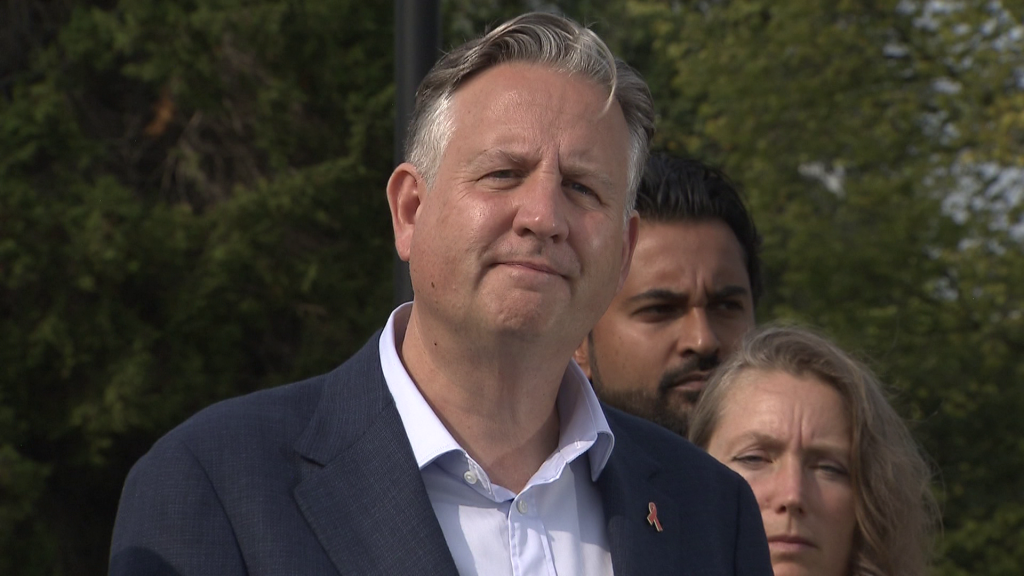
Today's digest: local investors are preparing a counteroffer to buy the Whitecaps to keep the club in Vancouver; police arrested a repeat offender who tried to flee on a homemade go‑kart at an "incredibly low speed"; a former Vancouver mayor said federal investigators are probing a BC cabinet minister over suspected cooperation with China.
BC-based potential buyers preparing counteroffer to acquire Vancouver Whitecaps
The past few weeks have been a real test for Vancouver Whitecaps fans: news that California billionaire Grant Gustavson had submitted a formal bid to buy the club and relocate it to Las Vegas sparked worry among soccer supporters. But BC’s minister of jobs, Ravi Kahlon, offered some encouraging news on Wednesday — a group of local investors has approached the provincial government and is preparing its own offer aimed at keeping the team in Vancouver. Kahlon, a longtime Whitecaps fan and season-ticket holder, said the group, he was told, has been organizing for several weeks and has already done preliminary work. In his interview with CBC News he called it “a positive development for both fans and the province,” adding that the potential buyers are serious and their plan is based on keeping the team here.
Officials are not yet disclosing details, but it’s known that the group did not ask the government for any direct financial support, only informed it of their intentions. Kahlon said he hopes the investors will announce themselves as soon as possible to reassure club supporters. Tension has risen since last week’s news of a formal offer from Grant Gustavson, the grandson of a Public Storage co-founder. His plan includes not only buying the club but building a privately owned, soccer-specific stadium in Las Vegas. Although the Whitecaps were put up for sale in 2024, the club’s owners have said that after 16 months of serious talks with “hundreds of parties,” no viable offer that would allow the team to remain in Vancouver had emerged.
A key issue limiting the club’s future in its current form remains the lack of control over its stadium. The Whitecaps play home games at BC Place, which is owned and operated by the province, creating limits on revenue and scheduling. That circumstance has long been an obstacle in finding a local buyer. Now, with a real threat of relocation, the situation is forcing stakeholders to move faster. Many commentators and fans recall the recent loss of a professional hockey team from Vancouver, making the Whitecaps situation especially sensitive for the province’s sports community. Voices like sports economist Glen Hodgson’s, who told CBC that the government and the city could still find local owners willing to act as “stewards” of the club, are being heard. Now it appears such a chance may exist, and attention is focused on whether the local investor group can present a convincing proposal that MLS will approve and that will end the uncertainty.
Escape on a go‑kart: wanted Canadian repeat offender tried to flee police at "incredibly low speed"
An unusual traffic incident occurred in British Columbia: Greater Vancouver Traffic Police officers arrested a wanted man who tried to flee law enforcement in a homemade go‑kart. As reported by CTV News, police described the speed of the escape as “incredibly low.” The incident happened when patrol officers noticed a suspicious toy‑like vehicle on the roadway. When they attempted to stop the driver, it turned out he was wanted on several criminal charges. The man had no chance of getting away in a go‑kart that can reach no more than about 30 km/h.
A homemade go‑kart is essentially a rudimentary sport vehicle without a roof or doors, with exposed wheels and often powered by a lawnmower engine or a small motorcycle engine. Such vehicles are generally not intended for public roads and are not registered. In this case, the arrested man apparently thought to use the toy‑like vehicle for a quick getaway, but miscalculated: his chances of escape were minimal, and the chase looked more comical than dangerous. Police noted that “the speed of the attempted getaway was incredibly low, which made the escape doomed to fail from the start.”
The notable point here is not only the oddity of the situation but its legal consequences. In Canada, as in most countries, intentionally attempting to flee from police using any vehicle (even a child’s electric car or a go‑kart) can be treated as a criminal offence. In addition to his existing charges, the man could face an extra charge for fleeing, which would increase his time in custody. Local media have widely circulated details of the incident, and social media users are actively discussing the ironic side of the episode, noting the “audacity” of the would‑be escape plan. Security experts say the case could set a precedent for tightening rules on the operation of unconventional vehicles that were previously regarded simply as children’s toys.
Ultimately, the story of the “go‑karting repeat offender” highlights the gap between desperate criminal schemes and their absurd execution. The RCMP in British Columbia has seen attempts to flee on unconventional transport before, but the go‑kart incident will likely go down as one of the slowest chases in the region’s history. The main moral for potential offenders is simple: even if you dream of a quick getaway, choosing an inadequate vehicle guarantees that dream will remain merely a newsworthy anecdote.
Former Vancouver mayor says BC cabinet member under investigation over suspected cooperation with China
Former Vancouver mayor Kennedy Stewart made a striking claim that could have significant repercussions for the province’s political landscape. On CKNW radio he said federal lawyers have already interviewed him in connection with an investigation involving a current minister in the Government of British Columbia. According to Stewart, the senior official is under investigation over suspected cooperation with the Chinese government. The former mayor stressed that Premier David Eby and many other cabinet members are aware of the probe, yet no practical steps have been taken so far.
Stewart did not name the minister under investigation, but said that immediately after being interviewed by federal lawyers he was able to identify the person and contacted government officials without delay. He said he made every effort to get the information “to the very top,” but there was no response. In his interview he emphasized that Chinese interference in Canadian politics has become “a serious problem both at the municipal level and now at the provincial government level.” Notably, Stewart admitted he is taking a significant risk by making these statements because he signed a non‑disclosure agreement, though he did not specify with whom. He explained his motivation by saying “the reason you don’t hear about these things is that people are afraid of lawsuits.”
So far the Government of British Columbia has not responded to a request for comment, and the Royal Canadian Mounted Police said it is looking into the statement. The situation is creating a highly tense atmosphere in political circles, especially given that a former mayor with first‑hand access to information is effectively accusing the current government of covering up a serious national security threat. It is important to understand that such accusations can have far‑reaching consequences: if substantiated, this would be an unprecedented case of foreign influence reaching the level of a provincial cabinet. If not, Stewart’s claims could be seen as an attempt at political discrediting, particularly given his admission of violating a non‑disclosure agreement, which raises questions about the reliability of his statements. With official bodies remaining silent, the public is left uncertain about how serious the allegations are and whether there is real evidence behind them or merely a political scandal.