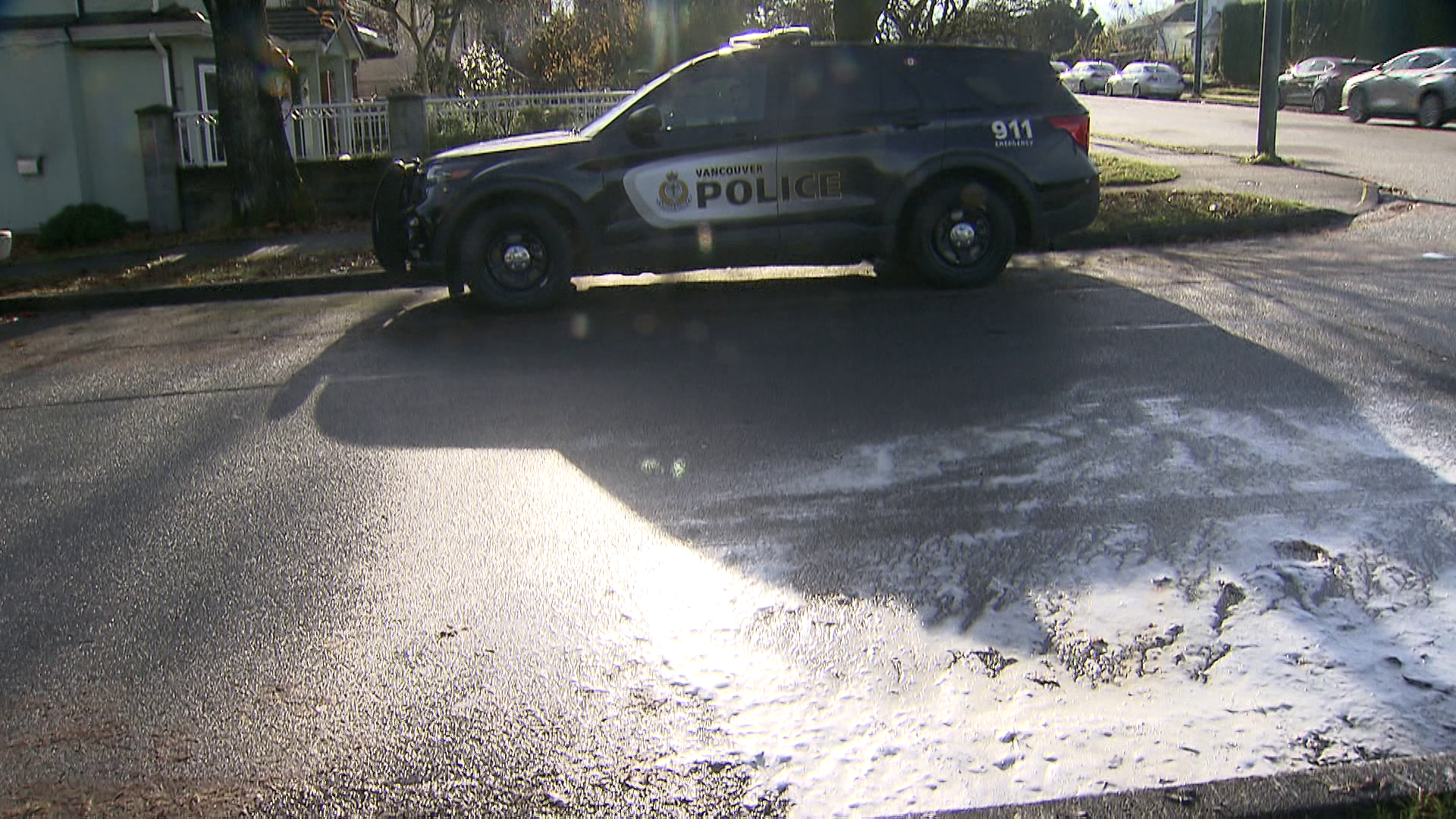
The Toronto Raptors will go hiking in Stanley Park ahead of their game against the Clippers, Vancouver police officers will avoid charges over shooting at a carjacking suspect, and BC Ferries canceled sailings because of a mechanical failure and a website outage.
Toronto Raptors bring tourist-bear merchandise to Vancouver and plan Seawall hike
The NBA’s Toronto Raptors continue to turn preseason games into full-fledged regional events. While the team prepared poutine-themed merchandise for Quebec, its Vancouver design plays on British Columbia’s greatest assets: mountains, forests and hiking trails. As reported by Daily Hive, the club’s new branding features its mascot—the familiar raptor—in hiking gear, complete with a backpack and trekking pole. It is a direct nod to the province’s scenic routes, which attract millions of tourists and residents every year.
Interestingly, the Raptors are not limiting themselves to souvenirs. The day before the game, on October 9, the club is inviting fans to Stanley Park’s historic waterfront from 9 a.m. to 5 p.m. Participants will be asked to walk part of the famous Seawall Loop for a chance to win themed prizes. Free trail mix from Vancouver company Cabin5 will be offered at the start, while a limited-edition Raptors cap will be handed out at the finish line, while supplies last. The club’s press release sounds almost like an invitation to a guided excursion: “Fans are invited to historic Stanley Park to follow in the Raptor’s footsteps and tackle part of the Seawall Loop.”
The game itself will take place on October 10 at 3:30 p.m. Pacific time at Rogers Arena against the Los Angeles Clippers. For Vancouver, the event carries historical significance. The Raptors will play at the arena for the seventh time since the Vancouver Grizzlies left the city in 2001. In total, the NBA has held eight preseason games in Vancouver. Last year’s Raptors matchup with the Denver Nuggets sold out Rogers Arena, confirming sustained demand for basketball in a region that has been without an NBA team for more than two decades.
Another point of intrigue is the possible return of Kawhi Leonard to Vancouver. The forward, who led Toronto to its 2019 championship, was traded from the Clippers back to the Raptors this summer. The deal was delayed because of an NBA investigation. If Leonard takes the court, it will be his first meeting with his former team since returning. Still, given the traditional caution clubs exercise during preseason games, the star player’s participation remains uncertain.
What is worth knowing beyond the headline? The Seawall Loop is a 28-kilometre waterfront path around Stanley Park and one of Vancouver’s main attractions, visited by millions of people each year. Trail mix—a popular North American combination of nuts, dried fruit and chocolate—is a standard hiking snack; choosing Cabin5 as a partner underscores the local character of the promotion. The Raptors are the NBA’s only Canadian team, so their trips across the country carry symbolic significance: the club is reminding people that basketball in Canada exists beyond Toronto. The Grizzlies, meanwhile, were Vancouver’s former NBA team, relocating to Memphis in 2001. Since then, the city has had no NBA franchise of its own, and every Raptors visit is seen as a kind of compensation for that loss. Leonard’s trade also generated considerable attention because of the NBA investigation into possible violations of negotiation rules, adding further drama to the story.
The main takeaway is simple: the Raptors are turning preseason into a marketing tool, connecting the club with local identity through food, nature and urban traditions. In Quebec, it is poutine; in Vancouver, it is hiking the Seawall. This is not merely an effort to sell T-shirts, but an attempt to build an emotional connection with regions where the NBA has no permanent presence. And if last year’s sellout proves anything, audiences are responding.
Vancouver police officers avoid charges over shooting at carjacking suspect, but actions deemed improper
British Columbia’s Independent Investigations Office (IIO) has completed its investigation into a high-profile incident in Vancouver nearly two years ago. Two city police officers who opened fire on an alleged carjacking suspect will not face trial: investigators concluded that, despite their mistakes, their actions did not amount to a criminal offence. However, the report paints a picture of chaos, poor coordination and a chain of violations that nearly led to a tragic outcome.
According to a document released Friday, police received a report at around 4 a.m. on November 30, 2024, about a BMW stolen on Main Street. The complainant said the vehicle had been taken at knifepoint. The car was soon spotted in different parts of the city—it was traveling at high speed and was later found parked on the shoulder of a residential street. Officers decided to block it: an unmarked police vehicle was positioned across the road in front of the BMW. Two plainclothes officers got out and approached the suspect from opposite sides, one on each side of the vehicle.
Almost immediately afterward, both officers drew and fired their service weapons. One bullet struck the suspect in the upper part of his right arm. He was taken to hospital, where a bullet fragment was removed. Forensic testing confirmed that it had been fired from one of the officers’ pistols. At the same time, the IIO emphasized that no weapon was found in the stolen BMW—meaning there apparently was no direct threat to the officers’ lives when the shooting occurred.
The most notable part of the report is its list of violations by the officers. Investigators determined that both officers ignored an order to stop trying to apprehend the driver. They approached the vehicle on foot even though they understood that it could suddenly move. They also failed to communicate with each other, worsening the confusion in a critical situation. The IIO separately highlighted an especially questionable episode: one officer used his pistol improperly, attempting to break a window with it, which resulted in an accidental discharge. According to investigators, that unintended bang prompted the second officer to fire at the suspect.
Several legal and procedural points are important to understanding the decision. The IIO is British Columbia’s independent oversight agency, responsible for investigating all deaths or serious injuries involving police. Its task is not to punish officers, but to determine whether their actions constituted a criminal offence. If the IIO finds no criminal wrongdoing, the case is not referred to the B.C. Prosecution Service and no charges are laid. That is what happened here: legally, even serious tactical errors and careless handling of a firearm do not necessarily constitute a crime. Prosecutors would need to prove criminal intent or criminal negligence of a particular degree.
The report’s key conclusions can be summarized as follows. First, the shooting was effectively accidental in a chain reaction: one officer violated firearm-handling rules, and the other reacted to the sound. Second, the suspect’s lack of a weapon and the officers’ failure to coordinate call into question whether the use of force was necessary in the first place. Third, ignoring a direct order to stop the pursuit is a disciplinary matter that will likely be reviewed internally by the VPD separately from the criminal investigation. Fourth, the victim was injured but survived, which may have prevented the case from receiving a more serious legal classification.
For Vancouver, this is another episode in a long-running debate over how appropriately police use firearms and how effectively the IIO performs its role as an independent arbiter. Formally, the oversight agency did its job: it investigated the incident, published a report and identified the mistakes. But the absence of charges despite such an obvious list of violations inevitably raises the question of where the line lies between an “unsuccessful operation” and criminal negligence—especially when a bullet has struck a person. Details of the incident and the IIO’s decision are outlined in this CityNews Vancouver report.
BC Ferries disruption: mechanical failure hits service, followed by website outage
On Friday morning, passengers planning to cross the Strait of Georgia between Horseshoe Bay and Departure Bay received unwelcome news: two morning sailings were canceled because of a steering-system problem on the Queen of Oak Bay. As often happens in such situations, however, the problems did not end there. A short time later, the company experienced difficulties with its website, further complicating communication with passengers.
According to information published by CHEK News, the canceled sailings were the 6:15 a.m. departure from Horseshoe Bay and the 8:40 a.m. departure from Departure Bay. Two more sailings—the 11:05 a.m. departure from Horseshoe Bay and the 1:20 p.m. departure from Departure Bay—were at risk of cancellation, but at around 10:40 a.m. the company confirmed that they would operate as scheduled. The disruption was caused by a mechanical problem with the Queen of Oak Bay’s steering system, which BC Ferries said it was able to repair. The announcement that service had been restored came amid the ongoing Horseshoe Bay terminal infrastructure modernization program.
The company promised automatic refunds for passengers whose sailings were canceled and advised them to contact the service centre about possibly rebooking on another sailing that day. It is important to note that, because of the Horseshoe Bay Essential Infrastructure Program, all vehicle travel from Horseshoe Bay to Departure Bay now requires advance booking and payment. At the same time, the booking deadline has been reduced from one hour to 30 minutes before departure—a measure intended to give passengers more flexibility, but one that applies only to this route.
Alongside the transportation problems, BC Ferries also experienced digital ones: at around 10 a.m. local time, the company’s website stopped working. The company confirmed to CHEK News that it was investigating the cause of the outage but could not yet say when service would be restored. This placed an additional burden on passengers trying to obtain current information or book tickets online.
What lies behind these events? Mechanical failures are not unusual on vessels in constant service, particularly on a busy route such as Horseshoe Bay–Departure Bay. However, the combination of a technical failure and a website outage points to a systemic vulnerability: even with backup vessels and established communication protocols, the company was not fully prepared for simultaneous crises. With reservations now mandatory and the booking window shortened, an unavailable website effectively prevents passengers from resolving the problem quickly.
The context of the Horseshoe Bay modernization program is also important. Infrastructure work is likely limiting terminal capacity, making every canceled sailing more noticeable. Mandatory reservations and a shorter window for changing them are attempts to manage traffic, but they make the system less resilient to disruptions. When the Queen of Oak Bay breaks down and the website is unavailable, passengers are left facing uncertainty despite the promised compensation.
The key takeaway is that BC Ferries appears ready to respond to individual incidents—repairing the steering system, restoring sailings and issuing refunds—but its digital infrastructure and real-time communication with customers need strengthening. In an era when advance booking has become mandatory, the reliability of online services is no less important than the condition of the ferries themselves. For now, passengers must monitor updates on the company’s website or call 1-888-223-3779, hoping that next Friday will bring no new surprises.