A British Columbia news digest: invasive lizards are saving gardens from slugs, an early election is shaking up Vancouver Island politics, and repairs to the Georgia Viaduct threaten three months of traffic jams.
Lizards vs. Slugs: How an Invasive Species Accidentally Became a Garden Ally on Vancouver Island
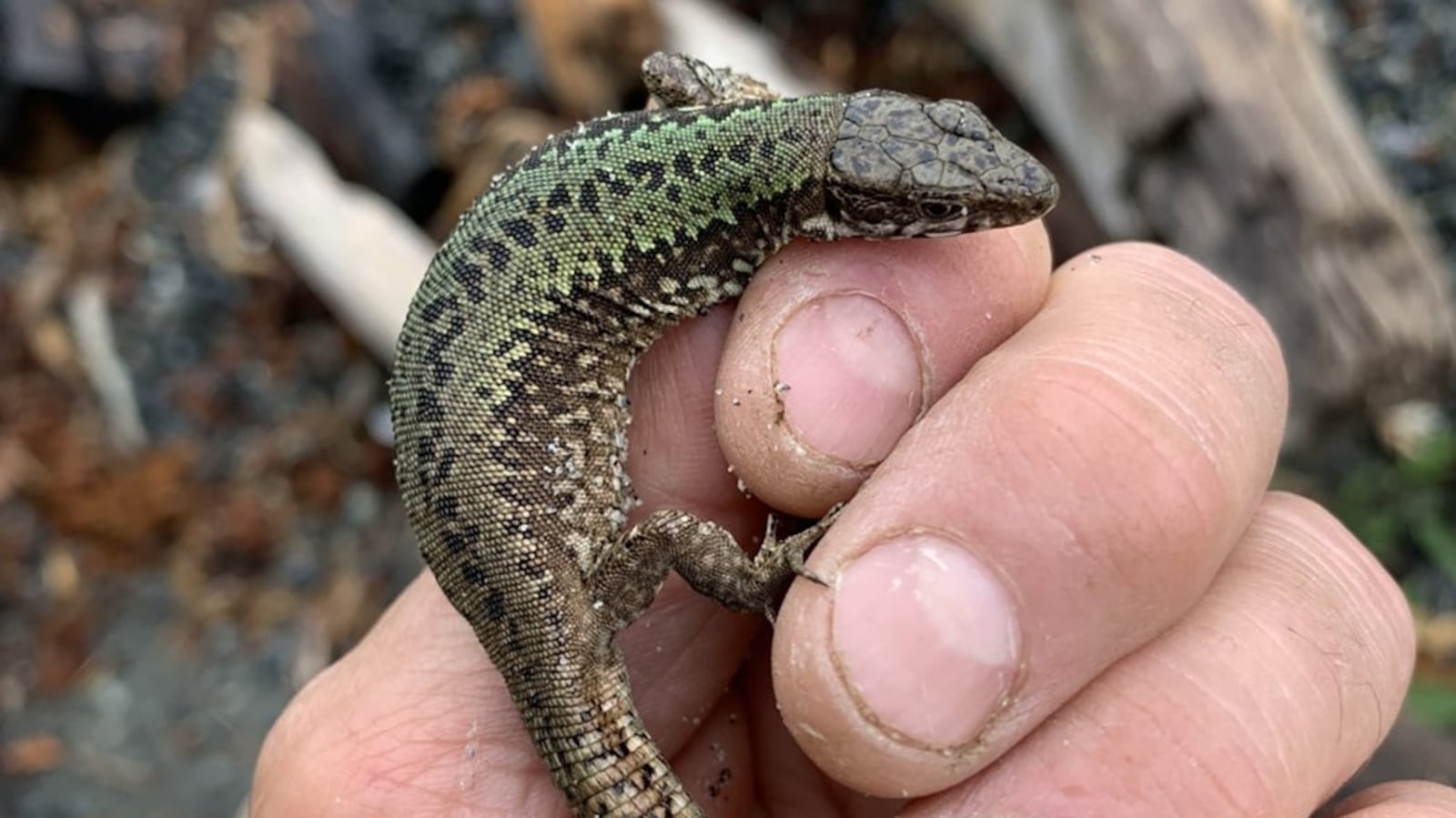
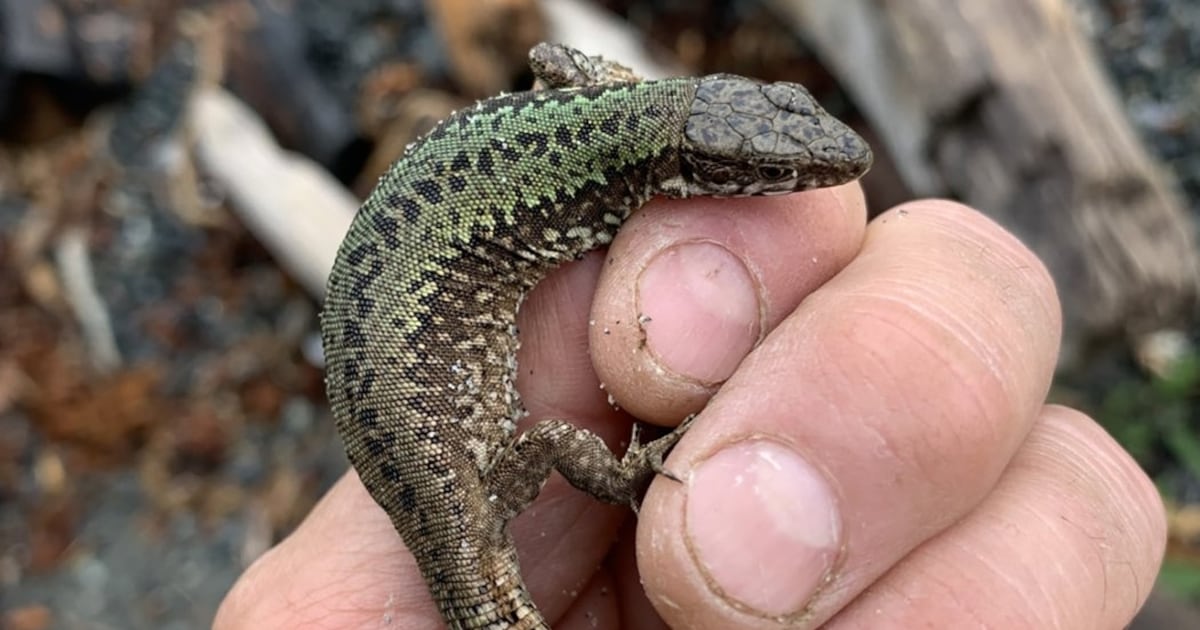
A story that began with the carelessness of a private-zoo keeper in Saanich has become one of the clearest examples of how biological invasions can have unexpected—and sometimes beneficial—consequences. The European wall lizard, introduced to Vancouver Island in 1967, is now experiencing a population boom. Along with it, the ecosystem of residential gardens is changing, as gardeners have suddenly discovered some unlikely allies.
It all began with the release of a small number of reptiles from a private zoo in Saanich. More than half a century ago, no one imagined that the population would not only survive but become one of the most successful introductions in the Canadian province of British Columbia. According to a CTV News report, the lizards’ range now covers a substantial portion of southeastern Vancouver Island, and their numbers continue to grow rapidly.
The paradox is that the species is formally considered invasive—that is, non-native and potentially harmful to local wildlife. For garden and allotment owners, however, these small reptiles have become a genuine blessing. European wall lizards mainly eat small invertebrates, including slugs, beetles, spiders and other insects that traditionally cause serious crop damage. Gardeners have noticed that in places where lizards have settled, slugs have nearly disappeared and strawberries are no longer suffering from pests.
It is also telling that in some parts of the island, residents now see these reptiles not as a threat but as a natural part of the landscape. The lizards are active during the day, tolerate the mild coastal climate well and reproduce quickly, making them a resilient population. Conservation specialists nevertheless warn that the positive effect on gardens does not eliminate the risks to native species, which may have to compete with the newcomers for food and territory.
It is important to understand what an “invasive species” is. It is an organism introduced by humans beyond its natural range that, after becoming established, begins to spread, often displacing native species. Yet, as the European wall lizard demonstrates, the consequences of an invasion are not always uniformly negative. Sometimes they lead to unexpected ecological changes in which both people and the reptiles benefit. It is worth remembering, however, that such cases are exceptions rather than the rule, and most invasive species still harm ecosystems.
The key conclusion is twofold. On one hand, British Columbia gardeners have gained a natural pest controller, reducing the need for chemicals and making gardening more environmentally friendly. On the other, the lizards’ population growth raises questions for biologists about the long-term consequences for native wildlife. In other words, this is a classic example of how human intervention—even accidental intervention—can set off a chain reaction whose effects will be felt for decades.
Ultimately, strawberries on Vancouver Island may indeed have become sweeter—but only because someone in Saanich opened a cage half a century ago. It is a reminder that nature rarely follows our plans, but always finds its own way.
Who Will Lead Vancouver Island into the Early Election: A Full Candidate Rundown
The early British Columbia election, scheduled for October 24, has shaken up the region’s political life well before the government’s four-year mandate was due to expire. NDP Leader David Eby took the decision to call it, and now that candidate nominations have officially closed, a contest is unfolding on Vancouver Island that could alter the balance of power in the provincial legislature. The list of contenders compiled by CHEK News shows that island politics is undergoing a tectonic shift: established parties are losing ground, new players—from centrists to communists—are attempting to establish themselves, and voters will see genuinely multipolar races in many ridings for the first time in a long while.
According to a CHEK News report, most incumbent island MLAs plan to seek re-election, with two exceptions. In Saanich North and the Islands and Saanich South, the incumbents are stepping aside, opening the way for new faces. In most of the remaining ridings, the NDP is fielding established contenders, while opponents from the Conservative Party, the Greens and newly formed movements such as CentreBC and OneBC are trying to turn voter dissatisfaction into seats.
The central intrigue is undoubtedly the CentreBC phenomenon—a party that appears to be built around former Green Party leader Andrew Weaver. In Oak Bay-Gordon Head, where Weaver was once an MLA and party leader, he is running again, but under a new banner. This is no ordinary candidate: a person with a doctorate in applied mathematics, a former editor-in-chief of the Journal of Climate and a member of numerous scientific societies, he is returning to politics after two terms in the legislature and a career at the University of Victoria, where he held a Canada Research Chair in climate modelling. His move to CentreBC is a bid to create an alternative both for disillusioned Liberals and for moderate conservatives unwilling to be associated with the more radical elements of their party. Significantly, the Conservative candidate in the same riding is Stan Sipos, a Yugoslav refugee who went from working on an Alberta mink farm to becoming a developer responsible for dozens of major projects in British Columbia, including the revitalization of Customs House in Victoria’s Inner Harbour. The Weaver-Sipos contest in Oak Bay-Gordon Head will likely be one of the island’s best-funded and most ideologically contrasting races.
The situation in Saanich South is no less notable, where the NDP incumbent’s departure has opened the door to unexpected candidates. The Green candidate is Lisa Lapointe, the province’s former chief coroner, who from 2011 to 2024 led investigations into unnatural and unexpected deaths, including those connected to the overdose crisis. Her reputation is built on a commitment to an evidence-based approach and public-health data—qualities that, in today’s political climate, are both strengths and vulnerabilities. The NDP candidate is Richard Zussman, a former legislative correspondent for Global BC and CBC who now works in legal journalism. Zussman is known for his work covering the provincial political scene, and his move from the press corps to the governing party is a classic example of a “revolving door” that opponents will surely use against him. The Conservatives are backing Katy Wonsted, a representative of the island’s old business establishment. Her family owns the accounting firm Ounsted and Company, and she previously owned Red Barn Market and served as director of operations at Thrifty Foods. Her experience on the Central Saanich council and police board gives the campaign a distinctly “local establishment” character—something that still carries weight in rural and suburban areas.
The growing fragmentation of the right and centre-left deserves particular attention. In Juan de Fuca-Malahat, candidates include Shane Friesen of OneBC and Jeff Brown of the Christian Heritage Party, alongside the Greens, NDP and Conservatives. Judging by Friesen’s rhetoric, OneBC is emphasizing “co-operation” and tax cuts, seeking a position between traditional conservatives and centrists. The Christian Heritage Party, meanwhile, openly states that the role of government is to “pass laws to protect public trust and the environment, ensure law and order, and provide quality health care and education based on free enterprise.” That is a marker for conservative voters who may regard even the “United Conservatives” as insufficiently traditional.
The Communist Party of British Columbia has also fielded candidates, though with little public-facing campaign information. In Cowichan Valley, that candidate is James Chamsa, who ran for Parliament as a Communist in Nanaimo-Ladysmith in 2019 and received 104 votes. In Nanaimo-Lantzville, the candidate is Pepper Saltman, whose campaign website, like that of Green candidate Charline Weatherly, could not be found. The mere presence of Communists on the ballot illustrates the breadth of the political spectrum, but their influence remains marginal.
The real battle for control of the island, however, will likely unfold in the densely populated southern ridings. In Victoria-Beacon Hill, Grace Lore, the incumbent MLA and minister for children and family development, is defending her seat against Joachim Agu, an engineer and small-business owner who immigrated to Victoria only in 2023 and has already become interim vice-president of the Victoria Conservative Association. Agu helped build more than 15 gas-turbine test stands on three continents—a typical profile for a member of the high-tech sector whom Conservatives are trying to bring into their ranks. The Green candidate is Raj Sahota, whose biography highlights the city’s multicultural character. Born and raised on the South Island, he experienced discrimination from an early age and now works as a litigator representing injured and vulnerable people.
In Victoria-Swan Lake, the contest promises to be just as intense. Nina Krieger, the incumbent MLA and minister of public safety, who previously headed the Vancouver Holocaust Education Centre, is defending her seat against Tim Taylor, a Conservative with decades of experience in commercial and residential real estate. Taylor has worked on developing housing at every level, from affordable to market-rate. His leadership of the Victoria Real Estate Board’s commercial division and his role as one of the founders of the British Columbia commercial council make him a formidable opponent in a city where the housing crisis is particularly acute. The Green candidate is Carolyn Howe, president of the Greater Victoria Teachers’ Association, whose campaign will likely focus on education and public services.
Looking at the island as a whole, several troubling trends emerge for the governing NDP. First, the Greens are fielding candidates in nearly every riding, including candidates capable of drawing votes from the progressive electorate. Second, the Conservatives are relying on “star” candidates with professional and life experience extending beyond ordinary party work: doctors, military personnel, police officers, former coroners and journalists. Anna Kindy, a doctor with 25 years of experience and a specialist in addiction medicine running in North Island, and Joshua Daling, who experienced poverty, homelessness and addiction and now leads the charity LUMARA, are not merely candidates but people with stories that resonate with voters tired of “career politicians.”
A special case is Courtenay-Comox, where incumbent Conservative Brennan Day, the former executive director of the Eureka Support Society, will face NDP candidate Will Cole-Hamilton. Cole-Hamilton is leaving Courtenay’s municipal council to enter provincial politics, and his achievement in creating the Comox Valley Housing Authority directly addresses one of the region’s most pressing problems. The Green candidate here is veterinarian Jay Van Oostdam, who spent 25 years working at Health Canada and BC Environment, which
Georgia Viaduct Repairs in Vancouver: What Drivers Need to Know
Vancouver officials have warned drivers about upcoming congestion as repair work on the Georgia Viaduct began Friday. The main problem motorists will face is the closure of the viaduct exit to Main Street. The ramp is expected to remain closed for three months, significantly complicating travel for people leaving downtown. The work will also affect the viaduct itself: city crews are replacing expansion joints on its deck and ramps. The full project is scheduled to continue until next spring, so drivers will need to be patient.
In addition to the ramp closure, drivers will face fewer lanes and possible travel delays. Pedestrians will be especially inconvenienced: the sidewalk on the Georgia Viaduct will be closed for “extended periods.” The city recommends that pedestrians use the sidewalk on the Dunsmuir Viaduct instead. The bike lane and vehicle lanes on the Dunsmuir Viaduct will remain open—an important clarification for people who use this route every day. The city also warns of periodic short-term lane closures on Pacific Boulevard beneath the viaduct when required for the work.
What lies behind these technical details? Expansion joints are specialized components that allow a bridge structure to expand and contract as temperatures change while also absorbing vibrations from passing traffic. Their replacement is a sign that the infrastructure requires substantial renewal. Built in the 1970s, the Georgia Viaduct has long been criticized for its outdated design and its impact on the urban environment. It is no coincidence that a CBC report includes video of groups of residents and business owners calling on Vancouver’s next city council to tear down the aging viaducts. This reflects a broader urban-planning dispute: some see the viaducts as essential transportation links, while others view them as barriers that disfigure the city and hinder neighbourhood development.
For now, the city has chosen repair over demolition. For drivers, that means the coming months will require patience and perhaps a change in familiar routes. Anyone who leaves downtown via the Georgia Viaduct every day should plan trips in advance and allow extra time. Pedestrians will have to get used to detouring via Dunsmuir, while cyclists have at least been spared—their infrastructure will not be affected. In the long term, the repairs may extend the viaduct’s life, but they do not answer the main question: what will the city do with the structure next? While some are repairing the joints, others continue to demand demolition.