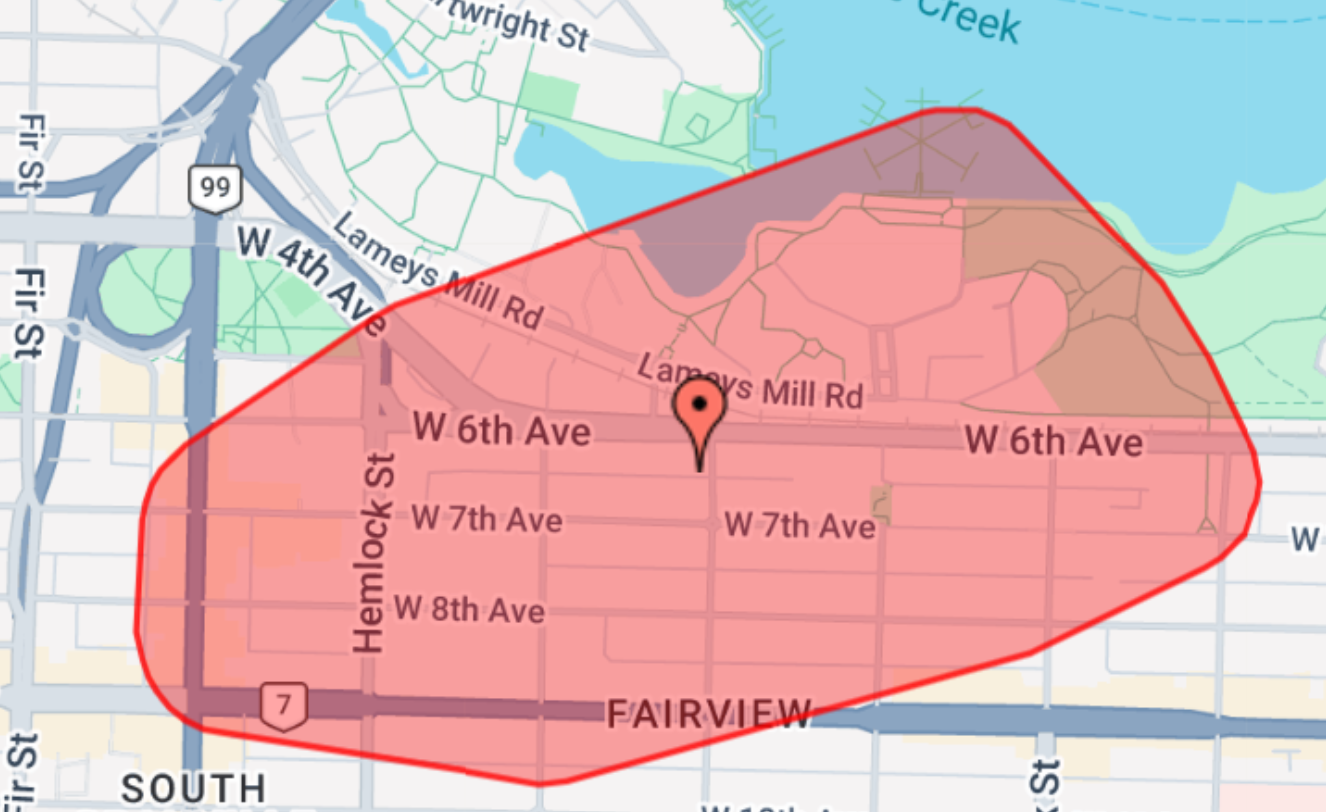
Today's news touches on several key events in Metro Vancouver: an independent probe into the death of a man in police custody, a large power outage in the southern part of the city, and a full strike by 700 utility workers threatening parks and water treatment systems.
Death under mysterious circumstances: British Columbia's police watchdog investigates after man dies in cell
A new scandal involving police actions is unfolding in the Canadian province of British Columbia. The Independent Investigations Office (IIO) has launched a probe after a man died while in custody in Vancouver. According to Castanet, the incident occurred Monday morning, just one day after the suspect was arrested and placed in the local jail. Guards found him unconscious and called paramedics, but he could not be revived — doctors pronounced him dead at the scene.
Representatives of the watchdog are remaining tight-lipped about the details of the arrest and the circumstances leading up to the tragedy. It is known only that IIO investigators intend to closely examine police actions to determine whether there is a direct link between their conduct and the detainee's death. For those unfamiliar with the Canadian system: the Independent Investigations Office is a civilian agency that operates independently of the police. Its main task is to investigate all cases of serious injury or death that occur in interactions with law enforcement or in places of detention. It is a kind of “police for the police,” intended to ensure objectivity in inquiries.
The key uncertainty remains: what exactly led to the death? Was it due to undiagnosed health issues, an accident, or excessive use of force? At present, investigators have asked potential witnesses to come forward. Until an autopsy is completed and all surveillance footage is reviewed, any theories will remain speculation. This case again raises a pointed question for Canada: how safe is it to be held in a cell, and do police always act within the law? Answers will likely only emerge once the IIO completes its investigation and releases its findings.
More than 1,500 Vancouver residents left without power after electrical outage
On Monday afternoon, the southern part of Vancouver experienced a large power outage affecting more than 1,500 homes and businesses. CityNews Vancouver reports the incident occurred shortly after noon and hit a densely populated residential area. At about 12:31 p.m. local time, power went out in an area bounded by 3rd Avenue to the north, King Edward Avenue to the south, Laurel Street to the west, and Vine Street to the east. BC Hydro repair crews arrived promptly to determine the cause of the outage, which remained unclear at the time of publication. According to the utility, 1,557 customers were affected. Fortunately, power was fully restored by 2:30 p.m. that same day. Further details of the investigation and the exact cause have not yet been disclosed in the CityNews Vancouver report.
Metro Vancouver workers declare full strike: protests reach boiling point
Regional utility workers in Metro Vancouver have escalated from targeted pickets to a full strike. This decision is the culmination of months-long tensions with management after talks for a new collective agreement reached an impasse. Global News reports that union representative Bill Tileman confirmed that, as of Monday, all members of the Greater Vancouver Regional District Employees’ Union ceased work, except for employees deemed essential for safety.
The core of the dispute stems from a protracted standoff: the previous contract expired in December 2024, and the parties have been unable to agree on new terms since. The union accuses Metro Vancouver leadership of dragging out negotiations and “incompetence,” while the administration says it offered dates to resume talks “without preconditions,” claims the union disputes.
The strikers number more than 700 people responsible for critical systems that keep a million-plus city running: water and wastewater treatment, air quality monitoring, natural resource management, and the operation of parks and ecological reserves. This infrastructure supports daily life in the metropolis. A partial or full paralysis of such services can have serious consequences for residents.
The union's statement specifically urges the public to temporarily avoid visiting 30 regional parks and green spaces. The list includes popular recreation areas such as Grouse Mountain Regional Park with its famed Grouse Grind trail, Pacific Spirit Park in Vancouver, and Burnaby Lake Regional Park. Because staff at these sites will not be working, visiting them could be not only inconvenient but potentially unsafe.
Union president Jesse Medeirush made the position clear: "Our frontline workers have been without a contract for 17 months. They are tired of delays and Metro Vancouver's incompetence. Unfortunately, we are forced to take these strong measures to make management return to the bargaining table without preconditions." On Monday, workers are expected to decide whether to continue the full strike or consider other forms of protest to resume dialogue. The Global News article emphasizes that no new talks have been scheduled, highlighting a deep rift between the parties.
The key takeaway is the vulnerability of urban infrastructure. The dispute exposes not just a labor quarrel but a fundamental problem: services like water treatment and park maintenance are taken for granted until they stop. The numbers speak for themselves: 700 people keep systems running that millions depend on. The lack of a contract for 17 months points to systemic failures in the bargaining process. For residents, this means not only closed parks but potential risks to everyday comfort and environmental safety, especially in the height of summer when strain on services increases.