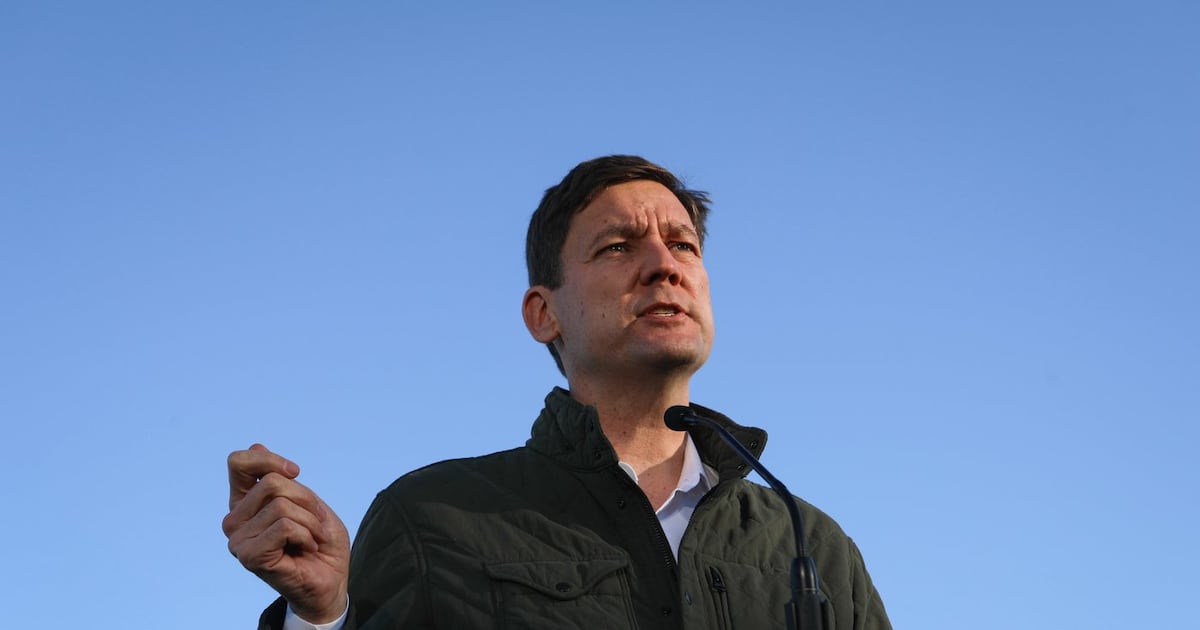
This digest covers three stories from British Columbia. In Pender Harbour, the nearly century-old Sundowner Inn is on the market for $2.6 million. The former St. Mary’s Hospital on the water is priced at roughly the same level as a benchmark house in Vancouver. A column in The Tyee takes an ironic look at whether “Green” Pete Fry’s victory in the Vancouver mayoral election foreshadows the provincial election; the author points to the differing political contexts and the absence of a single trend. Finally, David Eby’s NDP is focusing on Surrey, a key swing area where the campaign’s outcome will likely be decided.
Historic Waterfront Hotel in B.C. Listed for Slightly More Than a Benchmark Vancouver House
A property has appeared on British Columbia’s real estate market that is attracting attention not so much because of its price as because of its history and unusual location. The Sundowner Inn is a nearly century-old building on the shores of Hospital Bay in the Pender Harbour area of the Sunshine Coast. The hotel is listed for $2.6 million, a sum that, as Vancouver Is Awesome notes, is only slightly higher than the price of a benchmark house in Vancouver. For a buyer dreaming of a lifestyle change, the property looks almost like an invitation into another reality—with water views, its own dock and a rich past.
The story of the site began long before the hotel appeared. The building was originally not a hotel but St. Mary’s Hospital, which had room for 12 patients. As realtor Joel O’Reilly explained, shipping was active in the region at the time, so a hospital on the water was a logical solution. “It was the first and only hospital on the Sunshine Coast in those days when it was built, so obviously it was an important part of the community,” the publication quotes him as saying. The bay took its name from the hospital, and the building itself is located directly above the dock. When the hospital closed in 1964, the structure was converted into the Sundowner Inn.
Today, the nearly century-old hotel has been vacant for most of the past decade. However, O’Reilly says the building is in good condition: major renovations were carried out shortly before it closed. Over the years, the property has become something of a local landmark, sparking curiosity among residents. “People are really excited about the next chapter of its life,” the realtor says. Significantly, interest in the hotel coincides with another development: the neighbouring commercial property, John Henry’s Marina and Resort, has just been sold. O’Reilly hopes the marina’s new owners and the hotel’s future buyer will bring fresh energy to the community. “It will be a real revitalization of the bay,” he says.
So what exactly does a buyer get for $2.6 million? The hotel’s interior layout largely reflects its original use as a hospital: it has 11 bedrooms and one suite, which could be used as hotel rooms or as accommodation for an owner-operator seeking, as the publication puts it, a “Hallmark movie” change of lifestyle—from a big city to a quiet waterfront location. In addition to the living quarters, the building has a restaurant with a commercial kitchen and an event space known as the “chapel.” The furniture is also included in the sale. “The future of this place is really exciting because somebody can buy this property and create their own vision,” O’Reilly emphasizes.
To better understand the context, several points are worth explaining. A “benchmark house” refers to a typical home whose price is calculated using a special methodology and serves as a reference point for the city’s real estate market. Today, that price is comparable to the cost of an entire historic waterfront hotel—an indication of just how overheated the housing market is in the metropolis. The Sunshine Coast is a mainland region of British Columbia accessible only by ferry or plane, making it attractive to those seeking seclusion. Hospital Bay is a tiny inlet in the Pender Harbour area, known for its scenic coves and maritime history.
The main takeaway is this: for a price comparable to an average Vancouver house, it is possible to buy a property with nearly a century of history, its own waterfront land and the potential to become a boutique hotel, restaurant or private residence. It is a rare opportunity for someone willing to trade the bustle of city life for a quiet existence by the sea. However, the buyer will need to invest in restoration and marketing to restore the hotel’s former role in the community. The fact that the hotel is listed at the same time as the neighbouring marina gives local residents hope for a comprehensive revival of the bay—and that may be the most valuable part of the offer, something that cannot be measured in dollars.
Does Vancouver’s “Green” Victory Foreshadow the Future of British Columbia?
The recent municipal elections in Vancouver and other British Columbia cities provided plenty of food for thought, but interpreting them as a direct forecast of the provincial election would be a serious oversimplification. That is the argument made, with considerable irony, by columnist Steve Burgess in The Tyee, responding to readers’ questions about whether the municipal results contain signals for the province’s upcoming vote. The column is framed as a satirical piece of advice to politicians from a “speechwriter” with a fictional academic degree, and that tone sets the framework from the outset: trying to find a single political meaning in two campaigns separated by two weeks is a thankless task.
The central story of the local elections was the election of “Green” candidate Pete Fry as Vancouver’s mayor, defeating incumbent Ken Sim. Burgess repeatedly emphasizes the size of the margin: Fry’s allies won the most votes on city council, while his party’s rival was almost completely pushed out of elected bodies. The situation with the parks board was especially telling: ABC, the party that had intended to abolish the city’s parks authority, elected no one to it. The satirist suggests that candidates’ political weight should be measured not only by their votes but also by their ability to provoke rejection among their opponents. In his view, voters seemed to decide that anyone who was Ken Sim’s enemy was automatically their friend.
Particular attention is given to former provincial premier Michael Harcourt and Jeff Meggs, chief of staff to another former premier, John Horgan. They left the progressive camp and supported Rebecca Bligh, who received just under 8,000 votes compared with Fry’s approximately 87,700. The nearly elevenfold gap is a vivid illustration of how far the predictions of political veterans can be from voters’ actual behaviour. Burgess even advises them to stay away from betting shops.
Events in other cities further undermine the idea of a single trend. In Surrey, 82-year-old Doug McCallum became mayor again, and the journalist reminds readers that in 2022 he was acquitted of a charge of public mischief and managed to recover from a serious leg injury. Former mayor Brenda Locke, in the author’s view, spent too much time fighting over the already settled issue of a new police service, leaving the race as a choice between two versions of absurdity. It also turned out that the polls had missed the mark: Canada Pulse Insights showed Locke with a commanding lead, while voters, according to respondents, believed the city was moving in “the right direction.” In New Westminster, by contrast, the right won, ousting the incumbents—and the author concludes that looking for a unifying theme in this mosaic is as pointless as looking for meaning in goose droppings.
The provincial Greens tried to capitalize on Vancouver’s result by issuing a victory news release headlined by the claim that Pete Fry had become the first “Green” mayor of a major Canadian city, supposedly signalling growing support for the Greens ahead of the provincial election. Burgess is skeptical: to draw a direct parallel, the Greens would have to persuade Premier David Eby to step aside and unite the left flank, which has not happened. Fry’s victory, he believes, does not in itself represent a province-wide “Green wave.”
The article does, however, contain a serious subtext that can easily be missed beneath the irony. The comparison with Ontario, where Premier Doug Ford, in the author’s words, “blows up bike lanes,” serves as a marker of a broader conflict: according to the column, Vancouver voters rejected nostalgia for the 1950s. This is less an election forecast than an observation about urban politics shifting toward a progressive agenda. For readers following Canadian politics, three points matter: municipal elections in British Columbia take place at different times and under different rules; provincial elections are separate campaigns with a different logic; and a municipal result can be projected onto the provincial level only when federal and local trends coincide—which they do not in this case. That is the column’s central thesis: one victory, however striking, is not a prophecy. If a “Green wave” does occur, it will be determined not by Vancouver’s results but by the provincial Greens’ ability to build a coalition with the left. For now, as the author concludes, all that remains is to stay in shape and protect one’s elbows from “electoral” strain.
The Battle for Surrey: Why B.C.’s Key District Has Become the NDP’s Campaign Hub
A brief CTV News report devoted to the final stretch of British Columbia’s election campaign may look modest at first glance: the text contains just one sentence and a photo caption. Yet even this fragment signals an important political shift—the New Democratic Party (NDP) is focusing on Surrey, one of Canada’s most populous and fastest-growing cities, where the outcome of the vote could determine the fate of the entire province.
According to the report, provincial NDP leader David Eby is campaigning with an emphasis on Surrey, which the publication explicitly calls a “battleground.” The report also mentions a campaign stop by Eby in Kelowna, where he announced investments in expanding Kelowna General Hospital. This shows the party’s strategy: maintain and expand support in different parts of the province by combining socially significant health-care promises with a battle for votes in Vancouver’s suburbs.
The term “battleground”—also known in Canadian political usage as a “swing riding”—refers to an electoral district where no party has a durable advantage and where votes traditionally shift from one political force to another. Victories in such districts often determine the overall election result, so parties direct more resources, leaders and time there. Surrey falls into precisely this category: it is a rapidly growing city with a highly ethnically diverse population, where both the NDP and Liberals have historically been strong, while other forces have also gained ground in recent years. For the New Democrats, control of Surrey is critical, since securing a majority in the provincial legislature is difficult without it.
The mention of Kelowna, located in the province’s Interior, adds an important nuance. The promise to expand Kelowna General Hospital is a typical example of a campaign spending pledge in health care, one of the most pressing issues for British Columbia voters amid overcrowded hospitals and a shortage of family doctors. The move allows the NDP to speak simultaneously about supporting residents of the Interior and competing for votes in urban centres. The photo caption cites The Canadian Press and dates the event to October 20, marking it as a moment in the height of the campaign.
The report’s key conclusion is simple but significant: in the final phase of the election, the NDP is deliberately shifting its focus to Surrey, acknowledging its decisive role. This reflects a nationwide trend in which election outcomes are increasingly determined by the suburbs of major cities rather than traditional industrial or rural areas. For observers, it is a signal to watch the results in Surrey closely—they will likely indicate whether the NDP will retain power in the province. More information about the report and its context is available in the CTV News article.