This digest covers the complete halt to air traffic in the United States and Air Canada’s offer of free flight changes, dozens of cancellations in Vancouver, vandalism at the city’s oldest mosque—including a message scrawled on its doors and the community’s response—and an amusing story about a father in British Columbia whose cloud photo made it onto television thanks to a viral TikTok campaign amid flooding.
British Columbia Under Water: How Fathers, TikTok and Old Cloud Photos Became Symbols of a New Reality
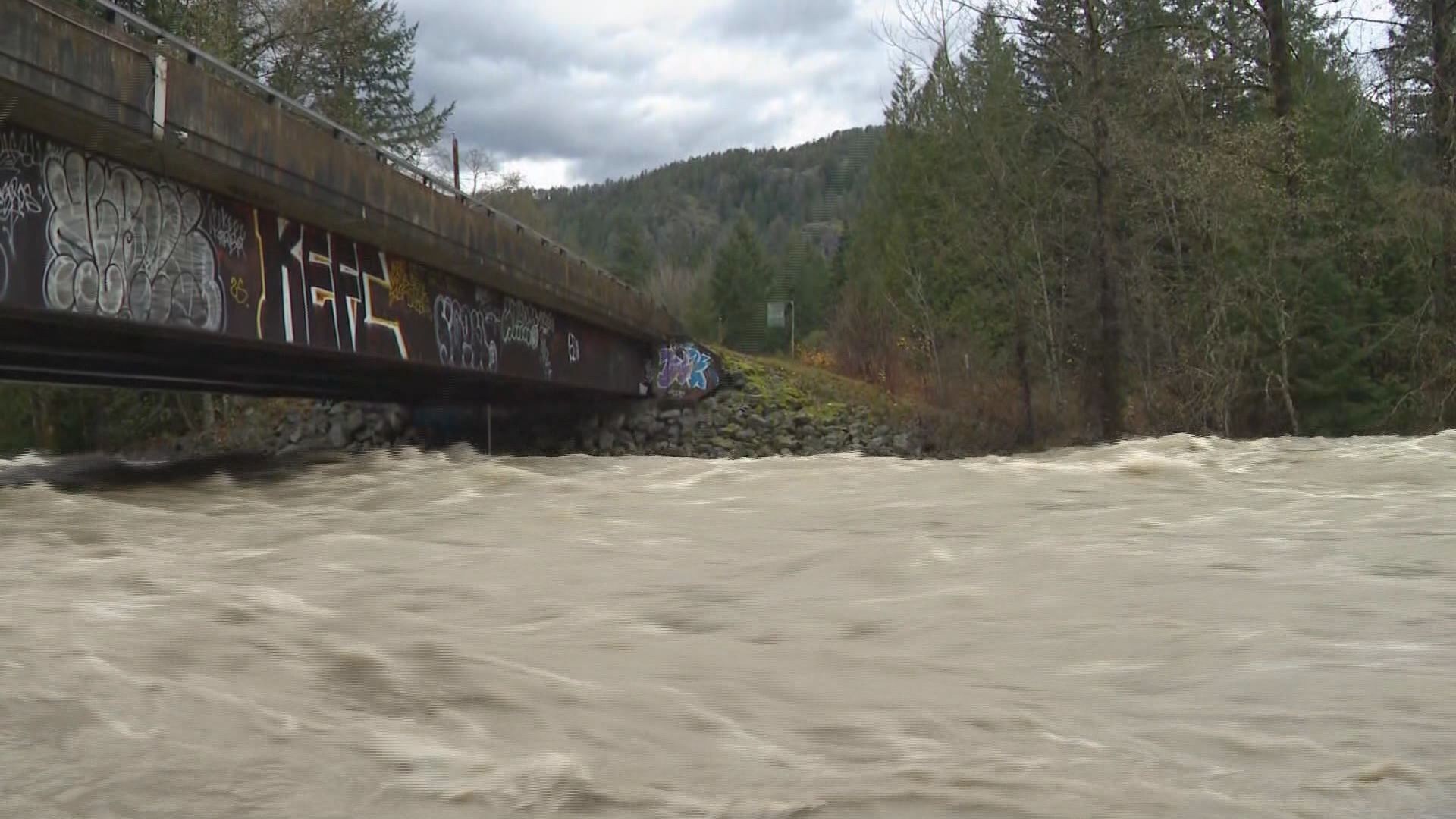
At first glance, a piece published on the Global News website under the headline “B.C. flood update” looks like a routine report on flooding in the Canadian province of British Columbia. In fact, however, it is a much more interesting and revealing case than a simple regional weather story. A short clip accompanying the video focuses less on the flooding itself than on a tangential, almost comical story: a father in British Columbia who dreamed of seeing his cloud photo on television finally got his wish thanks to a viral TikTok campaign. Wedged between metadata about the video’s length and the date “55 months ago,” this detail unexpectedly turns a news update into an illustration of how today’s media landscape, social networks and climate coverage intertwine in a curious tangle.
Judging by the link to the story, this is a video format typical of digital newsrooms: a short news segment in which the main information is conveyed visually, while the caption serves mainly as a hook. The headline promises an update on flooding in British Columbia—a region that has repeatedly been hit by extreme weather in recent years, including atmospheric rivers and flash floods. But the body of the piece takes the reader in a different direction: instead of information about water levels, evacuations and damage, we get the story of a man whose cloud photo went viral on TikTok and eventually made it onto television. This is a classic technique in modern journalism: pairing a serious climate issue with a human, almost anecdotal story to hold the attention of an audience inclined to scroll quickly through its feed.
Let’s look at the details. The phrase “B.C. dad hoping to see his cloud photo on TV get his wish following viral TikTok campaign” means that a father in British Columbia who had hoped to see his cloud photo on television got his wish thanks to a viral TikTok campaign. Every word matters here. “Cloud photo” means a photograph of clouds—a picture of the sky that has no news value on its own but acquires it in the context of going viral. “Viral TikTok campaign” refers to a campaign on TikTok that spread like a virus: a coordinated or spontaneous collective effort by users that prompted the media to take notice of one person’s request. “55 months ago” indicates that the video is likely archival or a repost, adding a sense of temporal depth to the story: the event happened nearly five years ago and has resurfaced.
Why does this matter? At first glance, it is a harmless story about a dream coming true. But, viewed more broadly, it reflects several trends. First, it illustrates how social media is redefining the news agenda: newsrooms increasingly respond to requests that take shape on TikTok, rather than the other way around. Second, it is an example of a “softer” approach to climate coverage: flooding in British Columbia remains in the background, while human emotion takes center stage, making distressing news feel less alarming. Third, it is a reminder that digital archives have a life of their own: content from five years ago can suddenly recirculate and take on new relevance.
The key insight in this brief story is that regional climate news increasingly comes in a hybrid format, packaging serious issues in a light, almost entertaining wrapper. The excerpt provides no data on the scale of the flooding and contains no quotes from officials, but the very fact that this story appeared under the banner “B.C. flood update” says a lot: media outlets are looking for ways to hold audiences’ interest in recurring climate stories, and human-interest pieces become the glue that holds the coverage together. For readers, it is a reminder that behind an apparently random story about a cloud photo lies a broader picture: journalism is adapting to the age of algorithm-driven feeds and viral content, where even a flood story can begin with TikTok.
Complete Halt to U.S. Air Traffic: Air Canada Offers Free Flight Changes, Vancouver Cancels Dozens of Departures
On Friday, November 13, U.S. airspace was completely closed to commercial flights. The Federal Aviation Administration (FAA) announced a nationwide ground stop, citing “extraordinary circumstances” and “safety considerations.” The event caused the most extensive disruption to global aviation in recent years, and its effects were felt immediately by passengers on both sides of the Canada–U.S. border. Vancouver International Airport (YVR) found itself at the center of the logistical chaos: according to FlightAware, 18 flights were canceled over the past 24 hours, another 37 departures were delayed, and more than 16 arriving flights were running late. Among those canceled were evening flights to Los Angeles, Palm Springs, San Francisco, Portland, Sacramento and Seattle, as well as several flights to California.
Against this backdrop, Canada’s national carrier, Air Canada, responded quickly, revising its ticket policy, Vancouver Is Awesome reports. The airline said it was “closely monitoring the situation” and allowed passengers to change the date or time of departure free of charge, subject to seat availability, for flights affected by air traffic control restrictions on November 13 and 14. The offer applies to airports in Halifax, Vancouver, Montreal, Ottawa, St. John’s, Toronto and Calgary. Passengers can simply go to their booking and select a new flight. Customers who purchased tickets through Air Canada Vacations should call 1-800-296-3408 directly. Before heading to the airport, passengers are advised to check their flight status online or through the automated information system at 1-888-422-7533.
Notably, other Canadian carriers—WestJet and Flair Airlines—have not yet posted similar rebooking policies on their websites. They may contact affected passengers directly; Vancouver Is Awesome has already reached out to them for comment. Global Affairs Canada has also updated its travel advice for the United States, warning of disruptions to air travel nationwide and advising Canadians to “contact your airline for information on how this may affect your plans.”
To understand the scale of what is happening, it is worth clarifying a few terms. A “ground stop” is an FAA directive prohibiting all or some aircraft from taking off within a given airspace or from heading to specific airports. Unlike a “ground delay,” which simply pushes back departure times, a ground stop blocks traffic entirely until further notice. In aviation law, “extraordinary circumstances” is a legal category that may exempt carriers from having to pay compensation for canceled flights, although in this case Air Canada voluntarily offered passengers assistance. Finally, “space permitting” means that a free switch to another flight is possible only if seats are still available—a significant limitation amid mass cancellations.
The key point for passengers is that the disruption has affected not only transatlantic and transcontinental routes but also short cross-border flights used daily by thousands of British Columbians. Vancouver, Western Canada’s largest hub and the major city closest to the United States, is taking the first hit. The cancellation of evening flights to Seattle and Portland—cities that are only two to three hours away by car—places additional pressure on ground transportation and hotels. It is also telling that airlines are responding with varying degrees of preparedness: Air Canada, with the largest fleet and the most developed disruption-management system, was able to introduce a flexible policy quickly, while WestJet and Flair have so far remained silent, which could lead to a wave of complaints and claims.
The main takeaway for travelers is clear: when planning trips to the United States or through U.S. airspace in the coming days, allow extra time, closely monitor FAA updates and your flight status, and keep all receipts and booking confirmations—they may be needed for rebooking or refunds. The situation remains fluid, and until the restrictions are officially lifted, no flight to the United States can be considered guaranteed.
Vandalism at Vancouver’s Oldest Mosque: Between Threat and Confusion
On Thursday night, Vancouver’s oldest mosque, Al Masjid Al Jamia, was vandalized. Shortly before 11:30 p.m. Pacific time, an unknown person wearing a gray jacket with the hood up, carrying a black backpack and a can of red paint, approached the entrance and wrote “UK BLOOD IS ON YOUR HAND” on the doors, then left about a minute and a half later. The entire incident was captured on surveillance cameras. For mosque director Haroon Khan, what he saw came as a shock. “I couldn’t believe it when I saw the picture. I thought it was from somewhere else,” he said, adding that he felt “deeply sad” and that “it breaks my heart to see this.” The Vancouver Police Department was no less perplexed: Sgt. Adam Donaldson said plainly that the message was “very confusing” and its meaning was unclear, but stressed the main point—the message had been put on a mosque, which meant “it was done to intimidate.” So far, he said, investigators do not have enough grounds to classify the incident as a hate crime. Until relevant evidence emerges, it will be investigated as mischief, but police intend to “get inside the head” of whoever did it. Meanwhile, patrols in Fairview, where the mosque is located, were stepped up on Friday.
The context adds another layer of urgency to the story. Khan says the hatred he encounters is “very real and virulent,” and recalls that it was on full display during a recent open house: “The comments we got on social media were insane. The worst of the worst.” In his view, this shows how ignorance and fear can combine into what he calls “a very powerful combination,” causing hatred to manifest itself in “very real and destructive” ways. At the same time, the mosque director is choosing dialogue over confrontation: he would like to speak with the vandal to “clear up any possible misunderstandings,” and says that “sometimes good people do bad things” and that “if you go out with a spirit of reconciliation, you can overcome this.” “The door can always be repainted,” he concludes. Al Masjid Al Jamia opened in 1963 as a cultural center for the growing Pakistani Canadian community. It was converted into a mosque in the mid-1980s and is now known, in Khan’s words, as “the spiritual home for the Muslim community of Vancouver and British Columbia”—“the root of all the mosques that have been established since.”
A few concepts help put the incident in context. Under Canadian law, a hate crime is not a separate offense but a motive: law enforcement must prove that the act was committed out of prejudice against a particular group. Without such evidence, the case proceeds under the less serious charge of mischief, which explains the police’s caution. The message “UK BLOOD IS ON YOUR HAND” appears to accuse the Muslim community of bloodshed in the United Kingdom, but without additional context it remains ambiguous—which is precisely what has confused investigators. Finally, an “open house” is a common practice among Canadian mosques, where the community invites neighbors and anyone interested to learn about Islam firsthand. As the reaction on social media shows, such events can also become targets for online hate.
There are several key takeaways from the incident. First, police have acknowledged that the act was intended to intimidate but are not rushing to make a legal classification—a reminder of how high the bar is for proving a hate motive. Second, the community’s response has been notably conciliatory: instead of escalating the situation, it has offered dialogue and a willingness to “repaint the door,” in stark contrast to the vandal’s aggressive message. Third, the story highlights a broader problem: the rise in online hate directed at Muslim institutions, which, according to Khan, is showing itself “in the worst ways.” Fourth, the symbolic importance of the site matters: an attack on the region’s oldest mosque is seen not as an isolated incident but as an assault on the entire community, prompting authorities to increase patrols. Finally, Sgt. Donaldson’s remark about the need to “understand what’s in the person’s head” underscores that, until the motive is established, the public is left with an open question: was this a deliberate act of hate or something else? The answer will determine whether the case becomes a lesson in how Canada responds to threats against religious minorities, as CBC reports in detail.