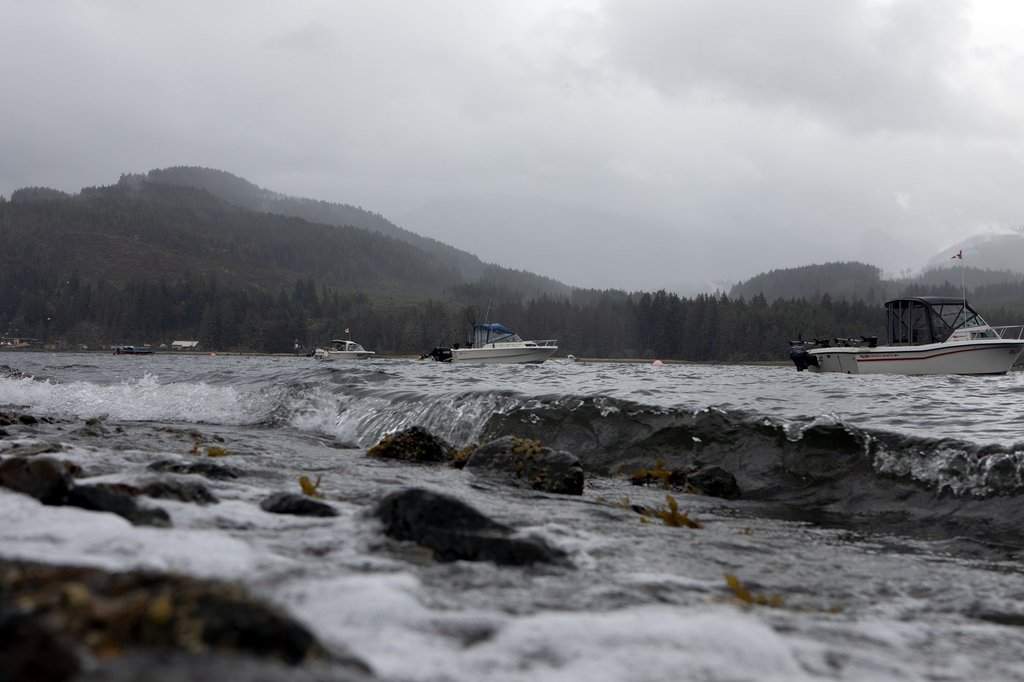
An autumn storm will hit the province’s coast, bringing rain and strong winds. A West Vancouver resident has been fined $27,000 for baiting bears and coyotes—a direct ban and a warning to everyone. The final blow for a market manipulator: Canada’s regulator is imposing a lifetime ban on securities trading on a British Columbia resident.
$27,000 Fine for Feeding Bears and Coyotes: One Wildlife Violation in British Columbia
A British Columbia resident has received a substantial fine of C$27,000 for deliberately luring dangerous wildlife in West Vancouver in the spring of 2022. This is not merely another penalty for breaking the rules, but a striking example of how one person’s irresponsible actions can pose a real threat to both animals and people. The province’s Conservation Officer Service reported that Kenneth Amaral placed food bait at several locations along Keith Road between April 26 and May 8, 2022, doing so in close proximity to homes and a pedestrian trail.
The investigation found that both bears and coyotes came to feed at the sites over several days. According to inspectors, what was particularly troubling was Amaral’s admission that he had deliberately put out the food despite knowing it was prohibited—even after a local resident publicly shamed him for doing so. Such behaviour borders on outright contempt for the law and common sense. Conservation officials stress that actions like these endanger the animals themselves: wild creatures that learn to associate people with food quickly lose their fear and begin acting aggressively, entering residential neighbourhoods where they inevitably face a tragic end—either being shot or euthanized.
Conservation Officer Sergeant Chris Doyle said in a video statement that the sentence should serve as a warning to everyone: feeding dangerous wildlife is a serious offence that puts both people and animals at risk. Significantly, C$20,000 of the fine will go to the Habitat Conservation Trust Foundation, creating a certain symmetry: money that was supposed to buy treats for wild animals will now be used to protect them. Inspector Simon Gravel added that bears and coyotes that begin associating human presence with food are far more likely to enter populated areas, creating conflict situations.
The case raises an important question about how seriously some people take the rules governing coexistence with wildlife. The provincial Wildlife Act explicitly prohibits feeding dangerous animals, and a $27,000 fine is not the harshest measure that may follow. Repeat violations can result not only in financial penalties but also in prison time. Local authorities urge residents to keep their distance from wildlife, dispose of garbage properly—open waste containers are among the most common reasons bears visit—and report suspicious incidents to the Report All Poachers and Polluters hotline.
It is worth noting that incidents like this are not uncommon in British Columbia, where wilderness exists virtually alongside urban development. However, as experts rightly point out, the source of the problem is often not the animals themselves but human foolishness and misplaced compassion. People who feed wildlife out of good intentions rarely consider the consequences. A bear that receives food outside someone’s home will remember the experience and start returning, losing its natural fear of humans. Ultimately, an animal that was merely following its instincts may have to be destroyed. That is precisely why conservation officers act so firmly. As CBC News reports, Amaral did not dispute his guilt, and his case became a clear example that caring for wildlife must not turn into creating a deadly danger for it.
A Ban That Flew from Boston to Vancouver: How a Canadian Penny-Stock Manipulator Was Caught by His Home Jurisdiction
Sometimes justice moves slowly but relentlessly, especially when cross-border financial crimes are involved. The story of Steve Marko Bajic, a 56-year-old British Columbia resident with Canadian and Croatian citizenship, is a classic example of how the globalization of financial markets forces law-enforcement systems in different countries to work together. Nearly three years ago, Bajic pleaded guilty in a U.S. court to conspiracy to manipulate securities markets, received what amounted to a symbolic sentence of one day in prison, and returned to his normal life in Vancouver. Now, however, his past has caught up with him in his home country of Canada, where regulators intend to impose mirror sanctions, effectively cutting him off from lawful activity in the securities market for life.
The case, scheduled to be heard by the British Columbia Securities Commission on September 8, concerns the so-called reciprocal recognition of sanctions. Because Bajic’s offence in the United States also violates Canada’s Securities Act, the provincial regulator has the authority to impose the same restrictions that were imposed by U.S. authorities. Those restrictions are severe: a permanent lifetime ban on trading securities, a ban on serving as a director or officer of companies, and a ban on promoting, managing, or advising securities issuers. For someone whose career was built on shadowy stock transactions, this amounts to professional death in the legitimate financial sector.
What did he do? Bajic was part of an international group that spent decades refining a “pump-and-dump” scheme—artificially inflating the price of cheap shares and then selling them at an inflated price. To conceal his tracks, he used a network of foreign shell companies through which he held shares in dozens of U.S. penny stocks—extremely cheap speculative securities traded over the counter. These structures allowed him to circumvent the U.S. Securities and Exchange Commission’s disclosure requirements for large shareholdings. Then, while remaining in the shadows, Bajic secretly organized aggressive promotional campaigns, creating artificial demand among naïve retail investors who believed the companies had strong potential. Once the price soared, he sold the shares through banks and brokers whom he misled about the securities’ true owner. The total proceeds from the schemes amounted to tens of millions of dollars, although according to U.S. prosecutors, Bajic personally earned approximately $837,000, which was ultimately confiscated.
A particularly notable figure in this story is Fred Sharp, a former West Vancouver lawyer who prosecutors say was the mastermind behind the entire criminal empire. Beginning in 2021, U.S. regulators named Sharp in numerous civil and criminal cases as the “architect” of multiple schemes he coordinated directly from his Vancouver office. Bajic is identified in those documents as one of Sharp’s clients. Significantly, in the case of Zhiin Yvonne Gazarch, another alleged Sharp associate who became the subject of a civil SEC lawsuit, Bajic is mentioned as the person who contacted Gazarch—known within Sharp’s operation by the code name “Wires”—to distribute proceeds from stock sales. Sharp himself has already been found liable for civil fraud, although his criminal charges remain unproven, and the SEC is now attempting to recover $52.9 million from him through the British Columbia courts.
A statement by Doug Muir, the commission’s director of enforcement, sheds light on the motivation behind the Canadian authorities’ actions. He emphasized that market manipulation and fraud are, by their nature, based on deception. Given the growing integration of capital markets across North America and the fact that Canadian investors can purchase securities offered in the United States, damage to the reputation of U.S. markets can seriously undermine Canadians’ confidence in the integrity of capital markets as a whole. The statement reflects a new reality: cross-border financial crimes require equally cross-border enforcement. Notably, the commission is considering at least three other similar reciprocal-ban applications involving British Columbians allegedly connected to Sharp, including Jack Friesen, Avatar Singh Dhillon, and the aforementioned Gazarch.
For the average reader, it is important to understand what a “penny stock” is and why these securities are so attractive to fraudsters. Penny stocks are shares of small companies that trade for less than one dollar per share and generally do not meet the listing requirements of major exchanges such as the NYSE or NASDAQ. Because they are subject to limited reporting requirements and have low liquidity, they receive little oversight, making them ideal targets for manipulators. Organizers buy large quantities of such shares through front companies, then circulate false or misleading news through spam emails, forums, or fabricated analyst reports, driving up the price. When the price peaks, they immediately sell their holdings, leaving ordinary investors with devalued shares. This was precisely the mechanism used by Sharp’s and Bajic’s group, adapted to modern conditions through complex offshore structures.
It is worth noting that Bajic’s punishment in the United States was surprisingly lenient—one day in prison, which he has already served, and the forfeiture of his illegal profits. U.S. prosecutors declined to seek restitution for victims, citing the enormous number of victims and the difficulty of calculating their losses. That decision may seem unfair to those who lost their savings, but it reflects the practical difficulty of such cases, in which victims are scattered around the world and the exact amount of damage is difficult to establish. Now, however, with the Canadian regulator taking action, Bajic will have to face consequences that may prove more tangible than his U.S. sentence. A ban on working in Canada’s securities industry effectively deprives him of the ability to earn a legal livelihood in the country where he lives—and is perhaps the harshest possible punishment for someone who made financial manipulation his profession. The situation itself serves as a warning to anyone who believes they can commit crimes in one jurisdiction with impunity and then live comfortably in another. Modern regulators have learned to share information and coordinate their actions, making international financial markets a place where it is increasingly difficult to evade justice.
First Fall Storm to Hit British Columbia’s Coast: What Residents Can Expect
The Canadian province of British Columbia is preparing for the first genuinely autumnal storm of the season, which forecasters say will bring heavy rain and strong winds to much of the Pacific coast. Environment Canada has already issued a special weather statement covering the province’s north and central coasts, as well as the west coast of Vancouver Island. The affected communities include Prince Rupert, Kitimat, and Bella Bella, along with the coastal area stretching from Zeballos in the north to Sooke, near Victoria.
According to meteorologists, the main phase of the bad weather will occur on Tuesday, when significant rainfall is expected, potentially causing localized flooding and increasing the risk of landslides in foothill and hilly areas. The peak wind load is forecast for Tuesday night into Wednesday morning. Forecasters are paying particular attention to the fact that, after the dry conditions experienced across southern British Columbia for much of the summer, the ground may be unable to absorb the sudden influx of water. This increases the likelihood of standing water on roads and localized flooding in low-lying areas, even in places where such problems are unusual.
Interestingly, Environment Canada has already classified the weather system as a fall storm, even though astronomical fall will not officially begin in British Columbia until September 22. Nature, it seems, has decided not to wait for the formal date and is reminding coastal residents that the seasons are changing. The provincial wildfire service, meanwhile, says the region is moving toward more “fall-like” weather, with higher humidity and temperatures close to seasonal norms. However, emergency officials warn that despite the arrival of rain, dry conditions persist in the southern Interior and southeastern parts of the province, so it is too early to relax.
For those unfamiliar with the region’s geography, British Columbia is Canada’s westernmost province, bordered by the Pacific Ocean. Its coastline is rugged, with numerous fjords and islands, and its climate is shaped by oceanic air masses. That is why fall storms are a familiar occurrence here, although they still require heightened attention from authorities and residents. Vancouver Island, which is included in the warning, is the largest island off the west coast of North America and is separated from the mainland by the Strait of Georgia.
As for practical advice, residents and visitors in coastal areas should remain alert: avoid travel during the storm whenever possible, especially in the evening and at night; monitor local warnings; and avoid parking vehicles near trees or power lines that may not withstand strong gusts. Tourists planning mountain hikes or coastal walks should postpone those activities until calmer days. It is also important to remember that even after the rain stops, the ground remains saturated and the risk of landslides continues for some time. As usual in such situations, local authorities are on heightened alert and will respond quickly to weather-related emergencies. More information about developments can be found in the original Global News article.