In British Columbia, the long weekend is being overshadowed by wildfires and evacuations, chaos in the air, on ferries, and at the border. Meanwhile, the Vancouver Whitecaps are announcing a Pride match with a touching story about a young fan named Jack.
Storm front in British Columbia: Lightning sparked new wildfires and expanded the evacuation area
The situation with wildfires in the Canadian province of British Columbia continues to intensify — both literally and figuratively. Another round of thunderstorms that swept across the region in early August led to new fires, prompting local authorities to immediately expand both mandatory evacuation orders and warnings of possible evacuation. As reported in a CTV News report, the situation remains extremely dynamic, and every new gust of wind or lightning strike can radically change the balance in the fight against the flames.
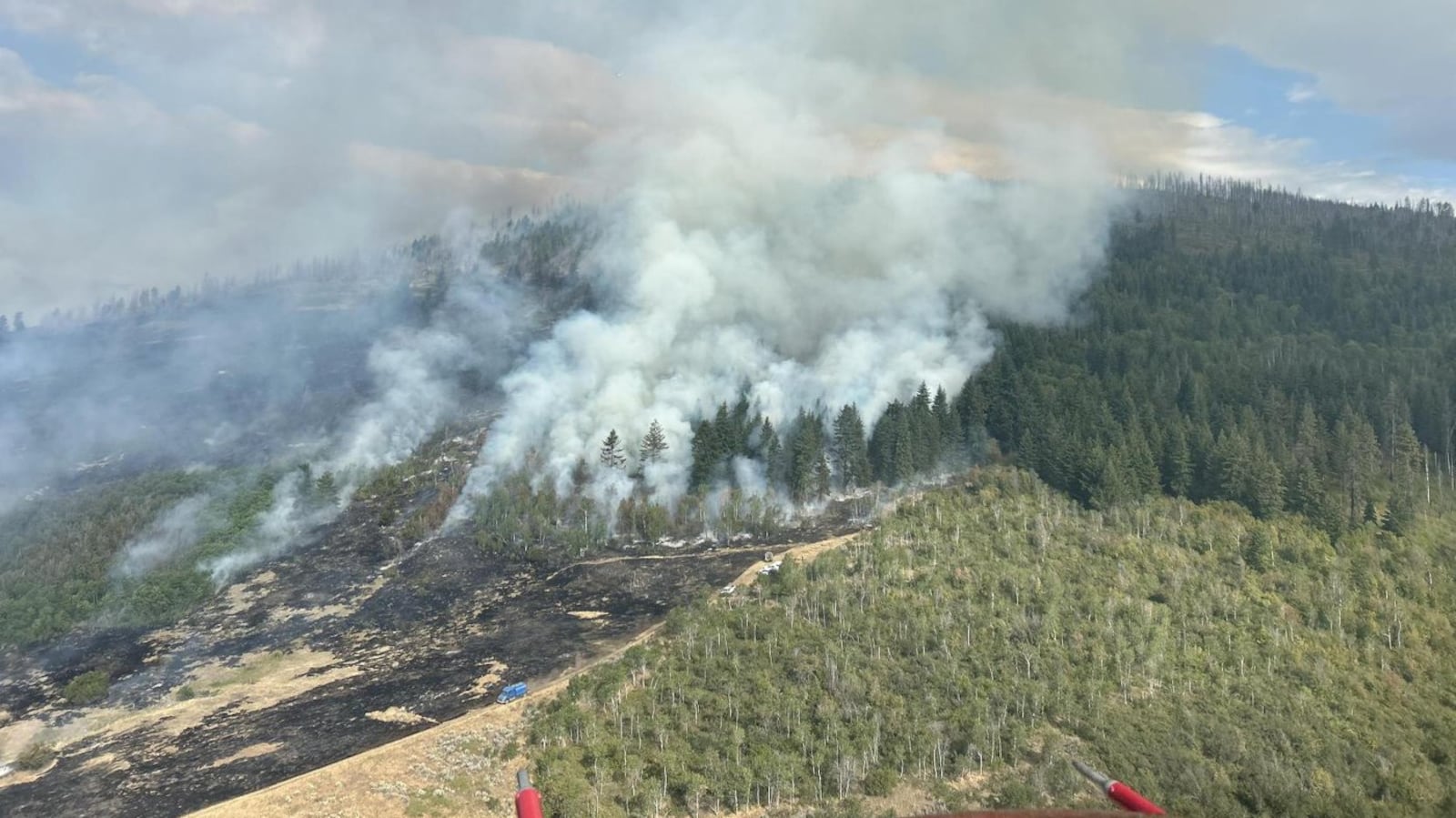
Particular attention in the updates is focused on the Bradley Creek wildfire, which is burning to the west of Vernon, a city in the picturesque Okanagan region. A photo published by the Canadian Press service, taken on Saturday, August 1, vividly shows the scale of the threat: a thick column of smoke rises over the hills, while firefighting services wage an uneven battle against the blaze. The photo, provided by the BC Wildfire Service, is among many pieces of evidence of just how complex the current firefighting campaign has turned out to be. The fact that authorities have to tap every available resource, including aircraft and ground crews, underscores the severity of the situation.
A key trigger for the current escalation has been dry thunderstorms — a phenomenon in which lightning occurs with very little precipitation, so the strikes reach the ground, but the rain barely wets the vegetation. As a result, each lightning strike can potentially spark a new fire, and within hours the number of active wildfires across the province can multiply. Firefighters note that in these conditions, the priority becomes protecting communities and critical infrastructure rather than fully extinguishing every fire at once — simply because there are not enough resources or time.
For those watching from afar, it is important to understand the difference between the threat levels reported by authorities. An evacuation order means there is an immediate danger to life, and people must leave the area right away — delays could cost lives. An evacuation alert is a signal that residents should be ready to leave at any moment: gather documents, medications, essentials, and determine departure routes. In the current situation, both levels have affected many communities located close to the line of fire, creating a massive strain on logistics and emergency services.
Fire in British Columbia is not a new phenomenon, but year after year the wildfire season starts earlier and lasts longer, while the intensity of ignitions continues to increase. Climate change is bringing prolonged droughts and extreme heat that dry out forests and turn them into tinder. Experts emphasize that even the most effective response cannot completely rule out catastrophic scenarios as long as abnormal weather conditions persist. The situation in Vernon is only one episode of a broader picture affecting a significant portion of the province, and judging by forecasts, there’s no reason to relax.
Notably, the updates are coming from the heart of the Okanagan — the province’s tourism and agricultural hub, known for its vineyards and lakes. The threat of wildfire here is not only a matter of public safety, but also an economic, ecological, and lifestyle blow to thousands of residents. Smoke from the fires is already spreading for hundreds of kilometres, worsening air quality in cities and towns, which adds pressure to the healthcare system. Local authorities are urging people to strictly follow instructions and not return to dangerous areas until official permission is given, because the fire is treacherous and can return even where it may seem everything has already been extinguished.
While firefighters continue battling the flames and meteorologists monitor the movement of weather systems, all that remains is to hope the weather gives a break. But experience from past years suggests that August is the peak wildfire month in British Columbia, and there is likely more than one week of intense work ahead. Every new lightning strike brings a potential threat, and all services are on heightened alert to respond quickly to any changes. The Bradley Creek wildfire story is a reminder of how fragile the balance between people and nature can be — especially in an era of shifting climate,
Long weekend in British Columbia: Fires, a WestJet strike, and border traffic make travel harder
This year’s August long weekend for British Columbia Day has turned into a serious test for thousands of people in the province who planned to travel. Instead of the usual break, many face blocked highways, cancelled flights, packed ferries, and multi-hour queues at the U.S. border. As reported by CBC News, the situation is complicated by several factors at once: wildfires deeper in the province, a labour dispute at WestJet, and peak demand on transportation infrastructure.
The main problem is the large-scale wildfires that have spread to more than 100 locations across the province. About 2,900 properties are under mandatory evacuation orders, with another roughly 2,800 under warnings of possible evacuation. The fires have made major changes to motorists’ plans: a stretch of Highway 1 in the Fraser Canyon area between Hope and Lytton is closed due to the Brunswick Complex of fires. This is a key route through the scenic gorge, so drivers now have to use an alternative road — Highway 5, known as Coquihalla. But even there it’s not smooth sailing: large drainage works are under way between Hope and Merritt, so provincial authorities warn of significant delays.
The situation is even more difficult north of Lytton. More than a 60-kilometre stretch of Highway 97 between Cache Creek and 100 Mile House is fully closed due to a major wildfire at Okanagan Lake in the Clinton area. That fire led to evacuation orders for hundreds of homes in the Cariboo region. Authorities advise drivers to fill up with fuel or fully charge the battery of an electric vehicle before setting out, and to bring food and drinking water — people may be stuck on the roads for a long time.
Problems in air travel have not been avoided either. Vancouver International Airport expects about 340,000 passengers between July 31 and August 3. The most popular destinations include Toronto, Calgary, Edmonton, Montreal, Hong Kong, and San Francisco. But WestJet passengers have found themselves in a difficult position: the airline began cancelling flights in large numbers amid the threat of a flight attendants’ strike that could start on Sunday. By Saturday, 198 flights had already been cancelled. At the airport, YVR said 16 WestJet flights are affected, though that number could change throughout the day. Company representatives explained that the cancellations are necessary to avoid leaving crews and passengers in a difficult situation, and they strongly recommend checking a flight’s status before heading to the airport.
For those planning to get to Vancouver Island or the Sunshine Coast, there is also bad news. B.C. Ferries calls this August long weekend the busiest weekend of the year. Last summer, during a similar period, ferries carried more than 400,000 passengers and about 130,000 vehicles, and this year demand is expected to be similar. On many major routes, especially Monday’s sailings from Vancouver Island to the mainland, all seats are sold out for pre-bookings. B.C. Ferries spokesperson Lillian Kim warns that anyone hoping to get on a ferry without a booking will have to be patient — there may be long waits or no available spots. She recommends that those who truly need to travel consider walking instead of taking a vehicle. All ships in the fleet are being used and operating at full capacity, but that apparently isn’t enough.
Also not forgotten are those planning to cross into the United States. On Saturday afternoon, long, multi-kilometre lineups formed at border crossings in the Lower Mainland. According to DriveBC, the wait at Peace Arch and Pacific Highway reached three hours, at Aldergrove it was more than an hour, and at Sumas it was about an hour and a half. The Canada Border Services Agency expects a surge in travellers and asks people to check official wait times on its website in advance before heading out.
It’s understandable that terms like “evacuation order” or “evacuation alert” may be unfamiliar to people who are encountering Canada’s emergency notification system for the first time. An order means authorities are telling people to leave immediately because there is an immediate threat to life. An alert is a recommendation to be ready to evacuate at any moment, prepare documents, medications, and necessary items. It’s also worth noting that “standing in line for a ferry without a booking” means arriving at the terminal hoping there will be an available spot — but in the summer season, demand far exceeds supply. And the mentioned Coquihalla is a high-speed highway that runs through mountainous areas and is the main alternate route connecting the Lower Mainland to the province’s interior regions when Highway 1 is closed.
In essence, this weekend has become a stress test for the entire transportation system in British Columbia. The province is simultaneously dealing with the effects of climate change, which are making fires more frequent and more destructive, labour conflicts at major airlines, and ever-growing demand for domestic tourism. Authorities, transportation companies, and emergency services are working at full stretch, but travellers still need to be flexible, bring patience, and possibly rethink their plans. The situation highlights the fragility of infrastructure when multiple crises pile on top of one another and thousands of people try to spend the long weekend outdoors or by the sea.
“The Caps” return to BC Place: a Pride match supported by Telus and the story of 10-year-old Jack
Ahead of the Vancouver Whitecaps match on August 1, 2026, the club has published information for spectators. The announcement focuses not only on logistical details, but also on a human story — the account of a 10-year-old fan named Jack, who has been attending Whitecaps matches since he was two years old. This narrative is the emotional core of a message published on the club’s official website as part of the Pride Match announcement, with telecommunications company Telus serving as the presenting partner.
At age four, Jack was diagnosed with autism and a rare genetic condition, but as the text emphasizes, those diagnoses have never defined who he is. His passion for football, determination, and love of the game inspire everyone who knows him. The boy participates in gymnastics, baseball, multisport activities, and football through the Canucks Autism Network program — an organization created to support people with autism spectrum disorders and their families. At the same time, Jack remains a devoted Whitecaps fan: on match days, he walks to BC Place with his father, brother, and the famous supporter group Southsiders.
The very fact that this story is included in the context of a major match is symbolic. The Whitecaps are returning to BC Place with a big crowd, and the club is clearly aiming to highlight inclusivity as one of the event’s key values. Traditionally, the Pride match supports the LGBTQ+ community, but in this case inclusivity extends beyond that — including to families raising children with developmental differences. Jack’s story shows that the stadium should be a place where everyone feels like they belong, regardless of diagnosis, background, or identity.
For those who aren’t familiar with the Canadian sports context, it’s worth explaining: BC Place is an indoor stadium in downtown Vancouver, and the home arena of the Vancouver Whitecaps, who play in Major League Soccer (MLS). Southsiders are one of the club’s most active and visible fan groups, known for its atmosphere, songs, and support for the team throughout all 90 minutes of the match. Canucks Autism Network, meanwhile, is a non-profit organization founded shortly after the 2010 Olympic Games in Vancouver; it runs sports and social programs for people with autism, and partnerships with professional clubs — including soccer and hockey — help these families feel like part of a larger sports community.
It’s telling that in the official match logistics announcement — from gate-opening times to rules for behaviour in the stands — the editorial team found room for a portrait of the young fan. That suggests the club views its audience not as a faceless mass, but as a community made up of real people with their own stories. For many parents of autistic children, going to a stadium is a serious challenge: noise, crowds, bright lights, and the unpredictability of what might happen. But when the club and fans create a supportive environment, those barriers become manageable. Jack walking in with the Southsiders is a clear example that football really can be for everyone.
Ahead of the Pride match presented by Telus, organizers expect strong attendance. The Caps’ return to their home venue after a break is always an event, but on August 1, 2026 it takes on an extra dimension: it will be a celebration of diversity, with room for rainbow flags, children’s laughter, and a family that, ten years ago, could not even have imagined their son marching to the stadium surrounded by thousands of singing supporters. As noted in a Whitecaps FC website post, for Jack this match isn’t just a game, but a part of life he lives with immense love. And perhaps those are the kinds of stories that matter most to any sports club.