A roundup of key events from Vancouver: an attack on a residence, a housing market crisis and international recognition for local restaurants.
Molotov cocktail attack on North Vancouver home: family in panic, police probing motive
One Tuesday evening, a peaceful family life in North Vancouver nearly ended in tragedy. An unknown assailant threw a lit bottle containing an incendiary mixture — a so-called Molotov cocktail — through a window of their home, which is in a four-unit building. According to police, a young family with children was inside at the time of the attack. As reported in the Global News piece, the father had been sitting on the couch by that very window just minutes before the incident but, fortunately, decided to move to another room. That inadvertent move likely saved his life. The family heard a loud bang, and the mother, looking out, saw a burning window and broken glass on the sill.
The situation could have become catastrophic if not for the swift reaction of neighbours. One neighbour, hearing the screams, rushed to help. He grabbed a garden hose and quickly put out the fire. “I heard the neighbours yelling and immediately knew something was wrong… I ran down as fast as I could,” the witness said. “I grabbed the hose, doused the fire, and the bottle was stuck in the window. A big fire could have started, someone could have been injured or even killed, who knows.” That prompt intervention prevented the flames from spreading but left the family deeply shaken and bewildered.
The most alarming aspect of this story is the complete lack of an obvious motive. The victims say they do not understand why anyone would want to harm them. They believe they were likely targeted by mistake — the attack may have been carried out at the wrong address. “The family says they don’t understand why anyone would want to hurt them and believes it could have been a mistake,” the article notes. North Vancouver Police, represented by Corporal Mansur Sahak, have made no definitive conclusions. He stressed that the investigation is in its early stages and it is not yet possible to say whether the attack was deliberate or random. Officers are collecting footage from security cameras and interviewing witnesses and neighbours.
It is worth noting that a Molotov cocktail is an improvised incendiary device, typically a glass bottle filled with a flammable liquid (such as gasoline) with a wick. Its use is an extremely dangerous and aggressive act that in Canada qualifies not merely as mischief but as an attempted arson with aggravating circumstances. Given that people were inside, it could also be considered an attempt to murder or cause grievous bodily harm. Police are treating the incident “extremely seriously,” and victim support services are already providing the family with necessary psychological assistance. The main question investigators now face is whether this was a targeted act of intimidation or a terrifying mistake that nearly cost people their lives.
Zero launches: concrete skyscrapers vanish from Vancouver presale market
The presale housing market in Metro Vancouver is experiencing an unprecedented slump: in the first quarter of 2026 there were no new concrete high-rise presales launched. A year earlier there were 152 such starts. That figure is not just a statistic but a marker of a deep crisis in British Columbia’s construction industry. Concrete towers have traditionally been prized by buyers for better soundproofing and panoramic views; they sit in prime locations near transit hubs, but today developers are reluctant to start such projects. As Business in Vancouver’s Ryan Wise, lead analyst at Rennie & Associates Realty Ltd., notes, “from what I’m hearing, there won’t be any in the near future.”
The main reason is unattainable presale targets. To secure construction financing, developers usually need to pre-sell 60 to 70 percent of units. But key buyers — investors — have vanished. They used to invest readily in new developments with multi-year horizons, but now high interest rates and tighter housing rules have made such investments unattractive. Investors have shifted to rental markets, where purpose-built rental buildings compete with them, or moved into higher-yield assets like stocks. In addition, the market is suffering from an oversupply of completed but unsold housing: by the end of Q1 there were 3,945 such units in Metro Vancouver.
In these conditions developers are forced to adapt. Some are injecting more of their own capital or seeking partners. Others, relying on long-standing bank relationships, begin construction before presales are complete. Builders are working with contractors to cut costs so they can offer prices that will attract buyers. “We try to be creative and solve market problems,” says Cam Good, owner of KEY Marketing Inc. His company is currently not launching condominiums at all, focusing instead on townhomes, which are bought for real needs — young families or couples downsizing. But townhome launches have also fallen, from 507 to 334 annually.
Some developers are taking radical measures. Good created the PLS.ca platform — a private service to sell “stuck” lots, including assignments of purchase agreements. In his words, it’s “like a traffic jam on a river”: developers who started construction in 2024–2025 are willing to offer discounts but are afraid to cut prices publicly for fear of collapsing the market. So deals happen confidentially under non-disclosure agreements. Another approach is forward sales — selling entire projects while they’re still at the excavation stage. Mark Goodman of Goodman Commercial Inc. notes that this practice, popular in the past, is returning. It gives a developer a firm contract, reducing risk and allowing better financing terms. “Rather than trying to sell condominiums in a tough market, developers are moving to rental projects and selling them whole,” he explains.
To save the market, Goodman believes provincial policy changes are needed. He calls the decline in condo presales “man-made” in British Columbia and painful for many developers. The outlook is bleak: if nothing is done now, the market could face a severe supply shortage by 2028–2029.
Three British Columbia restaurants make North America’s 50 Best Restaurants list
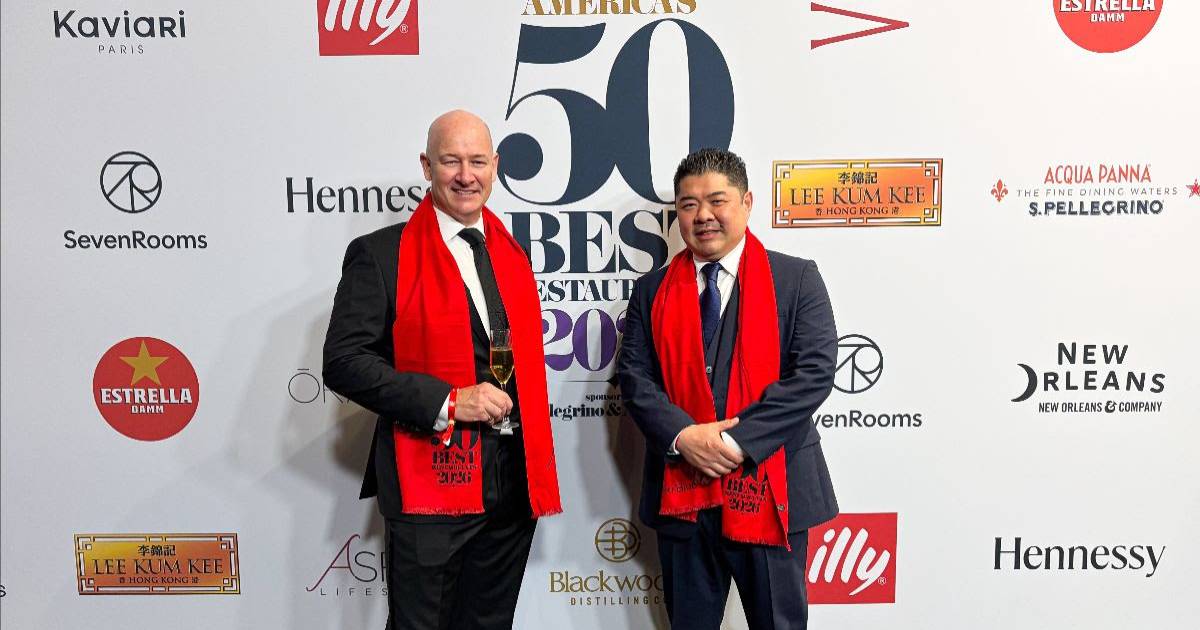
British Columbia’s culinary scene continues to gain international recognition — this week three restaurants from Vancouver and Whistler landed on the prestigious North America’s 50 Best Restaurants 2026 list. Leading the provincial contingent was Published on Main, which rose from 28th in last year’s debut ranking to 17th. The Main Street restaurant, led by chef Gus Stieffenhofer-Brandson, has already become one of Vancouver’s key gastronomic destinations with a menu that highlights the seasonal bounty of the Pacific Northwest.
Joining Published on Main on the list is AnnaLena, debuting at number 35. For many regular Vancouver diners, the restaurant’s inclusion feels like overdue recognition it has long deserved. Widely known as one of the city’s top dining experiences, AnnaLena has consistently received high marks from critics, peers, this newspaper and even Michelin inspectors. Its omission from last year’s list seemed a surprising oversight, now rectified.
The third British Columbia restaurant was Wild Blue in Whistler, which took 47th place. The restaurant has noticeably elevated the resort town’s culinary reputation, proving its dining scene can be as appealing as its ski slopes. Canada as a whole posted a strong showing with 14 entries on the list. The highest-ranked Canadian restaurant was Calgary’s Eight at number two, followed by Restaurant Pearl Morissette from Ontario (third) and Montreal’s Mon Lapin (fifth). Last year’s debut list included only two spots from the Vancouver metro area: Richmond’s Baan Lao, which unfortunately fell off this year’s list, and the aforementioned Published on Main.
For those unfamiliar with the ranking’s mechanics: North America’s 50 Best Restaurants is an annual list compiled by an authoritative international organization also known for its global World’s 50 Best ranking. The list is based on votes from about 300 experts — chefs, restaurateurs, journalists and food critics — divided into regional groups. Each voter chooses their favorite establishments, evaluating not only the taste of the food but also atmosphere, service and innovation. Notably, Canadian restaurants performed particularly well this year: 14 of 50 is a record for the country and a strong sign of the maturity of the local culinary scene. Mentioning Michelin inspectors in connection with AnnaLena underscores that the restaurant has already been recognized by the world’s most prestigious restaurant guide, although Michelin has only recently begun evaluating Canadian cities. As the article notes, this year’s ranking is not just the success of individual venues but an indicator that British Columbia’s gastronomy is moving beyond a secondary pastime to become a full-fledged part of regional culture and tourism appeal. If you’re planning a visit to Vancouver or Whistler, dining at these restaurants could be more than a meal — it could be a true culinary adventure that showcases the best of contemporary Canadian chefs. The full list and details can be found in the original The Georgia Straight article.