A fatal crash on the Sea to Sky highway tied up traffic, Vancouver nurses took to picketing, and the price of a private island dropped by $150,000.
Sea to Sky crash in British Columbia: fatal collision leaves thousands stuck in traffic
A tragedy on one of Canada’s most scenic—but also most dangerous—roads has again brought safety concerns back to the spotlight. On Sunday, on the Sea to Sky Highway connecting Vancouver to the Whistler ski resort, there were two collisions, one of which resulted in fatalities. The road was closed for several hours, leaving thousands of travellers in a multi-kilometre traffic jam. As reported by CTV Vancouver news, the incident caused not only a transportation breakdown, but also a new wave of calls from local residents and activists—improving infrastructure and tightening speed enforcement along this route.
Sea to Sky is not just a road, but a symbol of Canada’s West Coast. It winds along the rocky shores of Howe Sound and is widely considered one of the most beautiful highways in the world. Still, its danger is well known: narrow sections, sharp bends, and unpredictable weather conditions. The Sunday crash occurred at the peak of the summer tourist season, when the volume of cars is especially high. According to witnesses, the first accident happened near one of the route’s most challenging switchback stretches, while the second occurred just a kilometre from the first, when drivers began chaotically switching lanes in an attempt to get around the congestion. The exact number of people affected has not been released, but a death has been confirmed.
The highway closure lasted several hours, leading to a jam more than twenty kilometres long. Many families returning from vacation spent five to six hours in their cars with no food or water. Police and emergency services worked around the clock, but limited exit ramps made evacuation extremely difficult. The incident has again raised the question of building alternative routes or widening the highway—a project that has been discussed for more than a decade, but is constrained by difficult terrain and environmental limits.
The key takeaway is that even a single crash on a narrow mountain highway can paralyse traffic for hundreds of kilometres. Many experts say that, in addition to repairing the road itself, smarter traffic management systems are needed—for example, dynamic traffic lights and sensors that provide congestion warnings. Activists from the “Save the Sea to Sky” community have already said they will push the British Columbia provincial government for immediate action, including installing permanent radars on all hazardous sections. For the thousands of drivers stuck on Sunday, it was not just an inconvenience, but a reminder of how fragile the connection is between people and the wilderness.
British Columbia nurses picket Vancouver’s largest hospital as labour conflict escalates
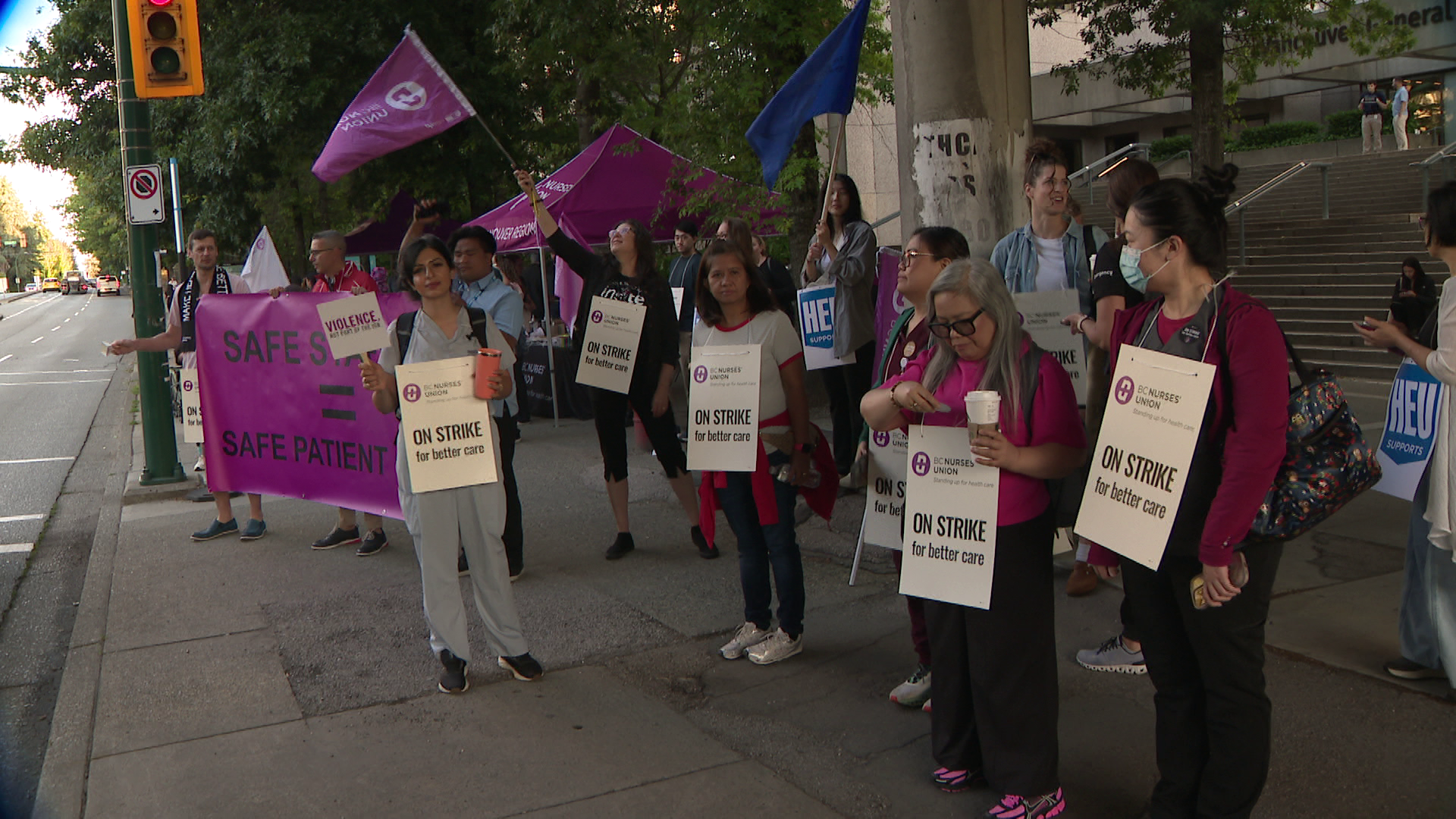
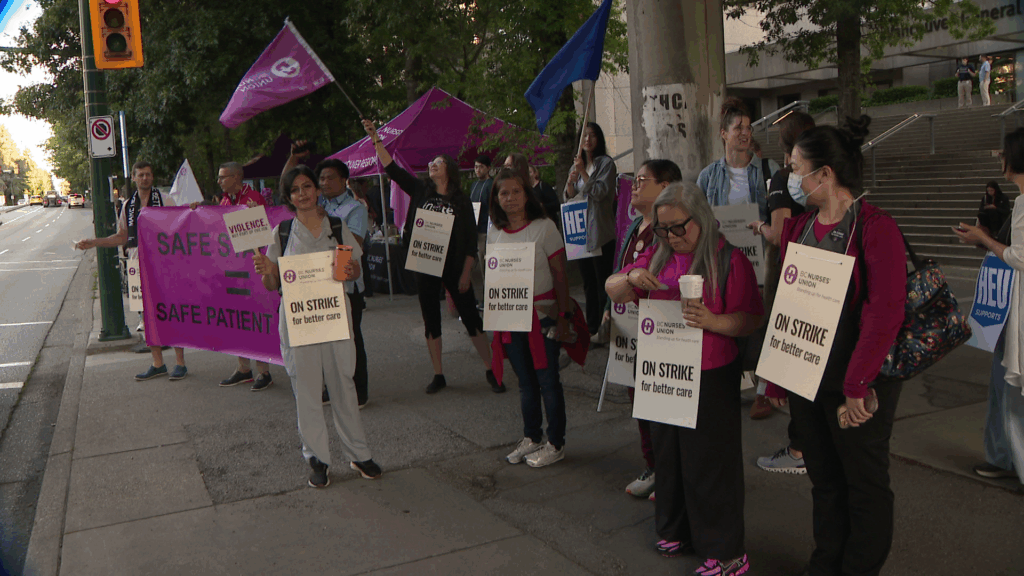
The standoff between British Columbia nurses and employers has entered a new phase. This week, hundreds of members of the BC Nurses’ Union (BCNU) took to picketing outside the walls of the region’s largest medical facility—Vancouver Hospital (VGH). The action comes in response to prolonged negotiations over a new collective agreement and, according to the union, attempts by management to intimidate staff using their lawful right to take strike-related job action.
The union began the first phase of its labour action on July 2, just 72 hours after the strike notice was issued. However, as BCNU president Adrian Giar said, there was no response from the employers. Now, just days later, the union reports more than 1,400 complaints from nurses alleging they are being intimidated. In a statement posted on the CityNews Vancouver website, the union says nurses are being warned about disciplinary measures, threatened with their licences, and forced to carry out duties not normally assigned to them or to work overtime despite the union’s directives.
One key flashpoint has been the collapse of a tentative agreement that the nurses rejected in a vote back in May. Now the dispute is spreading to other sites: further pickets are expected on Thursday at Surrey’s hospital and the Jim Pattison Surgical Centre. The union is urging the provincial government to intervene and stop, in their view, the unlawful pressure being applied to workers.
To understand what’s happening, it helps to look at the terminology. “Job action” is a broad range of activities—from slowing work down to picketing—that workers use to pressure the employer without fully stopping work. A “72-hour strike notice” is a formal step after which a union can legally begin protest actions. “Unauthorised overtime” in this context means forcing nurses to stay on shift despite a union order, which may violate labour legislation.
The headline numbers and facts: more than 1,400 complaints about intimidation since early July, pickets have already taken place at VGH, and the next wave is scheduled for Surrey Memorial Hospital. The tentative agreement rejected by the nurses—showing just how deep dissatisfaction runs over working conditions—is central to the dispute. Experts note that if the government does not intervene, the situation could lead to the disruption of planned surgeries and increased strain on the remaining staff. Essentially, the nurses are demanding not only financial improvements, but also respect for their professional status and protection from arbitrary management decisions. So far, the province’s Ministry of Health has not provided an official comment.
Private island price in British Columbia has dropped
After a year of waiting, the seller of a private island in British Columbia decided to come down a little on the price. As reported by Vancouver Is Awesome, the property’s cost has been reduced by $150,000: from an initial $6 million to $5.85 million. The island, about 16 hectares in size, is in Cortes Island Harbour, located between Vancouver and the province’s mainland. The price includes five structures: two main homes, three guest cottages, as well as a fish house, a laundry facility and a workshop. The homes are designed to blend naturally with the surrounding forest—one was built in 1979, the other in 1996. Both are connected to the province’s shared electricity grid (BC Hydro), and water is supplied via drilled wells. This kind of infrastructure allows the island to be used as year-round housing or as a recreational retreat.
However, a key feature of the purchase is the need for your own boat. While the nearby Cortes Island is served by BC Ferries, it’s not so simple to get to Tan. In good weather, you can cross by kayak or boat, and if you have a motorboat, you can travel to Lund or Campbell River. For the buyer, that means added costs and a certain level of isolation—something that may be a plus for some and a downside for others. It’s also important to note that BC Hydro is a crown corporation that supplies electricity to most of the province, so the island is not completely self-sufficient. A 2.5% price drop after a year on the market could mean either the seller adjusted expectations or that the market for private islands in the region is not as active as previously thought. In any case, for those dreaming of owning their own island—and who are prepared for logistical challenges—this could be an interesting option.