The Supreme Court of Canada overturned the acquittal of a driver who struck and killed a child in Vancouver, and ordered a new trial. Jennifer Whiteside became interim leader of the B.C. NDP after its defeat by the Conservatives. The Holdom Overpass in Burnaby received Envision’s Platinum certification for sustainability.
Supreme Court of Canada overturns acquittal of driver who killed child in Vancouver
The story began in July 2021 at one of downtown Vancouver’s busiest intersections and ended—at least for now—with a ruling by the country’s highest court that could significantly affect how Canadian courts handle dangerous-driving cases. It concerns a tragedy that took the life of a young girl named Ocean Oshi Noel, and the legal battle over where the line lies between criminal negligence and ordinary human error.
According to a CBC report, Seyed Moshfeghi Zadeh ran a red light at the intersection of Smith and Hornby streets in downtown Vancouver on July 6, 2021. His car collided with another vehicle, then rolled over and flew onto the sidewalk, striking the young girl and seriously injuring her father. In 2024, a provincial court judge acquitted the driver, concluding that his actions, though dangerous, amounted to a “momentary lapse of attention.” In the judge’s view, the accused’s conduct did not reach the level of a marked departure from the standard of care expected of a reasonable driver in similar circumstances—the test required for a conviction under the provisions dealing with dangerous driving causing death and bodily harm. The British Columbia Court of Appeal upheld the decision by a majority.
On Friday, however, the Supreme Court of Canada overturned the appeal court’s ruling by a five-to-four majority and ordered a new trial. The top court’s key argument was that the trial judge had wrongly treated a “momentary lapse of attention” as a circumstance that, by default, rules out criminal liability. Instead, the court should have assessed all the circumstances, including the fact that the incident occurred in a busy downtown area and that the traffic light had been red long enough to be noticed. In other words, “momentary” is not an automatic pass; it is just one factor in the overall picture that the court must weigh.
To understand the legal dispute, it is worth explaining the terms used in the ruling. In Canadian law, a “momentary lapse” refers to a brief distraction by a driver that does not, by itself, constitute a crime. To secure a conviction for dangerous driving, the prosecution must prove that the accused’s conduct “markedly departed” from the standard of care expected of a reasonable driver. This is known as an objective standard: the question is not what the person was thinking, but how a careful road user should have acted. The dispute centered on how to apply this standard. The trial judge held that a single momentary distraction could not amount to such a departure, while the Supreme Court said the court must consider the person’s conduct in context, rather than in isolation.
The ruling carries particular weight because it was decided by a margin of just one vote—five to four. This points to a deep divide within the highest court over how broadly “momentary lapse” can be interpreted, and whether it risks becoming a blanket defence for drivers whose inattention has led to tragic consequences. The four dissenting judges presumably argued that the trial judge had acted within the scope of their discretion and had made no legal error in assessing the evidence. The majority, by contrast, found that the legal test had been incorrectly framed, requiring the case to be reconsidered on its merits.
For the family of the girl who died and for her father, the decision does not bring closure; it means continuing a years-long ordeal. A new trial will be held in provincial court, though no date has yet been set. For Canadian legal practice, the ruling signals that invoking a “momentary lapse” will not automatically remove criminal liability: courts must examine the context, including traffic conditions, the nature of the violation, how long the light had been red, and other factors that, taken together, may indicate criminal negligence. For the public, it is a reminder that behind the wheel in a city centre, the cost of a second’s inattention can be measured in human life—and that the legal system must be able to take that cost into account.
Party at a crossroads: Jennifer Whiteside named interim leader of B.C. NDP after crushing Conservative defeat
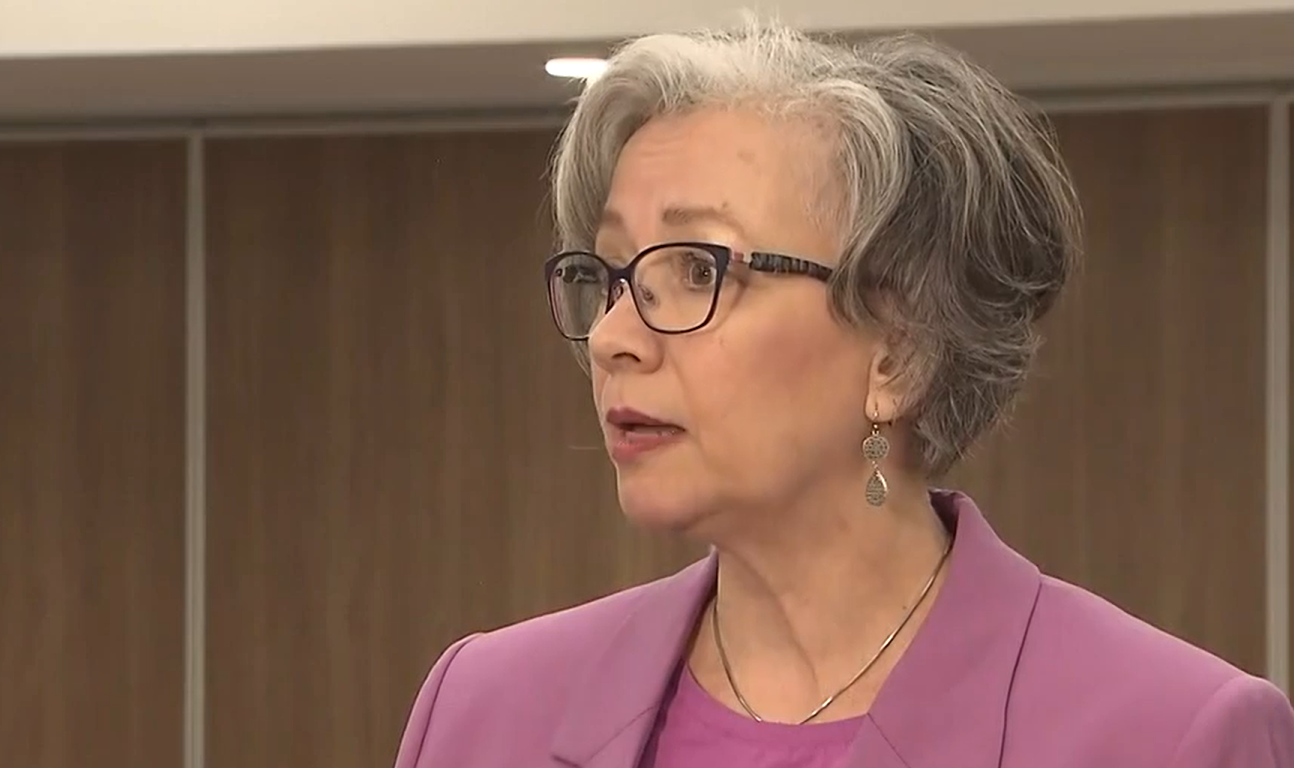
After a painful loss in the snap election called by former Premier David Eby, the B.C. NDP has chosen an interim leader. The party, which was in power as recently as last year and had governed the province since 2017, is now preparing for an unfamiliar role as the official opposition. Jennifer Whiteside, the MLA for New Westminster-Coquitlam, which she has represented since 2020, has been named interim leader. The appointment is more than a change in personnel: it is an effort to give the party time to regroup, rethink its identity and find a way back to voters who rejected it so decisively that, for the first time since 2017, the NDP is no longer in government.
As CityNews Vancouver reports, the decision was made in a vote by the incoming parliamentary caucus and, according to Whiteside, was unanimous. She has been tasked with leading the party through its first period as the official opposition in its recent history. Whiteside is no stranger to the role: she has served in NDP cabinets in several portfolios, including labour, education, and mental health and addictions. Her track record makes her well acquainted with the party’s inner workings and potentially able to keep it from fracturing at a time when voter confidence has been shaken.
Experienced politicians have also taken up key roles in the party: Mike Farnworth became leader of the legislative caucus, and Niki Sharma became caucus chair. The transition became inevitable after David Eby announced he would step down as premier and party leader. The reason was a crushing defeat by the B.C. Conservatives in the snap election Eby himself had called—a move that, his fellow party members acknowledged, ended in disaster.
Sharma did not mince words in describing the outgoing caucus’s final meeting on Wednesday. She said the mood was heavy: the party had to say goodbye to MLAs who, by all accounts, had served their constituents well. Eby, as he had done publicly, apologized to his colleagues and took full responsibility for calling the snap election, effectively admitting it was a mistake. Notably, Sharma called the situation what it was: “There’s no sugar-coating it; it was a hard day.” The phrase “we lost two years of majority government” sounds especially bitter—the party voluntarily gave up two years of a guaranteed mandate, put its future on the line and lost.
More important to the party’s future, however, were not the emotions but the self-assessment offered by one of the defeated MLAs. Rick Glumac, who lost his seat, summed up the main criticism of the leadership: the snap election had become a symbol of a top-down approach to governing that had left the party out of touch with people’s real concerns. “We got off track—we stopped connecting with our values and expressing them coherently in a way that resonated with people in British Columbia,” he said. In his view, the NDP needs a deep internal review and a return to its core principles: a strong economy, protection for workers and environmental protection.
Glumac also pointed to a specific institutional risk: a repeat of the controversial 2022 leadership race, when Anjali Appadurai was disqualified, allowing Eby to become leader without opposition. Such a scenario would be unacceptable, he said. The party needs real debate, an exchange of ideas and a competitive contest that produces a leader capable of inspiring the party and restoring voters’ trust. For now, all that is known is that the NDP is not expected to choose a permanent leader until next year, meaning Whiteside will keep the party afloat for at least several months.
A few terms help put this in context. In Canadian politics, a “caucus” is not a gathering of activists but the group of all a party’s elected members in the legislature; it was the caucus that voted for Whiteside. “Official opposition” is the formal status of the second-largest party in the legislature, giving it special rights and resources to scrutinize the government. The NDP has not held that status since 2017, when John Horgan came to power. A “snap election” is an election called outside the regular electoral cycle, and Eby’s decision to call one voluntarily became the main political charge against him.
The significance of this story goes beyond the appointment itself. First, the NDP has opted for continuity and stability during the transition: Whiteside is an experienced minister, not a rebel, and her task is to prevent a split, not to overhaul the party. Second, the party has publicly acknowledged two systemic mistakes—the gamble of calling a snap election and the closed, non-competitive leadership process in 2022—setting the terms for the debate ahead. Third, there is already an internal demand for substantive debate and a genuine contest for the leadership, which could become a starting point for renewal. Fourth, the situation gives the B.C. Conservatives time to consolidate their hold on power while the opposition focuses on rebuilding. Finally, Glumac’s comment about the party having “gotten off track” and Sharma’s description of a “hard day” are not merely emotional remarks; they are unusually direct public acknowledgments of responsibility from a defeated party.
The main question now is whether the NDP can turn its admission of mistakes into real renewal—or whether Whiteside’s interim leadership will prove to be only a pause before a new internal struggle for power.
British Columbia crossing receives top sustainability award
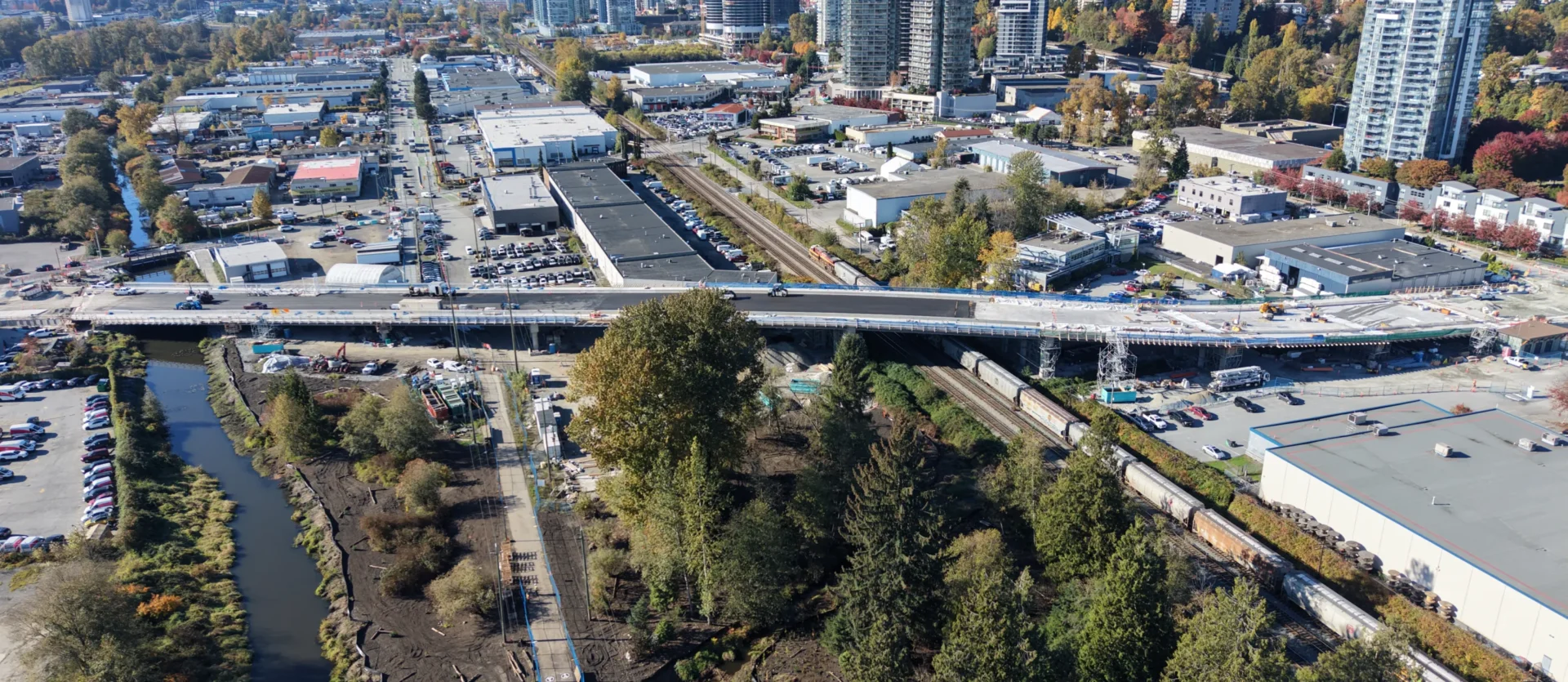
The Holdom Overpass project in Burnaby, British Columbia, has received Envision’s Platinum award from the Institute for Sustainable Infrastructure. This is the highest level of recognition in a system that assesses infrastructure projects for environmental sustainability and social responsibility. The Canadian transportation project earned it after a rigorous review across five categories: quality of life, leadership, resource allocation, the natural environment, and climate and resilience. For the region, this is more than a plaque on the wall: the project is part of a major corridor carrying a significant share of Canada’s exports, and it aims to balance growing freight traffic with the needs of local residents.
The project will extend Holdom Avenue south over the rail corridor and Still Creek to Douglas Road, replacing the existing railway crossing on Douglas Road. This will address two issues at once. First, drivers and pedestrians will no longer have to wait at the crossing for trains to pass, reducing congestion and vehicle idling. Second, the capacity of the Port of Vancouver’s north shore terminals—a key hub for Canadian freight—will increase by nearly 15 percent. It is this balance between trade logistics and the day-to-day lives of residents that earned the project a high rating.
Jennifer Natland, vice-president of real estate and development at the Vancouver Fraser Port Authority, described the port authority’s view of the award: “Envision Platinum status confirms our proven track record of delivering quality, sustainable infrastructure that supports Canada’s trade needs while providing long-term benefits to communities and the environment.” She said the project continues work the port has been doing for years.
Here, sustainability is not just a declaration but a set of concrete measures. The project improves safety and mobility, strengthens pedestrian and cycling connections, protects local waterways and reduces vehicle idling—the practice of leaving an engine running while stopped, which produces unnecessary emissions. The work also restores and enhances the natural environment: invasive species are removed, native plants are introduced, and new habitat features are created, including structures that provide shelter for bats. New public spaces featuring Indigenous art are also being created, while the completed bridge will include multi-use paths and support the region’s sustainable mobility strategy. The project is also participating in the Construction Plastics Initiative pilot, which promotes the reuse and recycling of construction plastics. The initiative is a partnership between Light House and Aecon-Gateway Infrastructure Group Partnership, the project’s general contractor.
The overpass is part of the broader Burnaby Rail Corridor Improvements program, a series of road and rail upgrades designed to improve train movement between the terminals in Burnaby and North Vancouver while reducing the impact of growing trade on the local community. CN has already completed some rail work, including upgrades to the Thornton Tunnel and a new passing track between Willingdon Avenue and Piper. Funding comes from three sources: the Government of Canada through the National Trade Corridors Fund, the Vancouver Fraser Port Authority and CN. Scott Marshall, senior vice-president of major projects in the west at Aecon Group Inc., commented: “Receiving the Envision Platinum award highlights our team’s and partners’ commitment and reinforces Aecon’s position at the forefront of innovative and responsible construction solutions.”
A few terms help put this in context. Envision is a rating system developed by the U.S.-based Institute for Sustainable Infrastructure. It assesses projects on a scale from bronze to platinum, with platinum awarded for outstanding performance across all five categories—not simply for including individual “green” features. The National Trade Corridors Fund is a federal program that invests in transportation corridors critical to the country’s international trade. Invasive species are non-native plants and animals that displace local ecosystems, so removing them is standard practice in environmental restoration. Finally, idling means leaving an engine running while a vehicle is stopped; at railway crossings, where cars wait for trains, it can become a significant source of emissions and noise.
The main takeaway is simple: an infrastructure project can both expand trade capacity and reduce the burden on a neighbourhood if environmental and social requirements are built in from the outset. The 15 percent increase in terminal capacity is a direct economic benefit, while habitat restoration, bike paths, public spaces featuring First Nations art and construction-plastic recycling provide social and environmental benefits that often go unmentioned. In this case, Envision Platinum serves as an independent external check: the claimed benefits have been verified through an audit, not just marketing. In Canada, where port corridors and railway crossings have long been points of tension between freight traffic and cities, this example matters. It shows that export growth does not have to come at the expense of quality of life. Details of the project and its assessment are available in a ReNew Canada report.