This digest collects news about the honoring of family physicians in British Columbia, a scandal over payment for a brief meeting of politicians, and a large power outage on Vancouver’s East Side.
Family physicians of British Columbia honored in Vancouver: recognition of service in difficult times
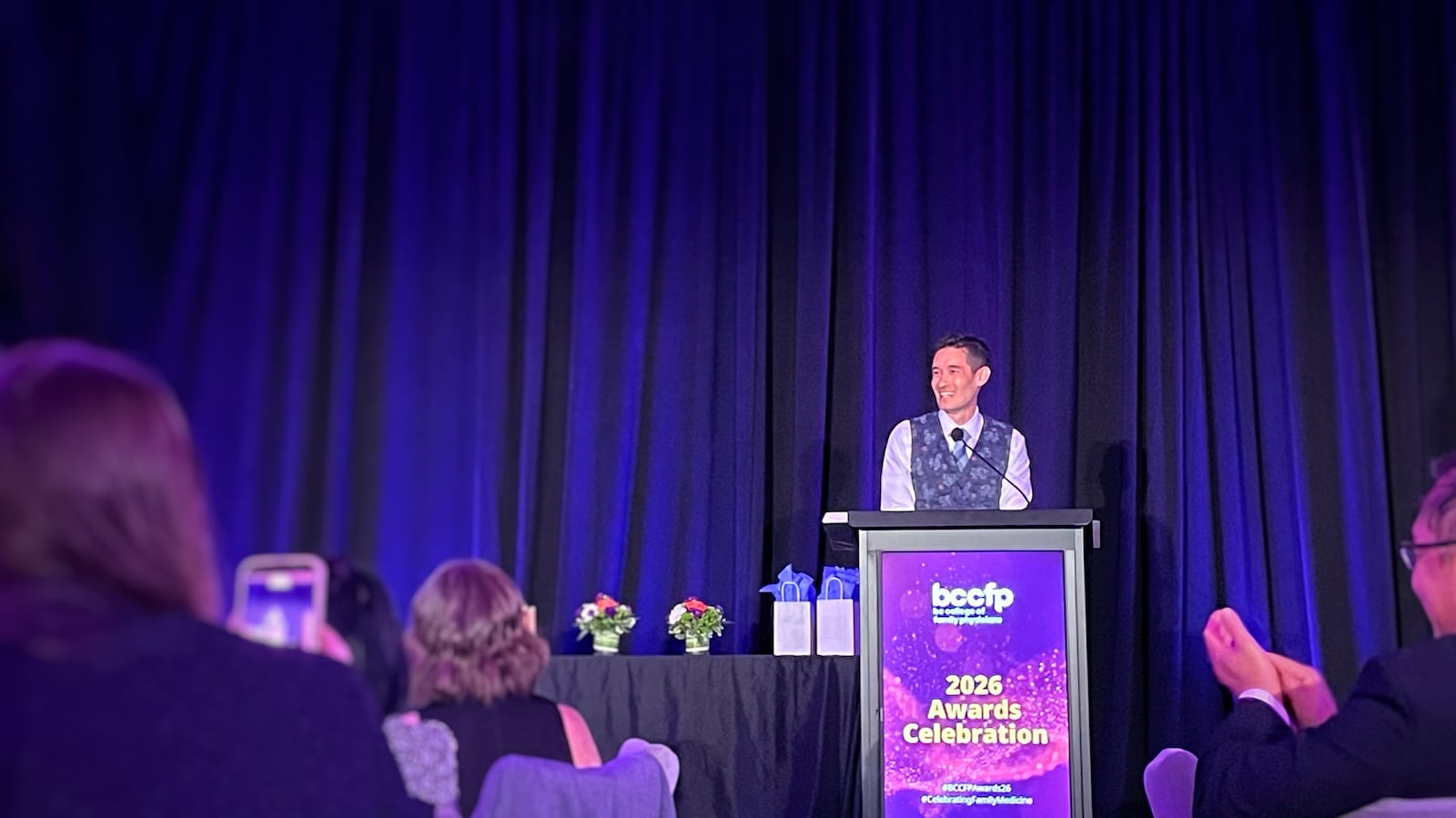
On Friday, May 8, an annual awards ceremony dedicated to family physicians of British Columbia took place in downtown Vancouver. The event, covered by CTV News, served as an important reminder of the critical role primary care doctors play in the province’s health system. Their work often remains in the shadow of high-profile stories about specialty clinics or hospitals, yet family physicians carry the bulk of preventive care, diagnosis and treatment of common illnesses, and act as the link between patients and the rest of the medical system.
The Vancouver ceremony reportedly took place in a warm and celebratory atmosphere, emphasizing the importance of the moment. Such events matter not only as formal recognition but also as a way to boost the morale of professionals who face huge daily pressures — from overloaded appointment books to bureaucratic hurdles. Typically, awards are presented in various categories, for example, for outstanding contributions to rural medicine, long-standing dedication to the profession, or innovative approaches to care. In the context of recent years marked by the pandemic and a physician shortage, this kind of recognition carries particular weight.
The complexity of a family physician’s work lies in the breadth of their competence. Patients come with a wide range of issues — from a common cold to chronic pain or mental health concerns — and the doctor sometimes must act as clinician, counselor and care coordinator all at once. The term “family physician” may be unfamiliar to some readers, but it essentially refers to the community-based primary care doctor who manages a patient’s medical history from childhood and knows the health dynamics of the whole family. In Canada, having such a doctor is a significant advantage, and the awards ceremony underlines that the province and society value these professionals despite the challenges in the health-care system.
The key takeaway from this short but substantive piece is that even in an era of crises and staff shortages, authorities and the medical community find time and resources to say “thank you” to those who protect people’s health every day. This event is not just a calendar item but a symbol of hope that preventive medicine and primary care remain priorities. Although the article does not name the laureates or recount specific rescue stories, the fact that such a large-scale event was held in downtown Vancouver speaks volumes: family medicine is alive and continues to fight for every healthy day for the people of British Columbia.
Three-minute meeting cost taxpayers $7,200: politicians paid $557 for four minutes
A recent meeting of the Metro Vancouver regional planning committee lasted just three minutes and 40 seconds, yet each of the 13 committee members present received the standard payment of $557. That made total payouts of more than $7,200 — all at taxpayers’ expense. Calculated against actual time spent, the politicians earned the equivalent of $151.77 per minute or $2.53 per second. The meeting took place on Thursday morning and was chaired by Langley Mayor Eric Woodward, who said he tried to decline the payment but the organization’s bylaws do not allow officials to work for free.
Woodward told Global News that the governance structure is too cumbersome and the committee system needs reform. “I attempted several times to decline the payment, but the bylaws prohibit it. I have to accept the money whether I want it or not,” he said. The items on the meeting agenda were purely procedural — to approve regional context statements for the cities of Surrey and Coquitlam so those cities could adopt their official development plans in accordance with provincial requirements. Metro Vancouver confirmed the meeting had to be held at that time because the documents were urgent.
The “minute-meeting” scandal highlights a systemic problem in many municipalities and regional boards: an inflexible payment system for politicians where even minimal participation triggers full compensation. In this case the organization’s bylaws categorically require payment regardless of meeting length. That means directors, many of whom already receive salaries as mayors or regional leaders, get additional income for purely formal procedures. The insight from this story is clear: unless the payment rules change, such cases will recur and taxpayers will continue to pay for seconds of work. Woodward hopes that reforming the committee system and reducing board size will help avoid such inefficiencies in the future.
The original article was published on Global News.
Massive power outage on Vancouver’s East Side leaves thousands in the dark
On the evening of Thursday, May 7, residents of east Vancouver faced serious disruption due to a sudden power outage. According to utility BC Hydro, the incident affected 2,597 households, leaving a whole neighborhood without electricity for several hours. CityNews Vancouver reported that the outage was logged with dispatchers at 9:24 p.m., after which repair crews were immediately dispatched to the scene.
The outage area covered a significant portion of the East Side. The impacted zone was bounded by the following streets: to the west — Datchess Street, to the south — 15th Avenue, to the east — Inverness Street, and to the north — 48th Avenue. Thousands spent the evening by candlelight waiting for power to be restored. Although crews did not arrive on site until nearly an hour and a half later (10:50 p.m.), the work was completed efficiently. CityNews Vancouver reports that power was fully restored by Friday morning.
Despite the alarming figure of 2,597 affected customers, this is not catastrophic for a large power system. The term “outage” in this context means a temporary interruption of electricity supply due to a line fault. The news did not specify the cause — whether a damaged cable, a fallen tree or a network overload. The key takeaway is that emergency crews worked effectively and resolved the problem overnight despite the initial delay. In fast-growing cities like Vancouver, where development density is continually increasing, such outages serve as a reminder of infrastructure fragility and the importance of timely preventive maintenance.