British Columbia is looking for domestic resources to protect its economy from U.S. tariffs, Vancouver is debating the placement of a substation beneath a park, and thousands of residents are preparing to protest artificial intelligence.
Building Ferries in British Columbia as an Economic Shield in the Trade War with the U.S.
As trade pressure from the United States intensifies, with tariffs on Canadian goods becoming not merely an economic tool but also a political lever, British Columbia is being forced to look for domestic resources to protect its economy. At first glance, ferry construction may seem like a narrowly specialized issue concerning only transportation infrastructure on Canada’s West Coast. However, a new report being discussed in Canadian business and political circles highlights a much broader problem: dependence on foreign suppliers and missed opportunities for domestic industry. The issue is not simply about ships, but about the region’s strategic autonomy in an era of protectionism.
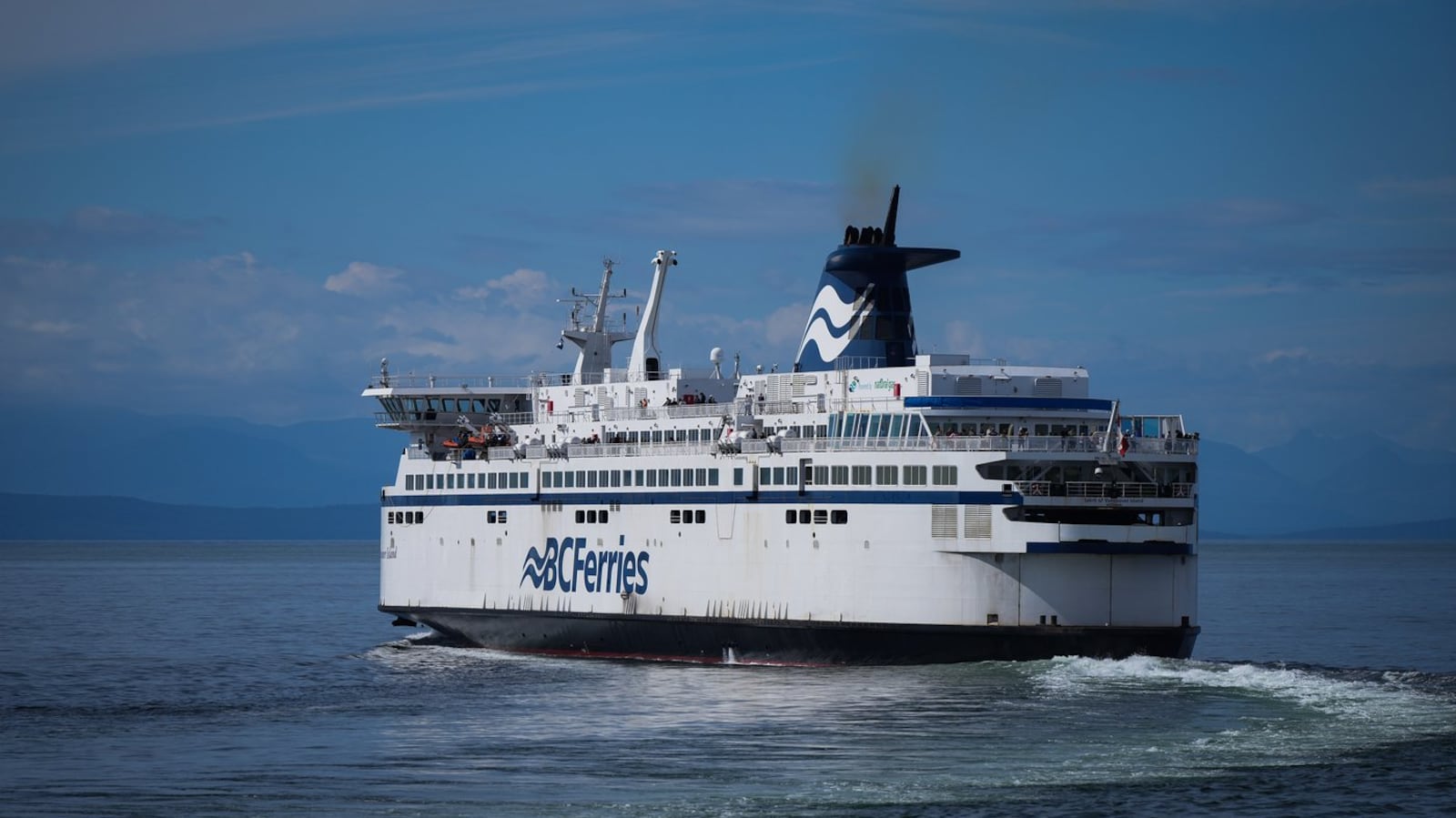
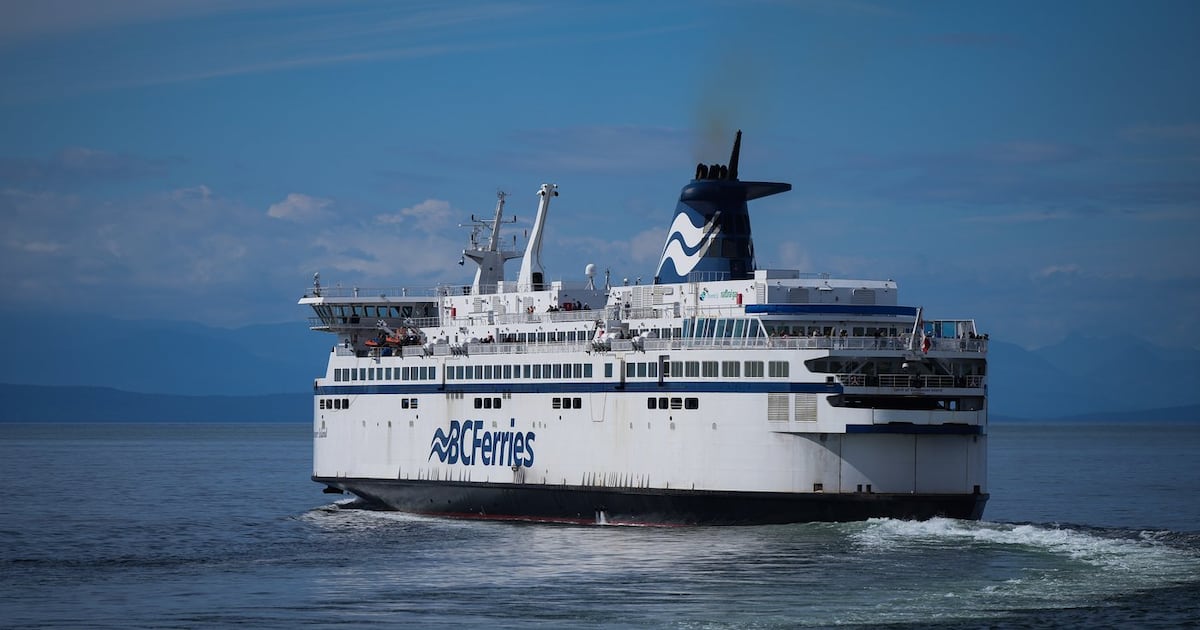
According to information cited in a CTV News report, building ferries directly in British Columbia could become an effective response to U.S. tariffs. The report’s authors argue that the province has traditionally purchased ferries abroad, including from Europe and Asia, but that under current geopolitical conditions such supply chains are becoming vulnerable. More importantly, they do not create jobs or a tax base within the region. If vessels were built at local shipyards, every dollar invested in such a project would remain in British Columbia’s economy, generating a multiplier effect. This is not merely an abstract theory: hundreds of millions of dollars in contracts currently go to foreign shipbuilders but could instead support Canadian families and small businesses.
The report’s central idea is that U.S. tariffs imposed—or threatened—against Canadian products hit export-oriented industries hardest. However, the domestic market, including government procurement, remains largely outside the scope of American tariffs. British Columbia’s ferry fleet is precisely the kind of sector in which the provincial government and BC Ferries are the primary customers. If those orders were redirected to local shipyards, the provincial economy would receive contracts independent of external trade conditions. Moreover, ferry construction requires metalworking, engineering, electronics and logistics—in other words, an entire cluster of related industries that would also be affected by tariff wars.
The report emphasizes that modern ferries are complex engineering structures, and their production could become a catalyst for reviving Canada’s shipbuilding industry, which has declined significantly over the past several decades. The authors point to examples from other countries where government ship procurement has driven technological modernization. In particular, they note that even amid globalization, many developed countries protect their shipyards through domestic procurement mechanisms. For British Columbia, this would mean not only economic security but also energy security: ferries are critical infrastructure linking Vancouver Island with the mainland, and their timely replacement should not depend on decisions made in Washington or logistical disruptions in other parts of the world.
Several concepts may require clarification. In economics, the multiplier effect describes a situation in which one dollar of government spending produces more than one dollar in additional overall demand because recipients spend that money domestically, creating new jobs and income. The tariffs discussed here are import taxes imposed by the United States on Canadian goods, making them more expensive for American consumers and reducing the competitiveness of Canadian producers. BC Ferries is a provincial Crown corporation—a government-owned company that operates ferry services. Its procurement is governed by provincial law and can be directed toward local suppliers under a “buy Canadian” policy.
The report’s key conclusion is that building ferries in British Columbia is not merely an industry project, but also a tool of economic diplomacy and domestic resilience. At a time when the United States is using tariffs as a weapon, Canada has the option of responding asymmetrically: rather than imposing mirror tariffs, it can strengthen its own domestic market. This would require political will and a willingness to reconsider long-term contracts with foreign shipyards in favor of local ones, even if the initial cost is higher. Over the long term, such investments pay off through tax revenue, employment and technological sovereignty.
Vancouver’s New Substation Debate: Between Power and Parkland
A conflict is unfolding in downtown Vancouver that is familiar to many modern cities: how to upgrade critical infrastructure when there is virtually no open space left. B.C. Hydro plans to replace the aging Dal Grauer substation, which has supplied electricity to approximately 50,000 homes and businesses in the city center for more than 70 years. However, the proposed location for the new substation—beneath Lord Roberts Annex elementary school beside Nelson Park—has met strong opposition from local residents. The story, reported by CBC, goes far beyond a simple construction dispute.
The problem is that the Dal Grauer substation, along with another nearby facility, is nearing the end of its service life. According to Energy Minister Adrian Dix, without a new substation, downtown Vancouver will be unable to receive the clean electricity needed by everyone who lives and works there. B.C. Hydro and government representatives insist that the selected option is the least harmful of all those available. Locating the substation underground beneath the school would supposedly preserve valuable urban land at the surface, while the school itself would be demolished and replaced with a new one. Under a 2018 agreement between B.C. Hydro and the Vancouver school board, the utility must pay the school district at least $73 million to build a new elementary school with kindergarten spaces and a playground. Earlier this year, the school board submitted an application for a three-storey school serving more than 500 students, with play areas, a basketball court and an athletic field.
Activists from the Friends of Nelson Park group, however, see the situation differently. Carol Reardon, one of the campaigners, emphasizes that the substation is necessary, but says placing it beneath the only local park serving 20,000 people within a 10-minute walk would amount to a “massive industrial project” in the heart of a residential neighborhood. If the project proceeds, the school will be demolished, the playground eliminated and 85 trees—including magnificent mature canopies that are among the park’s main attractions—cut down.
Even experts acknowledge the complexity of the situation. Werner Antweiler, an economics professor at the University of British Columbia, explains that replacing energy infrastructure in a city center always involves logistical constraints. The substation must be located at a specific hub where all the lines can be brought together, making it extremely difficult to move it elsewhere. This explains why B.C. Hydro is insisting on its chosen site. For local residents, however, the issue is not only technical but also about quality of life: a park with century-old trees is not simply green space, but a neighborhood social center that would disappear for years during construction—and perhaps never return in its previous form.
The final decision now rests with the British Columbia Utilities Commission, which is assessing whether the project serves the public interest. A decision is expected in the coming months, and B.C. Hydro will not begin construction until it is issued. This gives both sides time, but no compromise is yet in sight. On one side is the need to maintain the power system serving Vancouver’s rapidly growing downtown; on the other is residents’ right to preserve the only park in a densely populated neighborhood. The Dal Grauer substation dispute is a striking example of how technological requirements collide with the human dimensions of a city. How the conflict is resolved will affect not only the future of Vancouver’s West End, but also the model for developing urban infrastructure in an era of limited land.
Vancouver on the Brink of a Digital Revolt: Why Thousands Are Protesting AI
In recent months, Vancouver has become one of North America’s leading centers of resistance to artificial intelligence. What began as scattered concerns voiced by parents and activists has grown into a mass movement preparing to hold two major protests in the coming weeks. Against a backdrop of petitions bearing thousands of signatures and announcements of new marches, the city is becoming an arena for a clash between corporate technological optimism and local communities’ fears about the future of their children and urban environment.
The first protest is scheduled for Thursday, September 10, beginning at 9:30 a.m. outside the AI Data Centre at 720 Beatty Street. It is being organized by the Coalition of Progressive Electors (COPE), a political force that appears intent on making opposition to the uncontrolled deployment of AI a central part of its platform. According to a press release, the party plans not only to protest but also to present its own platform for preventing irresponsible uses of artificial intelligence in city government and protecting residents from the negative effects of data-center construction. COPE also plans to sign a pledge opposing the introduction of AI in Vancouver schools. Speakers are expected to include COPE city councillor Sean Orr, who previously introduced a motion to regulate the use of AI at City Hall, as well as outspoken AI critic and party candidate Solomon Yi-Kieran. They will be joined by current school trustee Susie Ma. Protesters, including members of the No AI Vancouver movement, plan to display banners opposing the construction of new data centers and paint an anti-AI banner before the speeches begin.
However, that will only be a prelude. A larger event is scheduled for October 3, designated as an International Day of Protest. Organizers from @no.ai.vancouver, a group founded by 18-year-old Torin Laroche, are urging people to “mark their calendars.” The Instagram account currently has more than 11,000 followers, while a previous march on May 23 drew between 500 and 700 people, who walked through the city carrying anti-AI slogans. Organizers expect the October protest to surpass the May event in size. Activists traditionally begin with speeches before marching through the city. At the same time, they are urging people to sign petitions opposing the introduction of AI in Vancouver and across Canada. One key petition calls for a two-year moratorium on the use of AI in British Columbia classrooms. It has collected more than 2,100 signatures so far. Activists cite research indicating that generative tools such as ChatGPT are associated with poorer learning outcomes, while frequent AI use correlates with declining critical-thinking skills.
Telus, which is developing two new data centers in Vancouver, has become a central focus of the dispute. One is in Mount Pleasant and is expected to open in late 2026; the second, at 150 West Georgia Street, is scheduled to begin operating in 2029. Telus is also expanding its existing facility in Kamloops. According to a press release, the cluster’s combined capacity will exceed 150 megawatts by 2032. The company maintains that its data centers will be among the most sustainable in the world: 98% of their power will come from renewable energy, and they will support the decarbonization of more than 50 million square feet of real estate. Telus says its closed-loop liquid-cooling system will reduce cooling energy consumption by 80% compared with traditional data centers, while also allowing electricity to be reused as carbon-free thermal energy for heating the equivalent of 150,000 homes. Water consumption will be 90% lower than at conventional facilities, with plans to use reclaimed water from BC Place. The company also promises to create numerous jobs, which would benefit the local economy.
Critics, however, remain deeply skeptical of Telus’s sustainability rhetoric. Opponents point out that even the most efficient data centers consume enormous amounts of energy and water and add to the strain on urban infrastructure. The scale of AI deployment in schools is also raising concerns: parents and educators fear that content-generating technologies will replace personal instruction and foster children’s dependence on algorithms. The political dimension of the conflict is intensifying as COPE seeks to convert protest energy into electoral support by proposing specific regulatory mechanisms. While some see AI as inevitable progress, others are calling for at least a pause and greater public oversight. Vancouver is thus becoming a laboratory testing whether local communities can resist global technological trends. The events of September 10 and October 3 will show how broad and organized this wave of opposition has become—and how far residents are prepared to go to defend their vision of the future.