The province faces a record budget deficit and mounting debt at BC Hydro, raising questions about how its climate and energy plans will be funded.
British Columbia’s Energy Ambitions Need a Financial Reality Check
British Columbia is at a crossroads between climate ambitions and harsh financial realities. With a record budget deficit approaching $14 billion and the rapidly growing debt of the region’s main utility, BC Hydro, reaching $35.4 billion, the new cabinet led by Premier-elect Lorne Doerkson has promised an independent audit of the province’s finances. But, as Barry Penner rightly notes in his column for Business in Vancouver, that is not enough. The audit should be extended to BC Hydro itself and to the government policies shaping future electricity demand. The situation is compounded by the fact that the utility spent $2.1 billion on electricity imports over the past three years, while its net debt rose by more than $1 billion in just three months. Even the completion of the Site C dam, renamed in honour of former premier John Horgan and built at a cost of $16 billion, does not resolve all the questions. On October 27, the British Columbia Utilities Commission (BCUC) approved BC Hydro’s long-term plan, confirming the need to acquire an additional 5,000 gigawatt-hours of clean energy annually by 2034—the equivalent of another Site C dam—and 400 megawatts of firm generating capacity by 2030. At the same time, the commission explicitly said that deciding whether to supply electricity to liquefied natural gas projects and data centres is a matter of government policy, not for it to determine. That means the new government will have to answer the uncomfortable questions itself: where will the additional power come from, how much will it cost, and who will pay for it?
The debate is sharpened by a November 12 report from S&P Global Energy, which says that under a scenario of accelerated LNG development, electrification would require about 3,100 megawatts of additional capacity by 2050, along with a major expansion of transmission networks, if large new terminals use electricity for liquefaction. The question of artificial intelligence is also emerging: the outgoing NDP government proposed allocating up to 400 megawatts over two years to AI and conventional data centres, and BC Hydro received 15 applications for nearly 800 megawatts. But the final selection, initially promised by September, was postponed because of the snap election. AI could attract investment and strengthen Canada’s digital sovereignty, but should scarce electricity be directed there rather than to mining, LNG projects, or manufacturing? Government mandates raise equally serious questions. The Zero Carbon Step Code, for example, restricts the use of natural gas for heating new buildings, while new equipment standards are moving more homes and offices to electric heating, creating peak demand on the coldest days. BC Hydro’s own research shows that homes in the Lower Mainland with dual-fuel heating—heat pumps backed up by gas—have about 75 percent lower peak winter electricity demand than homes relying entirely on electric heat pumps. The utility’s latest plan indicated that the defeated NDP government’s building-electrification policy could add 10,300 gigawatt-hours of annual demand by 2050, equivalent to two more Site C dams. Transport mandates also warrant scrutiny. Although the government announced in April that it would keep the zero-emission vehicle (ZEV) sales requirement at around 26 percent in 2027, the published regulation still specifies 42.6 percent for 2027, up from 26.3 percent in 2026, and the new cabinet needs to clarify the legally applicable requirements promptly. Actual EV sales are falling short of targets: according to Statistics Canada, ZEVs, including plug-in hybrids, accounted for 18.7 percent of new registrations in the province in the second quarter of 2026. The federal government already regulates transportation across the country, and maintaining a separate British Columbia quota—with the bureaucracy needed to monitor and enforce it—is an unaffordable luxury when both the public finances and the power supply are stretched. This is especially so given that manufacturers face a $20,000 penalty for each vehicle sold beyond the permitted number of non-ZEVs. Penner, a former provincial environment minister and attorney general and now chair of the Energy Futures Institute, is calling for a clear-eyed assessment: an independent review should establish not only how much electricity BC Hydro needs, but why demand is growing, who benefits, who pays, and which alternative uses are being displaced. The province can grow its economy, reduce emissions, and maintain reliable, affordable energy—but doing so requires a realistic plan, preceded by an impartial analysis, before taxpayers and consumers are committed to billions of dollars in additional costs.
Several concepts that may be difficult to understand warrant explanation. Site C is a major hydroelectric dam on the Peace River, built over a decade at a cost of $16 billion. Its generating capacity serves as a kind of yardstick in the article, with new energy needs compared to its output. The BCUC is an independent regulator that approves BC Hydro rates and plans but does not set government policy. The Zero Carbon Step Code is a building code that limits carbon emissions from heating, effectively encouraging developers to replace gas boilers with electric heat pumps. Dual-fuel heating is a system in which a heat pump is paired with gas backup, reducing peak demand on the grid during cold weather. A ZEV (zero-emission vehicle) is a vehicle with no tailpipe emissions, including fully electric vehicles and plug-in hybrids; a ZEV mandate requires a certain share of vehicle sales to be such vehicles, with penalties for manufacturers who fail to meet the requirement. Finally, LNG (liquefied natural gas) projects and AI data centres are cited as major potential consumers competing for limited energy resources.
The article’s key insight is that the province’s climate policy comes with a hidden price that will show up in consumers’ bills and tax obligations. The figures speak for themselves: BC Hydro’s $35.4 billion in debt, $2.1 billion in imports over three years, the province’s deficit of about $14 billion, the need for 5,000 additional gigawatt-hours of energy by 2034, and the potential for another 10,300 gigawatt-hours of demand from building electrification. The article’s point is clear: “An independent review should establish not only how much electricity BC Hydro needs, but why demand is growing, who benefits, who pays, and which alternative uses are being displaced.” The consequences are obvious: if the new cabinet does not conduct an honest audit and set priorities among LNG, AI, heating, and transportation, the province risks locking itself into multibillion-dollar obligations that taxpayers will have to shoulder, without achieving either energy security or meaningful emissions reductions.
The Vancouver We Don’t See: How City Life Slips Past the Headlines
When we think of big-city news, political scandals, transit gridlock, or housing prices usually come to mind. But beneath that coverage lies a subtler layer of urban life, shaped by festivals, neighbourhood initiatives, and local events. An item published in the Community section of Daily Hive Vancouver may appear to focus on just one event—the return of Bright Nights, with millions of lights, to Surrey. Yet even this brief announcement says a great deal about how today’s urban media landscape works and what matters to residents of the metropolitan area.
The story is about the Bright Nights holiday festival, returning to Surrey, one of Greater Vancouver’s largest suburbs. “Millions of lights” is not just a catchy headline; it signals the scale of the event. Festivals like this require substantial infrastructure, sponsorship, and coordination among the municipality, businesses, and volunteers. For local communities, they act as a kind of social glue: bringing families together, creating traditions, and supporting the local economy in winter, when tourist traffic typically declines. It also matters that the event is taking place not in Vancouver itself but in Surrey, reflecting a broader trend: cultural life is increasingly spread across the metropolitan area rather than concentrated downtown.
A few terms may need explaining for readers from other regions. Bright Nights is typically a light festival or display set up in a park, where visitors walk along a route past illuminated figures and decorations. Such events are especially popular in North America in the lead-up to the winter holidays. Surrey, the second-most populous city in British Columbia, is often seen as a “bedroom community” of Vancouver, though it has long since become an independent cultural and economic centre. The Community section of Daily Hive is an example of hyperlocal journalism, covering neighbourhood-scale events that almost never make national news but directly affect people’s everyday lives.
The key insight is that even minimal content—a one-line announcement—serves an important purpose: it signals to the community that life goes on, city traditions endure, and there is a reason to leave home. For media outlets, it is also a way to retain audiences by being useful rather than focusing on conflict. When news feeds are filled with worrying stories, local holiday events offer a kind of emotional respite and also serve as an indicator of a healthy urban environment: if a festival returns year after year, the municipality has resources, businesses have an interest, and residents want shared experiences. It is precisely these seemingly minor stories that shape a genuine sense of belonging to a city—what sociologists call a sense of place, and what no economic indicator can measure.
Vancouver: Aquatic Centre Demolition to Go Ahead Despite Protests and Lawsuits
One of Vancouver’s most high-profile recent disputes over city infrastructure has reached a turning point: after a temporary court injunction expired in early November 2026, demolition of the Vancouver Aquatic Centre (VAC) is set to begin after all. The decision marks a turning point in the years-long dispute between city authorities and Protecting Our Vancouver Aquatic Centre (POVAC), which sought to stop the demolition and save the 50-metre pool. The case is telling: it shows how a conflict between the outcome of a plebiscite, engineering constraints, and the needs of local communities can end up in court—and how the court ultimately sides with officials.
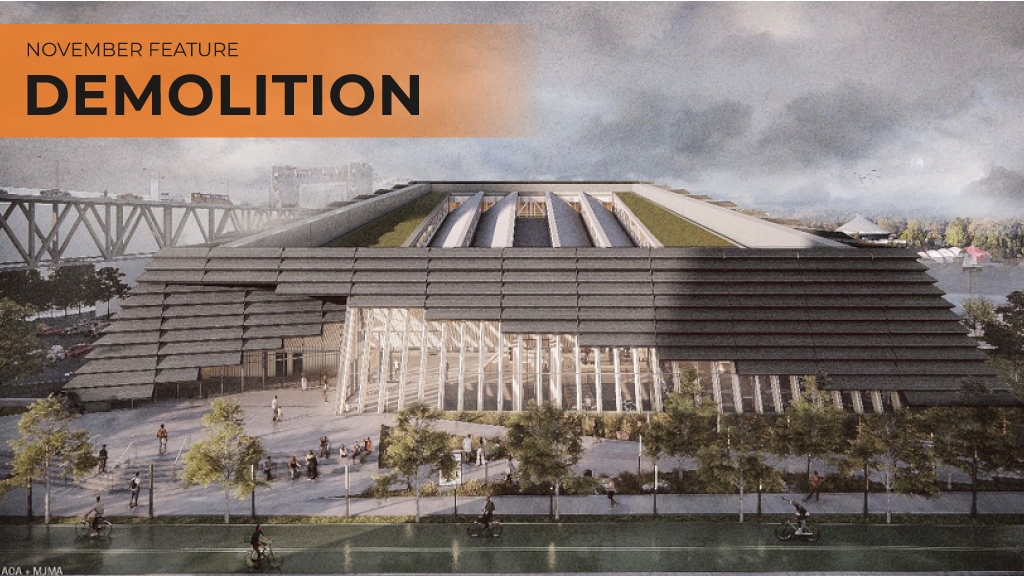
The dispute, in brief, is this. The aquatic centre on Beach Avenue, which opened in 1974, was permanently closed in June 2026. The city and the Vancouver Park Board maintain that the building has structural problems and that renovation is not economically viable. In their words, “studies have shown that reconstruction is not a viable long-term option, and the building will be demolished and replaced on the same site.” The new facility is estimated to cost about $140 million, as of November 17, 2026, with work expected to be completed by the end of 2029—three years after the closure.
POVAC and local swimming groups, however, have strongly opposed the plan. Their objection is the size of the new pool: instead of the existing 50-metre pool, the proposal provides for a 25-metre one. The society argues that this contradicts the result of a 2022 plebiscite, in which Vancouver residents approved a $103 million borrowing authorization specifically to replace the 50-metre pool. Local swimmers have also argued that the 50-metre pool was essential for numerous communities, and that reducing its size would force these groups to scatter across Greater Vancouver in search of suitable training facilities. The Park Board, for its part, has said that a 50-metre pool cannot physically fit within the existing building’s footprint. In October 2026, POVAC obtained a temporary injunction against demolition, but when it expired in early November, the way was cleared for work to proceed. The ruling is now being appealed in the British Columbia Court of Appeal.
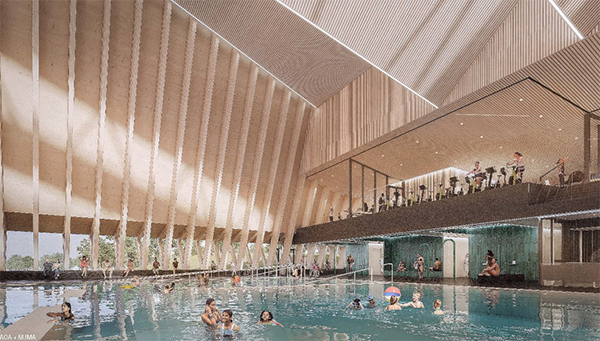
The scale of the loss to the city is illustrated by the statistics: the aquatic centre had 329,816 visits in 2025, not counting people who came only for swimming lessons. Thousands of residents will undoubtedly feel the facility’s absence over the next three years. The plans for the replacement are fairly detailed: it will include spaces for lane swimming, diving, lessons, leisure swimming, rehabilitation, and fitness programs; a separate diving pool with boards of various heights for training and competitions; a flexible pool configuration, including a movable floor that will allow the pool to be adapted for different activities and user groups; a larger hot tub and sauna for adaptive and instructional programs; a more spacious fitness room with more equipment; and a multipurpose room for community events.
The VAC story is just one part of a broader problem: Vancouver’s aging aquatic infrastructure. The popular Kitsilano Pool (Kits Pool), the city’s largest outdoor pool, was built in 1931 and rebuilt in 1978. It sits right on English Bay in a flood-prone area exposed to wave hazards. The city and Park Board acknowledge that the facility “has reached the end of its life cycle” and faces aging infrastructure, structural deterioration, and increasing impacts from storms and climate change. In 2023, the pool was losing 30,000 litres of water an hour because of cracks and damage to its recirculation pipes. City Council has already directed staff to include the rehabilitation of Kits Pool in the 2027–2030 capital plan. Kerrisdale Pool has faced a similar problem: closed for upgrades in June 2025 and scheduled to reopen in January 2026, it did not reopen until September 2026, after a leak in one of the main drains was discovered while the pool was being filled and had to be repaired.
The terminology here is straightforward. A plebiscite is a form of direct public vote on a specific issue—in this case, borrowing for a swimming pool. An interim injunction is an urgent measure a court can issue before a case is fully heard to prevent irreversible actions, such as demolishing a building. A movable floor is an engineering feature that allows the floor of a pool to be raised or lowered to change its depth, making it possible to use the same pool for shallow-water children’s lessons and deeper-water training. A capital plan is a multiyear city financial document that allocates funds for major infrastructure projects.
The main conclusion from this case is that the VAC dispute has exposed a systemic problem: promises made to voters in a referendum can conflict with engineering and financial realities, leaving the courts to resolve the dispute. The key figures speak for themselves: $103 million in approved borrowing, a $140 million replacement project, 329,816 visits in 2025, and three years of waiting for the new facility. It is also telling that the court ultimately sided with the city, effectively affirming that the argument that a 50-metre pool could not fit within the existing footprint outweighed the plebiscite result. For Vancouver residents, this means not only the temporary loss of a much-loved place to swim, but also a broader question about how the city will renew all its aquatic infrastructure—from the VAC to Kits Pool and Kerrisdale—as facilities age, the population grows, and climate risks increase. The POVAC case is not yet over: the appeal is ongoing in the British Columbia Court of Appeal, and the legal fight over the pool may yet return to the news.