Several notable events in British Columbia: Lululemon founder Chip Wilson won a court case, lowering the assessed value of his mansion by $18 million; the regulator paid a whistleblower $25,000 for the first time; and BC Ferries is introducing a temporary five-percent fare surcharge because of rising fuel costs amid the Middle East conflict.
Lululemon founder’s Vancouver mansion knocked down $18 million in assessments
Canadian billionaire and creator of the well-known athletic apparel brand Lululemon Athletica, Chip Wilson, won a court case that resulted in a reduction of the assessed value of his luxurious waterfront estate in Vancouver by more than $18 million. A decision issued May 28 by the British Columbia Assessment Appeal Board requires the assessment authority to revise the 2025 valuation of the house from $82.7 million to $64.4 million. As a result, the Point Grey Road estate, long listed as the province’s most expensive residence, ceded that title to another mansion on Belmont Avenue, assessed at $71.7 million.
The dispute, according to CBC News, centered on differing approaches to valuation. Wilson argued that the market value of his mansion in July 2024 was about $55 million. His case was that assessors relied on replacement-cost methods and failed to account for the most important factor — buyers’ willingness to pay a real-market price. Authorities, for their part, said they relied on the length of the property’s shoreline, which measures an impressive 57 metres. The appeal board sided with the billionaire, ruling that it is unacceptable to ignore real market conditions and buyers’ price sensitivity.
“While the property may command a higher value than all comparable sales due to its size and waterfront location in Vancouver, there is no reason to disregard market behaviour, including price sensitivity,” the decision quoted by CBC states. The estate itself, built in 2013, occupies 1,460 square metres on a lot twice that size. The impressive list of amenities includes an outdoor pool, hot tub, tennis court, rooftop patio and, likely the main selling point, “unobstructed views of Burrard Inlet, English Bay and the North Shore Mountains.” For context: the reduction in assessed value directly affects the annual property tax bill Wilson pays. With a nearly $18.3 million difference, the tax burden for one of British Columbia’s richest people will be significantly lighter — evidently the main goal of this legal battle. The decision also highlights the fragility of definitions for “the most expensive property” and how conditional official rankings can be in the luxury housing market, where every property is unique.
British Columbia pays a whistleblower award for the first time
A landmark event took place in British Columbia: the regulator paid a whistleblower monetary award for the first time in the region’s history. The sum was CAD 25,000. This precedent opens a new chapter in the fight against financial and corporate wrongdoing in the province. As CTV News reports, the payment was made under a whistleblower award program launched to encourage people to report securities violations.
The whistleblower award program operating in British Columbia is aimed at uncovering illegal financial schemes, market manipulation and other breaches of securities law. Similar mechanisms have been used successfully elsewhere, notably in the United States, where the Securities and Exchange Commission (SEC) regularly pays multimillion-dollar awards. But for Canada, and British Columbia in particular, this is a novelty intended to motivate people with knowledge of fraud to approach regulators.
It’s important to understand that such payments are not simply government charity. They are a tool that allows regulators to access information that would otherwise be nearly impossible to obtain. The system is structured to protect the whistleblower’s anonymity and provide a financial incentive for the risk they take. The first $25,000 payment, while not huge, demonstrates the authorities’ seriousness and sends a signal to potential wrongdoers.
It should also be noted that to receive a reward, the information must be new and significant, and the whistleblower must voluntarily provide details that lead to enforcement actions or monetary sanctions. Award amounts are typically a percentage of recovered funds as set by local law. In this case, the regulator is not disclosing all details to protect the whistleblower’s anonymity but stresses that the tip played a key role in uncovering the violation. Experts now expect this case will encourage others with insider information to follow the example of British Columbia’s first whistleblower.
BC Ferries fares rise: Middle East war blamed
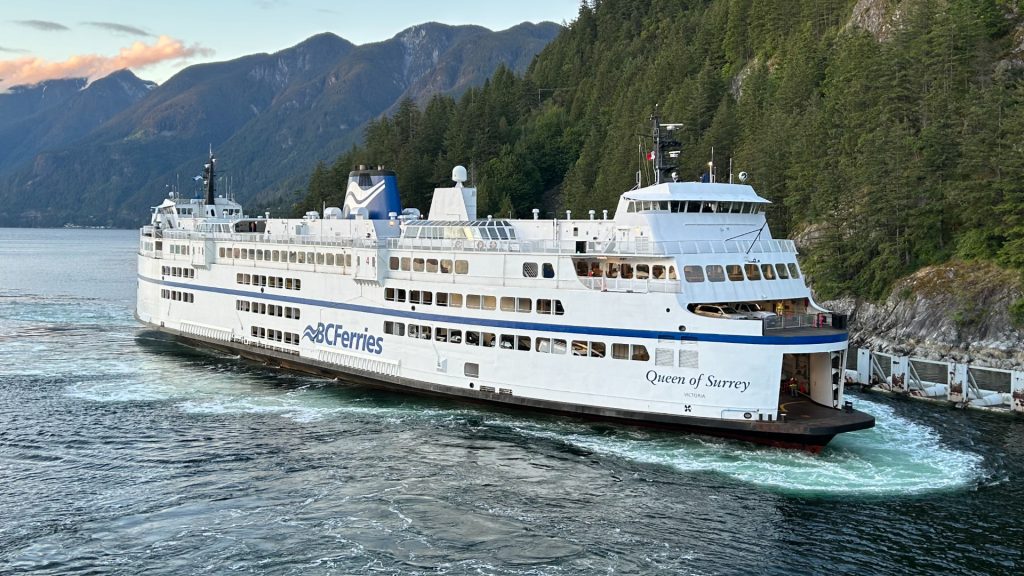
Canadian ferry operator BC Ferries announced a temporary five-percent surcharge on fares, blaming a sharp rise in global fuel prices due to the military conflict in the Middle East. The new levy takes effect June 16 — just three days after Vancouver hosts the first of seven FIFA World Cup 2026 matches. The company’s chief financial officer, Dallin Willis, said the operator had long absorbed price increases using a dedicated reserve fund to smooth fuel cost fluctuations, but is now forced to pass some of the burden onto passengers.
According to BC Ferries, global fuel prices have jumped more than 40 percent since March, and in Vancouver the average price at pumps has held above the psychological $2-per-litre mark for several months. The spike was caused by market instability from the war the U.S. and Israel are fighting against Iran, and related bottlenecks in the Strait of Hormuz — a strategically important shipping route that handles about one-fifth of the world’s oil.
The company stresses the surcharge is temporary and promises to review market conditions. As the management statement explains, the fee was modeled based on various fuel-price and revenue scenarios to balance the need to cover increased costs with minimizing the burden on passengers. If fuel prices fall, the surcharge will be reduced or removed.
Interestingly, BC Ferries is following airlines, which have also begun adding or increasing fuel surcharges in response to the Middle East crisis. For residents of British Columbia who rely on ferries as the only means of reaching the mainland from islands and coastal communities, the timing is particularly inconvenient — coming just before a tourist surge for the World Cup. According to a company statement cited by CityNews Vancouver, these steps are being taken under the Coastal Ferry Act, which allows the use of a reserve fund to smooth out price shocks rather than immediately shifting them onto consumers.