This roundup covers British Columbia’s decision to stop changing its clocks and the technical challenges that come with it, a CFL semifinal in Vancouver amid worrying pedestrian collision statistics, and the designation of the Vancouver port expansion as a project of national interest to diversify exports.
British Columbia skips the clock change for the first time in decades: What it means for residents and technology
For the first time in decades, residents of the Canadian province of British Columbia will not turn their clocks back on the first Sunday in November, while most parts of the United States and Canada will continue the traditional switch to standard time. Earlier this year, the province moved to permanent daylight saving time, now officially called “Pacific Time” (PT), which corresponds to a fixed UTC−7 standard. As a result, this Sunday most of British Columbia will be one hour ahead of Washington state to the south and two hours behind Ontario and most of Quebec, CBC reports.
The situation is unusual because the province’s decision does not apply universally even within British Columbia itself: as the government notes, some areas in the northeast and southeast follow different time arrangements from the rest of the province. This adds to the confusion and increases the risk of mistakes when scheduling meetings and trips or coordinating work among distributed teams.
Technology experts advise residents to prepare in advance for when other regions do change their clocks. The Canadian Telecommunications Association recommends installing all available software updates on devices before Sunday. Apple and Google have published instructions on how to change time settings manually if needed. Recommendations have also been issued by organizations including the University of British Columbia and Island Health.
Technology analyst and journalist Carmi Levy, based in London, Ontario, advises residents to make a list of all their timekeeping devices—smartphones, tablets, laptops and anything else—and then check the apps that depend on the time, including email, calendars and meeting reminders. “When you wake up that Sunday morning after the time change, take a similar inventory of all the technology in your home or office,” he said. “And include your car and anything else with a clock, to make sure that, first, the time is right and, second, the device is working as you expect.”
Levy compared the lack of a uniform transition to the new arrangements across Canadian jurisdictions with the “Y2K bug,” which prompted technology companies around the world to adjust computer systems so they could properly process dates in the new millennium. He anticipates numerous logistical problems because the time-zone change on November 1 is not happening everywhere. “Most people on the planet have no idea this is a problem, and that’s part of the challenge,” he said. “They’ll wake up, and something will go wrong. And they won’t know why.”
The key point to understand is that permanent daylight saving time means clocks will no longer change twice a year, but will remain on the UTC−7 standard year-round. Not all scientists support this approach—CBC notes that some experts oppose British Columbia’s switch to permanent daylight saving time because, in winter, sunrise will occur considerably later, affecting people’s circadian rhythms and well-being. The province’s change is therefore more than a technical detail: it is a socially significant decision with consequences for health, the economy and everyday coordination with neighboring regions.
The practical takeaway for residents is simple: update software, manually check the time settings on all devices, and pay special attention to calendars and scheduled meetings on the first Sunday in November, since automated systems may not account for British Columbia’s new time policy.
The Lions host the Roughriders at BC Place: Sports as a prompt to talk about road safety
Vancouver is preparing for another major event in Canadian football: the local BC Lions will face the Saskatchewan Roughriders in the West Division semifinal at BC Place. The game is expected to be one of the season’s most tense, with a spot in the conference final and a chance to compete for the Canadian Football League’s top prize on the line. But behind the sports headlines, a much more troubling story has emerged in recent days: a series of pedestrian-involved traffic collisions in Metro Vancouver. According to CityNews Vancouver, several such collisions occurred in Metro Vancouver in the past week alone, and at least two were fatal. Journalist Cecilia Hua has prepared a report on how the family of one of the victims is coping with grief and what it is asking of road users.
The story goes well beyond a simple sports preview. The headline about the Lions and the Roughriders serves as a kind of starting point, but the report itself focuses on human tragedy and public safety. It is a typical example of local media combining sports coverage with socially important issues, drawing the audience’s attention to problems that affect every city resident. The family of the pedestrian who died is not only grieving—it is publicly urging drivers and pedestrians to be more attentive to one another. This emotional focus turns the story into a reminder of how fragile human life is and of the responsibility shared by everyone who uses the roads.
Some context is important. Canadian football, or the CFL, is a separate league with rules that differ from those of the American NFL: the field is wider and longer, teams have 12 players, and the scoring and strategy work differently. The West Division semifinal is a playoff game in which the loser is eliminated and the winner advances. For the Lions, playing at home at BC Place means the advantage of their fans in the stands and extra motivation. In this report, however, the sports element takes a back seat to the coverage of the consequences of traffic collisions. It shows how newsrooms use sporting events as a “hook” to draw attention to more serious urban issues.
The key insight here is that road safety remains a pressing concern in Vancouver, and local media play an important role in fostering a culture of responsibility. By speaking out, the victim’s family is effectively becoming the voice of a community calling for change. The reports of several collisions in one week, two of them fatal, underscore the scale of the problem and the need for systemic solutions—from better infrastructure to greater driver awareness. Ultimately, the CityNews Vancouver report is a reminder that behind every sporting celebration is the everyday life of a city, where tragedies happen on the roads—and paying attention to them matters no less than following the games.
Canada makes Vancouver port expansion a national priority
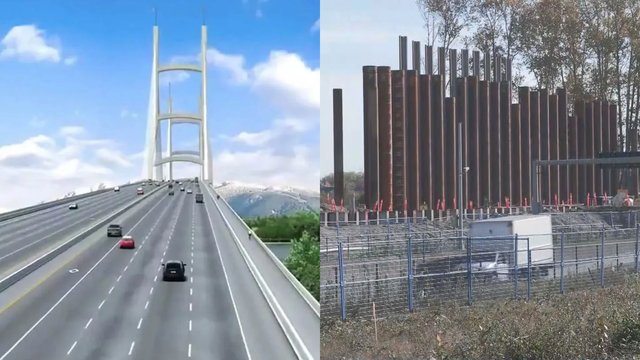
The Canadian government has designated the Roberts Bank Terminal 2 project, the second phase of a terminal at the country’s largest port, as a project of national interest. The decision, reported by Xinhua from Ottawa, may sound technical, but it is part of a broader shift in Canadian trade policy: Ottawa is seeking to strengthen export infrastructure and reduce its reliance on the U.S. market, which has historically absorbed the lion’s share of Canadian goods. The Xinhua report describes the project as a key part of a strategy to double exports to countries other than the United States by 2035.
The designation gives the developer greater regulatory certainty and could speed up the terminal’s move into commercial operation. According to Transport Canada, the terminal could be operational by 2035, up to four years ahead of the original schedule. The investment is estimated at C$5.9 billion, or about US$4.2 billion. The project is expected to increase the Port of Vancouver’s container capacity by about 50 percent, adding capacity for 2.4 million containers a year. The terminal is expected to support up to C$100 billion in trade annually, equivalent to about US$71.55 billion. According to the department, the project is currently on a realistic path toward a final investment decision by mid-2027.
A few points help explain the context. The Port of Vancouver is Canada’s largest port and the country’s main Pacific gateway for trade with Asia, so expanding its container capacity directly affects how quickly and cheaply Canadian goods can reach markets beyond North America. In Canadian practice, “project of national interest” status means the government coordinates approvals and treats the facility as strategically important, reducing the risk of delays and legal disputes. Finally, a “final investment decision” is the point at which investors formally confirm financing and launch full-scale construction; until then, the project remains a plan, albeit one at an advanced stage.
The key takeaway from the news is that Canada is trying to address two challenges at once. The first is infrastructural: increasing the physical capacity needed to diversify exports. The second is political: reducing vulnerability to Washington’s trade policies, which have repeatedly created uncertainty for Canadian exporters in recent years. Moving the timeline up by four years shows that Ottawa is prepared to use administrative tools to pursue a strategic goal rather than rely solely on market forces. The stakes are considerable: if the terminal reaches its planned capacity, it could handle trade flows comparable to a significant share of Canada’s total exports and become one of the country’s main Pacific logistics hubs. The open question is how quickly the port will be able to attract enough cargo to use the new capacity, since diversifying trade requires not only ports but also new markets.