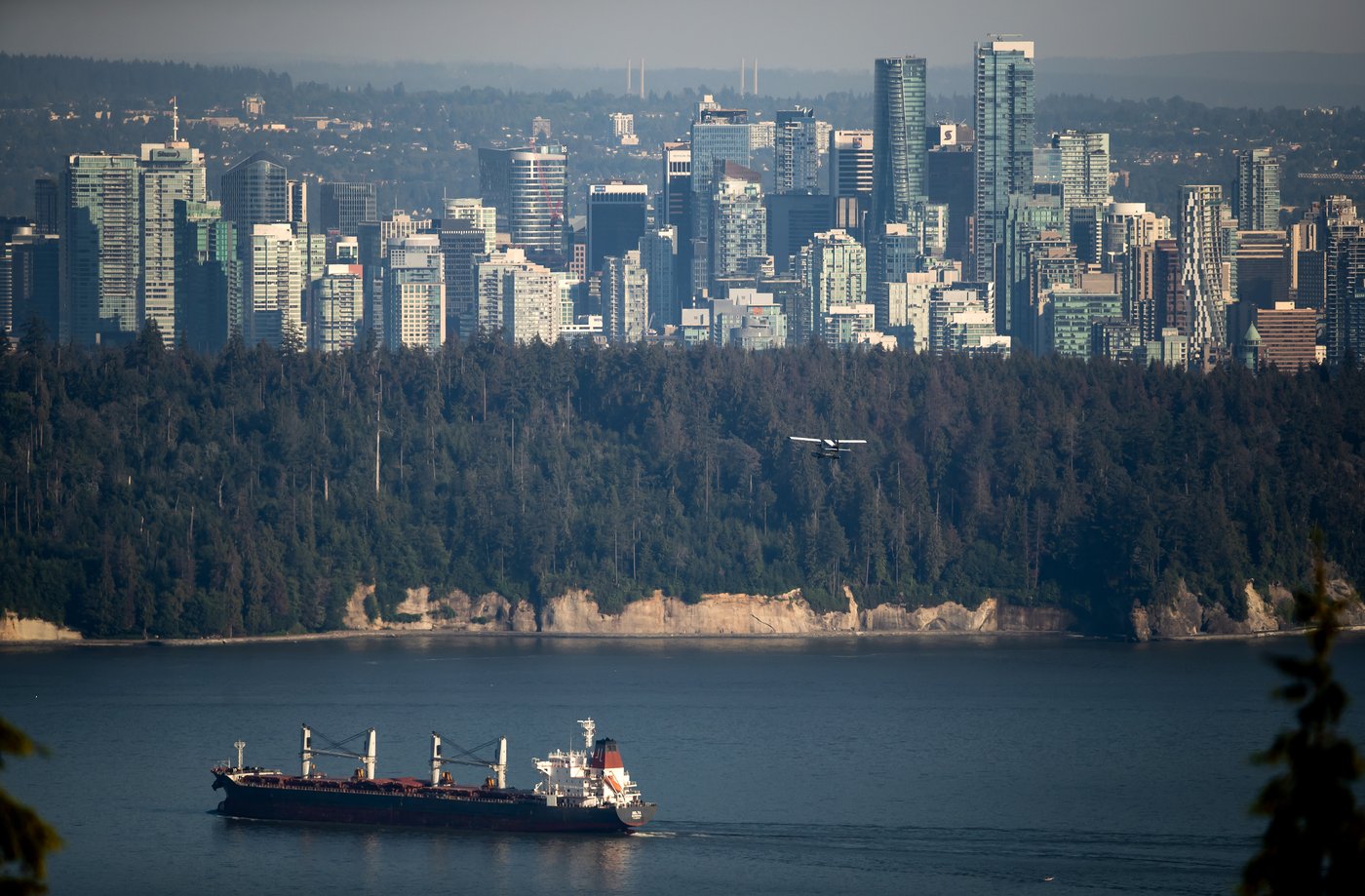
In British Columbia a record cruise season is expected to provide a major economic boost. At the same time the region is experiencing extreme weather contrasts, and preparations for the FIFA World Cup have exposed a crisis in access to medical care for Indigenous peoples.
Record cruise season in British Columbia: an economic lifeline
After a dip last year, Vancouver’s cruise industry is gearing up for a record-breaking 2026 season that is expected to be a powerful stimulus for the local economy. The first ship, Disney Wonder, has already arrived in port, marking the start of a period during which the city will host about 360 ships and more than 1.4 million passengers. This surge in activity comes amid a difficult fiscal situation for the province, making the cruise sector’s contribution more important than ever.
As Chance Mackie, senior trade development representative for the Vancouver Fraser Port Authority (VFPA), told CityNews Vancouver, the industry injects roughly CAD 1 billion into the city’s economy each year. Breaking down that figure, Mackie explained that about CAD 660 million of that is spent by cruise lines directly on local goods and services — from provisioning and bunkering ships to maintenance before sailings. For passengers, Vancouver is more than just a departure point for Alaska cruises: on average each tourist spends roughly CAD 450 in the city on hotels, restaurants, shopping and tours. That effect is expected to strengthen in 2026 thanks to synergy with another major event — the FIFA World Cup, whose matches will be held in Vancouver.
A feature of the upcoming season will be new players entering the market. The Port of Vancouver will, for the first time, receive ships from lines such as Virgin Voyages and Ritz Carlton Yacht Collection. Disney Cruise Line, already established in the region, will increase its presence by deploying a second ship using Vancouver as a homeport for Alaska sailings. The port authority is working closely with Destination Vancouver to promote the city not only as a transit hub but as a destination in its own right. According to a passenger survey conducted in 2025, the main reasons for interest in Vancouver are the city’s natural beauty and its reputation for environmental stewardship. These “green” credentials — a combination of measures, standards and reputation that demonstrate the city’s and port’s environmental responsibility — are an important marketing asset and a key factor for modern travelers choosing destinations.
Mackie also emphasized that Vancouver’s developed and diverse transport infrastructure — from public transit to marine and air links — is a major advantage, making navigation easier for thousands of passengers, many of whom are first-time visitors. Overall, VFPA data show that cruise operations in Vancouver support employment for more than 17,000 people across Canada. Thus, the record 2026 cruise season is seen not just as a tourism-sector success but as significant financial support for the whole province of British Columbia during a challenging time.
Extreme weather in British Columbia: record warmth, blizzards and gale-force winds
A powerful frontal system moved over the Canadian province of British Columbia, bringing a kaleidoscope of extreme weather. While some areas sweltered in unseasonably warm late-February conditions, others were hit by blizzards and hurricane-force winds, illustrating the contrast and unpredictability of the region’s winter weather.
According to an Environment Canada weather summary reported by the Times Colonist, the frontal system led to record temperatures in several communities. In Salmon Arm the temperature climbed to 15.2 degrees Celsius, nearly five degrees above the previous record set in 1932. long-standing records dating back to the first half of the 20th century were also broken in Cache Creek and Vernon, where thermometers rose more than a degree above historical highs. At the same time, interior regions experienced strong winds, with gusts reaching 98 km/h in Hope, 94 km/h in Lytton and 85 km/h at Smithers airport, creating hazardous conditions.
While some areas enjoyed anomalous warmth, others were buried in snow. Rogers Pass recorded 38 centimetres of snow on Thursday, and meteorologists warned another 15 cm could fall by Friday night. Heavy snowfall warnings remained in effect for sections of the Yellowhead Highway up to the Alberta border and for the Kinbasket area. The passing cold front was expected to bring an additional 5–15 cm of precipitation and significantly reduce visibility. For context: a frontal system is the boundary between two air masses with different properties (warm and cold), along which contrasting and often dangerous phenomena such as squalls, heavy precipitation and sharp temperature changes form. The passage of such a front across British Columbia’s complex terrain — with its mountain ranges and valleys — leads to sharp weather differences over relatively small areas.
The key insights from the summary demonstrate the power and scale of a single weather event that simultaneously broke century-old temperature records and produced winter storms. The use of concrete data — wind speeds, centimetres of snow and exact temperature values — underscores the scientific approach and seriousness of the situation. The implications of such events are practical: they disrupt transportation (as reflected in highway warnings), create risks to infrastructure and public safety from wind and snowdrifts, and fit into a broader global context of increasing extreme weather anomalies. This report, dated 2026, serves as a reminder of how a dynamic atmosphere can challenge established climate norms.
Access crisis: how the World Cup is denying Indigenous peoples in Canada medical care
Ahead of the major sporting event — the FIFA World Cup 2026, which will be partly held in Vancouver — attention has focused not only on infrastructure readiness but also on a troubling problem: access to basic medical care for vulnerable populations. Indigenous health authorities in remote regions of British Columbia have been forced to cancel scheduled patient trips to specialists in Vancouver due to skyrocketing accommodation costs driven by the sporting event. This situation exposes deep systemic problems in providing health care to residents of remote communities.
As CBC News reports, the Nisga’a Valley Health Authority has placed a moratorium on booking trips for non-emergency patients to the Lower Mainland (which includes Vancouver) from June 10 to July 20, 2026. The reason is a catastrophic rise in hotel prices and shortages during the period when BC Place will host seven World Cup matches and a fan festival will take place on the Pacific National Exhibition (PNE) grounds. Melanie Doolan, director of medical benefits for the authority, says prices began rising two years ago after the tournament announcement and have now peaked. A Deloitte report estimates about 41,800 hotel and rental beds will be available in the Metro Vancouver area during that period, creating a shortfall of 70,000 room nights while the expected number of visitors will exceed 350,000. For health authorities operating under tight budgets and obliged to provide services as cost-effectively as possible, this means they cannot secure accommodation for patients.
These are not one-off visits but essential, regular treatments. Patients from northern communities — for example residents of Haida Gwaii, where the Skidegate Medical Centre has also imposed similar restrictions — need regular trips to Vancouver specialists for cancer, rheumatology, nephrology and cardiology care — sometimes every three or six months, and in some cases, as Doolan notes, monthly. One patient, for instance, needed monthly treatment at St. Paul’s Hospital because that care is not available at northern hospitals. The First Nations Health Authority (FNHA), which oversees more than 200 communities, recommended avoiding non-emergency travel during this period due to unprecedented pressure on transport and accommodation. This forced measure is an attempt to preserve resources for genuine emergencies. As Doolan explains, by limiting scheduled trips they hope that, together with other Indigenous health providers, they can ensure rooms are available when urgent patients need them.
This situation is only the tip of the iceberg of a long-term problem. Doolan points out that housing costs in the Lower Mainland have “soared dramatically” over the past three years since COVID restrictions were lifted and mass events resumed. Each year the organization is forced to reassess priorities and tighten criteria for medical travel, but that is not enough to rein in costs. Cancelling scheduled treatment is an extreme measure taken with great discomfort but seen as the least bad option. The crisis highlights the fragility of the medical travel system, which is a lifeline for residents of remote parts of Canada where specialized care is not available. It raises difficult questions about priorities in mega-event planning, social responsibility and equitable access to health care when a celebration for millions can become a potential health threat for thousands of the country’s most vulnerable citizens.