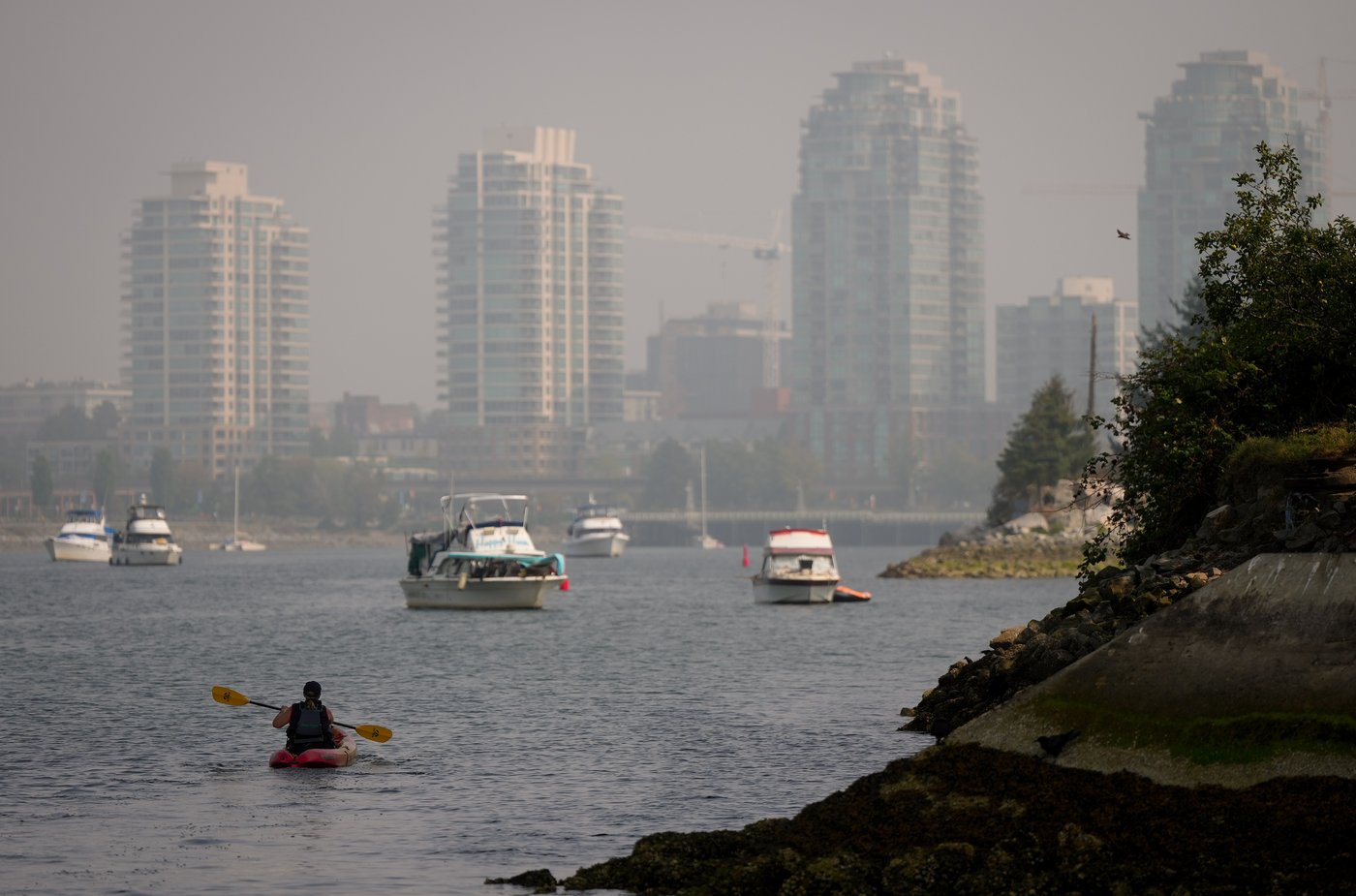
Rains have reduced wildfire risk in British Columbia, but experts remain cautious. Vancouver led rent declines in Canada, yet remains the second-most expensive city. The province is calling for a unified policy to remediate homes contaminated by drugs after the opioid crisis.
Rains have reduced wildfire risk in British Columbia, but experts remain cautious
This past weekend brought not only disappointment for those planning outdoor recreation in British Columbia, but also a long-awaited reprieve for the province’s ecosystems. Rains that fell across nearly all regions significantly lowered the fire danger. According to Taylor Colman of the BC Wildfire Service information team, the rains allowed fire danger ratings in areas such as Chilcotin, the Peace region, South Thompson and the Fraser Canyon to drop from high and extreme to moderate.
The precipitation is especially valuable in areas that have suffered multi-year drought. Colman explained in an interview with CityNews Vancouver that the rain moistened not only light forest fuels—grass, needles, shrubs—but also penetrated deeper layers of the forest floor. That led to the rehydration of denser materials like logs and leaf litter, which, the specialist said, provided a real break after an unusually warm and dry spring.
Nevertheless, despite the positive effect, the recent rains could not fully make up for the precipitation deficit in March, April and May. The lack of rain in those months led to a notable increase in ignitions. Colman notes that 275 fires have been recorded in the province to date, slightly above the 10-year average of 250. However, thanks to recent cooling and rainfall, the total area burned is far below the historical average—just over 4,200 hectares versus an average of 126,000 hectares over the last ten years.
With the upcoming FIFA World Cup matches scheduled in Vancouver, concerns arise about possible smoke impacts in the Lower Mainland. BC Wildfire Service experts advise residents and visitors to use the service’s mobile app to track smoke spread forecasts. As Colman explains, smoke behavior depends on many factors: the number of active fires, the dryness of fuels which affects fire spread rate, and of course wind direction. Currently the province has 16 active wildfires, two of which in the Cariboo region are classified as uncontrolled. Fortunately, the fires closest to Vancouver—a couple of small blazes north and east of Chilliwack and a half-hectare fire south of Ladysmith on Vancouver Island—are under control by firefighting crews.
Given continuing concerns about the coming summer months, residents in high-wildfire-risk areas are strongly urged to prepare in advance. The service offers four key recommendations: identify reliable official information sources and sign up for alerts; prepare a go-bag for evacuation, especially for those living near forests; strictly adhere to fire bans and be extremely careful with any activities that could create sparks; and conduct defensible-space cleanup on properties by removing debris and dry vegetation, and placing firewood or propane tanks at safe distances from structures.
Rental market analysis: Vancouver leads Canada’s rent declines
Canada’s rental market, particularly in British Columbia, is showing a rare trend in recent years: rents are steadily falling. According to a new Rentals.ca report, Vancouver is experiencing its 30th consecutive month of year-over-year declines in asking rents for apartments. This means that since 2022, renters in the province’s largest city have seen small but consistent relief. While the cost of living remains high, for those searching for housing this is a rare glimmer of hope. The average asking rent for a one-bedroom in Vancouver is now CAD 2,385 per month—a 6.3% drop from May last year. A two-bedroom averages CAD 3,330, down 0.8% year-over-year. Despite the declines, Vancouver remains the second-most expensive city to rent in the country, behind North Vancouver where average rent reaches CAD 2,927 per month.
The report’s key takeaway is that British Columbia has become the leader in rent decreases among all Canadian provinces—down 5.4% year-over-year. Following are Ontario (down 5%) and Alberta (down 4.7%). As Sean Hildebrand, president of Urbanation, notes, “the Canadian rental market is entering the peak summer season against a weak economic backdrop, population decline and a record supply of new apartments coming online, which together are restraining rent growth.” These factors give renters a break after several years of “hyperinflation” in rents. Interestingly, Nova Scotia has overtaken British Columbia on average rent levels, becoming the most expensive province for condos and purpose-built apartments at CAD 2,343. Saskatchewan shows the strongest long-term gain: over three years rents there have jumped by 26
Policy for remediating drug-contaminated homes in British Columbia: when property becomes a chemical trap
Calls are growing in British Columbia for a unified provincial policy to remediate homes where drugs were manufactured or used. CTV News reports that the issue is particularly acute amid the ongoing opioid crisis, which is leaving behind toxic units hazardous to new occupants. In a segment of Your Morning Vancouver, Trevor Hargraves of the Real Estate Association of British Columbia explained why fragmented municipal measures no longer work.
The core problem is that dangerous chemical residues—from fentanyl to methamphetamine—remain in such units. These substances embed in walls, carpets and ventilation systems, posing serious risks to future occupants’ respiratory systems and skin. As Trevor Hargraves told CTV News, “there is currently no uniform rule that requires an owner or realtor to carry out professional remediation before selling or renting.” That creates a legal gray area: a buyer may not even know that synthetic drugs were once manufactured in the purchased unit.
Experts’ main recommendation is not only to legislate mandatory testing but also to create a standardized remediation protocol. Some municipalities already have private companies specializing in such cleanup, but their services are expensive and do not guarantee legal protection for owners. Moreover, there is no certification system: it’s unclear which contamination levels are considered safe and which require major repairs.
The situation is complicated by a sharp rise in so-called clandestine labs and overdose sites in the province. Authorities spend millions combating substance use but neglect the long-term consequences for the housing stock. The implications for the real estate market are clear: contaminated homes lose value, insurers refuse to cover the risks, and tenants face invisible dangers.
Hargraves is urging the provincial government to require disclosure of a property’s chemical history prior to a transaction, similar to existing rules for mold or asbestos. “This is not just a cleanliness issue, it’s a health issue—especially for children who can breathe toxic dust for years,” he emphasized.
In this context, “remediation” means more than cleaning; it refers to a suite of professional measures to neutralize toxic substances using specialized equipment and chemical agents. Unlike household cleaning, the procedure requires licensed contractors and follow-up laboratory air testing. Without a unified policy, each case is left to the seller’s discretion, which amid the opioid crisis could lead to a new wave of illnesses among unsuspecting residents.