In the digest: BC nurses expand their strike on Vancouver Island; an Indigenous community criticises the lack of consultation over a new pipeline; the Whitecaps return to BC Place for a key match against LAFC.
BC nurses expand picket lines on Vancouver Island
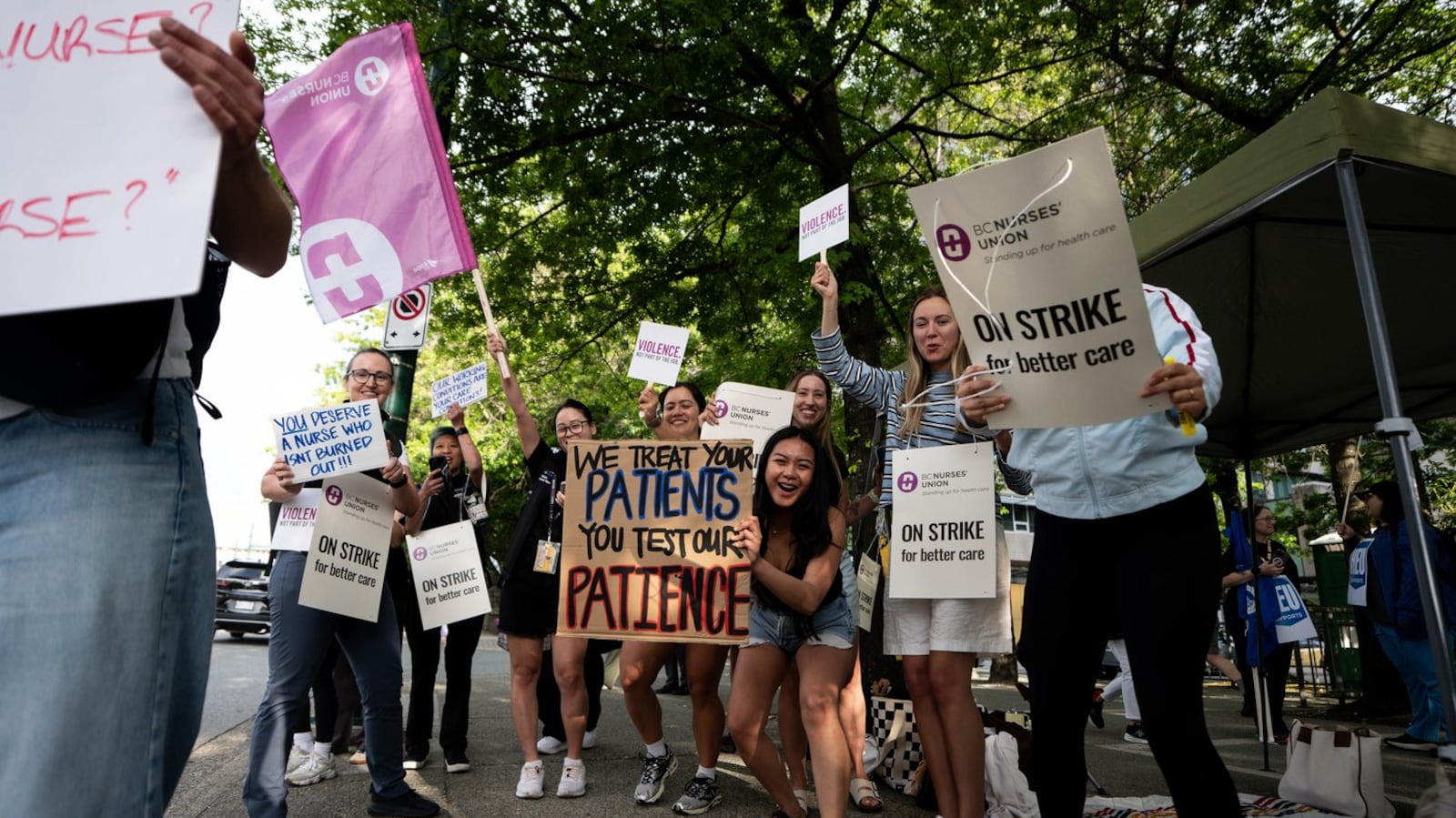
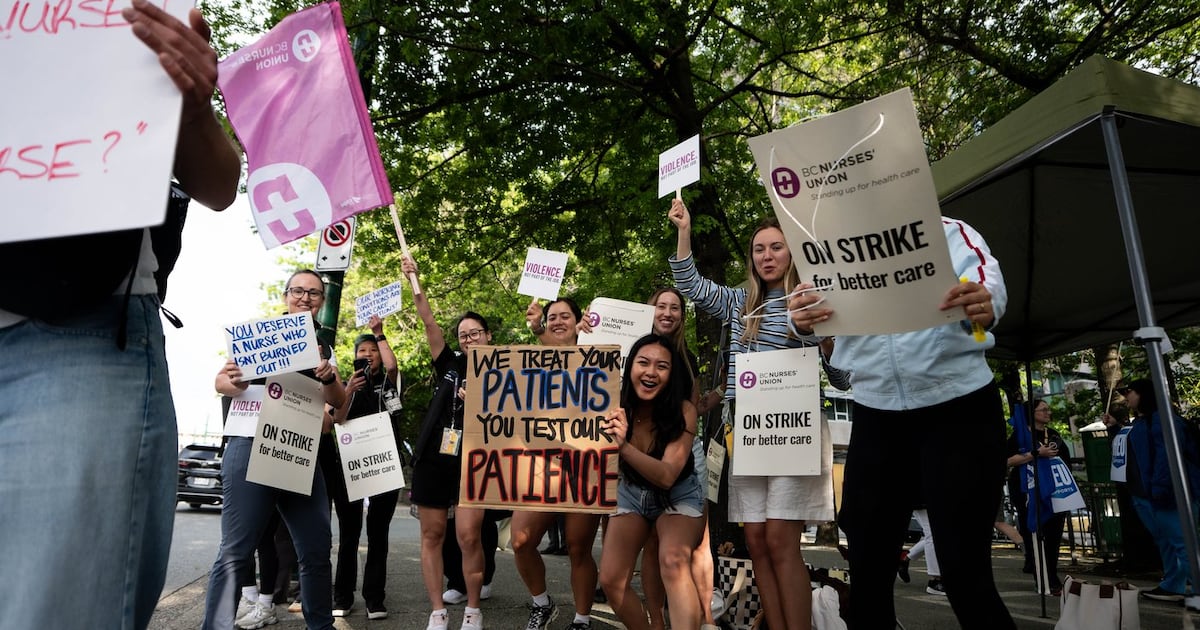
According to information published by CTV News, members of the British Columbia Nurses’ Union (BCNU) have expanded their strike pickets on Vancouver Island. A photo taken July 7, 2026 shows protesters outside Vancouver General Hospital in Vancouver itself. While the full text of the article is not available, the expansion of the pickets’ footprint alone points to an intensifying labour conflict in the province’s health-care system. Previously, protests were mainly concentrated on the mainland, and now Vancouver Island is becoming a new battleground.
A CTV News report notes that nurses continue to push for improved working conditions and higher wages amid chronic staffing shortages. Given that a health-care crisis has been ongoing in British Columbia for several years—especially acute in remote communities—expanding pickets to the island could lead to serious disruptions at hospitals and clinics. How events unfold next will depend on whether the provincial government is willing to sit down at the bargaining table and make the concessions unions are demanding.
Vancouver Island First Nation accuses authorities of ignoring consultation over a new pipeline
Last week, Canadian Prime Minister Mark Carney and BC Premier David Eby announced a “historic agreement on collaboration and prosperity.” Under the deal, Ottawa committed to funding billions of dollars for projects in British Columbia, including a major upgrade of the Roberts Bank container terminal in Tsawwassen. The project is directly linked to a proposal to build a new oil pipeline from Alberta. But the excitement surrounding the high-profile announcement has been overshadowed by significant concerns from Indigenous peoples.
Leaders of the Lyackson community, located on the south end of Vancouver Island, said that neither the federal nor the provincial government conducted adequate consultations before taking the decision to bring it to the public. In an open letter to Carney and Eby, hereditary chief Shaun Thomas stressed that the authorities “rushed” and “created public expectations” without bothering to hear the views of those whose land and waters would be affected.
Thomas said plainly that increased shipping in the Salish Sea directly threatens her community’s traditional way of life—the ability to fish, to carry out cultural ceremonies, and to protect the environment. In response to the criticism, the BC premier’s office moved quickly to assure people that the province itself is not lobbying for a new pipeline, calling it a federal-level and Alberta project. The statement emphasises that the agreement already includes a commitment by Ottawa to consult with Indigenous peoples if the project is carried out. Officials also point to the existing moratorium on tanker traffic and strengthened measures for responding to oil spills.
However, Green Party leader in Parliament Elizabeth May, who represents Saanich—Gulf Islands, is not hiding her anger. She called the situation “a catastrophe for the environment in British Columbia, especially for the Salish Sea.” “The risks of an oil spill have gone through the roof, and I’m so angry that I can barely speak,” May said in an interview with CHEK News. “I’m outraged that this was just announced without any discussion with the people of British Columbia.” In effect, she echoed the Lyackson community’s position: conversations about consultation should have happened before, not after, a public announcement.
Notably, by the time the article was published, the Prime Minister’s Office in Canada had not responded to a request from CHEK News. At the same time, the province insists that obligations to engage with Indigenous peoples are already included in the text of the agreement. But for Chief Thomas, that sounds like a formality: “They made an announcement and created expectations without directly having a conversation with the impacted Indigenous communities.” The core of the complaint is that trust in such promises is undermined when a project is first loudly rolled out to the world, and only afterwards do authorities begin negotiating with those who have lived on this land for generations.
To understand the context, it’s important to note that the Roberts Bank terminal is a key hub for exporting Canadian resources to Asia. Its expansion, like the building of a new oil pipeline, is being presented by authorities as an engine for economic growth. But for Indigenous peoples whose land and water rights are protected by the Constitution of Canada and numerous court precedents, a “announce first, consult later” approach is unacceptable. The case once again highlights a chronic problem: how to balance large-scale infrastructure projects with obligations to secure free, prior and informed consent from Indigenous communities. For now, Chief Thomas and her supporters are calling not just for promises, but for real dialogue before another “historic” project begins to change their lives.
Whitecaps return to BC Place: August matchup vs. LAFC could be decisive in the race for the playoffs
After a long wait, Vancouver’s Whitecaps will be playing at their home stadium, BC Place, again. The match against Los Angeles FC (LAFC), scheduled for August 1, promises to be a key moment not only for fans, but also for both teams’ standings in the Western Conference of MLS.
Over the past few seasons, LAFC has firmly established itself among the league’s elite clubs. Their style features constant pressure on opponents, quick transitions from defence to attack, and an uncompromising forward push. That approach keeps the Californians near the top of the table almost all the time, making them an extremely difficult opponent. As noted in the Vancouver Is Awesome article, teams prefer attacking football, so spectators will likely see plenty of dangerous moments and sharp changes in tempo—matches like these rarely leave much time to get settled.
For the Whitecaps, this meeting is an opportunity to strengthen their position in the playoff zone. This season, Vancouver has already turned BC Place into a genuine fortress for visiting teams, and a win against a strong opponent like LAFC would be a major statement of intent. As the regular season nears the end, every point takes on extra value: three points in a game like this could dramatically shift the standings.
One of the key concepts mentioned in the piece is the “playoff race.” In MLS, the teams that finish at the top of each conference qualify for the playoffs. With fierce competition in both the East and the West, any success—or setback—can determine a club’s fate. The August 1 match isn’t just another fixture; it’s an important step for the Whitecaps in their bid to secure a spot among the leaders.
The game will be held on Saturday, August 1 at 4:30 p.m. local time at BC Place. Tickets start at $60—according to the article, they can be purchased through Ticketmaster, and the author notes that it’s a partner link, with the outlet receiving a small commission to support local journalism.
For anyone following MLS, this matchup is one of the brightest home highlights on the Whitecaps’ calendar. A clash between two attacking teams with high ambitions is sure to deliver entertainment, and the pressure of the standings adds extra weight to the match. The original story can be read on the Vancouver Is Awesome page.