A bright meteor streaked over British Columbia, causing booms and tremors. In Vancouver, an agreement recognizing Indigenous rights was signed without threatening private property. And in Quesnel, the holder of a $46-million lottery ticket has still not come forward.
Bright flash and boom: a large meteor flew over British Columbia
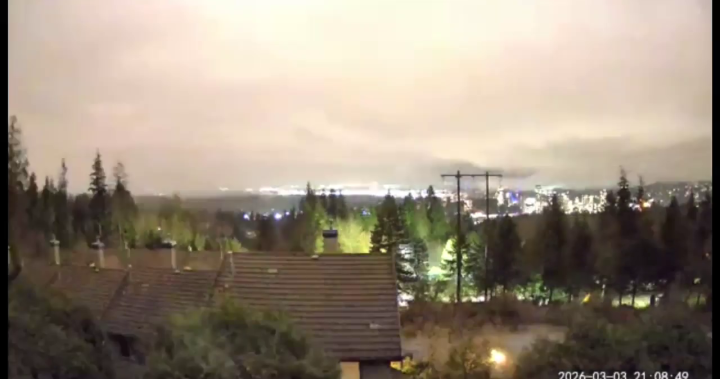
An impressive cosmic show played out in the night sky over British Columbia’s southern coast, startling many residents. The bright flash and the subsequent powerful boom observed Tuesday evening turned out to be nothing other than a visit from a large meteor, known as a bolide.
Residents across a wide region, from North Vancouver and the Fraser Valley to the U.S. state of Washington, became unwitting witnesses to this rare astronomical event. At about 9:08 p.m. local time, two blinding fireballs flashed in the sky in quick succession, and a few minutes later two deafening sonic booms, resembling explosions, were heard. The force of the event was such that vibrations were even recorded by seismographs — instruments designed to detect earthquakes. As North Vancouver resident Max Hacker told Global News, the boom was so powerful it made the glass balcony door shake. “We heard this deafening blast... The door rattled in its frame two or three times, then everything went quiet, and we just sat there for a minute stunned, asking each other, ‘Did you hear that?’”
Experts confirmed the disturbance was caused by a bolide — an especially bright meteor often called a “fireball.” Michael Unger, Director of Programming at the H.R. MacMillan Space Centre, explained that the object was large and entered the atmosphere at enormous speed. That produced a shock wave perceived on the ground as a sonic boom or rumble. “It looks like it may have fallen somewhere in the Lower Mainland area,” Unger speculated. He also added important context: our planet is constantly subject to a “cosmic bombardment.” Every day micrometeorites enter the atmosphere and fall unnoticed like a rain onto our backyards. What made this event rare was the object’s size and its proximity to a densely populated metropolis, where thousands could see and hear it.
This incident vividly demonstrates how dynamic and not always predictable our cosmic neighborhood can be. Although most such bodies burn up in the atmosphere before reaching the surface, their appearance is a reminder of ongoing processes in the Solar System. The event caused no harm but left behind many impressions, videos from witnesses, and valuable data for scientists studying the trajectories and nature of such cosmic visitors.
Recognition of Indigenous rights in Vancouver: a threat to private property or a step toward dialogue?
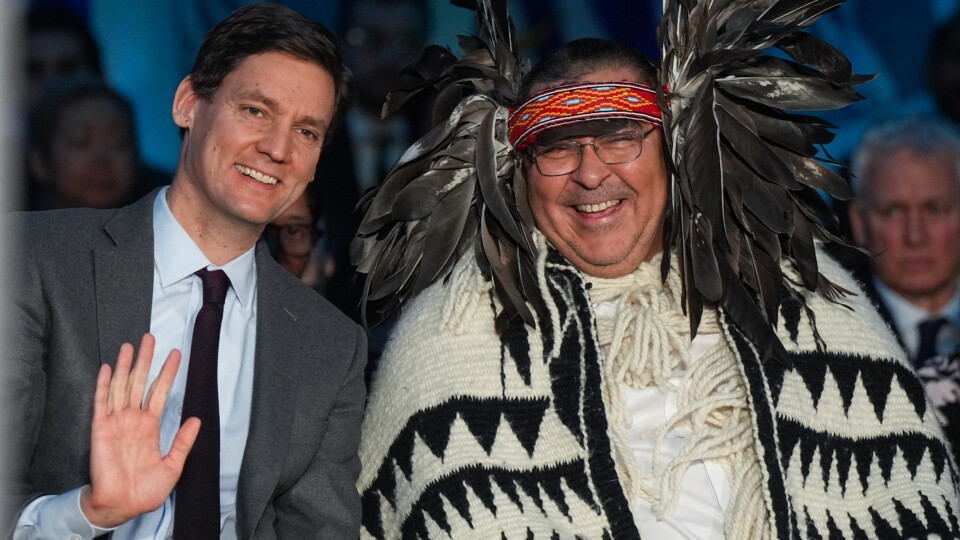
At the end of February, the federal government of Canada and the Musqueam Indian group signed an agreement recognizing Indigenous rights and title over traditional territories that today include a significant portion of Vancouver and its suburbs. This news, reports The Hub, sparked concern among residents: were the property rights of millions of private landowners suddenly at risk? To clarify the nature of the agreement and its possible consequences, the outlet consulted Dwight Newman, a professor of law at the University of Saskatchewan and an expert on Indigenous land claims.
The agreement in question is not a treaty or a land-claims agreement in the constitutional sense. As Newman explains, it is not entrenched in the Constitution in the way a treaty would be under section 35. Essentially, it is a preliminary agreement in which the federal government acknowledges the existence of Musqueam rights and title for the purposes of further negotiations. The document even contains a provision that the parties reserve the right to take a different position in court if the matter proceeds to litigation. The key point: the agreement does not directly affect private property rights. It contains no provisions analogous to those in the Haida Nation agreement, which explicitly respects fee simple private property rights. However, as the professor emphasizes, this agreement neither creates new rights nor extinguishes existing ones. Its main purpose is to establish a framework for future negotiations on specific issues such as resource management or revenue sharing, and to create dispute-resolution mechanisms.
So why did it cause such panic? Likely because of a recent precedent. Last summer, the Supreme Court of British Columbia for the first time in Canadian history recognized Aboriginal title for the Cowichan Tribes on urban land — a 5.7-square-kilometre parcel in Richmond containing residential and commercial properties. That decision is currently under appeal in the provincial Court of Appeal. Against that background, any agreement mentioning “title” within a city is perceived as a potential threat. However, Newman explains, the Musqueam agreement is fundamentally different from the Cowichan court decision. The court directly granted Cowichan Tribes title rights that rank above fee simple private property. The Musqueam agreement does nothing of the sort. It merely states that the parties believe such rights exist and requires them to negotiate the details going forward. The Musqueam themselves, through Chief Wayne Sparrow, say they do not intend to challenge private property rights and advocate for partnership with neighbors.
Nevertheless, certain questions remain. The agreement recognizes Musqueam jurisdiction over their territory within a framework of “cooperative federalism.” The Province of British Columbia is not a party to it. Newman notes the federal government cannot unilaterally change provincial jurisdiction, although contentious situations can arise in the context of relations with Indigenous peoples. Implementing many provisions will likely require provincial participation and consent. Another important aspect is the agreement’s legal force. It contains obligations to negotiate in good faith and provides a dispute-resolution procedure — from negotiation and mediation to arbitration or litigation. However, as the expert notes, forcing negotiations through the courts can be difficult.
It is worth explaining the term “Aboriginal title.” This is a unique Indigenous land right recognized by the Constitution of Canada. It arises from historical use and occupation of land prior to European arrival and can coexist with other forms of ownership, but in cases of conflict it sometimes has priority. “Fee simple” is the most complete form of private land ownership in Canada, akin to the concept of full ownership. How these two rights interact on urban lands is one of the most complex and delicate legal issues in the country.
Thus, the current agreement itself does not put private property in Vancouver at risk. It does not change the existing situation in which Musqueam have asserted but not court-recognized title claims over parts of the city. Its primary function is to create a structured dialogue between the federal government and the First Nation. However, as Dwight Newman concludes, the agreement could become a template for other Indigenous nations, especially in urban settings. And although it contains attempts to shield its contents from use in future litigation, that possibility cannot be completely excluded — as the Cowichan case showed, prior agreements can be used in court as arguments. Therefore, while there is no immediate threat, the agreement highlights the long-term and unresolved issue of land claims in densely populated urban areas, requiring clear and transparent solutions involving all parties: federal and provincial governments, municipalities, Indigenous nations, and residents.
Unclaimed $46 million ticket: someone in British Columbia still doesn’t know they won the jackpot
Imagine someone in British Columbia keeping, in a wallet, a desk drawer, or, worse, forgotten in an old jacket, a scrap of paper worth $46 million. That is the situation with a winning Lotto 6/49 ticket purchased in Quesnel. Vancouver Is Awesome reports that more than two months have passed since the decisive draw on December 20, 2025, but the lucky winner has not come forward.
The British Columbia Lottery Corporation (BCLC) officially confirms that the giant $46-million prize remains unclaimed. While some winners do choose to take a pause to prepare for the dramatic changes in their lives, the clock is ticking. Under the rules, a ticket holder has 52 weeks from the date of the draw to claim their prize. All tickets are valid for one year after the draw date. To ensure integrity in the verification process, BCLC refuses to disclose the exact place of purchase or any other details until the winner is found.
Interestingly, this ticket won not by matching the main Lotto 6/49 numbers, but via the game’s special component — the Gold Ball Draw. That means the ticket matched the unique number of the gold ball — 12706438-43 — which delivered the entire accumulated jackpot to its holder. For context: Lotto 6/49 has two primary ways to win a large sum. The first is matching six numbers in the main draw. The second, which occurred here, is the Gold Ball Draw, where one ticket randomly selected from all those sold for a specific draw gets the chance to win a constantly growing jackpot that can reach tens of millions. That mechanism created a new multimillionaire who may not yet be aware of their windfall.
The situation raises many questions and speculations. Did the purchaser buy the ticket on a whim and forget about it? Was it a gift unknown to both giver and recipient? Or is the winner intentionally delaying their claim while consulting lawyers and financial advisors? Whatever the case, each day without a claim is a day when the potential winner’s life could have changed dramatically. The story serves as a reminder to all players: check old tickets — luck can arrive unexpectedly and may require only one small step to be claimed.