Vancouver and all of British Columbia are voting in municipal elections amid record early turnout. The mayoral race is “neck and neck,” with plebiscites on drug policy and involuntary treatment also on the ballot, while CBC examines key campaigns in nine Metro Vancouver cities—from a changing of the guard in Richmond to controversies in Surrey and Delta. Meanwhile, Air Canada is filming an advertisement for its new Airbus A321XLR over the Lower Mainland, promising to expand its long-haul network and launch new routes from Vancouver by 2027.
Vancouver Chooses a Mayor: Record Turnout, a “Neck-and-Neck” Race and Two Controversial Plebiscites
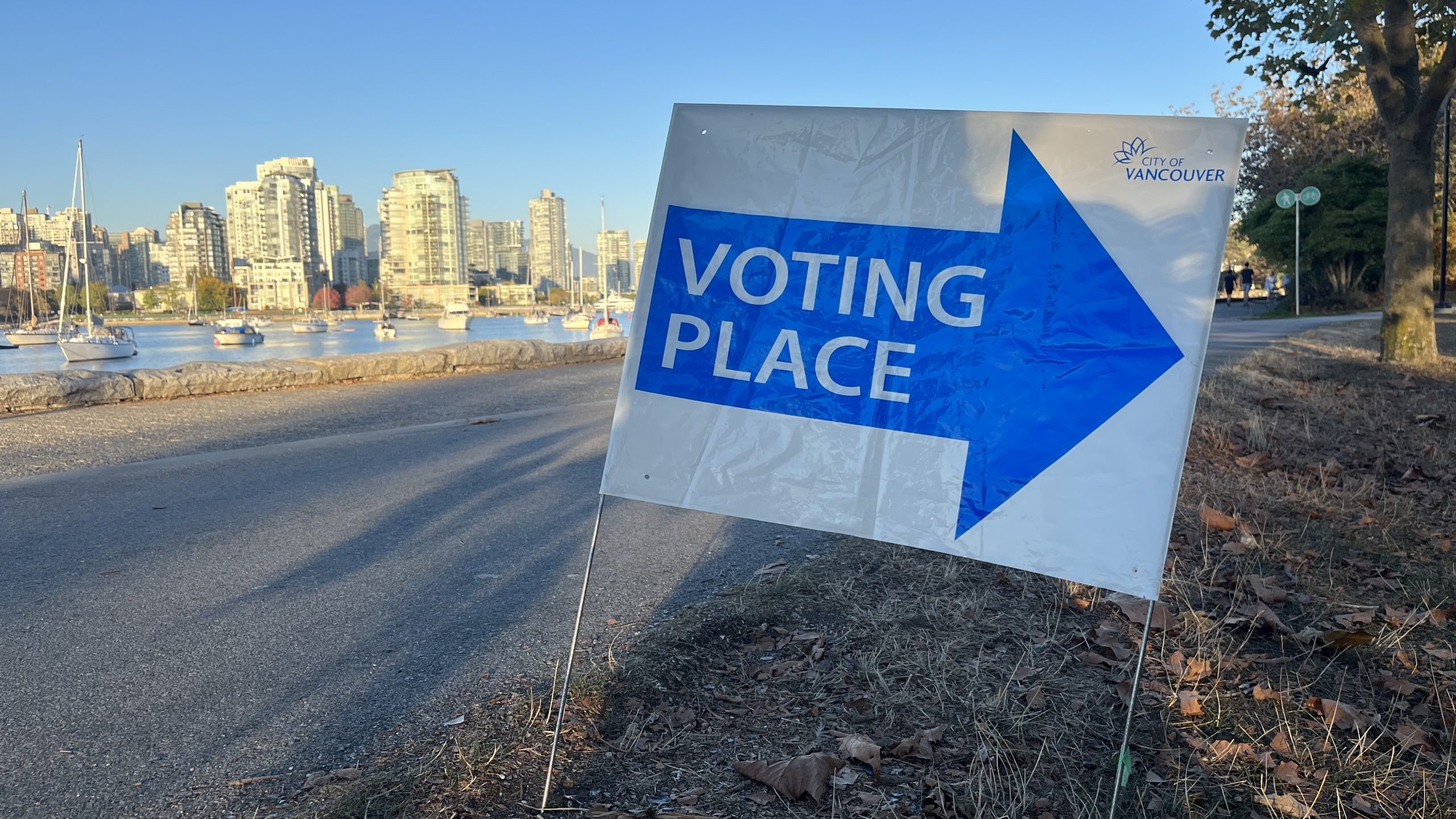
On Saturday, October 17, Vancouver residents headed to the polls to decide who will lead the city for the next four years. Voting is open from 8 a.m. to 8 p.m., and residents can vote at any of the 85 polling locations across the city. Interest in the election has been so high that a record was set even before election day: 103,000 people voted early, 60 percent more than the approximately 65,000 who voted during the five days of advance voting in 2022. That level of activity alone suggests that residents see this campaign as consequential rather than routine.
The mayoral race remains undecided until the final moment. According to a Canada Pulse Insights poll conducted exclusively for CityNews and OMNI TV and published on October 9, Green Party candidate Pete Fry leads with 28 percent among decided voters, while incumbent Mayor Ken Sim of ABC Vancouver follows with 27 percent. The one-point gap falls within the margin of error of plus or minus 4.4 percentage points, meaning there is no clear favorite. Among those who are certain to vote or have already done so, the numbers are nearly identical: Fry has 29 percent compared with Sim’s 28 percent. Karim Allam of the Vancouver Liberals is third with 19 percent, followed by Colleen Hardwick of TEAM for a Livable Vancouver with 13 percent and Rebecca Bligh of Vote Vancouver with seven percent. Also on the ballot are Muhammad Ahmad of Bright Future Vancouver, as well as independents Amaury Kaliman and Scott Gilbert.
Ken Sim, seeking a second term with the centre-right ABC, has built his campaign around a promise of no property-tax increases and has already presented a 100-day plan in the event of re-election. He acknowledges that not everything has been accomplished during his term, but insists that he is leading the city in the right direction. Pete Fry, a three-term councillor and the son of longtime Liberal MP Hedy Fry, is focusing on housing, transportation and the economy, repeatedly saying that “people should be able to live well in this city.” Karim Allam, Sim’s former chief of staff, has distanced himself from his former boss and promises to bring young people back to Vancouver through affordable housing and jobs, investment in parks and community centres, and a platform he says goes beyond ideology. Rebecca Bligh, who served two terms as a councillor and helped Sim win in 2022, is now running against him as a “progressive candidate with a centrist platform.” She accuses him of using the tax freeze to protect affluent property owners while undermining essential services. Colleen Hardwick, a former councillor, sees effective urban planning as the key to a comfortable life and promises to scrap the city’s official development plan and restore neighbourhood planning offices.
Interestingly, the electorate is divided less by candidates than by the type of concerns voters have. John Wright, head of Canada Pulse Insights, described it in an interview with CityNews as “two different streams heading toward each other.” According to Wright, Fry’s supporters are concerned about the environment, ethics, accountability, housing affordability and housing itself—a “very clear agenda.” Sim’s supporters have a different outlook: affordability is their top concern, followed by crime, municipal taxes and budget responsibility—“more down-to-earth, meat-and-potatoes issues.” Wright adds that this audience—often older people, homeowners and taxpayers—traditionally votes at higher rates, which could matter on election day.
In addition to the mayor, Vancouver residents will elect 10 city councillors. Candidates are running under the banners of ABC, the Greens, COPE, OneCity and other groups. Voters will also choose seven park board commissioners and nine school board trustees. But the ballot’s biggest surprise is two non-binding public-safety plebiscites and three borrowing questions related to the Capital Plan. The first plebiscite asks whether voters support tightening city bylaws to prohibit the open use of hard drugs in public places—even though it is already illegal in British Columbia. The second proposes asking the province to convert part of the former St. Paul’s Hospital into a “secure medical facility” with more than 100 beds for involuntary treatment. Colleen Hardwick called the questions “a populist election stunt,” while other critics described them as unrealistic. Sim, by contrast, says strengthening the city’s sanitation bylaws would allow inspectors to issue fines or confiscate drugs without making arrests. He describes the involuntary-treatment question as a demand that the province fulfill its responsibility to people who are dangerous to themselves or others. Fry supports regulating drug use in public places but differs from Sim on the approach: he believes people should be directed to supervised-consumption sites or shelters. The three borrowing questions concern transportation and street infrastructure, public-purpose and essential facilities, and parks and open public spaces.
Several concepts in this story require explanation. In the Canadian municipal context, a plebiscite is not a legally binding referendum but a non-binding public-opinion survey that city authorities may use as guidance but are not required to follow. Sim’s promised property-tax freeze means the tax rate would not rise; for the city, however, this could mean declining real revenues during inflation, as the same amount of money buys fewer services. Involuntary treatment is a highly controversial measure involving confinement of people with addictions or mental-health conditions in closed facilities against their will. It faces objections from human-rights advocates but has support among some voters frustrated by the street crisis. Finally, the Capital Plan is a multiyear capital-borrowing plan—effectively authorization for the city to take on debt for major infrastructure projects. The vote will determine how much the city can invest in roads, parks and public buildings.
Voting is not limited to Vancouver. On the same day, mayoral and council elections are taking place in municipalities across British Columbia, including Surrey, Richmond, Burnaby, Abbotsford and dozens of other cities. CityNews begins full coverage at 6 p.m. local time, with reporters throughout Metro Vancouver and invited experts analyzing the results. The key takeaway for observers is simple: with record advance turnout and a one-point gap, the election will be decided by election-day turnout and by which electorate—the “environmental” or “taxpayer” vote—is more disciplined. Even without legal force, the two plebiscites on drug policy and involuntary treatment will shape the city’s debate for years to come.
British Columbia Elections: Nine Metro Vancouver Municipalities to Watch
On Saturday, 161 municipal elections will take place across British Columbia, 21 of them in the Metro Vancouver region alone. Over the past two months, CBC has held seven mayoral debates in different municipalities and prepared candidate profiles in two more cities to give voters context on the campaign’s key issues. The material, published on the CBC website, serves as a guide to some of the region’s most interesting electoral contests.
Vancouver traditionally occupies centre stage as the province’s largest city by population. Incumbent Mayor Ken Sim, leader of ABC Vancouver, is seeking re-election against eight challengers. They include former councillor Colleen Hardwick, incumbent councillor Rebecca Bligh and Sim’s former chief of staff, Karim Allam, whom the mayor is currently suing for defamation. The strongest challenger, however, appears to be Green Party candidate Pete Fry—the only councillor who has consistently opposed the majority over the past four years. The campaign’s main themes are public safety and Sim’s plebiscite on drug use, but considerable attention is also being paid to whether the ABC Vancouver majority has benefited the city.
In Surrey, the province’s second-largest city, Brenda Locke is seeking a second term and faces six challengers from other local political groups. Locke became embroiled in a controversy over the transition to the Surrey Police Service, a matter on which she lost a court case. Her opponents include prominent figures such as former mayor Doug McCallum and two-term councillor Linda Annis. Nevertheless, no single issue has emerged around which the campaign has united, and the opposition vote could well be split among Locke’s challengers.
In Richmond, the province’s fourth-largest city, an era is coming to an end: Malcolm Brodie, who was elected mayor for 25 consecutive years, usually by a wide margin, is retiring. Seven candidates are seeking to replace him, but polls and experts agree that the real race is between three candidates: former councillor Rob Howard and incumbent councillors Kash Heed and Alexa Loo. All three are connected to the former BC Liberal Party—Howard and Heed served as members of the provincial legislature, while Loo was a candidate—so their positions on policy are broadly similar. The differences lie in temperament, experience and the fallout from negative reactions to a study of a potential supervised-consumption site, as well as questions about whether the representation of Chinese Canadians will change in a city where people with Chinese connections make up a majority of the population.
Coquitlam, like Richmond, is awaiting a change in power: longtime mayor Richard Stewart is stepping down. Four-term councillor Craig Hodge began his campaign more than a year ago and won Stewart’s endorsement. His council colleague Trish Mandewo, however, entered the race just weeks before the deadline, emphasizing her teamwork skills and her previous leadership of the Union of British Columbia Municipalities. Stewart ultimately withdrew his support for Hodge and gave it to Mandewo, adding intrigue to the election. Meanwhile, Madhavi Inamdar argues that both councillors are responsible for Coquitlam failing to reach its full potential and hopes to win as the “outsider.”
One of the region’s fiercest campaigns is taking place in Delta and effectively began more than two years ago. Dylan Kruger led a group that removed George Harvie as chair of Metro Vancouver and curtailed his authority to make certain minor decisions at city hall without council approval. Now Kruger and Harvie are running for mayor, and the campaign centres on leadership and ethics. They are joined by former executive director of the Surrey Police Board Melissa Granum, who is calling for a complete break with the council’s political culture.
Two mid-sized cities—New Westminster and Langley City—feature a similar story: progressive mayors Patrick Johnstone and Nathan Pachal, who have council majorities, are seeking re-election while facing opposition councillors Daniel Fontaine and Delany Mack, who are calling for lower taxes and greater attention to crime and safety. In both cases, personal conflicts have also played a role. Mack has filed several complaints alleging violations of the code of conduct, as well as a court petition concerning what she describes as unfair personal treatment by her council colleagues. Fontaine and Johnstone have publicly apologized for their rhetoric toward their opponents.
Langley Township and West Vancouver are larger suburbs where the mayors seeking re-election have found themselves at the centre of legal proceedings or investigations during their four-year terms. The similarities end there, however. In Langley Township, Eric Woodward faces the opposition Langley Strong party, which includes experienced councillors, but its mayoral candidate, Jay Lundgren, is a newcomer to politics. The main question is whether the city is taking on too much debt to finance new infrastructure projects. In West Vancouver, former journalist Kirk LaPointe is challenging Mark Sager, but he also faces competition from councillor Sharon Thompson, who supported much of Sager’s agenda. The debate here concerns leadership and character, as well as whether the district should have challenged Metro Vancouver’s decisions over the wastewater-treatment controversy and the provincial government’s housing targets.
Several concepts help put the material in context. Municipal elections in British Columbia take place every four years, with voting held in all the province’s cities on the same day—hence 161 campaigns in a single day. Metro Vancouver is a regional federation of municipalities that manages shared services, including wastewater treatment and regional planning. Its chair is elected from among mayors and councillors, which is why the conflict over that position in Delta matters so much. A plebiscite is a separate question put to voters alongside an election; Ken Sim used this tool to gauge residents’ views on drug policy. A supervised-consumption site is a medical facility where people can use drugs under supervision to reduce the risk of overdose. Such facilities regularly become the subject of political disputes in Canada.
CBC’s central conclusion is that this election in Metro Vancouver is largely about governing style and ethics rather than fundamentally different platforms. In Richmond, all three front-runners have similar views; in Delta, the campaign revolves around leadership and moral character; and in New Westminster and Langley City, personal conflicts have taken centre stage. At the same time, the departure of longtime mayors—Brodie in Richmond and Stewart in Coquitlam—creates room for unpredictable outcomes, while a split opposition vote, as in Surrey, could help incumbents remain in power. Electoral-infrastructure data underscore the scale of the event: 21 races in the region alone and seven debates organized by CBC represent a serious effort to help voters navigate complex and fragmented municipal politics.
Air Canada Films Its New Airbus Over Vancouver: The Story Behind the “Chase” in the British Columbia Sky
Residents of the Lower Mainland and Vancouver Island may have witnessed an unusual sight on Friday, October 16: two aircraft flying very close together, with one seemingly chasing the other. It was neither an emergency nor a military exercise, but a promotional shoot. Air Canada was filming its new narrow-body Airbus A321XLR from the air, using a second aircraft—a privately owned Embraer EMB-505 Phenom 300 that does not belong to the airline—specifically for aerial video work. The company announced its plans in advance on X, warning that the pair could be seen near YVR, over the Lower Mainland and throughout Vancouver Island.
Air Canada spokesperson Angela Ma explained in comments to Vancouver Is Awesome that the airline is entering “a new era of fleet modernization” with this aircraft, and that the footage will be used in branding, communications, marketing and promotional campaigns around the world. She said the filming location was chosen deliberately: the XLR will serve European destinations, while the spectacular backdrop of British Columbia’s coastal mountains, the Pacific Ocean, white clouds and Vancouver’s urban landscape allows the company to showcase the province’s natural beauty while promoting Canada to international customers.
The aircraft itself is the central figure in the story. The flag carrier presented its first Airbus A321XLR at Vancouver International Airport in June, along with its new Glowing Hearted cabin design. The aircraft has 182 seats: 14 fully lie-flat seats in Air Canada Signature Class, 68 economy seats and 36 “preferred” seats with extra legroom. The company currently has four of these aircraft, but Air Canada plans to receive 30 Airbus A321XLRs over the next several years. At the presentation, Alex Lefebvre, vice-president of network planning and global sales, noted that these are the first fully lie-flat seats on a narrow-body aircraft in Canada. This allows the airline to operate year-round flights on routes that were previously seasonal, as well as open new routes.
Interestingly, the decision to equip the aircraft this way grew out of observations of passenger preferences after the COVID-19 pandemic. People became more willing to pay extra for business class and a premium experience, and demand for lie-flat seats proved strong not only on international routes but also on North American ones. For now, the XLR will fly from eastern Canadian cities to Europe, while flights to Vancouver from Toronto and Montreal will begin in 2027. Lefebvre promised new routes and new markets, adding that the aircraft “will be coming to an airport very near you very soon.”
Several technical points help explain the context. The Airbus A321XLR is a longer-range version of the popular narrow-body A321; XLR stands for Extra Long Range. It allows relatively small aircraft to operate long-haul routes that were previously served only by wide-body jets. That is why “narrow-body” does not necessarily mean limited comfort: a modern configuration can include full lie-flat beds. The Embraer Phenom 300, meanwhile, is a light business jet well suited to aerial filming because of its compact size and manoeuvrability. YVR is the IATA code for Vancouver International Airport.
The broader takeaway is more significant than the advertising shoot itself. Air Canada is positioning Vancouver and British Columbia as a showcase for Canada in the global market while preparing to expand its long-haul network from the West Coast. The fact that XLR flights from Toronto and Montreal to Vancouver are not scheduled until 2027 shows that the current campaign is advance marketing aimed several years ahead. The warning on social media about “two planes flying close together” also served as a reminder of how easily a visually striking production process can appear alarming from the ground—and how important transparent communication is between airlines and the residents of the cities over which they fly.