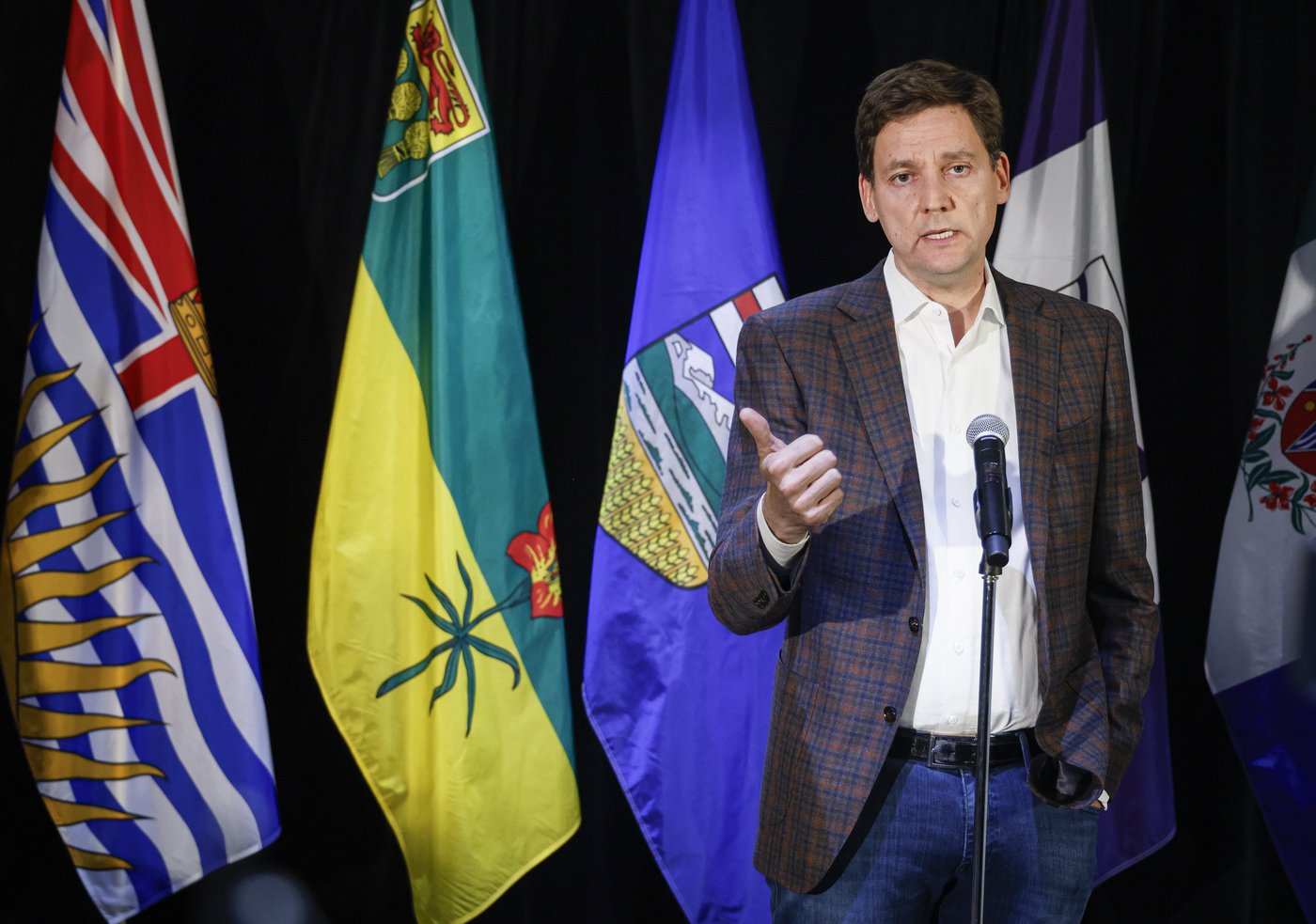
The governments of British Columbia and Ottawa have struck a series of agreements: buying unsold condos to create affordable housing, a multi-billion-dollar deal to develop ports with a ban on oil tankers, and a framework for developing Vancouver Island.
Eby compares the condo purchase plan to a “liquidation sale”: government buys unsold housing below construction cost
British Columbia Premier David Eby and Prime Minister Mark Carney announced a sweeping program to buy unsold condos and turn them into affordable housing. The initiative sparked sharp criticism—many called it a bailout for developers who can’t sell their projects. But Eby pushes back: it’s not a bailout, it’s a “liquidation sale.” In his view, when you buy something on discount at a store, you don’t think you’re saving the store. The same goes here—the government is simply using the situation to acquire housing at a price below the cost of building it. At the same time, Eby acknowledged that this approach won’t work in Vancouver: the numbers don’t add up, and buying condos there to make them affordable isn’t economically viable.
A report by CityNews Vancouver says the plan calls for the purchase of more than 2,000 unsold units under a federal-provincial agreement. Those units are expected to be converted into rental housing or offered under a “rent-to-own” model. Carney stressed that the program takes advantage of developers’ current difficulties for families who need affordable housing. According to him, purchases will only happen where it makes economic sense, and if the market changes, the program simply won’t be carried out.
Critics argue that such measures effectively subsidize developers who overestimated demand and built too many expensive condos. Eby insists that developers themselves didn’t ask for help and don’t view it as a bailout. He offered a “liquidation sale” analogy: when a store holds a liquidation, the buyer doesn’t feel like they’re saving the store. Similarly, buying housing below construction cost isn’t support for developers—it’s an opportunity for the government to acquire assets that can then be offered to the public at lower prices. Vancouver, however, is excluded: even unsold condos there are still too expensive to be shifted into the affordable category.
The program is part of a broader infrastructure investment package worth $5 billion that was announced a month ago and will be rolled out over 10 years. Experts say such an initiative could become an important tool for lowering housing prices, but its success depends on whether developers are willing to sell units at a discount and on an honest assessment of market conditions. If demand rebounds, developers may change their minds, and then the government would have to either pay more or abandon the plan. For now, Eby and Carney insist: they aren’t saving a business—they’re simply buying what’s being sold at a discount to make housing affordable for people who can’t wait.
Canada–British Columbia deal: oil tanker ban in the north and expansion of the Port of Vancouver
Prime Minister Mark Carney and British Columbia Premier David Eby announced the signing of a multi-billion-dollar agreement that, they say, will be the foundation for sustainable economic growth for the province and the country as a whole. A key part of the deal is confirmation of the federal moratorium on the movement of oil tankers along British Columbia’s north coast—an approach that effectively shuts the door on any new oil pipeline from Alberta to the Pacific coast. In return, however, the province will receive tens of billions of dollars for infrastructure projects, including expansion of the Port of Vancouver and replacement of the George Massey tunnel. In his remarks, Carney described British Columbia as a “critical link— the gateway to a more prosperous, sustainable, and inclusive Canada.” Eby, for his part, called the agreement “historic, generational,” aimed at building the kind of province they want to see decades from now.
The fight over oil export routes has been going on for more than a year. Alberta Premier Danielle Smith has repeatedly advocated for building a new pipeline to ports in northern British Columbia—one that would provide direct access to Asian markets. But environmental risks associated with possible spills have prompted fierce opposition from Indigenous communities and environmental advocates. “Today is a good day. Great Bear Sea is not a place for oil tankers,” said Marylin Slett, elected chief of the Heiltsuk Nation and president of the Great Bear Initiative (Coastal First Nations Great Bear Initiative). She emphasized that their alliance “will never allow oil tankers on the coast.” It’s important to understand: a tanker moratorium means that even if a pipeline were built, there would simply be nowhere to ship crude oil—wharves would not be able to handle huge tankers. That makes the project commercially pointless.
The fate of Alberta’s proposal for a new pipeline remains unclear. Eby acknowledged that the province has no intention of challenging federal jurisdiction in court: “We’re not going to court to fight the pipeline project. Pipelines are a federal jurisdiction issue, so this agreement matters. It guarantees the northern tanker ban remains in force, and if a pipeline is built, British Columbians will receive fair compensation for the environmental risks.” The memorandum of understanding explicitly states that British Columbia “must meaningfully share” in the economic benefits of the new pipeline—mechanisms such as annual royalties and a spill response fund are discussed.
Beyond the energy component, the agreement also includes huge investments in transportation infrastructure. The federal government is allocating $10 billion to expand the Roberts Bank terminal in the Port of Vancouver. As Carney explained, this will speed up export shipments and reduce the time cargo spends waiting to be sent overseas. Another $3 billion will go toward replacing the George Massey tunnel. It is currently a bottleneck four-lane highway, which will be widened to eight lanes, making it easier for trucks to reach ports on the Lower Mainland. The money will also support the ports of Prince Rupert and Stewart, which are expected to become “vital trade corridors for Canada’s critical minerals.” Separately, $500 million is earmarked to expand the Red Chris copper mine and to support a power transmission line along the north coast.
The agreement also confirms plans to develop liquefied natural gas exports, manufacture wind turbines, and strengthen protections for the population of orcas off the coast. The foreign policy context also matters: Eby has just returned from the first trade mission to China, where he was promoting the province’s resources. In this way, the deal is not only an economic move, but also a strategic one that ties together environmental commitments, infrastructure development, and interprovincial compromises. As CBC noted, Carney was scheduled to meet later the same day in Calgary with Premier Smith to discuss a “proposed new energy infrastructure for diversifying Canadian exports”—showing that the conversation about a pipeline is far from over, even if the balance of power has clearly shifted in favor of an environmentally responsible approach. The full text of the original report is available on CBC’s website.
Agreement between British Columbia and Ottawa: new horizons for Vancouver Island
A story published by CTV News describes a strategic agreement between the governments of British Columbia and Canada that sets the direction for development on Vancouver Island. The focus is on three key sectors: shipbuilding shipyards, forestry, and the coastal area. The document is not a detailed plan, but rather a framework agreement that establishes general principles and priorities for future investment and regulation.
Vancouver Island’s shipbuilding industry has historically played an important role, but over the past few decades it has faced declining orders and increased competition. The agreement calls for modernizing shipyards and attracting federal contracts, including for building and repairing vessels for the Coast Guard and the navy. The goal is to create thousands of jobs and spur growth in related industries.
Forestry has traditionally been a pillar of the region’s economy, but it is currently going through a difficult period due to falling demand for lumber, environmental restrictions, and wildfires. The framework provides for a shift toward more sustainable forestry practices, support for a bioeconomy, and the creation of new wood-based products such as biofuels and building materials. There is also an emphasis on protecting old-growth forests—an important concession to environmental organizations.
The coastal area is not only about tourism and fishing, but also about protection from climate change. The agreement includes measures to restore marine ecosystems, develop the “blue economy” (ocean aquaculture and renewable ocean energy), and adapt infrastructure to rising sea levels. For local communities—especially Indigenous peoples—this is an opportunity to gain more control over resources.
The key takeaway is that this framework agreement is an attempt to balance economic development with environmental sustainability. It creates a basis for a long-term partnership, but the specific projects still need to be developed and agreed upon. Experts say success will depend on funding and on whether all sides are willing to compromise. For residents of Vancouver Island, it’s a signal that their region remains in the sights of federal and provincial policy, and that traditional industries get a chance to be refreshed.