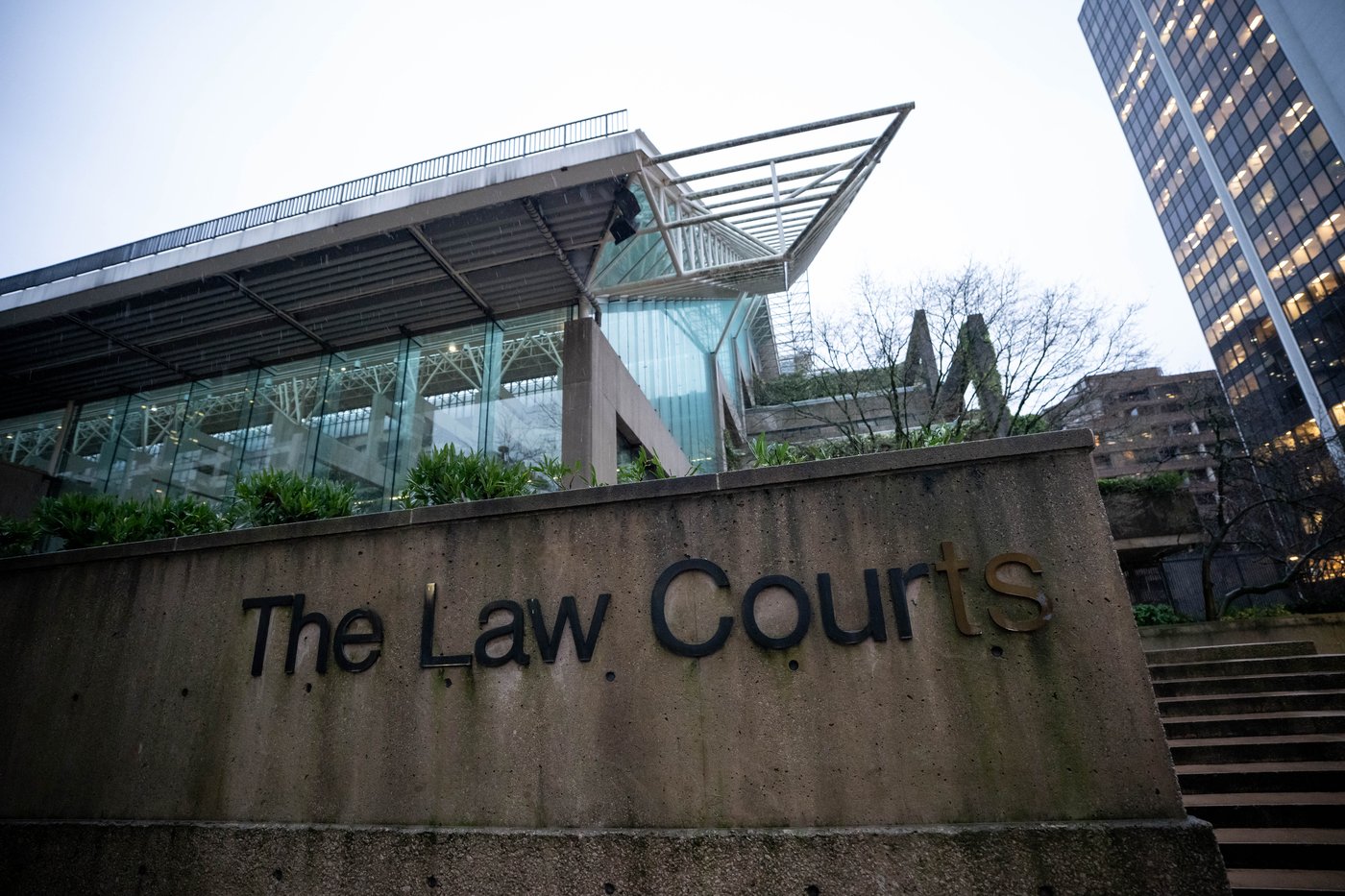
A court awarded more than $1 million after a neighbour’s shooting, an award-winning home was listed for $5.75 million, and police reported the results of their impaired-driving crackdown.
B.C. Supreme Court awards couple more than $1 million over neighbour’s shooting
A high-profile civil lawsuit on Vancouver Island has concluded after several years, following a criminal case involving a violent dispute between neighbours. Anthony and Wendy Nelson of Sooke, on Vancouver Island, won their civil case: their neighbour, Paul Trigier, who is already serving a seven-year sentence for an armed attack, has been ordered to pay them more than $1 million in damages. The case stems from an incident in May 2022, when Trigier shot Anthony Nelson at virtually point-blank range with a .22-calibre rifle, causing severe and irreversible health consequences.
As is often the case in such stories, the circumstances arose from a long-running feud between neighbours. B.C. Supreme Court Justice Julie Gibson, issuing her decision Monday, not only upheld the claim but also sharply criticized the defendant’s conduct during the proceedings. Trigier, notably representing himself and attending hearings by video from prison, continued to insist that the shooting had supposedly “not been proven,” despite having previously been convicted in criminal court of aggravated assault and unlawful firearms offences. Justice Gibson specifically noted that this position amounted to an abuse of process and demonstrated an “exceptionally poor understanding of the situation and a complete disregard for the suffering of the Nelsons.”
The judgment includes several substantial awards that together make up a significant compensation package. Anthony Nelson will receive $767,000 for the assault and resulting bodily injuries. His wife, Wendy, who directly witnessed her husband being shot, was awarded $279,000 for the intentional infliction of mental suffering. In addition, the court ordered Trigier to reimburse the provincial government approximately $64,000 for medical services related to the victim’s treatment. The total financial obligations to all parties therefore exceeded $1 million, making the case one of the region’s most notable in recent years.
Interestingly, the criminal judgment included Trigier’s own explanation that he had taken the firearm with him allegedly to warn his neighbours that a bear had entered their property. However, the judge in the criminal case found that explanation to be a lie and determined that Trigier had gone to the Nelsons’ home with a premeditated intention to shoot someone. In her civil ruling, Justice Gibson also emphasized that even if she had not been bound by the findings of the criminal proceedings, she would have reached the same conclusions about the defendant’s liability based on the evidence presented in court. The verdict is a striking example of how civil justice can supplement criminal punishment by providing victims with at least partial financial compensation for the terror they endured and the lives that were upended, while also establishing an important precedent for similar cases in the future.
For those unfamiliar with the Canadian legal system, it is worth explaining the difference between the two proceedings. Criminal court determines guilt and imposes punishment, such as imprisonment, protecting society from the offender. Civil court, by contrast, deals with compensating the injured party, usually through a monetary award. The fact that Trigier had already been convicted significantly simplified the Nelsons’ lawyers’ task in the civil case. Even so, the defendant attempted to dispute obvious facts, drawing criticism from the judge. As reported by CityNews Vancouver, the decision was issued on Aug. 17, 2026, and has already generated widespread public attention because it touches on the sensitive issue of safety in small communities and accountability for one’s actions. The Nelson family’s story is a reminder that tragedy can occur even in quiet suburbs, and that the consequences of a single reckless act can permanently alter the lives of several people. Financial compensation, unfortunately, cannot restore someone’s health, but it can at least help ease the financial burden placed on the victims.
Award-winning West Vancouver home listed for $5.75 million
A home in the prestigious West Vancouver neighbourhood has returned to the real estate market, attracting the attention of not only potential buyers but also architecture critics. The property is the renowned Howard House, designed by Architecture Building Culture (ABC). This four-bedroom, four-and-a-half-bathroom residence has already received several prestigious awards, including the Lieutenant Governor of British Columbia Award for Architectural Excellence from the Architecture Foundation of British Columbia. It has now reappeared in listings with an asking price of $5.75 million, slightly below the amount paid for it just one year ago.
This is not simply another expensive mansion in a Canadian suburb. Its uniqueness lies in the way the architects responded to the characteristics of the site. The lot has an unusual kite-like shape, and that feature determined the entire design concept. The house consists of two interconnected wings that meet to form an inner courtyard. The bedroom wing is raised on columns and extends southeast, while the western wing contains the living room, a double-height entry hall, the main staircase, an office, a games room and a balcony. The design is not only visually striking but also makes highly efficient use of the lot, creating private areas and open terraces.
The home was sold for $5.83 million in 2024 and has now returned to the market at a slightly lower price. This could indicate that the seller wants to complete the transaction quickly, or it could reflect adjusted market expectations amid current conditions in Vancouver’s luxury real estate sector. According to BC Assessment, the property’s assessed value also reflects these fluctuations. For buyers who value architecture and uniqueness, however, the price difference is unlikely to be the deciding factor.
The reason the home has attracted so much attention is that the Lieutenant Governor’s Award is one of British Columbia’s most significant architectural honours. It recognizes outstanding projects that demonstrate an innovative design approach and integrate harmoniously with their surroundings. For a buyer, it serves as a kind of quality guarantee and evidence that the home was created to the highest standards. In addition, the layout’s emphasis on natural light and a connection with nature makes it appealing to families seeking not merely a residence but a genuine work of art.
Nevertheless, a $5.75 million price tag represents a major investment, and even with its architectural credentials, prospective buyers will need to weigh all the advantages and disadvantages. Vancouver’s real estate market remains one of the most expensive in Canada, and the high cost of properties like this is often linked not only to the house itself but also to its location—with ocean views, proximity to the mountains and well-developed infrastructure. As noted in an article by Vancouver Is Awesome, the home has been listed before, and its return to the market may attract the attention of real estate collectors and admirers of contemporary architecture.
For those unfamiliar with local conditions, it is important to understand that West Vancouver is one of Canada’s wealthiest municipalities, where average home prices are significantly higher than in the city. Many prominent businesspeople, athletes and cultural figures live there, and architectural projects in the area often become models for others to follow. Buying a home like this is therefore not only an acquisition of property but also an investment in status and lifestyle. Experts nevertheless advise approaching such transactions cautiously by thoroughly checking the documents and assessing all hidden costs, including property taxes and maintenance. Ultimately, Howard House is a vivid example of how architecture can transform an ordinary lot into something exceptional, and its new listing will likely attract considerable attention from both buyers and those simply following the luxury real estate market.
32 drivers impaired by alcohol or drugs caught on Vancouver Island in six weeks
The B.C. Highway Patrol has released the results of its summer impaired-driving campaign, and the figures are, to put it mildly, mixed. Over six weeks, from June 15 to July 31, officers on Vancouver Island stopped 32 drivers who had been behind the wheel while impaired by alcohol or drugs. That may seem like a small number, but it represents only the tip of the iceberg when viewed against the provincial total.
Law enforcement officers caught 224 impaired drivers across British Columbia during the period. That is nearly three times fewer than last year, when 626 people were arrested during a comparable but longer period of 10 weeks. Police, however, attribute the decline less to improved public awareness than to organizational factors. This year’s campaign was four weeks shorter, and some personnel were reassigned to provide security during a major international sporting event—the World Cup. Superintendent Laurie Orstad, who leads the highway patrol, said directly that now that resources have returned, enforcement will resume at its previous, more intensive level.
The regional breakdown is also revealing. The largest number of impaired drivers—97—were caught on the South Coast. Northern B.C. came second with 58 arrests, followed by Vancouver Island with 32, the central region with 24 and the Kootenays with just 13. Last year’s distribution was different: the South Coast led with 150 arrests, the North recorded 146, Vancouver Island 131, the central region 111 and the Kootenays 88. The figures clearly show how serious the problem was last season.
Superintendent Orstad said officers at familiar road checks had observed some improvement, but the number of people who knowingly get behind the wheel while impaired remains concerning. She emphasized that police were proud of their contribution to safety during the soccer tournament but are now returning to their regular duties—and drivers should think twice before taking the risk.
Statistics from the Insurance Corporation of British Columbia (ICBC) add further context. About 65 people die in crashes involving impaired driving in the province every year, and alcohol or drugs are linked to roughly one-fifth of all fatal collisions in British Columbia. Behind every percentage point in those statistics are real lives, devastated families and irreversible consequences.
ICBC is reminding people of basic advice that not everyone seems to follow: if you plan to drink, arrange a safe way to get home in advance. That could mean taking a taxi, using a car-sharing service, taking public transit or relying on a sober friend willing to be the designated driver. It may sound obvious, but ignoring this advice leads to preventable tragedies. Police, meanwhile, warn that patrols are not going away and that increased roadside checks should be expected in the near future. In practice, however, that is not enough to deter some drivers.
In Canada, the term “impaired driving” refers to operating a vehicle while under the influence of alcohol or drugs, including prescription medications that reduce reaction times. The Summer Impaired Driving Campaign is an annual initiative during which police conduct intensified checks on major roads, particularly during the vacation season, when the number of trips and parties increases. As the highway patrol emphasizes, the decline in arrests this year should not be misleading: it resulted exclusively from the shorter campaign and the reallocation of resources, not from drivers suddenly becoming more law-abiding. The full report is available in a CHEK News article.