Three seemingly unrelated news items — a shooting scare on a Florida beach during spring break, a celestial “explosion” from a meteor over Ohio, and a string of nighttime break-ins in Norfolk — unexpectedly form a single theme: how modern society responds to alarm, noise and the sense of threat. People flee the beach in panic even though the “gunshots” turned out to be popping plastic bottles; Ohio residents experience a tremor-like impact and think of a house explosion when it was just a shock wave from a celestial rock; Norfolk business owners are awakened not by a boom but by a police call: their storefronts were smashed overnight. Each story mixes real and perceived danger, human fear, the role of information and law-enforcement actions — and that makes them part of a broader narrative about safety in a world where any flash or pop instantly becomes an “incident.”
Fox News describes a dramatic scene at Daytona Beach: balcony footage from the Ocean Walk Resort shows crowds of vacationers panicking, running across the sand and onto the road while police try to calm people and contain the chaos. Eyewitness Kissi Derito recounts what was happening before and during the panic: “Twerking, dancing, blocking traffic, cursing, obscene gestures… It was insane. Traffic was stopped; you couldn’t go forward or back.” Crucially, the mass flight was triggered not by gunfire but by sound. People began squeezing plastic water bottles; the pops were mistaken for shots. The Volusia County Sheriff’s Office, as cited by WESH, said there were no shootings on the beach that weekend — but that became known only after the fact, when the crowd had already experienced the domino effect of fear.
At the same time, five incidents of gunfire did occur in the city over the same days, heightening the overall atmosphere of alarm. According to Fox News, a bullet was fired after a bar fight at Joint Bar in the beach strip district on Friday, with no injuries; about an hour later another person was wounded near Crunch Fitness. On Saturday two shootings were reported near the ocean, one by the popular Crusin’ Cafe two blocks from the crowded beach. Sunday’s events escalated: South Daytona Beach police officer Jake Fessenden was shot during an exchange with suspect Todd Anthony Martin, who attempted to flee by car, crashed on the northbound stretch of I‑95 and opened fire at officers. Deputy Daytona Beach Police Chief Tim Morgan told ClickOrlando (quoted in Fox News) the officer is “in stable condition and in good spirits,” though he suffered two wounds to critical areas: “God was on his side,” Morgan said.
Here two levels of danger meet: real criminal danger and the threat perceived subjectively by the crowd. Authorities respond with tough measures: Volusia County Sheriff Mike Chitwood announced a “zero tolerance” policy and the creation of special “event zones” in Daytona Beach — administrative regimes that give police additional powers and resources to handle unauthorized mass gatherings, often promoted on social media. Chitwood issued a pointed warning: “We’re coming after you financially… The Tesla you’re driving — I’m coming after it,” WESH quotes. Practically, that signals that responsibility for chaos will be not only criminal but economic, through fines, seizures and other enforcement tools.
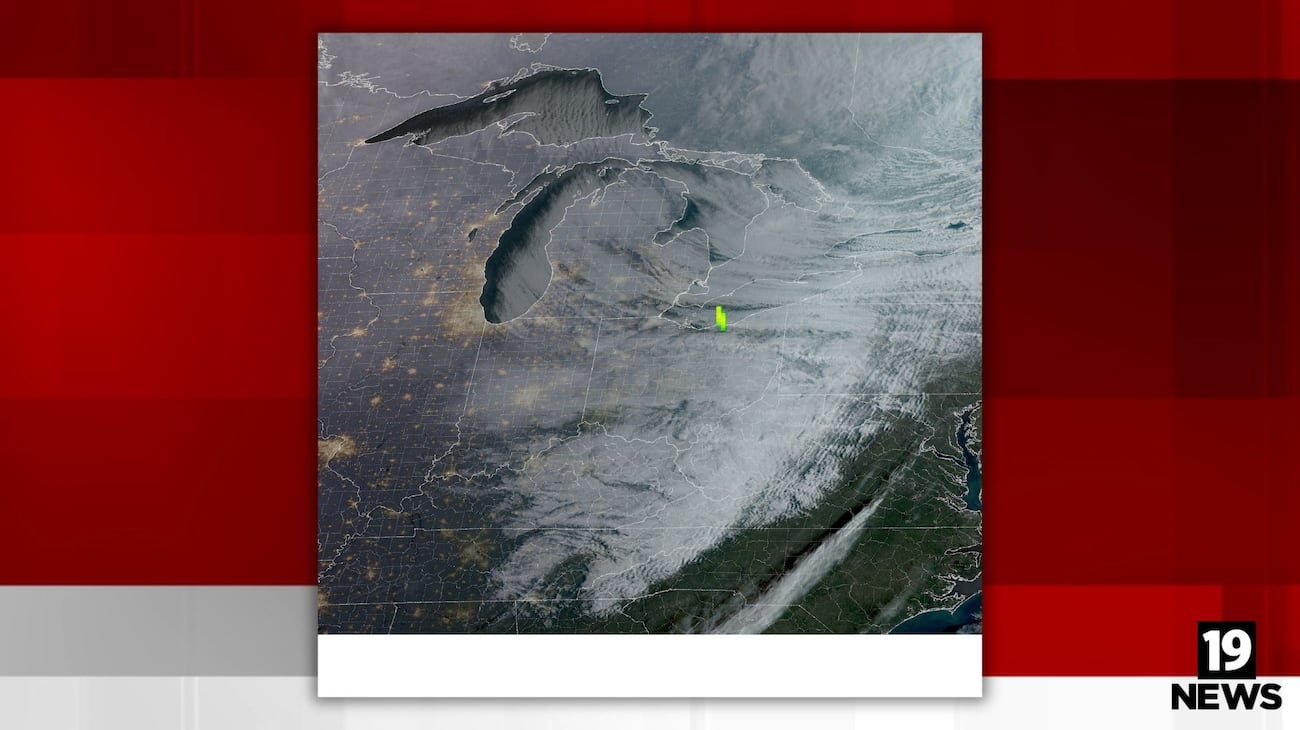
Alongside this we see a different kind of “explosion” in a Cleveland 19 News piece about an asteroid over Northeast Ohio. At 8:57 a.m., NASA recorded a six-ton (roughly seven-ton by mass) object about 6 feet (around 1.8 m) in diameter entering the atmosphere over Lake Erie near Lorain, traveling 34 miles and disintegrating over Medina County. This is a classic meteor: a solid rock or metal fragment moving through space. As Great Lakes Science Center community engagement coordinator JohnDarr Bradshaw explains, a meteor is a fragment entering the atmosphere; friction with the air creates the bright trail we call a “fireball.” Once fragments reach the surface they are classified as meteorites — meteorologist Kelly Dobeck separately notes that distinction.
The key point is not just spectacle but the acoustic effect. NASA explains the meteor traveled at 40,000 miles per hour and its breakup produced a powerful shock wave that caused the thunder-like boom. Thousands of people across Northeast Ohio, and in parts of Pennsylvania and New York, reported an “explosion,” rattling windows and vibrating homes — observations WOIO compared with National Weather Service Cleveland data. In Strongsville Kerry Woloszynik says “the house shook,” dishes and glass fell from shelves: “At first I thought something had fallen on the house. Or something exploded.” Hope Intihar near the Cleveland State campus described it similarly: “It felt like a car hit the house.” Lacking an immediate explanation, people mentally substitute familiar sources for a loud sound: a gas explosion, a car crash, an industrial accident.
Bradshaw’s remark is notable: “It’s amazing — right in our backyard!” He emphasizes how rare it is for fragments of a celestial body to actually reach the surface: Earth’s dense atmosphere typically “burns up” most such objects. But the focus here is not only science; it’s societal reaction: an entire region lives for hours in a state of uncertainty — where did the impact come from, are there casualties, is it a technological disaster? Only later do authoritative explanations from NASA, the media and meteorologists appear. As meteorologist Jeff Tanchak notes, under clear skies the fireball would have been visible to the naked eye; on an overcast day people are left mainly with sound and shaking, which opens the field to many interpretations.
The third story, from an official Norfolk city release, is more “down-to-earth,” but the logic of threat is different: not one loud boom but a series of quiet nighttime crimes. Norfolk police are investigating a string of commercial break-ins that began March 6 and continued in the early morning hours — from midnight to 6 a.m. — with two incidents around 9:30 p.m. on March 16. In each case, detectives, reviewing surveillance footage, determined the same individual is responsible: he smashes windows, enters premises and steals property.
The list of affected businesses is conspicuously broad: from Little Caesars on N Military Highway and a 7‑Eleven on E Virginia Beach Boulevard to HQ Korean BBQ and Hot Pot, Applebee’s and Biryani Hub, Happy Shopper and Hardees on Campostella Road, and local spots LowKey and Sacq Run X Bags to Riches on Granby Street. Police ask residents to help identify the suspect, offering anonymous tips through the Norfolk Crime Line (1‑888‑LOCK‑U‑UP) and the P3Tips mobile app. A cash reward is promised for information leading to an arrest. At the same time the department stresses the importance of residents “staying informed of urgent alerts” and subscribing to updates on X (@NorfolkPD).
Comparing the three stories reveals several through-lines.
First, interpretation of sound and visual signals plays a fundamental role. At Daytona Beach the pops of bottles become “gunfire,” fueled by real reports of shootings in the city and the broader backdrop of violence in the U.S. In Ohio the meteor’s shock wave is perceived as an explosion, collision or accident — because for the layperson a boom and shaking walls almost automatically equal a technological catastrophe. In Norfolk the act of breaking in is also a sound of shattering glass, but it does not trigger mass panic; it happens at night, behind the walls of empty businesses, and only surveillance cameras turn that quiet criminal noise into evidence for investigation.
Second, an information vacuum and the speed of alerts are common threads. In the meteor case, NASA and meteorologists’ after-the-fact explanation calms the public: no, it wasn’t an industrial accident or a terror attack, nobody was hurt, “all rights reserved,” as WOIO formally concludes. In Daytona Beach, by contrast, the lack of unified, immediate alerts on the beach and across social media allows a false trigger (bottles) to overlay real rumors of shootings and erupt into chaos. Police later say there were no shots fired on the beach and all wounded — including Officer Fessenden and suspect Martin — are expected to survive. But for a tourist, who Derito tells WFTV 9 had come to Florida for the first time and asked in the elevator, “Do we need to pack up and leave?” that reassurance arrives too late. In Norfolk the police proactively shape communication around the investigation: asking for help, releasing footage, emphasizing anonymity and rewards, and urging people to follow updates. There, information flow is part of the prevention strategy.
Third, the three cases show different ways security is organized. In resort Daytona the emphasis is on forceful presence and strict control: 133 arrests over the weekend, 84 in Daytona Beach alone, Fox News reports. Special zones, stepped-up patrols and tough measures against those participating in unsanctioned gatherings promoted on TikTok and Instagram are introduced. This is a model of preventive repression: “zero tolerance” as a response to the annual spike in college tourism and associated crime.
In Norfolk, by contrast, the main tool is community cooperation: reliance on surveillance footage and citizen assistance rather than total control of public spaces. Police appeal to local solidarity and offer partial rewards to informants — a common practice in the U.S., but here it’s pushed to the fore.
In the meteor story, security is provided not by police but by science and monitoring infrastructure: NASA systems record the object’s atmospheric entry, trajectory and the shock wave’s power. An important related concept is the external, “cosmic” threat that doesn’t fit familiar criminal or technological frameworks. It can’t be addressed by police raids, “zero tolerance” policies or cameras. Scientific outreach becomes key: explain what happened, what the risks are, how rare such events are, and why, despite the “explosion sound” and shaking houses, the likelihood of casualties is minimal.
Trust is also a binding theme. In Daytona tourists stand between the real risk of being an unlucky victim of a bar or street shooting and the irrational panic when a bottle pop is taken for a gunshot. Should they trust rumors? Believe the police, which say there were no beach shootings while also reporting five shooting incidents citywide over one weekend? In Ohio people are briefly in a situation with no official information or clear sense of scale; they seek confirmation via social media, neighbors and local media — and only later receive a clear scientific narrative: a meteor, not a catastrophe. In Norfolk the police ask citizens to trust them and share information, offering anonymity and a possible cash reward.
From these examples follow key trends and consequences. Mass sensitivity to noise and flashes in urban space is increasing: every loud event is by default perceived as potential violence or a technological incident. This reflects an era when mass shootings, bombs and terror attacks regularly populate news feeds and thus build a collective “catalog” of threats in people’s minds. Any alarmed homeowner in Strongsville or frightened tourist in Daytona automatically reaches for familiar scenarios from that catalog before hearing a professional explanation.
In response, security institutions diversify tools: from force and controlled “special event zones” to networks of cameras and civilian informants, from automated space-monitoring systems to media partnerships for rapid rumor dispelling. That, however, carries a reverse risk: the more often governments and media deploy threat discourse, the easier it becomes for any pop to be a trigger and every flash to be a new “emergency,” even without casualties or destruction.
Still, all three stories end relatively calmly. In Daytona Beach, despite five shooting episodes, there were no fatalities and the wounded, according to Fox News Digital, are expected to survive. In Ohio the meteor produced no recorded injuries or destruction beyond items knocked off shelves, Cleveland 19 News reports. In Norfolk, so far no violence against people has been reported — only property damage to businesses — and the police continue an active investigation while asking for public help via the city’s official channel.
There is an important, if paradoxical, conclusion: the world we perceive as dangerous and “explosive” in every sense — from beach shootings to celestial fireballs — is also becoming more controlled and explainable. We cannot stop a meteor from entering the atmosphere, but we can measure its speed, trajectory and the force of its shock wave. We cannot completely prevent crime during spring break, but we can quickly impose special legal regimes and boost patrols. We cannot guarantee no one will smash the window of a small business overnight, but we can build a dense network of cameras and anonymous reporting channels.
The main question is how well we can balance this new sensitivity to threats with a reasonable, albeit sometimes tough, response system, without turning every flash of light and every loud pop into a catastrophe before the facts are known.