Three articles focus on different events: a measles outbreak in Pennsylvania, a police investigation in Tucson, and the Republican Party’s primary runoff. Yet they share one theme: the role of public trust in institutions, leaders, and official information. In each case, people’s decisions—to get vaccinated, seek help, support a candidate, or trust an investigation—depend not only on the facts but also on how convincingly public institutions and public figures act.
The measles outbreak shows the cost of losing trust in medicine. The Arizona murder case demonstrates how, in times of anxiety, society depends on law enforcement transparency. And the Republican contest in the United States shows that even strong presidential support does not guarantee victory if voters have doubts about the candidate herself.
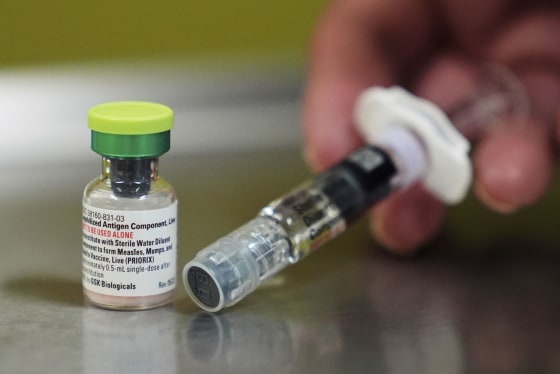
The consequences of public distrust are most clearly visible in Pennsylvania. According to NBC News, two unvaccinated people in the state have died from measles. These are the first measles deaths in the United States this year and the first in Pennsylvania in 35 years. In Lancaster County, where most cases have been recorded, the number of infections has reached 393, with 86 diagnoses made in just one week. Seventy people have been hospitalized because of complications.
Measles is an extremely contagious viral disease that can lead to pneumonia, brain damage, and death. It spreads through the air and is transmitted especially quickly in communities where vaccination rates are falling. The MMR vaccine protects against measles, mumps, and rubella; two doses provide approximately 97 percent protection against measles, usually for life.
Pennsylvania Health Secretary Debra Bogen emphasized: “Because measles has been virtually absent from the Commonwealth for more than three decades, people are unfamiliar with the disease and do not fully understand how serious its consequences can be.” This quote points to a paradox of vaccination success: when a disease disappears from daily life for a long time, society begins to view the threat itself as exaggerated. Protection from the disease becomes invisible, while the possible side effects of vaccination become more noticeable and emotionally significant.
The problem is compounded by the politicization of vaccination. The article notes that President Donald Trump signed an executive order aimed at reducing the number of vaccines recommended for children, with the support of Health Secretary Robert F. Kennedy Jr., a well-known critic of several vaccination programs. At the same time, the number of parents seeking vaccination exemptions for their children is increasing: in the 2025–2026 school year, 4.2 percent of American first-graders had at least one exemption, compared with 3.6 percent the previous year. In Lancaster, MMR vaccination coverage fell from 95.5 percent in 2017 to 87.6 percent in 2025.
This figure is critically important. Herd immunity—the protection a community gains when the overwhelming majority of people are vaccinated—is especially important for infants, people with weakened immune systems, and those who cannot receive vaccines for medical reasons. When coverage falls, the virus gains the opportunity to spread even among people who cannot protect themselves. In other words, refusing vaccination is not only a personal choice but also a decision with consequences for society.
According to the U.S. Centers for Disease Control and Prevention, 2,777 measles cases have been recorded in the country this year—the highest number in 35 years. About 7 percent of those infected were hospitalized. Last year, three people died from measles: an adult in New Mexico and two girls in Texas. These figures show that a disease once considered virtually eliminated is returning not because the virus itself has changed, but primarily because prevention rates are declining and trust in expert recommendations is weakening.
A very different but equally trust-related story is reported by KVOA. In Tucson, police arrested Alex Barnett after a SWAT operation on the city’s east side. He was wanted in connection with the killing of 23-year-old Jose Ramirez—a former corrections officer and police recruit—and the wounding of his fiancée, Alia, who also worked in the corrections system. According to police, their unborn child was not harmed.
The article is based on information from the sheriff’s office, police, and court documents. According to the documents, Alia heard a noise near the bedroom, after which Ramirez told her to retrieve a gun from the safe: two masked men were outside the door. He fought with them, and gunshots were then heard. Investigators later found a vehicle believed to be connected to the crime, and a murder warrant was issued for Barnett. Another person captured on surveillance cameras has not yet been arrested; police are determining the extent of that person’s involvement.
Here, trust is formed differently than in the vaccination debate. The public expects police not to make political statements but to conduct a consistent investigation, clearly distinguish confirmed facts from theories, and respect legal procedures. The wording concerning the second suspect is important: investigators are “determining his involvement,” but no arrest has yet been made. This distinction between suspicion and proven guilt is fundamental to justice.
The case also illustrates the human dimension of public safety. Ramirez was scheduled to complete his training and graduate from the academy in August. He was killed in his own home while protecting his family. The Erik Hite Foundation and the Tucson Police Department organized a fundraiser for his loved ones; donations are intended to cover medical expenses, bills, child care, and other urgent needs. The article mentions the victim’s parents, brother, fiancée, two young children, and unborn child. This moves the crime story from the realm of statistics into that of a specific family tragedy.
The third article, published by Fox News, focuses on a political struggle within the Republican Party. Darline Graham is taking part in the runoff to select the Republican candidate for the U.S. Senate from South Carolina, seeking to retain the seat previously held by her brother, Senator Lindsey Graham. She is supported by President Trump, while her opponent is Representative Ralph Norman.
In the American system, primaries determine a party’s candidate for the general election. If no contender receives a majority of the vote, a runoff is held between the leading candidates. In South Carolina, where Republicans traditionally dominate, the winner of the party contest effectively becomes the favorite in the Senate election.
The central question is the limits of Trump’s political influence. The president urged supporters to vote for Graham and said: “Please pretend I’m on the ballot.” In doing so, he turns the election into a kind of referendum on his own popularity. However, the article notes that presidential support is not a guarantee of victory. During this election cycle, several candidates backed by Trump lost Republican primaries, including contenders for governor in South Carolina, Georgia, Iowa, Wyoming, and Minnesota.
Republican strategist Ryan Williams put it this way: “The president’s endorsement in a Republican primary gives you a tremendous boost, but it certainly doesn’t mean the candidate will win.” In his view, the president still “has a firm grip on the party,” but a candidate’s own weaknesses may prove stronger than a presidential recommendation.
That is precisely what is happening in the contest between Graham and Norman. Graham is relying on the support of Trump, Governor Henry McMaster, Senator Tim Scott, and other influential Republicans. Norman, by contrast, emphasizes his own closeness to the president while also reminding voters that he previously supported Nikki Haley, Trump’s main rival in the 2024 Republican primaries. His campaign has been endorsed by former Governor Mark Sanford, known for his tough stance on the national debt and government spending.
The election therefore tests several forms of trust at once. Do voters trust Trump’s personal recommendation? Do they see Darline Graham as an independent politician or primarily as the relative of a deceased senator? How important are debt, budget, and ideological consistency to them? Political support works best when it strengthens a candidate’s existing appeal. If a contender has weaknesses, an endorsement—a public recommendation from an influential politician—may attract attention but cannot eliminate doubts.
In all three stories, trust proves to be a limited resource. Medical institutions must convince people that vaccination is safe and necessary, especially when the disease itself has been largely absent for a long time. Police must demonstrate that investigations are conducted professionally and that suspects are not declared guilty before trial. Political leaders must recognize that even the strongest endorsement cannot replace a convincing candidate and a clear platform.
The broader trend is that authority is no longer accepted automatically. Holding public office, possessing expert status, or receiving a presidential endorsement is not enough by itself. People compare statements with observable results: Are infections increasing? Has the suspect been found? Are endorsed candidates winning? When a gap emerges between words and consequences, trust quickly weakens.
The consequences of this process can be serious. In public health, they appear in the return of infections that were once considered under control. In public safety, they take the form of greater demands for investigative transparency and victim protection. In politics, they lead to increased competition within parties between personal loyalty to a leader and independent evaluation of a candidate.
The main conclusion is that trust cannot be replaced by loud statements, administrative decisions, or political charisma. It develops gradually through verifiable facts, professional work, and the ability to acknowledge the limits of one’s own certainty. In Pennsylvania, declining trust in vaccination has already produced measurable consequences. In Tucson, trust will depend on how thoroughly police bring the case to trial. In South Carolina, the voting result will show whether Trump’s support remains a sufficient argument or whether voters increasingly demand that candidates prove their own persuasiveness.