Three different reports — about a protest by Venice residents in Los Angeles, about record heat across the Washington region, and about a rare copy of the Declaration of Independence found in a British archive — at first glance seem almost unrelated. But on closer inspection, they are united by one big theme: how communities endure a moment of strain when the usual order breaks down, forcing people to redefine who they can trust, what they must fight for, and what they consider a shared responsibility. In one case, it’s about neighborhood safety and the price of decisions in the homeless-aid sphere; in the other, it’s about a city’s ability to protect residents from extreme weather; and in the third, it’s about how a chance archival find reminds us that major historical changes always begin with specific people who take risks, argue, and act amid uncertainty.
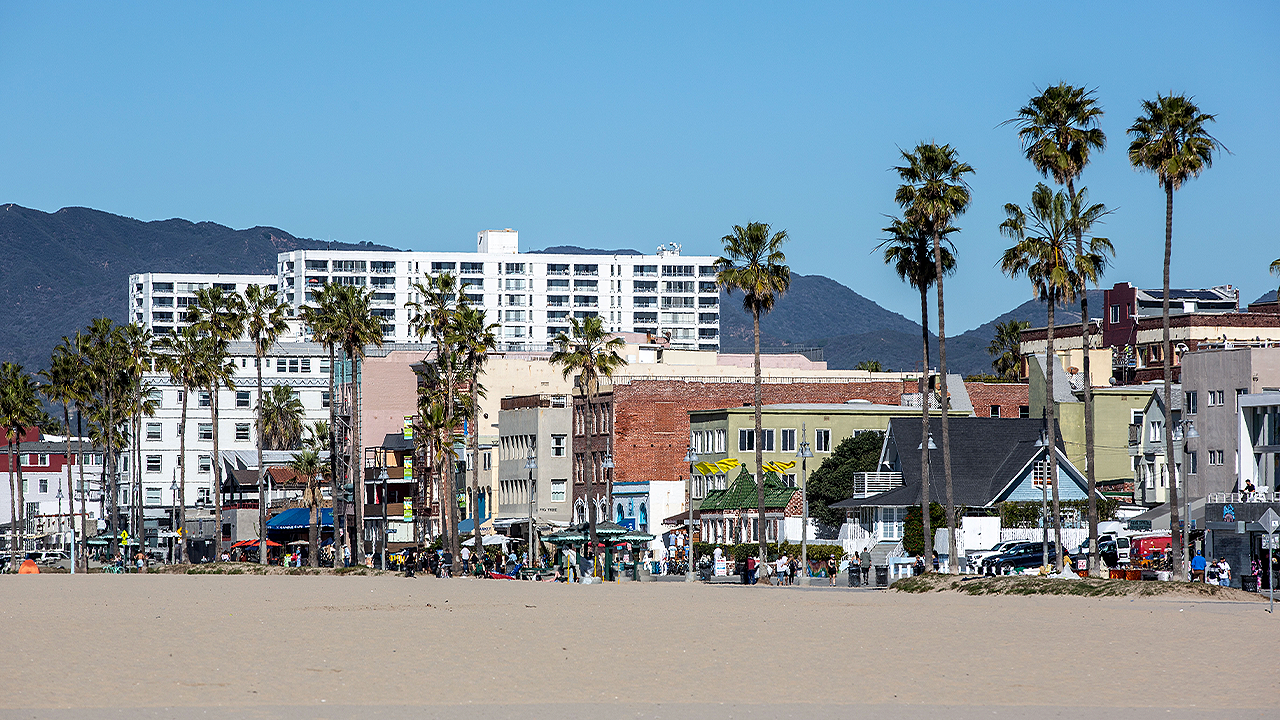
In Los Angeles, this tension has surfaced especially sharply. Venice — one of the most famous and tourist-attractive neighborhoods along the coast — has, according to local residents, reached a boiling point. More than 100 people showed up to a meeting with leaders of two supported housing programs — The Journey Program and Safe Place for Youth — and turned it into an emotional discussion about rising crime, drug dealing, trespassing and declining quality of life. One resident said that neighbors now “find dead bodies” during routine cleanups; another admitted, “I don’t feel safe sending my teenage kids to walk the dog alone.” For many, this is no longer a debate about land-use or planning policy, but a question of day-to-day survival.
At the same time, the conflict is not simply a case of “residents versus help for the homeless.” Both the programs and Venice Community Housing behind them insist that the combination of stable housing and wraparound services is “a proven long-term solution to homelessness,” and also offer “trauma-informed resources and supports,” meaning help that takes people’s traumatic experiences into account. But residents say there’s a gap between the promise and reality: “It feels like a lot of beautiful words and very little action,” one of them said. This is where the story’s main social nerve comes into play: the very idea of helping many people doesn’t trigger rejection, but they demand that its implementation does not shift the costs onto nearby neighbors, businesses and families.
The political response to this conflict is especially important. Los Angeles City Council member Tracy Park made it clear that patience is running out and that, absent improvements, the city could reconsider funding. She said: “We’re going to keep fixing this and holding these people accountable for providing their own safety… And you know what? Then we’ll start talking about cutting their future funding.” This isn’t just pressure rhetoric; it’s a signal of a shift in public sentiment. When even in aid policies for vulnerable groups words about consequences start to be heard, it means the issue has moved beyond ideology and become a matter of governance and accountability. In the same sense, one businessman’s phrase — “It can’t just be an open door. There have to be consequences for actions” — captures the neighborhood’s mood precisely: people aren’t demanding that the help be scrapped, but that its effects be controlled.
If the crisis in Los Angeles is local and social in character, then in Washington it is natural — though no less political. The region is again under threat from extreme heat after records were set the previous day: the National Weather Service warned of temperatures of 100–105 degrees Fahrenheit, and the heat index could reach 110–112. This is no longer just hot weather, but conditions authorities directly describe as potentially deadly. Meteorologist Dan Hoffmann explained that the danger is intensified by cumulative exposure: “When it’s this hot for this long, it just wears you down over time… Especially when it stays that hot overnight, and your body can’t recover properly.” The key point isn’t only the temperature number itself, but how long the strain lasts: the body doesn’t have time to cool, which raises the risk of heat stroke, dehydration and the worsening of chronic conditions.
This material shows how climate stress becomes a factor in city life. Officials are already changing event schedules: entry to the “A Capitol Fourth” concert at the Capitol was moved to a later time to reduce risks. At the same time, meteorologists are warning of possible evening thunderstorms, strong winds and localized downpours that could escalate into flood threats. The result is a typical picture of modern summer: extreme heat doesn’t come alone; it creates atmospheric conditions for another kind of danger — sudden storms. Hence Hoffmann’s practical advice: drink water, avoid overheating, limit physical activity and even don’t overdo coffee and alcohol, because they “actually dehydrate you.” Such recommendations sound simple, but they rest on a basic lesson: in an era of climate instability, city safety increasingly starts with everyday discipline and infrastructure preparedness.
The third report takes us to a very different timescale, but it too speaks to the connection between risk, memory and public meaning. In the UK’s National Archives, volunteer Michael Skear found a rare copy of the Declaration of Independence hidden among documents belonging to a captain of the Royal Navy associated with the capture of the American privateer Dalton in 1776. Skear recalled: “I thought, oh yeah, that’s definitely the Declaration of Independence. How exciting!” The find is one of only 11 known copies of the so-called Exeter printing — an early printing of the Declaration made in July 1776 to spread news of the break with Britain. The UK National Archives emphasizes that it is the only such copy found outside the United States.
The significance of the find isn’t limited to its rarity. It shows how ideas spread in the 18th century and how the revolution wasn’t only fought on land, but also at sea. As Amanda Beevan noted, finding the Declaration in materials connected to naval conflict is a reminder that Americans fought not only at Valley Forge, but also at sea, trying to disrupt British trade and challenge the Royal Navy. Her point is especially important: “They know what they’re fighting for, but it translates that into a language that makes the cause bigger than they are.” In other words, the document isn’t just paper — it’s a tool of political inspiration that turned a local conflict into a struggle for an ideal. That’s why historian Matthew Skeak from the Museum of the American Revolution called the find a “tangible link to the past,” adding that even after 250 years “we still don’t know everything about the American Revolution.”
Taken together, these three stories make it clear that at the center of them all is the price of collective decisions. In Venice, residents ask whether help for some groups creates a threat for others, and why the promised safety isn’t working. In Washington, officials and meteorologists are trying to reduce damage from the elements, but already in a mode of responding to near-extreme conditions. In an archive in London, a chance discovery reminds us that historical documents also emerge in moments of risk and conflict, when people need not only to act, but to explain why they are doing it. In each case, the same hidden question is heard: can society preserve trust in institutions when people’s lived experience contradicts official promises?
There’s another unifying theme — visibility and invisibility. Venice residents say the problem has long been in plain sight, but their complaints seem not to have led to action. In Washington, the hot weather becomes noticeable only once it’s already dangerous and affecting transportation, power grids and health. And a copy of the Declaration of Independence remained in archival shadow for centuries until a volunteer noticed it among “other papers.” This is a good reminder that big shifts are often found not in loud statements, but in repeated signs: accumulating irritation, the city’s fatigue, and an accidental archival discovery that ends up being the key to an entire era.
The difficult concepts in these texts come down to a few important terms. “Supported housing” or “поддерживаемым жильем” refers to a model in which people are provided not only with a roof over their heads, but also with social, medical or psychological services that help them stay in stable housing. “Trauma-informed” means an approach that takes a person’s traumatic experience into account — that is, support that doesn’t worsen what they’ve already endured, their dependence, or homelessness. “Heat index” is not just the air temperature, but an indicator of how hot the weather feels when humidity is factored in; that’s why 100 degrees can be perceived as far more punishing conditions. “Extreme Heat Warning” is an official warning about heat that is dangerous to health. “Exeter printing” is an early printing of the Declaration of Independence, printed in Exeter, New Hampshire, shortly after the original was signed. “Privateer” is a privately owned ship that operated with government permission during wartime — not quite a warship, but also not an ordinary merchant vessel.
The key takeaway from these materials is that trust in institutions today is being tested not by slogans, but by results. In Los Angeles, residents want humanitarian policy to come with real safety and oversight. In Washington, people have to adapt to climate reality that is already affecting holidays, health and city systems. In London, the archival find shows that even after 250 years, society keeps rediscovering its origins and understanding that ideas of freedom and self-organization were born amid uncertainty and struggle. And if you look at these stories together, it becomes clear: modern society is living not only in crisis mode, but also in a test mode — a test of the ability to protect people, explain decisions, and keep the link between promises and reality.
Sources: Fox News on the crisis in Venice, WTOP on heat in the DC region, ABC7 on the found copy of the Declaration of Independence