In almost all the stories presented — from a royal scandal in London to a football dispute at the World Cup and to threats to health amid extreme heat in the United States — the same plot keeps recurring: institutions of power are forced to make decisions under pressure, while society increasingly doubts their transparency, consistency, and fairness. Whether it is Buckingham Palace, FIFA, or civil protection services, the main point of contention is not only the decision itself, but also how it is made, explained, and perceived. It is trust in the rules, not the rules themselves, that sits at the center of all three stories.
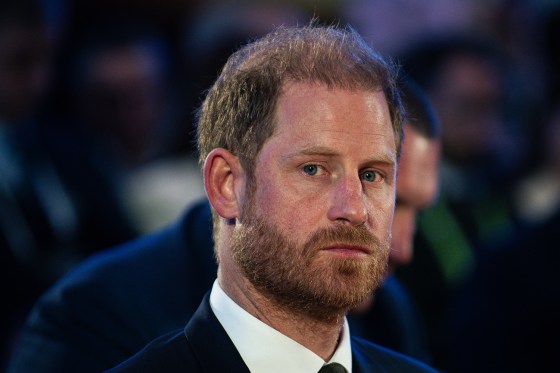
In the story about Prince Harry, NBC News reports a new round of tension between the Sussexes and the British royal family: Harry’s trip to the UK has again turned into a dispute over security, access, and symbolic status. According to his representative, he was first offered accommodation at Buckingham Palace, but then the offer was withdrawn. The representative called it “disappointing” and added, “it’s unclear why, after the accommodation had been officially accepted, it was withdrawn at the last moment.” The palace, in turn, did not comment on the situation. Formally, the dispute looks mundane — where exactly a member of the royal family will stay during the visit. But in essence, it is about a deeper conflict: after Harry stepped down from the ranks of working members of the monarchy and after the publication of his book Spare, any organizational detail immediately turns into a public test of loyalty, distance, and control of the agenda. Even the fact, as reported, that his wife and children were initially supposed to accompany him, and then the plans were revised due to a security dispute, only reinforces the sense of an unresolved familial and institutional rift. Harry, according to NBC News, was to travel to London and Birmingham for charity events, and he also ended up near the expected court decision in his privacy lawsuit against Daily Mail’s publisher, adding yet another layer of tension to the trip. What matters most in this story is that the conflict is not built around a single specific step, but around suspicion of hidden motives: who and when made the decision, why it changed, and whether it was connected to a broader struggle over control of reputation.
A dispute that is completely different in form but very similar in substance is presented in an Al Jazeera report about the World Cup and US player Folarine Balogun. Here too, the formal procedure is called into question, but at the level of international sports law. FIFA, the report alleges, suspended a red card for Balogun after direct intervention by US President Donald Trump, allowing the player to take part in the match against Belgium. The decision triggered an immediate backlash not only from the Belgian federation, but also from UEFA, the former FIFA head Sepp Blatter, as well as coaches and experts. The Belgian association said it was “shocked,” while UEFA said the decision “crossed the red line” and was “unprecedented, incomprehensible, and unjustified.” Here the key conflict is even clearer than in the case of Harry: critics argue not so much about whether the on-field incident was indeed a red card, but about whether it is possible to change an already-decided disciplinary ruling under political pressure. This strikes at the very foundation of sporting legitimacy, because sport is built on the belief that the rules apply equally to everyone. When FIFA cites a specific article of the disciplinary code that allows the suspension of a sanction, while the Belgian side points to other provisions that make an automatic ban mandatory, the dispute moves beyond a single match and becomes a precedent. It is especially dangerous because of its underlying logic: if an exception is made once, what would stop people from demanding the same approach tomorrow? No coincidence that among the harshest comments is a question from Blatter: “If a US president intervenes and a player suddenly gets permission before a playoff match, the question is inevitable: where is FIFA going?” In that question, you hear not only criticism of the specific decision, but also concern that global sport may be starting to live by the rules of political exceptionality, not equality.
ABC News’ report on record-breaking heat in the United States may seem at first like an entirely different topic, but here the same underlying motive applies: a system is facing a major test, and the cost of delay is measured in lives. According to figures from New Jersey, officials suspect at least 25 deaths related to extreme heat, and across the East Coast and parts of the Midwest and the South a wave of dangerous weather has settled in, with temperatures in the triple digits in Fahrenheit. The head of the state health department, Dr. Reinard Washington, said that many of the victims were found “in homes without air conditioning,” and some were “on the street and even in parked cars.” That phrase is especially important: it shows that extreme heat is not only a meteorological event, but also social inequality, because it is access to cooling, transportation, housing, and timely help that determines who survives such an episode and who does not. New Jersey Governor Miki Sherrill emphasized that the heat strikes “not only older people and not only those with chronic illnesses,” but “people of all ages.” She also reminded the public that “extreme heat is America’s No. 1 weather-related killer,” and called this period “the hottest in more than 14 years.” Against this backdrop, the destruction caused by storms, power outages affecting nearly 300,000 customers, fallen trees, and downed power lines look less like isolated incidents and more like the result of an overloaded climate system, where one danger amplifies another. In Washington, authorities even evacuated the National Mall during July 4 celebrations, and then the event had to be delayed due to lightning and a storm. In other words, society faced not one disaster, but a chain of interconnected risks: heat, storms, power outages, overheating cities, threats at outdoor events, and strained emergency services.
If you bring these three materials together, it becomes clear that the central theme is not merely a crisis of individual institutions, but a crisis of trust in their ability to act predictably and fairly. In the royal story, the dispute is about whether the decision by Buckingham Palace was formally justified or whether it was a way to rein in — and symbolically put in its place — an inconvenient member of the family. In the football story, the question is even harsher: can a sanction be changed if political power gets involved, and does any belief remain in the neutrality of international sport after that? In the weather story, trust is tied not to elites but to state and local systems that are supposed to protect people in the face of extreme climate conditions. And everywhere the same effect emerges: even if a decision is explainable from an administrative standpoint, public perception is determined by how transparent, consistent, and identical for everyone it appears.
There is also another common thread — the personalization of institutional conflicts. Prince Harry, Donald Trump, King Charles III, FIFA, Governor Sherrill — all of these figures become not just participants in events, but symbols of broader processes. In Harry’s case, it is about a post-Brexit, post-monarchy media drama, where a private family quarrel has long since become a question of public identity. In FIFA’s case, it is about the politicization of sport, where sporting arbitration can no longer be separated from diplomacy and national prestige. In the case of heat, it is a test of the real ability of the state to protect vulnerable citizens in an era of climate stress. At the same time, all three stories show that today’s public is extremely sensitive not only to the outcome, but to the procedure as well. People are willing to argue about whether the punishment was fair, whether the palace was obliged to host Harry, whether the storms were inevitable. But the decisive question is different: why do the decisions look as if they are made not according to general rules, but depending on status, pressure, and context?
It is also worth clarifying a few complex concepts. A “red card” in football is the removal of a player from the field for a serious offense; it usually automatically means missing the next match. “VAR” is the video assistant referee system, which allows referees to review disputed incidents. “Heat dome,” mentioned by ABC News, is a “heat dome,” an atmospheric phenomenon in which an area of high pressure holds hot air over a region, preventing it from dispersing — that is why the heat may be not just intense, but prolonged and dangerous. And in the royal context, the phrase working members of the royal family means family members who officially perform state and representative duties; Harry and Meghan’s exit from that role in 2020 became an important point of reference for all subsequent disputes.
The main takeaway from these materials is that today’s crisis rarely looks like an open breakdown of the system — more often it appears as a series of “small” conflicts over rules, deadlines, formalities, and exceptions. But trust lives in those details. If the palace changes accommodation at the last moment, if FIFA adjusts a disciplinary decision after a political call, if the power grid and urban infrastructure can’t withstand extreme weather, people start doubting not only one institution, but the very idea that the rules work the same for everyone. And this, perhaps, is the most important shared trend across all three stories: in a world where every decision becomes public instantly, transparency and consistency matter more than formal authority.
Sources: NBC News on Prince Harry’s trip, ABC News on the heat wave and deaths in New Jersey, Al Jazeera on the dispute over Folarine Balogun’s red card.