Across all three pieces—about the Canada–U.S. bridge, about the record surge of measles in the U.S., and about the next phase of LeBron James’ career—on the surface they’re talking about entirely different things: trade and diplomacy, public health and sports. But they share one striking theme: major institutions today operate in conditions of high turbulence, and success is determined less by bold gestures than by the ability to withstand pressure, negotiate, and quickly adapt. Where it used to seem enough to rely on established rules, increasingly the deciding factors are political conflict, public coordination, and personal choice. In an Al Jazeera piece the bridge opens without American officials because of a trade dispute and threats of tariffs. In a CNN report, the healthcare system struggles to contain a measles outbreak that has become the most severe in decades. In an NBC News piece, at age 41 LeBron James changes the context of his career again, turning another move into a question not of money, but of meaning and legacy.
The common logic of these stories is that resilience no longer looks like something guaranteed once and for all. It has to be proven again—in infrastructure, in public health, and even in sports, where age, reputation, and expectations have already become part of the strategy. Canadians open the bridge as a symbol of cooperation, but do so explicitly apart from the U.S., because political reality has changed the very format of the celebration. American doctors fight measles not only as an infection, but also as the consequence of accumulated mistrust in vaccination and the overload of local services. And James, one of the most recognizable athletes in the world, shows a different kind of maturity: he says he needed “to look at myself and decide, still do I love this game,” and calls the move “my last decision.” This isn’t just a nice gesture—it’s an acknowledgment that even the greatest career comes up against a question of limits and choice.
The Canadian story is especially telling because the bridge—intended to speed up trade and improve connectivity—was from the start a pawn in political bargaining. The Gordie Howe International Bridge was built as a faster alternative to the older Ambassador Bridge, but its opening was overshadowed by Donald Trump’s threats to impose 50% tariffs and by new demands about how the revenue should be distributed. The very fact that the ceremony took place without American officials, and that the Canadian side even didn’t allow the guests to cross over to the U.S. side of the bridge, points to how deep the tension runs: an infrastructure project, in essence, became a stage for demonstrating sovereignty. Ontario Premier Doug Ford tried to preserve the double meaning of the event, saying, “Canadians and Americans are better off when we work together instead of standing apart.” But the line sounds almost like a wish rather than a description of reality. Trump, by contrast, interpreted the situation in deal-making and profit-share language: “We changed the terms of the Deal so that the United States of America now gets 50% of the Profit.” And this is where you can see how modern politics can replace long-term agreements with the logic of instant gain and public pressure.
The dispute over the bridge also reveals a deeper problem: even when the parties formally cite agreements, they may read them differently. Canadian Prime Minister Mark Carney argues that under the existing arrangement, toll revenues are shared only after the debt is repaid, while a leaked draft of the new deal, according to Al Jazeera, points to splitting net proceeds during the first 15 years. As Nicholas Lamphier of Queen’s University noted, the document is “so vague that each side can save face and claim they won.” That detail matters: conflict is no longer always resolved through a clear-cut victory by one side. Often the main result isn’t winning—it’s the ability to avoid losing publicly. That’s why Don Ebelson of McMaster University called the main success simply the fact that the bridge opened and Trump was calmed down: when the relationship between two countries is tied to massive trade flows, political escalation becomes more expensive than compromise.
The measles story in the U.S. shows another type of breakdown of the old norm—not diplomatic, but epidemiological. The disease, declared eliminated in 2000, returned with such force that 2026 has already become the second consecutive record year. This is especially alarming because this isn’t a random spike—it’s a systemic shift. More than 2,318 cases have already been reported, and most of those who fell ill are unvaccinated children. A quote from Dr. Andrew Ratzine, president of the American Academy of Pediatrics, sounds like a diagnosis not only for healthcare, but for society: “This essentially is a public health failure, and it’s avoidable.” The key word here is avoidable, meaning “avoidable.” It means the problem isn’t fatal and isn’t technologically incurable; it arises from behavior, organization, and political context.
Particularly important is the account from a church community in South Carolina, where the outbreak began after a Christmas dinner. Reverend Scott Neely describes how the illness ended up both right there and somehow outside everyday experience: “An outbreak was garnering national attention right where I live but having almost no immediate impact on me.” The line captures modern social fragmentation perfectly. Even a large-scale threat may not feel directly personal if someone lives in a relatively protected environment. But once contact tracing begins, it turns out that the community’s familiar openness—shared meals, no strict guest list—becomes a vulnerability. At the same time, according to Neely, a high vaccination rate within the community helped stop the spread. He calls what happened a “remarkable microcosm story that vaccines work”—a vivid small-scale model of how collective protection really works.
From there, the main takeaway from the CNN piece emerges: effective measles control is not only a medical question, but also a question of social organization. Contact tracing takes weeks and months, and it requires staff, communication, and trust. For the San Francisco Department of Public Health, even two cases can mean mobilizing almost the entire team. In Virginia, where vaccination coverage is generally high, isolated cases didn’t grow into new chains, but even there people had to change behavior—issuing recommendations to avoid mass gatherings and organizing mobile teams. Especially significant is that the herd immunity threshold for measles is 95%. This isn’t an abstract figure: below it, the virus finds “pockets” of susceptibility even within well-off regions. In other words, national statistics can look better than the real picture on the ground. That’s why, in the U.S., outbreaks continue to occur simultaneously across different states on different trajectories: some began as early as 2025, others appeared later, and some stretched out for nearly a year and a half.
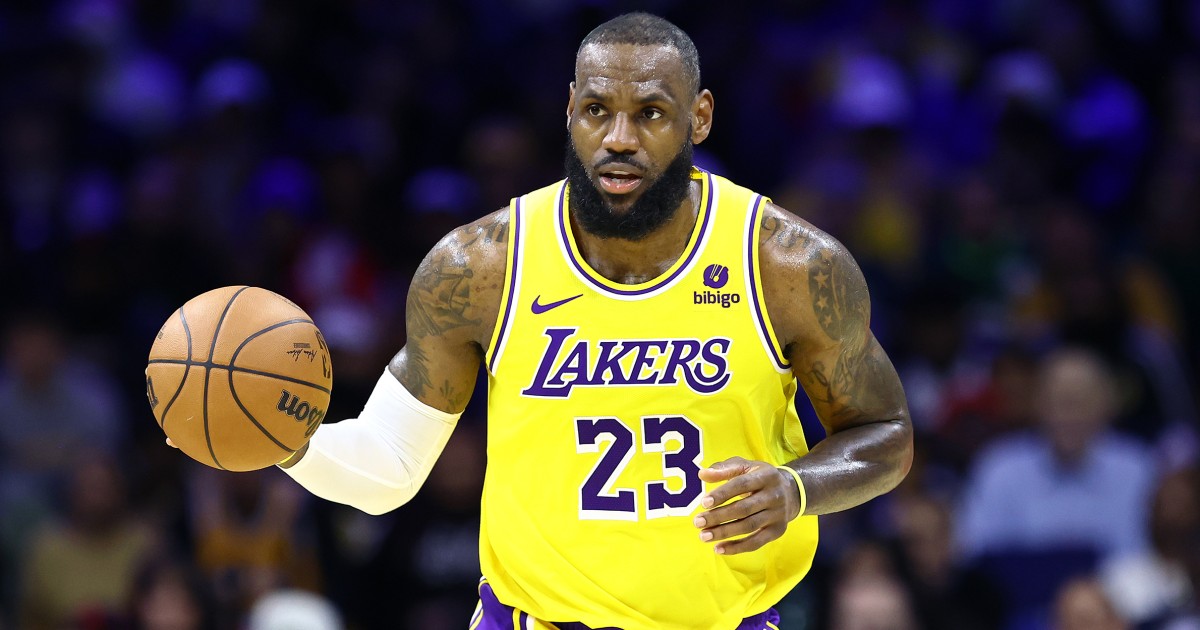
LeBron James’ story, despite belonging to the world of sports, also fits into this conversation about change and adaptation. Here, it’s not the state or the healthcare system, but a personal career colliding with the question of time and limits. His move to the Philadelphia 76ers, according to NBC News, became James’ “last decision”—the last decision in a not-so-literal but symbolic sense. He says plainly that he isn’t chasing money and isn’t chasing family: “What am I really playing for at this point?” That line contains an honesty that’s rare in sports. After 23 seasons defining the league, he begins talking not about the next contract, but about the inner meaning of continuing. That matters more than yet another statistic, even though his stats are still elite: 20.9 points, 6.1 rebounds, and 7.2 assists last season; career averages of 26.8 points; and the status of the NBA’s all-time leading scorer.
But there’s also an institutional layer here. “Philadelphia” has assembled multiple stars at once, including Joel Embiid, Jalen Brown, and T. Maxey, and is betting on experience, reputation, and a short-term chance at a championship. In this sense, James’ move isn’t only personal—it also reflects the modern logic of professional sports, where an aging superstar becomes not a long-term project, but an instrument for immediate results. It echoes the Canadian bridge: a massive project only makes sense when it’s built into the practice of today. And if political conflict or personnel fatigue destroys that connectivity, the symbolic value won’t be able to save it.
If you put all three pieces together into a single picture, one important trend becomes clear: we live in an era in which big systems are forced to constantly prove they still work. The bridge between Canada and the U.S. opens as proof of cooperation, even though the ceremony itself shows the opposite—how fragile that cooperation has become. Vaccination against measles stops being just a medical standard and turns into a public marker of discipline, trust, and the ability to act together. And even LeBron James’ career, which seemed like a long-written legend, turns out to be a space where meaning can be rebuilt. In all cases, reliability doesn’t arise automatically—it comes from aligning interests, maintaining administrative routine, and taking personal responsibility.
There’s also a broader conclusion: conflicts of the 21st century increasingly don’t look like isolated crises. They accumulate around infrastructure, information, health, and identity. Tariff wars and disputes over revenue can sour even a symbolic gesture of friendship between neighbors. Vaccine refusal or low trust in the system can bring back diseases that were thought to have been defeated. And in sports and culture, even the greatest figures are forced to explain not only what they do, but why. In that sense, the three articles are saying the same thing: resilience no longer means immobility. It means the ability to withstand friction, acknowledge limits, and still rebuild the system—whether that’s a bridge, public health, or a great career.
To avoid confusion, a few terms here are especially important. Herd immunity is the level of protection in a population at which a disease can’t easily spread because so many people are already protected through vaccination or prior infection. Contact tracing means finding people who may have come into contact with an infected person in order to interrupt the chain of transmission as early as possible. Tariffs are taxes on imported goods; in trade disputes, they’re used as leverage against a partner. PAC, mentioned in the bridge piece, is a political action committee that collects funds to support candidates or political initiatives. And MVP in basketball is the award for the most valuable player of the season; in James’ case, it underscores the scale of his status, not just his current form.
Looking at the consequences, they’re different, but they converge on one point. For Canada and the U.S., the bridge remains an important economic channel, but the political cost of cooperation has risen. For the American healthcare system, measles has become a signal that even diseases long considered beaten return if trust declines and prevention weakens. For the NBA, James’ arrival in Philadelphia is a reminder that even a supercareer lives under the laws of finiteness, choice, and rebuilding. And in all three cases, the main resource isn’t the volume of a statement—it’s the ability to keep functioning under instability.