At first glance the materials presented seem unrelated: some discuss a U.S. and Israeli war against Iran and strikes on Lebanon, others concern constitutional disputes in Washington over the president's powers, and a third recounts a touching episode with Joel Embiid and his son on a basketball court. But all these stories share one common and very contemporary theme: who has the right to declare “that’s it, the war is over” — and how that decision affects law, policy and human reality.
An Al Jazeera report on the U.S. and Israeli campaign against Iran and strikes on Lebanon emphasizes that the Islamic Revolutionary Guard Corps (IRGC) warns the conflict could resume at any moment and that Iranian forces are “fully prepared” to continue fighting, according to Al Jazeera. The piece advances a near-programmatic thesis: formal declarations of a ceasefire do not mean that war as a phenomenon has disappeared — the parties maintain blockades, exert pressure and prepare for new strikes. Iran is blocking the Strait of Hormuz, the U.S. and its allies maintain a large naval grouping and are effectively conducting an economic and military siege. A pause in exchanges of strikes does not remove the fundamental conflict of interests, threats and perceptions of danger.
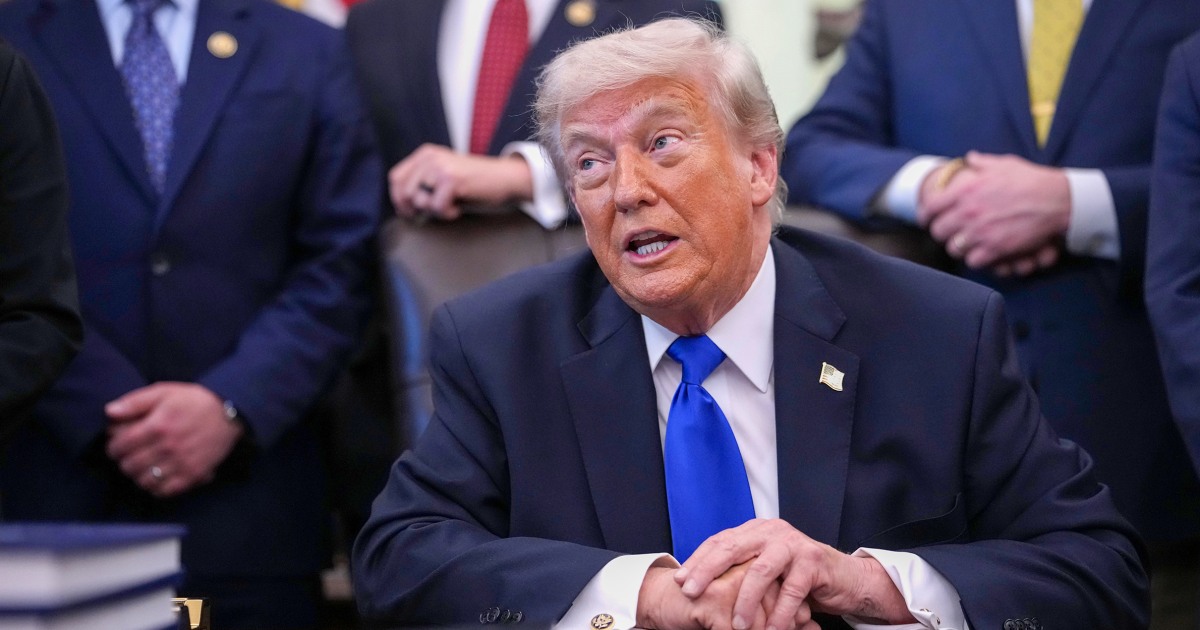
The exact same question — but in a strictly legal and political dimension — underpins NBC News’s analysis: President Donald Trump writes to Congress that he does not need its authorization for operations against Iran because a ceasefire has been declared and extended, and therefore “hostilities that began on Feb. 28, 2026, have ceased,” as NBC News notes. The key concept here is “hostilities,” meaning “military operations” or “combat operations” in the sense of the 1973 War Powers Resolution. That law requires the president, after 60 days of ongoing “hostilities,” to secure formal Congressional approval or begin withdrawing forces. Trump argues that because of the ceasefire the “clock has stopped” and there is no longer a requirement for Congressional sanction.
Lawyers interviewed by NBC News essentially raise the same question that underlies the Al Jazeera report: is a cessation of shooting already “the end of the war” or merely a tactical pause against the backdrop of an ongoing naval blockade and demonstrative force buildup? Professor Michael Glennon emphasizes that the argument of ended hostilities is “strained,” because the U.S. continues to enforce a maritime blockade by force, which by every measure is a form of waging war. International Crisis Group expert Stephen Pomper in an NBC News interview directly says: a blockade is an “act of war,” a “hostile act” that puts American service members at risk. In other words, from a legal perspective “hostilities” continue even if there is no exchange of missile strikes.
It is important to explain the essence of the 1973 War Powers Resolution. It was adopted after Vietnam to limit the president’s ability to unilaterally drag the country into prolonged wars. The law does not forbid short-term operations but requires that after 60 days of combat the president either obtain Congressional approval or begin withdrawal of forces. The term “hostilities” in the law is vaguely defined, which regularly generates disputes. Some administrations (like Obama in the case of Libya in 2011) argued that if there are no ground troops and no “sustained hostilities,” then “hostilities” in the full sense do not exist. Others, including lawyers and members of Congress in the current situation, believe that any sustained military activity, including a naval blockade, already falls under that definition.
In his letter to Congress, Trump cites his constitutional position as commander-in-chief and conductor of foreign policy and asserts he will continue issuing orders to the armed forces without a separate Congressional sanction. House Speaker Mike Johnson echoes: “we are not at war,” because there are no “active kinetic strikes” — meaning there are no ongoing bombings, artillery barrages or intense firefights. Here “kinetic” literally denotes the use of physical force and weaponry, as opposed to, say, cyberattacks or economic sanctions. This rhetoric effectively attempts to narrow the concept of war to open exchanges of fire, ignoring all other forms of military pressure.
Opponents, including Democratic Representatives Gregory Meeks, Adam Smith and Jim Himes, respond that such an interpretation is distorted. In their statement, quoted in NBC News, they stress: both sides are using force to enforce maritime blockades, so “hostilities have not ceased.” For them this has been an “unauthorized war of choice from the start, based on the knowingly false premise of an imminent attack by Iran,” and the lack of Congressional authorization after 60 days is a clear violation of the law. Subtext here is concern about eroding the system of checks and balances: if any president can declare a war “de jure” over merely because no one fired a shot for a while, Congress is effectively stripped of a key lever of oversight.
Against this background, the U.S. administration’s position and the rhetoric about “stopped clocks” naturally clash with the picture Al Jazeera describes. According to their reporting, the IRGC makes clear it views the period as a temporary pause. Iran is demonstratively blocking the Strait of Hormuz — one of the planet’s key energy corridors through which a substantial portion of the world’s oil exports transit. The U.S. and its allies have deployed two carrier strike groups, hundreds of combat and reconnaissance aircraft and dozens of ships, are conducting a strict maritime blockade and have already opened fire on an Iranian cargo vessel attempting to breach the cordon. For Iran and regional observers this looks not like “the end of a war,” but like its transition into a protracted phase of pressure and containment.
Thus we observe a rift between the legal-political definition of war within the U.S. and the actual military and humanitarian dimensions of the conflict in the region. It suits the White House to construe the protracted crisis as less than “hostilities” under the 1973 law: doing so relieves it of the need to go to Congress for a politically risky mandate. For Iran and many international experts there is no essential difference between an artillery duel and a naval blockade that paralyzes an economy, threatens civilian shipping and can easily lead to another forceful incident. That asymmetry of perception is one of the key trends of modern warfare: legal status and rhetoric lag behind or deliberately distort the real content of the conflict.
In this context the seemingly remote sports story in The New York Times looks particularly revealing. Joel Embiid, center for the Philadelphia 76ers, had just delivered an outstanding Game 7 performance in a playoff series, scoring 34 points with 12 rebounds and carrying his team into the next round. During the postgame interview his five-year-old son Arthur runs onto the court and joyfully announces, “Daddy, look at my tooth!” showing his newly lost baby tooth. The interview turns into a human moment: Embiid smiles, acknowledges that this everyday, almost comic “news” takes precedence for him over the loud sporting event.
The piece’s author reminds readers that Arthur is named after Embiid’s brother, who died in Cameroon in 2013 when Joel was a rookie in the league. In his essay in The Players’ Tribune he recounted how after his brother’s death he lost his sense of purpose, wanted to quit basketball and return home, and how he pieced together joy and motivation bit by bit. The birth of a son named after his late brother became for him a way not only to preserve memory but to gain new purpose: in his speech after winning the NBA MVP in 2023 he explicitly said, “my son is the reason I’m even here.” For Embiid, the internal “end of the war” with trauma, loss and depression did not come by an external declaration but through a long personal journey and the emergence of new meaning.
This contrast with the official language of international politics and law is telling. Around the conflict with Iran we see leaders and lawyers debating whether a war should be considered formally over: is an order to cease fire sufficient, can the War Powers “clock” be “stopped” if ships continue to maintain a blockade. In Embiid’s case the story is arranged differently: no one external declares his private tragedy or his “internal war” finished. Moreover, he says directly that there was no cinematic scene in which some wise person arrived and fixed everything. Each day he made the choice to “take one more step forward.” The birth of his son and the scene on the TD Garden floor merely materialize an internal fact: for him the war with the past no longer governs the present.
Both narratives share a common thread: a gap between formal words and the real state of affairs. In international politics there is a temptation to declare a conflict over to evade legal constraints and political responsibility, even as a tense, dangerous and costly “instability” persists on the ground (and at sea). In the athlete’s personal story, by contrast, external formulas of “overcoming” mean little without internal work and real transformation.
The concepts “armistice,” “ceasefire” and “end of war” require clarification. An armistice (ceasefire) in ordinary political language is an agreed stoppage of firing between parties to a conflict. It can be limited in time, geography or types of weaponry. It is not a peace treaty or surrender; it is rather a pause to negotiate or regroup. Legally, the end of a war is often formalized through a peace treaty or another international act in which the parties record cessation of hostilities and define new rules of relations. In the modern world this distinction is blurred: many conflicts drag on for decades without a formal peace, yet also without constant massive combat (Korea, many Arab-Israeli wars, the Donbas conflict prior to 2022, etc.).
The dispute over whether a maritime blockade counts as “hostilities” demonstrates that law often tries to fit new forms of warfare into old frameworks. A blockade is the deliberate use of military force to control an adversary’s resources and communications. It saves the lives of one’s own soldiers but can have devastating consequences for the economy and civilian population of the other side. Experts like Glennon and Pomper, quoted in NBC News, rightly stress that if the War Powers Resolution does not cover such actions, it loses much of its restraining effect. An administration that declares it is “fully prepared to destroy Iran” while insisting that there is legally no war is effectively trying to be “on both sides” at once — and this is a key trend in great-power military policy in the 21st century.
From Iran’s perspective, reported by Al Jazeera, the ceasefire is only a tactical episode within a broader strategic confrontation with the U.S. The IRGC stresses it is fully ready to resume hostilities; regionally, war is perceived not as a series of formally bounded campaigns but as a long streak of conflict in which pauses and bursts of violence are merely rhythm, not clear beginnings and ends. This difference of perspectives — a “campaign with legal timelines” vs. a “long war” — helps explain why diplomacy so often stalls: parties attach fundamentally different meanings to the words “end of war.”
Viewed this way, Embiid’s human story becomes not incidental but almost symbolic: a war in the full sense ends only when the real content of life changes — when the threat ceases to be daily, when a sense of purpose returns, when instead of constantly expecting a strike there is a scene in which the main “report” is a child’s smile and a lost tooth. For international politics this means that declarations and legal maneuvers are insufficient. Real changes are needed: lifting blockades, durable mechanisms to prevent escalation, transparent limits on the use of force and accountability of authorities to their societies.
Key takeaways and trends emerging from these materials can be summarized as follows. First, modern war is increasingly waged in a “grey area” between peace and full-scale combat: blockades, cyberattacks, economic pressure, demonstrative force buildups. Law and policy have not fully kept pace with this, creating “gray zones” of responsibility. Second, in democracies there is a persistent tension between the executive’s desire to preserve freedom of action in force operations and the obligation to submit to legislative oversight and public accountability. The dispute over application of the War Powers Resolution and the interpretation of “hostilities,” examined in NBC News, is a vivid example. Third, perceptions of the end of a war on the ground (in Iran, Lebanon, among sailors living under blockade) and in the capitals of great powers diverge sharply, undermining trust in international institutions and in leaders who insist “we are not at war.”
Finally, on the human level — as the story of Joel Embiid and his son Arthur unexpectedly shows — the end of any war, external or internal, requires not just political will and legal formulas but a real transformation of people’s lives. Peace is not only the absence of gunfire but the ability to enjoy so-called small things, like a child losing a tooth in the middle of a big, tense “game” of history. Until that simple condition is met for those living on both sides of the Strait of Hormuz, any talk in Washington of “stopping the clock” will remain a rhetorical construct detached from the reality of war.