At first glance, these three pieces are about entirely different things: Iran’s strikes on American targets in the Middle East, the detention of a man by ICE officers at Las Vegas airport, and Donald Trump’s evening address in which he once again tries to rewrite the story of the 2020 election and tighten control over the electoral system. But viewed more broadly, they share one theme: the struggle for power through the demonstration of vulnerability. In one case, it is the military vulnerability of the United States and its allies; in another, it is the fragility of the rule of law at home; in the third, it is the White House’s attempt to use a crisis of trust in institutions as a political resource.
The Iranian storyline, described by ABC News, shows that even after months of strikes and Trump’s claims that the United States “crushed” Iran’s capabilities, Tehran still has the ability to carry out targeted attacks on assets linked to the United States. According to an analysis of satellite images and videos, damage affected at least three bases in Jordan, Bahrain and Qatar, and targets in Kuwait were also hit. The most important point here is not the scale of the destruction, but the fact that it is happening at all: as Foreign Policy Research Institute expert Sam Lair put it, the United States “could not have drained them of enough capacity that they could no longer carry out attacks like this.” That is the key takeaway from ABC News: Iran appears not to be aiming at total destruction, but instead selecting targets that can be struck with limited risk and maximum political effect. Ken Pollack of the Middle East Institute stated the logic of Tehran even more plainly: the Iranians look for targets “they know they can hit,” and in doing so “control escalation.” This means the situation is not simply about trading blows militarily, but about a strategy of deterrence through the demonstration of capability. Even partial damage to facilities such as a warehouse at the U.S. Fifth Fleet base in Bahrain, or part of a building at Al Udeid Air Base in Qatar, matters symbolically: U.S. allies see that their protection is not absolute, and that the air and sea corridor of the Strait of Hormuz remains under threat—something that in turn affects markets, shipping insurance, and regional political calculations. ABC News thus shows not only a military dynamic, but also a broader effect of fear and uncertainty—fear and uncertainty that Iran is using as a pressure tool.
Against this backdrop, the ICE incident in Las Vegas looks less like foreign policy and more like an internal reflection of the same logic of power, albeit without sufficient transparency. NBC News reports video showing two ICE officers in civilian clothes trying to put handcuffs on a man in the Harry Reid International Airport, shocking onlookers. The man screams, a crowd gathers nearby, and then the agents leave—leaving a single handcuff on him. Authorities later identified him as Fu Nguyen, an Australian citizen whose visa had expired. Formally, the government says this is a lawful immigration enforcement action: the Department of Homeland Security states that Nguyen will “receive full and proper legal process” and will remain in custody until the proceedings conclude. But the problem with the piece is not the legal basis of the case—it is the manner in which it was carried out. Senator Jacky Rosen emphasizes the lack of formality, badges, and video cameras, and says that ICE “continues to operate with impunity—instilling fear in our communities and driving away tourists.” The ACLU of Nevada calls the agents’ conduct “reckless” and “shameful.” A key institutional question then arises: even if the underlying charge may be lawful, can the means of enforcement be considered lawful and normal when it looks like a sudden, almost anonymous use of force in a public space? This case shows how immigration enforcement can turn into a spectacle of power, where fear becomes part of the process. For the government, it may be a way to underscore determination; for society, it is a sign that the rules are unclear and that the line between enforcement and intimidation is being blurred. The NBC News piece is especially important because it demonstrates that tension around immigration in the United States is no longer confined to rhetoric—it is playing out in public scenes that undermine trust in the law-enforcement system.
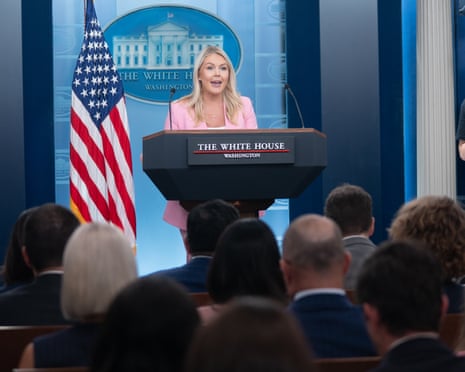
The third story—the one Trump’s speech covered by The Guardian—ties together an external threat, an internal fear, and political control into a single narrative. According to the chronology, the president’s evening address was devoted not only to old allegations of election fraud in 2020, but also to a new step: the publication of “declassified” documents about vulnerabilities in election infrastructure. Trump claims that China supposedly committed “the biggest hack in history” of electoral data, and that the U.S. voting system is “catastrophically” vulnerable. Yet even friendly media are not rushing to repeat these claims without qualification: Fox News reported outright that it had “not seen evidence” for his assertions. That is telling. When the network that supports Trump is forced to issue public caveats, it means the level of mistrust toward the source is already so high that even a politically loyal audience needs a warning. The Guardian also quotes Democrats who see Trump’s speech not as mere rhetoric, but as preparation for practical interference in elections. Congressman Jim Himes says the president “set the groundwork” so that on Election Day he could declare a threat and, for example, direct federal employees to seize ballots. Senator Raphael Warnock puts it even more sharply: “This isn’t about 2020. This is about 2026.” In other words, the election topic is being used to justify a future expansion of executive power.
The common thread across these pieces is that political or state power is presented everywhere as a response to an alleged existential threat: from Iran, from migration, from “foreign interference” in elections. But each time, doubt arises about the nature and quality of that power itself. Iran is showing not destructive might, but the ability to deliver limited yet painful and symbolically important strikes. ICE is showing not confident law enforcement, but a tense, almost improvised detention scene that shocks the public. Trump is showing not the resilience of the democratic process, but a drive to cast doubt on its very legitimacy and to use a pre-prepared information backdrop to expand control. That is why the key theme across all three sources is not simply conflict, but a crisis of trust in the person speaking on behalf of order.
From the standpoint of broader trends, it matters that both external and internal security are increasingly turning into a media and symbolic resource. In the Iranian case, the significance is not only in the explosions and damage, but also in who manages to form the first interpretation of what is happening: the United States talks about deterrence, while Iran frames it as the ability to reach American targets and keep the Strait of Hormuz under threat. In the ICE case, it is not only the fate of the specific detained man that matters, but also how video from the airport instantly turns a local incident into a nationwide dispute about rights, fear, and the boundaries of what is acceptable. In Trump’s case, what becomes paramount is not the content of the documents, but the way they are presented—“all at once,” during prime time, accompanied by emotional pressure and without time for independent verification. It is a method not of persuasion, but of information-field overload, when the stream of claims must get ahead of fact-checking.
There is also a deeper consequence: when power systematically operates in the logic of “first intimidate, then explain,” it undermines the resilience of the very institutions on which it relies. In this way, Iran reminds the United States and allies that military superiority does not guarantee security. ICE shows that forceful enforcement without transparency triggers backlash and political reaction. Trump, for his part, uses these vulnerabilities as proof that he is right, even though in reality he is only intensifying distrust in elections, the media, and bureaucracy. This is especially visible in how The Guardian discusses the possibility of ICE agents being deployed at polling places and attempts to “put voting under control.” Here, internal and external themes converge: the state starts thinking not as a guarantor of rules, but as a player that can use a crisis to expand its own powers.
Some concepts may not be obvious, so it is worth clarifying them. “CENTCOM” or the United States Central Command is the command responsible for operations in the Middle East and parts of Asia. “A strategy of escalation control” means attempting to strike and apply pressure in a way that does not cross the line into total war. “Proper legal process” is a legal principle under which a person cannot be punished or deprived of liberty without a procedure established by law and the right to a defense. “Chain of custody for ballots” is the procedure for controlling votes from the moment they are collected until they are counted; if it is breached, trust in the results sharply declines. “Fact-checking” is the independent verification of claims against facts. In the context of these materials, such procedures—transparency, verification, clear rules—turn out to be the weak link.
In the final analysis, we are not looking at three separate news stories, but three symptoms of the same era. The international order is becoming more dangerous because even limited strikes can keep entire regions on edge. The domestic order is becoming more fragile because law-enforcement actions are increasingly perceived as a show of force. And the political order in the United States is under pressure because key figures are no longer just arguing about outcomes—they are trying to rewrite the rules in advance for a future conflict. Iran, ICE, and Trump are different actors in these stories, but they are united by one thing: all of them are operating in a space where fear has become not a side effect, but the main political instrument.